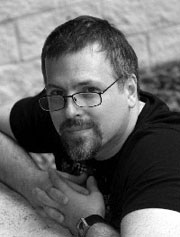
 Jeff Vandermeer needs little introduction. Between his fiction (he’s just been nominated for another World Fantasy Award), his work on various anthologies or his popular blog, Ecstatic Days, it’s hard to miss Vandermeer’s presence when you step into the online Speculative Fiction community. With the recent release of The Third Bear, a collection of short fiction from Tachyon Publications, Jeff and I decided it would be a great time to sit down and talk about his latest project, the online reviewing sphere, sticks, awards, writing and, just maybe, what other projects he’s got up his sleeve.
It’s a long one, but Jeff pushes me around a little, so grab some popcorn, get comfy and enjoy.
The Interview
Jeff! Welcome to A Dribble of Ink and thanks for dropping by! Any opening words to set the mood?
“I will smack your head from your body and pull your arteries out through your neck bones.” Oh, sorry, that was the third bear saying hi.
*gulp* The tone has been suitably set, I think.
Behave yourself, sir.
Your most recent project is a short fiction collection called The Third Bear, recently released by Tachyon Publications. What can The Third Bear, and the stories it contains, tell us, right now, about you as a writer, both professionally and creatively?
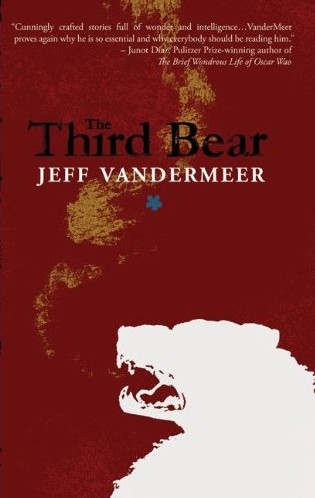
I’ve spent a great deal of effort not explaining anything about the stories in the collection—no story notes, no introduction, just a sparse afterword. It’s not really up to me to say what it tells readers about me or my fiction. For me, it was just important to have a tight, complex collection that entertained but also didn’t compromise.
One recent topic of debate centred around whether most readers have the right and/or ability to subjectively address the novels they’re reading. The argument being that just because you don’t get a novel, doesn’t necessarily mean it’s poor; that quality is, at a base level, an objective attribute, rather than a subjective attribute.
We’d like to think that everything’s subjective, but any novelist worth his or her salt knows that there are some objective standards of quality.
…But here you are, taking your work and putting in the hands of the readers and allowing them to judge and define what you’ve created. Do you ever worry that you’re books are being misinterpreted? Ever ball up your fists, shoot steam from your ears and yell, “But you just don’t get it!” while reading a review? Even if they don’t get it, is that opinion still wrong?
I certainly think there are smarter and dumber readers, readers who have more reading experience and less reading experience, readers who like stuff handed to them and readers who like to explore. The thing is, it’s often the same reader. When I read noir, for example, I’m a dumb reader. I like even bad noir. I’ll read an airport thriller in one frame of mind and enjoy it and something more complex the next day. I prefer omnivoracious, magpie readers who’re going to give the writer the benefit of the doubt. Misreadings are common, and I don’t mind them in readers—*I* misread as a reader, too. I mind it more in reviewers because they have a greater burden of responsibility to get it right. A sloppy reader who reviews is a terrible thing.
That’s an interesting point. As a blogger/reviewer, I’ve made great efforts over the past year or so to expand the reach of my blog, to explore less comfortable areas of the genres, but often find myself feeling inadequate when it comes time to discuss or review some of the novels. Where do I even begin when trying to sit down, gather my thoughts and give a fair analysis of A Wizard of Earthsea by LeGuin or The Last Unicorn by Beagle? Most of the time, I don’t; I just read the novel and let the review get lost in the ether.
I think that bears further explanation. What is it about a work of fiction that intimidates you so? It’s just words on a page, written by someone who’s probably a crank and a recluse. What moves you to review, and what doesn’t? It’s a little more complicated for me—in reviewing for the NYTBR, LA Times, etc., I’m often assigned books, so it is necessary for me to engage them. When you have to engage a novel, you really have a duty to engage it.
To be honest, it’s hard for me to put a finger on it. As a public figure, someone who blogs, and writes with (for lack of a better term) mass-consumption in mind, I think there’s a nagging fear that I’ll get something wrong, that I’ll have to face up to the deep-rooted biases for or against a revered work of fiction; I’ll reveal to the world that I’m just a schmuck, a fraud. It’s not a good excuse, but it’s the only one I’ve got. It’s like being starstruck when you meet your favourite musician, or paralyzed with fear when you’ve been passed the ball, there’re seconds on the clock and your team’s down by one. Silly, in a subjective arena like reviewing, but there it is.
It actually sounds like a good approach, in a way, because it indicates a lot of thought behind your reviews and what you review. I’ll make different kinds of decisions when reviewing for newspapers, etc. For example, a first novelist is going to get a little more slack from me, and an established, well-known novelist I’m less likely to hold back—Stephen King can withstand my mixed review, I think. It’s not that I won’t state my views about the first novel, but that I may lead with the positive before exploring the negative.
Also interesting is the idea that bad readers make for bad reviewers.
Is it? Doesn’t it seem like a safe conclusion?
No, I wouldn’t say it’s a safe conclusion. Again, and somewhat antithetical to my sports and musician analogy, reviewing’s a subjective thing. Every opinion, no matter the background of the reviewer, is more-or-less valid, as long as they’re being honest with their feelings towards the novel. Though a great writer can construct a brilliant story, they can’t necessarily communicate to someone else what makes a story successful. Conversely, a great reviewer might be able to dissect a novel to the nth degree, but can they write a successful story themselves? Though they’re sides of the same coin, they’re not necessarily connected, in my mind.
Of course, this is all thrown out the window because I’ve admitted to being afraid to review and analyze certain novels because of the reputation and stigma attached to them. So, conversely, a good reader (as I consider myself), doesn’t always make for a good reviewer.
I think your analogy is true, but we were talking about bad readers. How a bad reader can be a good reviewer, I don’t know, because the point of the review will be to express their opinion as a reader. In the context of there actually being a lot of good reviewers out there, I think the biggest problems in terms of being a “bad” reader and then reviewing something is if a bad reader isn’t a widely read reader, at least, and they wind up missing a lot of what’s in the text because of that. And then there are good readers who are bad reviewers because they seek reviewing as a kind of power trip or method of control or as a way to put a book in one box. Anyway, I wonder if it might be more useful to talk about good reviewers, except what makes a good reviewer good is less variable, in my opinion, than what makes a bad reviewer.
Now, it’s probably safe to say that there are more ‘bad’ readers out there than ‘good’ readers (by orders of magnitude, if you use some of the metrics discussed in Larry’s article), and wouldn’t those ‘bad’ readers be better served reading a review from someone with a similar style of reading and consuming books? The guy who reads nothing but D&D novels probably doesn’t need a terribly in-depth or far-reaching dissertation on Phillip Athan’s new novel, he just wants to know if it’s good or not.
You really ask long questions, you know? I’m beginning to wonder if I’m necessary. :) I guess the answer to your question is that a good reviewer always tries to read the book the writer intended, and to then, in the review, analyze how well they accomplished those goals. The question of whether those goals were worthwhile does bring in the reviewer’s taste, but that doesn’t come up in every review. I think you’re perhaps doing your hypothetical D&D reader a disservice there, too. I wouldn’t assume that a D&D reader isn’t sophisticated; they may also be someone who likes D&D and only reads D&D novels, but also likes, say, the opera. What readers need is an honest assessment of whether what the writer was trying to do was successful or not. They don’t need, or at least I hope they don’t need, a blanket judgment of “if you only like D&D novels you will hate this non-D&D novel over here.” That would be absurd. As a former D&D player, I know that’d be a reason to bring out the third bear.
You’re just the catalyst so I can hear myself blabber on to an audience, Jeff.
It’s fair to call me out for singling out D&D. I’ve not read many of the novels, but I’m a former player myself and just found it to be an easy target. I suppose that what I was trying to say is that, bottom-line, I believe there’s an audience out there for every type of reviewer.
If you take a reviewer like Adam Roberts, as his ramble-y, engaging reviews of Robert Jordan’s The Wheel of Time series and put them up against some of the reviews found on Amazon.com, you’re going to find people who appreciate one or the other. Many of those reviews on Amazon.com are written by what we’re calling ‘bad readers’, but there’s certainly an audience (a very large audience), who appreciate those ‘you’ll love this book if you loved ‘Book X’ or ‘Movie Y’. Are Roberts’ reviews objectively better? Would Joe Blow at the grocery store, who only chooses his novels solely on cover art think so?
First off, merely saying you love or don’t love something doesn’t make you a bad reviewer or bad reader. (Although there’s clearly something in this conversation that’s itching at you oddly—like, something we’re vaguely in opposition about here, but you can’t put your finger on it; otherwise, why all of this focus on hypotheticals?) And I think we have a different definition of “review”. The Amazon “reviews” are generally just short like/love/hate/loathe opinions, sometimes held together with analysis and sometimes not. I wouldn’t call them reviews. Adam Roberts, by the way, is one of my favorite reviewers. I think he’s smart, looks to be sympathetic to a book’s aims, and generally hits his target. He can also be very, very funny. Besides, anyone willing to tackle The Wheel of Time has got to get some praise…But we’ve also got a different view of audience, perhaps? This idea of some Joe Blow in the grocery story strikes me as a received idea and a kind of caricature. You seem to want to make a distinction between sophisticated and non-sophisticated readers, and a corresponding distinction between how they want their reviews served up to them. I would argue that without a scientific study in place, you don’t actually know that (1) your version of Joe Blow exists and (2) that he’d prefer an Amazon review to an actual review (i.e., what is usually a more detailed approach, although not always), or (3) that even if this Joe Blow exists, and doesn’t really self-identify as a reader, and just casually picks up a book every once in awhile in a grocery store, should I think of him as my core audience? Poor Joe Blow. He probably lives in a penthouse in Manhattan and likes opera with his beer, and fences for exercise. And here you’re talking about him like he’s, well, joe blow.
But regardless of what anyone wants, what do we decide to give them? What do we decide to write? All I am required to do as a writer is provide what I would like to receive, if you want to boil it down to something essential. What do I like to read, in reviews and in fiction? What is fun for me to write? And do that. And if other people like it, great! And if they don’t, no harm no foul. At least I’m happy doing what I’m doing.
I think we can both agree that every reader’s different, which is what makes this online space and the Literature community so interesting. Let’s get this train back on the proverbial tracks, shall we? Are any of the collected stories available online, if someone wanted a taste of what The Third Bear has to offer?
The title story and The Situation are both online.
Who’re the first and second bears?
Stan and Ed—they live down the street. Carol Bly writes about them in A Passionate, Accurate Story. They’re fairly harmless.
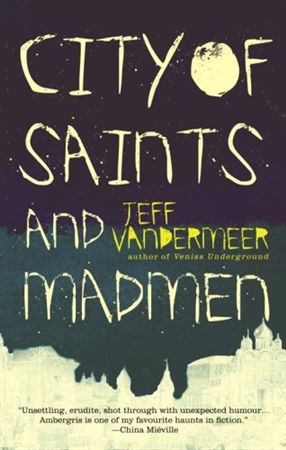
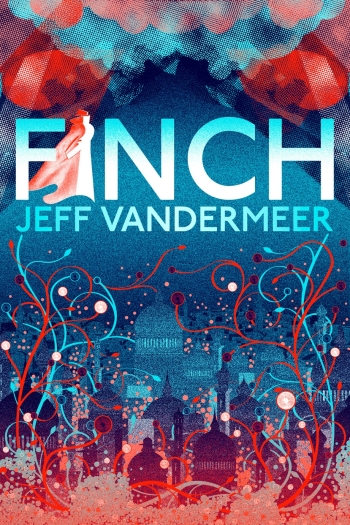
You’re best known for your Ambergris novels, including City of Saints and Madmen and Finch. Are the stories in The Third Bear related to this universe, or do they stand on their own?
They’re pretty much all stand-alones, although a few of them are forming their own series, slowly but surely.
In my recent review of Mark Charan Newton’s City of Ruin, I hummed and hawed over my preconceptions of the New Weird, a genre that you had a hand in sculpting, but that died while still in its infancy.
I had very little hand in sculpting it. At the time, I was hell-bent against it.
The New Weird’s been discussed heavily (and likely will be again, as it never quite seems to go away, despite the numerous reports of its death), but I’m most curious about the idea that genres can emerge out of nowhere, on the backs of just a handful of writers, to take on a life of their own. Do you feel that sub-genres can be properly identified or even appreciated while still in their infancy? Or is it only in retrospect that we can judge their value? What does it take for a literary movement to become firmly entrenched within the genres?
I think the weight of your question crushed my spine.
 *Ahem* Well, to alleviate your pain, how about a fluffier question. Given the choice, would you take a New York Times bestseller, or a (another) World FantasyAward or Hugo Award? Why, exactly?
A NYT bestseller or a World Fantasy Award. A Hugo I could take or leave. And, frankly, all three of these choices are fun but don’t thrill me beyond belief. All I really want is the continued space to explore what I want to explore, which means reasonably good sales, with the occasional spike, and editors willing to accept my vision. And readers who are interested in the stories I want to tell.
Re: your genres question, well, yes, most of them did occur because of a few writers doing something either new or a significant renovation.
What if I replaced the Hugo Awards on that list with the David Gemmell Legend Award?
Eh. Same difference. Every writer has the right to have things be less or more important to them. Just because the prospect of these things doesn’t make me suck in my breath and go “wow!” doesn’t mean anything other than that those aren’t my career goals. Plenty of cool stuff makes both lists.
Any reason in particular you’re ambivalent towards the Hugo Awards?
They just don’t excite me the way the Shirley Jackson Award ballot does, for example. It’s just a matter of what I like as a reader. But they’ve gotten a little less conservative lately. Sue me! Put me in the stocks! (And then explain to me why the World SF Convention decided to schedule itself opposite DragonCon? Hmm?)
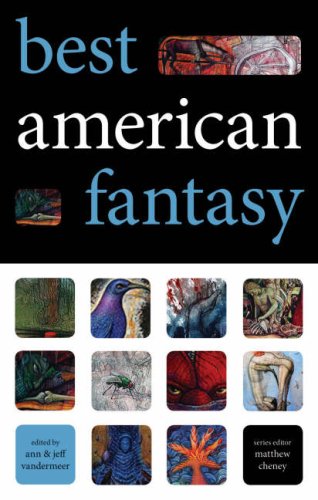
In light of the recent news that your anthology series, Best American Fantasy, would end its run after three volumes, what can you tell us about the state of short fiction in the market today that led to this decision to close out the series?
Nothing about the state of short fiction led us to this decision. The state of short fiction is extraordinarily good and diverse and healthy. But how you, in a reprint anthology, get a particular type of fiction to readers, that can be fraught with difficulty. When you’re trying to draw in both mainstream and genre readers to a best-of that includes work from both sides of the aisle, so to speak, you face special challenges, as set out in the blog post.
In my own experience, I’ve found that eReaders have opened up the world of short fiction for me. Before, I was always loathe to read off of my computer screen, but with the ability to put the stories on an eInk tablet in front of me (or an iPad, as is the case with many people) presented the opportunity to enjoy otherwise unavailable short fiction. I’ve discovered many great writers this way.
What’re your thoughts on eBooks, eReaders and how they might affect the short fiction industry?
Short-term, they’ll have a huge effect on how many people read or continue to read short fiction. Long-term, civilization is going to collapse, and so if you’re looking to invest in a form that will be around in 70 years, I would advise you to look into logs. And learning how to write in your own blood without fainting. And discovering how tasty human flesh is.
To continue on the short fiction tip, during your career, you’ve published more collections, and been involved in more anthologies, than you’ve published full-length novels. What is it about the short fiction medium that so appeals to you?
I’ve actually published as many collection as novels, not more. The back of Third Bear is unfortunately wrong—Third Bear is my fourth collection, and I’ve written four novels. I love novels as much as short stories. It’s not so much that I prefer one over another, but that certain ideas lend themselves better to a shorter or longer form. Also, since I had a day job for many years, I had that constraint in terms of the amount of time it took me to finish a novel. I think it’s more than likely that the pace will now pick up, novel-wise.
It’s nice to hear of a novelist who’s looking to pick up the pace, rather than slow down, as is more apt to happen (unless you’re Brandon Sanderson and can write 1,000,000 words a year).
Are they the right words? I’m not saying they aren’t. I’m just asking.
Well, as long as you’re not going to pull a Nora Roberts (or a Harriet Klausner) on us, I think most of the words’ll be the ‘right words’. Though one does have to wonder how heavy production for a writer can affect their quality. That said, with a connection to Sanderson, Robert Jordan produced his best work when he was writing at a furious pace early in the Wheel of Time series. When he had time to finally step back and think about it, he stumbled a little bit.
*Stunned silence*. So…Jordan was a good writer? I don’t think so.
Ooh, those’re fighting words! What’ve you got in the pipeline?
Editorially with my wife, Ann: The Thackery T. Lambshead Cabinet of Curiosities (HarperCollins), Steampunk Reloaded (Tachyon), Above and Below (TBA), The Weird (Atlantic). A second nonfiction collection, Monstrous Creatures (Raw Dog), a long novella, Borne (Subterranean), another novella in book form, The Three Quests of the Wizard Sarnod (limited hardcover for CapClave), The Steampunk Bible coffee table book (Abrams Image), the web comic The Situation for Tor.com, with Eric Orchard, and a novel I’d rather not talk about.
A novel you’d rather not talk about? A big list of awesome releases, and that’s the one that’ll stick in everyone’s head. What a tease.
I try not to talk too much about my novels ahead of time, so as not to tell them ahead of time, so to speak, and also because the next two are based on ideas I think are unique and never been done before.
That’s fair, it never hurts for an author to keep their projects close to the chest. As an aside, our mutual friend, Larry Nolen from OF Blog of the Fallen and (former) series editor on Best American Fantasy, tells me you’ve got a great sense of humour.
The third bear doesn’t pirouette on demand…
So, tell me a joke.
What’s brown and sticky?
Larry’s ego?
A stick.
Ahh, quite. Larry’s also curious about your cat washing techniques. Got any advice for him?
Stay away from the pointy bits.
 They say the same about swords and spears. Solid advice, then.
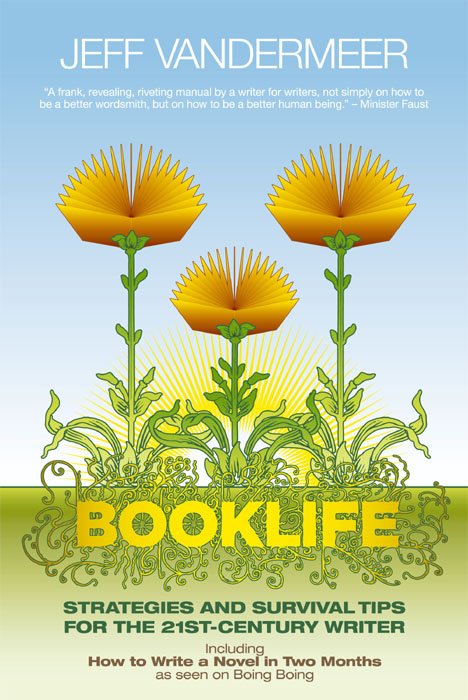
To return to more serious topics, I’ve recently been reading Booklife, your non-fiction book on being a writer. One of the main conceits of the novel is that while advice is valuable, you should always take it with a grain of salt, never look at it in a vacuum; you also include the advice in Booklife under this umbrella.
Were there any particular incidences early in your career of misguided or ill-followed advice?
Mostly it took the form of hearing professional writers thoughtlessly recite truisms that were only true a decade or two decades before. I’ve resolved never to be that person because I take teaching very seriously, and I never want to waste anyone’s time. Stephen King’s writing book, for example, has some good stuff in it, but his advice about submitting short stories is hilariously awful and inaccurate.
What’s the best way for a young (or young-at-heart) aspiring writer to stay current with the best practices of the publishing industry and writing in general?
The first thing a new writer needs to do is stick to their own path and develop their own unique voice and style. The publishing scene is potentially so volatile that even if you wanted to be cynical and exploit some trend, you’d be ill-served trying to do so. So the first thing is: write something no one else could’ve written. At first, it may be flawed and misshapen, but it’ll still be a mistake no one else could’ve made. Then simply find ways to talk about your writing and places to get it in front of an audience that maximize your potential readership. For some that will mean reaching a thousand readers and for others ten thousand or more. As for best practices…the tools keep changing so don’t focus on the tools….and now I’m just repeating Booklife, so I recommend a healthy dose of Booklife for a more extended conversation about my views on this topic.
The following is from a recent interview between yourself and Charles Tan:
CT: How did Tachyon end up publishing your short story collection?
JV: I know and trust Tachyon, and I wanted them to do it. Jacob, Jill, and the rest of the Tach-pack are real professionals.
Also recently, on Episode 18 of The Functional Nerds Podcast, Mike Resnick made similar comments about his experience with the small press publishers that he’s worked with, indicating that though he’s at a place in his career that, more or less, allows him to pick and choose from any of the big New York City publishers (Tor, Del Rey, etc…), he prefers to stay with smaller publishers like Pyr Books.
What makes publishing your books with smaller publishers like Tachyon Publications and Underland Press the right choice for you?
With regard to Underland, they quite frankly matched the advances offered by the larger houses and I liked their catalogue. (The novel is published by Atlantic in the UK.) In general, for some of our quirkier projects, a place like Tachyon allows us to have more creative control. On something like Booklife, I could’ve pitched it to Writer’s Digest Books and probably gotten it accepted, but, first, Jacob Weisman at Tachyon proposed the idea, and, second, they let me have a book that was exactly what I wanted it to be. They even gave me the ability to work with the designer on the cover. That was really nice, and it was a definite perk. But I’ll continue to do projects with both commercial and indie presses. The point is always to find the right fit.
I always ask the people I interview to solicit for those wonderful authors they feel are criminally under-read. Who’re some of those authors you would love to see in the hands of more readers?
Edward Whittemore, Michael Cisco, Karen Lord, Kelly Barnhill. To name just a few.
I should let you go before the ice caps melt, I suppose. Thank for dropping by Jeff. Any final words for your readers – past, present and future?
Thanks for putting up with me.
Cheers, Thanks Mr. Vandermeer!

I think you had your Glen Cook moment there, Aidan ;)
Tell me about it. Interviewing Vandermeer is nothing like interviewing a debut author, as I’m prone to do. Live and learn, right?
Yes, and I’ll admit it was rather odd reading so much about myself in those questions. Did you read other interviews and shape your questions around/away from those others?
Sure, I went back and read a few of Vandermeer’s interviews (particularily his recent one at SFSignal, to make sure we didn’t both tread too much similar ground), but a lot of it was also prompted by my experience with Booklife and some of the shitstorms on the Internet.
Just curious, because it read like a Frankenstein’s monster at times with its jumping around on all sorts of matters.
The construction of the interview was a bit like Frankenstein’s Monster. Jeff and I started with a few questions, then kept shuffling stuff around and adding to the conversation as needed. The question about the second and third bear was originally near the beginning on the interview. It’s not a perfect process, but I prefer it to a more rigid style.
I understand, as I tend to do that with my own. I was just thinking more about the question of “what were the main goals of this interview” and the follow-up of “were those goals realized?”
Sure. My main goal was for me, and my readers, to become better informed about the industry, the craft and Jeff’s books. Whether they agree with me, Jeff or nobody, I think there’s a fair bit in there for everyone to chew on.
It’s certainly more scattered than my usual interviews (where I’m mostly acting as a catalyst for new authors to get their name out there), but I still think it was successful.
I suppose. I just don’t know if I’d put the editor on the spot by asking those questions intended to get the writer to respond. But you did get some informative answers, even if I about sputtered when reading that New Weird question :P
Like I said, live and learn.
Indeed. Mord was kind to you.
I thought you’d find more humour in my WFA/NYT bestseller question. You disappoint me, Larry.
While that was amusing, knowing what I do about Jeff’s relationship with the NW term, that question was even funnier :P
I guess the answer to your question is that a good reviewer always tries to read the book the writer intended, and to then, in the review, analyze how well they accomplished those goals.
Whenever an author says this sort of claptrap, I want to scream! I don’t know what’s going on inside an author’s head, their intentions. I can *only* review based on what’s on the page and what’s in *my* head, informed by whatever else I’ve observed.
Aidan: I enjoyed the hell out of that. And then I got to the “Pat Question” about NYT / Awards and damn near yelled at you through the screen.
King Rat: I read the comment about authorial intent more to have to do with what sort of book it is. Do you really evaluate the new Weis / Hickman D&D novel the same way you do, say, Jeff VanderMeer’s Finch? Or the same way you read Don DeLillo as postmodern litfic?
You benchmark Eragon against other heroic quest fantasy novels. It doesn’t suck because it isn’t to the style and standards of Catherynne Valente or Louise Erdrich. It sucks because it isn’t to the style and standards of what sort of novel it is.
I generally don’t know authorial intent, but I’m judging how well a book is at being what it *appears* to be intended to be. If Eragon is really supposed to be a parabolic deconstruction of Maoist China, I missed the boat and maybe I should re-evaluate. But if it is supposed to be that epic heroic fantasy of some of our childhoods, in the style of Terry Brooks mixed with Anne McCaffrey, well…I can tell you how good of a job I believe Paolini does. To pick on the rich kid for a moment.
Does that make sense?
I don’t go into Twilight expecting War and Peace. I’m not arguing that. And I don’t think Mr. VanderMeer is really referring to that. His work isn’t getting mistaken for paranormal romance. To pick on him, do I review “Errata” (really the only VanderMeer I’ve read) as entertainment, as commentary on reality, or as a colossal in-joke for its references to real people and things? It’s a finer grain of intent that the broad brush of “which subgenre does this belong in?” that you paint. Below the surface, authorial intent is not something I’m going to guess at. You take readers (and reviewers) as they come to the work at the time, not as you would like them to be.
For a good example of what I’m talking about. Someone commented that I’d totally gotten my review of a Junot Diaz story wrong, because I didn’t get it. http://reading.kingrat.biz/story-reviews/ysrael-junot-diaz#comment-3632 Does that make me a bad reviewer? Nope. Does that make it a bad story because I didn’t like it or get it? Only if you are a reader somewhat similar to me. Someone who has a Ph.D. in English would get it and enjoy it.
King Rat–your tail is showing rather than your tale. What Joe said. You are willfully misinterpreting my comment so you can be offended because you are insecure. And..King Rat? Seriously? Use your real name.
King Rat–the Diaz novel is about a guy who likes comics with a backdrop of the politics of the Dominican Republic. And it’s a love story. Um, do you need a PhD for that? My wife, who loved it, doesn’t think so. Most people don’t. Sigh.
Btw–my wonderful Hugo Award-winning wife smacked me five ways to Sunday over this interview…
Ann does good work, Jeff. It has to be difficult keeping you and Mord in line.
It’s a full-time job. And I would like to now say, “I love the Hugo”. *Now put down the gun, hun…*
Just wanted to say that I really enjoyed reading this interview, especially the unexpected humor. I’ve never read anything by Jeff Vandermeer before (probably because I tend to avoid short stories and anthologies), but I guess this is my chance to check out his work. I’m going to visit Ecstatic Days and then read the first story of The Third Bear and The Situation…
Love Jeff’s comment about Robert Jordan. I found it strange as well that you brought him up multiple times Aidan. A really fun interview though. Glad to hear you’re amping up your pace Jeff.
Eh? I only really brought up Jordan (as a subject) once, the other time was in relation to Adam Roberts and his well known reviews of the series.
Thanks, Keith. I would like to say, I’m really not trying to insult King Rat–but I do believe KR is misinterpreting my comment re reviewing. cheers, jeff
[…] A Dribble of Ink speaks with Jeff Vandermeer, World Fantasy Award Nominated author of […]
Aidan–I found it really amusing that Jeff ended up almost interviewing you! Nicely done, though. I’m always excited to read anything on Vandermeer, as it’s bound to be entertaining.
[…] tylko kilku z nich bywa czasami dosyć trudny. Na pewno warto zwrócić uwagę na kolejny wywiad z Jeffem VanderMeerem oraz nowy z Peterem F. Hamiltonem. Godny uwagi jest też tekst o autorze książki „Więcej niż […]
[…] A Dribble of Ink speaks with Jeff Vandermeer, World Fantasy Award Nominated author of […]
[…] Aidan Moher, creator of A Dribble of Ink, a dear Canadian friend of mine, recently posted an interview with Jeff Vandermeer, quite a interesting read. Without a doubt, Vandermeer continues to be the golden pinnacle for the […]
I havent read any of the boof featured but i am very much intersted of reading the City of saints and madmen. Thanks for sharing
Interesting response (negative though to Jeff himself, so mind) to this interview here:http://pixelstained.blogspot.com/2010/08/in-which-i-get-cranky-beyond-reason.html
Strangely, my reply – a mild defense of Jeff and literary “characters” in general – keeps disappearing off the comments. Could be a glitch, but I’ve reposted now four times…
I’ve thus copied my reply here, Aidan, I hope you don’t mind but it is germane to the interview and the comments above; just in case it continues to mysteriously disappear.
Thanks!
Eric
RE: http://pixelstained.blogspot.com/2010/08/in-which-i-get-cranky-beyond-reason.html
I’m bemused by this, although I suppose I wouldn’t be if I were Jeff.
I found the interview in question, with all due respect to Aidan Moher whose blog I quite like, a rather odd kettle of fish.
It certainly wasn’t a Patrick (of Pat’s Fantasy Review) and Glen Cook train wreck (more’s the pity), but I think quite a few of Aidan’s questions were confusing. I didn’t detect any willful ill-intent on the interviewer’s part, but in Jeff’s defense, I think most authors would have found this a slightly off-putting interview – at least in parts. And again, I think this wasn’t out of any desire to trip up the author or to expose your supposedly detected “pomposity.” Rather, considering theat Vandermeer has built his reputation on less than standard fare, Aidan was in all likelihood trying to keep things interesting and discover more than perhaps the usual questions and format allows. A fine sentiment and I think that Jeff responded in kind.
Personally, I found your response to it far more puzzling. But then I mistrust writers who use too frequently the All Caps. It seems like shouting, of the mad, standing on a street corner with either an unkempt beard or a placard that says God Saves/Jesus Loves/The End is Nigh, sort.
And before you say I’m just standing up for Jeff Vandermeer out of misguided loyalty as a fan, let me assure you, that’s not the case.
Nothing could be farther from the truth:
I have a feud with Jeff, declared in his absence, outside of his knowledge, sworn on the branch of the purple amaranth and before the altar of the boundary gods and so eternally binding until discharged all the same. This has nothing however, to do with his personality online or otherwise, or a comment on his innovative and fine work as an author. It is strictly between him, and me, and the men of the Juvina Amaranth.
Why this interview got under your skin, is a mystery to me, but obviously it touched a nerve in you somewhere. Yet to dismiss the work of an author simply because they have an overweening ego? I’m not really sure what to say. I think it is ludicrous, really. In the realms of art and writing, what more would you expect to find? A wealth of meekness and the milk of human kindness? Wrong business, I’d say.
Some of our finest writers in the English language (and in many others as well) were downright horrible characters. Not people you’d have wanted to invite over to your house or to marry your sons or daughters – if they hadn’t been also famous, fiercely intelligent, and creatively driven practitioners of their craft. To limit yourself to the fiction of people whom you find utterly without flaws of a personal or private nature, is to impoverish yourself.
How many of the world’s great writers would you have been forced to leave behind should you spent an hour in their (dubious) company? And what better way to pay penitence for their (perceived) sins than to enrich our lives and our culture.
It seems a fool’s quest then, to whittle down your library on such things, a tilting at imaginary windmills, and above all, unnecessary.
Best wishes,
E. M. Edwards
[…] Jeff VanderMeer talks a smörgåsbord of things, HERE (Smart and nerdy, just how I like […]
[…] may have missed Aidan Moher’s interview with Jeff VanderMeer when it went up last week and if that is the case, then you should go read […]
thoroughly, with a little wincing, enjoyed both the interview and the comment thread!