I’ve read an awful lot of fantasy, and watched an awful lot of anime, and both canvases are incredibly broad and notoriously hard to characterize.
When first discussing this essay, comparing and contrasting the traditional hero narrative in fantasy fiction and anime, with my friend Casey Blair, I found myself in a bit of difficulty. I’ve read an awful lot of fantasy, and watched an awful lot of anime, and both canvases are incredibly broad and notoriously hard to characterize.
Fantasy, after all, includes classics like Lord of the Rings, heroic secondary-world epics like The Wheel of Time, wainscot fantasy like Harry Potter, and the magical realism of The City & The City, covering sub-genres like urban fantasy and steampunk in between. It’s very hard to write a coherent comparison that covers both C.S. Lewis’ The Chronicles of Narnia and Max Gladstone’s Three Parts Dead, for all that we shelve them in the same genre.
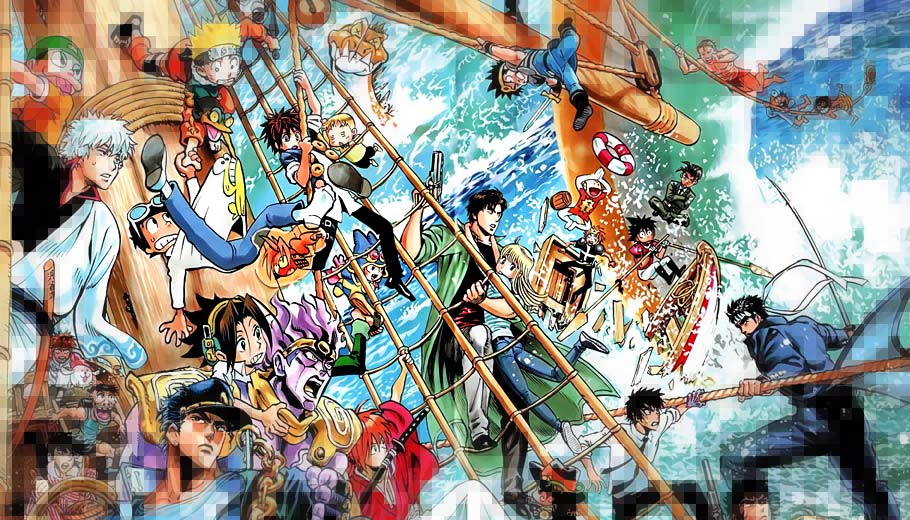
Similarly, anime is unbelievably diverse, more so than all but the most hardcore of fans realize. (Because the US translation companies skim the cream of the crop, picking the hit shows and often passing over the stuff with less broad appeal.) From staples like Dragonball, Sailor Moon, or Naruto, anime goes all the way to Revolutionary Girl Utena (which is so symbolic as to be almost abstract) and Non Non Biyori (which is about a bunch of girls in a rural village chatting about nothing in particular). It includes every genre of speculative fiction we have in the US, and some we don’t. Read More »
Starting with Tolkien, it’s become practically obligatory that the epic fantasy saga, somewhere around the middle of book three, feature an Epic Confrontation Between Good and Evil with a Cast of Thousands.
I am, I have to admit, a war buff. I read military histories for fun, the kind with fold-out maps covered in little colored arrows and notations like “Kollowrath (40,000)”. As I am also a fantasy novelist, the nature of war in fantasy fiction has always been fascinating to me.
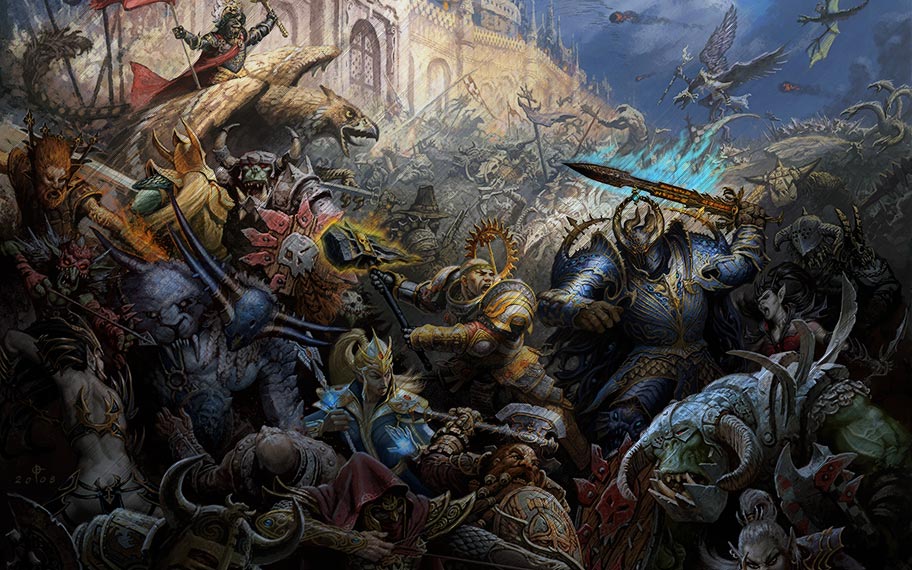
And there is a lot of war in fantasy. Starting with Tolkien, it’s become practically obligatory that the epic fantasy saga, somewhere around the middle of book three, feature an Epic Confrontation Between Good and Evil with a Cast of Thousands. Various allies, painfully recruited over the course of the hero’s journey, turn up to lend a hand at the Final Battle. Various villains are dispatched, hapless orcs or equivalent humanoids are mowed down by the score, and just when things seem bleakest Evil is defeated forever. A beloved secondary character or two bites the dust, and someone gets to make a Heroic Sacrifice. Afterward, we may be treated to a scene where the hero roams a battlefield strewn with corpses, or visits the injured to bring home the horrors of combat. You know, war, right?
Back before I wrote fantasy myself, my wargamer friends and I used to snicker a bit at this. Most of the fantasy authors wouldn’t know a halberd from a half-pike, and their descriptions of battles were usually heavy on bold strokes and dramatic confrontations and light on tactics and the important of proper reconnaissance. I wouldn’t want to be a poor foot-slogger in either army, given the rate at which they tend to be chewed up by either the hero and his friends or some villain demonstrating the full extent of his power. Read More »