Posts By: Max Gladstone

Happiness for a Fish

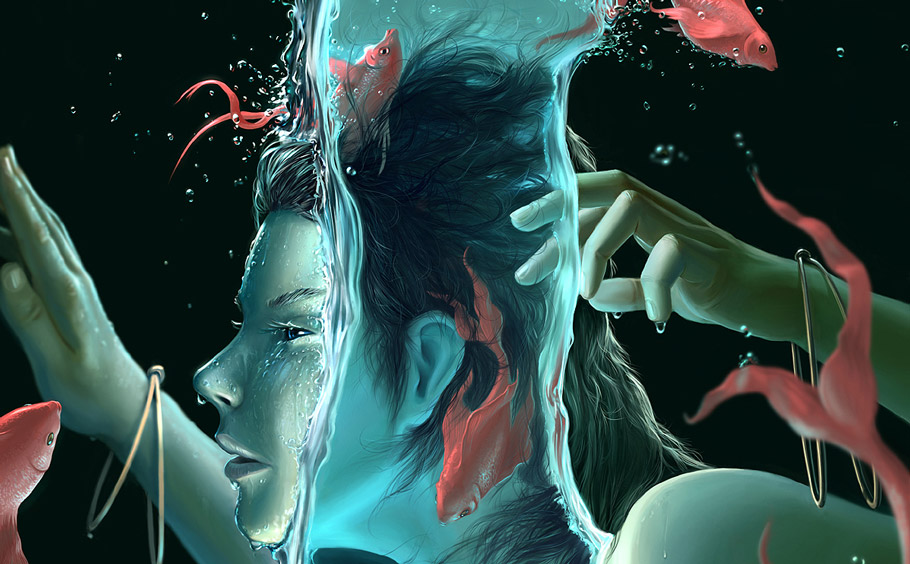
Zhuangzi and Huizi cross a bridge over the Hao river. Minnows dart below, silvery and swift. Zhuangzi leans so far over the railing he almost falls. “They swim about so freely—they go wherever they like. That’s happiness, for a fish.”

Huizi crosses his arms; he realizes he’s wrinkling his silk gown, and crosses his arms differently so the gown’s sleeves hang smooth. “You’re not a fish,” he says. “On what basis do you claim to know what fish like?”

Zhuangzi turns back and raises one eyebrow in that way he knows pisses Huizi off. “You’re not me. On what basis do you claim to know what I know?”

We’ve all been there.

We sit across from a friend or an enemy at dinner, standing beside an acquaintance in a bar, we lean against a con party wall, we walk side by side along the river with a lover or a friend. Maybe the conversation skidded out when one of us mentioned unions or the inheritance tax, expecting reflexive “oh sure” agreement and finding a defensive, pointed entrenchment; maybe we’re talking about our feelings and they’re not listening; maybe they said something we find unconscionable, or the other way round. And we feel that hot pressure behind our forehead, because they are just… not… getting it.

We’re homo sapiens on paper, but sapientia’s worth squat without communication. When the first proto-human had her first thought, she looked around for someone to share it with. How many times do you think we, as a species, got that far without reaching the next step—without managing to say “Hey, check this out?”

Cognition research suggests that animals do a lot more of it, cogitating I mean, than we used to think, which won’t surprise anyone who’s tried to keep a poodle in their back yard, so it’s hard to say when that leap happened. We made it back when we were habilis, if not earlier. (And we’re not the only ones who did—whales have languages and dialects.) But still, every once in a while I think about those occasional isolated nodes, the stars that burned before there were other stars to shine against. Think about the loneliness of having a thought and not being able to pass it along.

And we go back there again and again—at the table, at the bar, near the wall, by the riverside, and for all our hundreds of thousands of years of practice, the gap from mind to mind seems uncrossable.

How do we talk to one another? Read More »
Biting Style:
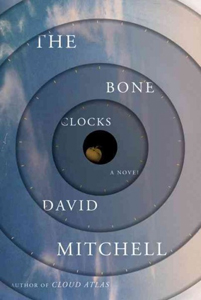
The Bone Clocks
and Anti-fantasy
the-bone-clocks-cover-art

This is not a review of David Mitchell’s The Bone Clocks.

I don’t even mean that in the self-consciously Magrittesque kind of way.  If this were a review I’d tell you to read the book, or not, which I don’t plan to do.  I mean, okay, for those of you who haven’t made up your minds on David Mitchell’s latest opus: while I had an excellent time on every individual page, the book landed strange for me, and this essay is me trying to figure out why.  Asking “Should I read this book” is like asking “Should I take up power lifting?” or “Should I learn Chinese?”  Answer: depending on your goals, your experience, your medical history, your ambitions, how much free time you have—Maybe?

I do, though, think this book succeeds at something really really cool and interesting, even if it fails as a unit.  And the shape of this cool interesting thing challenges the goals and underlying structures of modern science fiction and fantasy—especially fantasy.

Because Mitchell’s written a fantasy novel.  That point seems impossible to argue.  His world contains immortals who teleport, throw fireballs around, and kill people with a thought.  To call it anything else would be silly.  And yet… Read More »

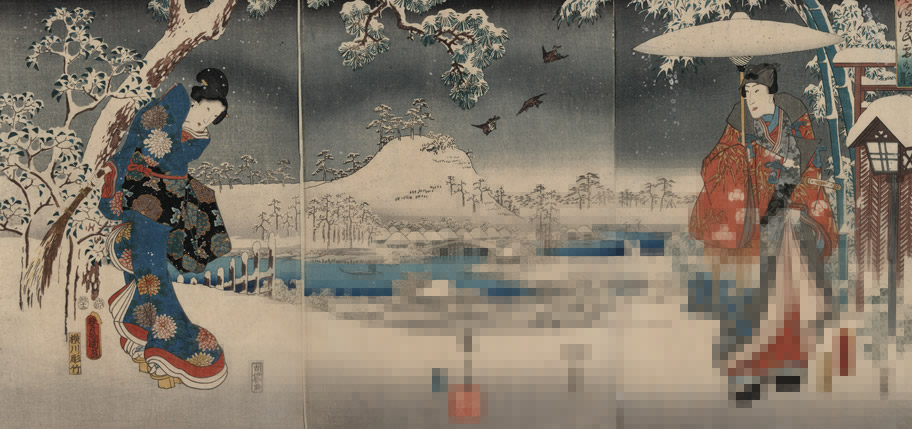
A young man of surpassing beauty who rises to a political and romantic career of power and renown mixed with disappointment, betrayal, and demonic possession.  Also, he glows.

A minor noblewoman has a tragic love affair with an emperor.  She dies, leaving behind her child — a young man of surpassing beauty who rises to a political and romantic career of power and renown mixed with disappointment, betrayal, and demonic possession.  Also, he glows.

Welcome to the Tale of Genji, the Japanese story of romance, ghosts, poetry, and politics that has a good claim of being the world’s first novel. To clarify: Genji is a work of prose, not epic poetry, and written in the vernacular rather than the local courtly language (which, in early 11th century Heian Japan, would have been Chinese).  It’s also, as far as we can tell, original, without folkloric or legendary precursor.  The author, Lady Murusaki Shikibu, wove her hero and his, um, exploits out of whole cloth.  And, while many other works deal with mythological high society—gods and demons and so forth—Murusaki seems to have cared a great deal about representing (idealistically but still) her social reality.  Genji Monogatari is a work of beauty and passion and (to modern sensibilities) occasional utter weirdness, in which twenty chapters of plot turn on the accidental glimpse of one character by another through a paper screen, astrological prohibitions on travel are used to justify spending the night at a prospective lover’s house, titles take the place of names, violence is anathema, and a twenty-mile exile is worse than death. Read More »