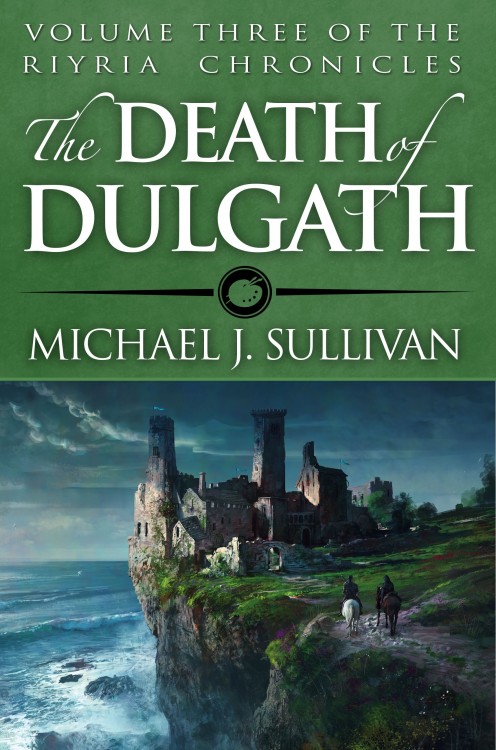
Art by Marc Simonetti
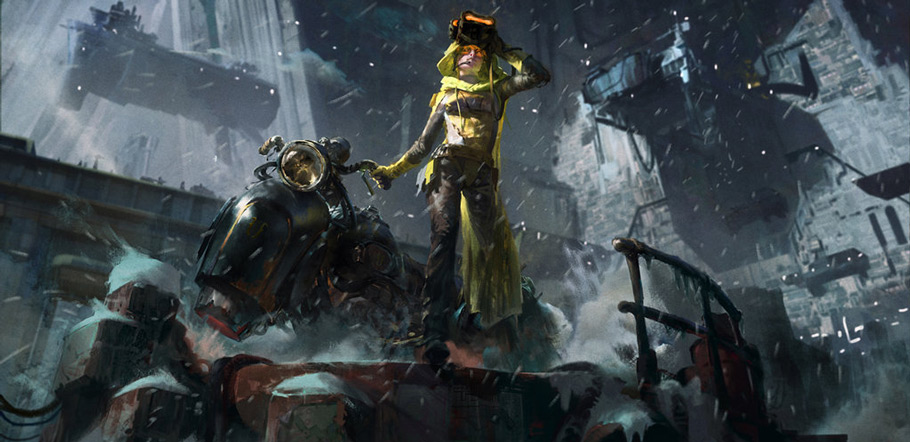
Michael J. Sullivan revealed the cover art for The Death of Dulgath, the third volume in his Riyira Chronicles series, with artwork by French artist Marc Simonetti.
Marc Simonetti is one of my favourite fantasy artists, and his work here is just sublime. It should surprise no one that I’m much in favour of the shift away from the photo-realistic, figure-based covers that Orbit produced for the first two books in the Riyira Chronicles series. Sullivan agrees. “I never felt that the models used for the other pair were a good representation of how I saw Royce and Hadrian. But, by the time I saw them it was far too late to do anything about it,” he said on his blog. “For [The Death of Dulgath], we wanted to keep Royce and Hadrian’s back to the camera and focus instead on Castle Dulgath, a run-down abode on the edge of the sea and the site of the majority of the novel.” Read More »
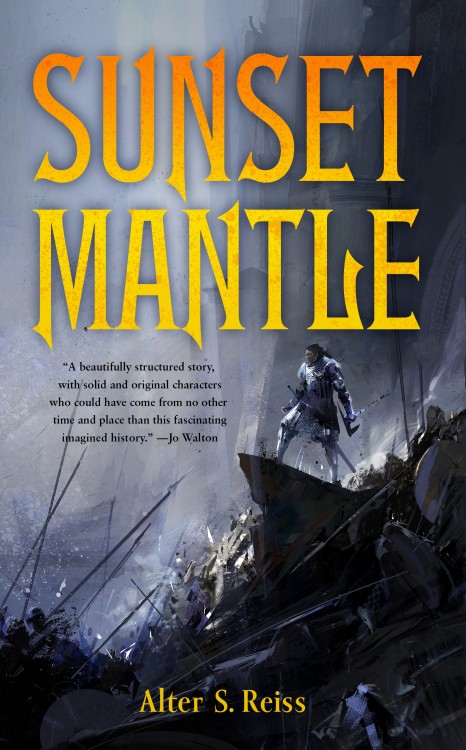
Art by Richard Anderson. Design by Christine Foltzer.
I am very proud to reveal the cover for Sunset Mantle by Alter S. Reiss, one of several novellas coming later this year as part of the debut lineup of SFF novellas from Tor.com’s new short fiction imprint. As always, I’m a big fan of Richard Anderson’s work, and Irene Gallo’s art team, including designer Christine Foltzer, has done a fine job of wrapping a cover around Anderson’s work. Read More »
I get to put the monsters centre stage once in a while, give them a good run, even make the heroes.
The characters I liked most in The Empire Strikes Back were the bounty hunters – not Boba Fett, that grandly over-rated amateur jetpack enthusiast, but the other guys: the lizard guy, the insect guy with his insect-headed droid, because if you were an insect guy, you’d do that, wouldn’t you? You wouldn’t want that disconcerting standard model human mask staring at you while you travelled from bounty to bounty.
And there was a lizard guy in Battle Beyond The Stars, too, that bizarre Corman space opera that I still have all the feels for, no matter what. It’s full of weird and memorable characters, but for me it was always Cayman of the Lambda Zone, last of his species, and yet with a good fistful of decent lines and some self-deprecating humour thrown in. And he dies heroically which, along with looking like a bug or a lizard, has always done it for me.
So, “From childhood’s hour I have not been as others were”. Thank you Mr Poe. It’s true though: there never was someone to root for the monsters quicker than me. Now, as a writer, I get to put the monsters centre stage once in a while, give them a good run, even make the heroes. Read More »
Today, I join Justin Landon on the latest episode of Rocket Talk, Tor.com’s official podcast. We talk about a whole bunch of fun things, including:
I had a lot of fun, and it was a good opportunity for the two of us, longtime bloggers both, to get a little Inside Baseball about publishing, blogging, and SFF in general. I can’t wait to hear what you think.
Find out more on Tor.com, or get Rocket Talk on iTunes/RSS.
Uuuuurrrrggghh.
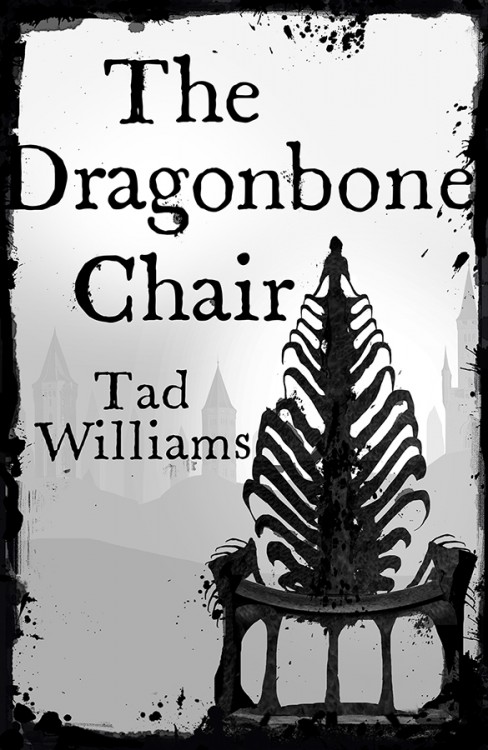
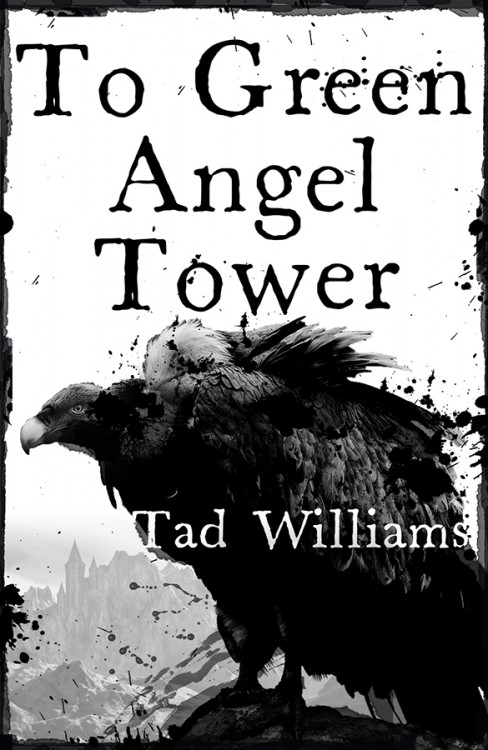
It’s no secret that I’m a huge fan of Tad Williams’ Memory, Sorrow and Thorn, a landmark epic fantasy trilogy published in the ’90s. So, when Hodder & Stoughton, one of my favourite SF/F imprints, announced they’d be publishing the series in the UK with brand new covers, I was appropriately excited. I’m usually a fan of Hodder & Stoughton’s covers, and Summers’ previous work for Hodder & Stoughton is stylish—particularly his cover for Lavie Tidhar’s A Man Lies Dreaming—but these are a big miss for me.
Even in a vacuum, where the series doesn’t already have some of the most iconic cover art, by one of the field’s legendary artists, these just aren’t right for the series. Memory, Sorrow and Thorn might have inspired George R.R. Martin to write A Song of Ice and Fire, but they’re not edgy or dark. They’re bright, expansive, and full of colour—these covers do little to convey the tone and spirit of Williams’ classic tale.
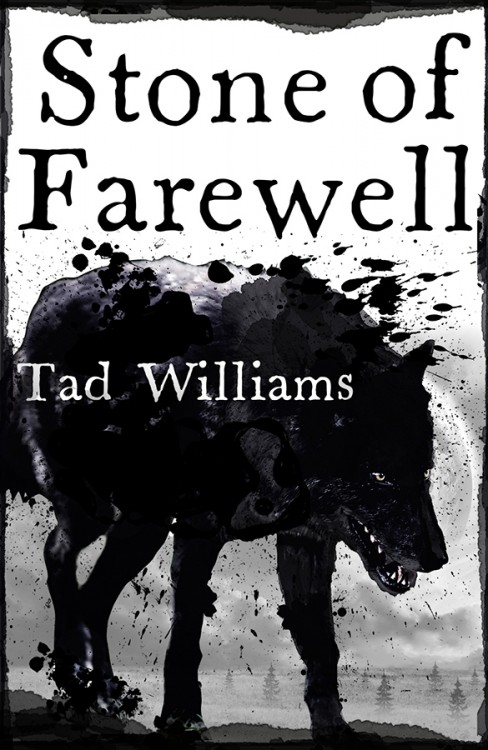
That all said, I do think the cover for Stone of Farewell is the best of the bunch, and is nice in a gritty, punch-you-in-the-face kind of way. Reminds me a bit of Stina Leicht’s (very good) contemporary Irish fantasy, Of Blood and Honey.
What do you think?