Juxtaposition is one of the most powerful tools in a writer’s arsenal
One of my favourite novels is Cao Xuequin and Gao E’s Dream of Red Mansions, which has nothing we would recognise as a plot by modern standards: it follows the “twelve beauties of Jinling”, the main characters of a decaying household in China under the Qing dynasty; and juxtaposes and contrasts their experiences to achieve a powerful and moving tapestry of narratives that speak both to the female and human experience.
This act of juxtaposition is one of the most powerful tools in a writer’s arsenal, and one that I’m particularly affectionate towards. A common example is dichotomies for characters: X being a foil for protagonist Y, or the opposites antagonist/protagonist, hero/villain. I prefer to think of it in terms of contrasts, to decentre the story—I go for moral ambiguity very often, and therefore my fiction tends to function in terms of POV characters rather than heroes. Read More »
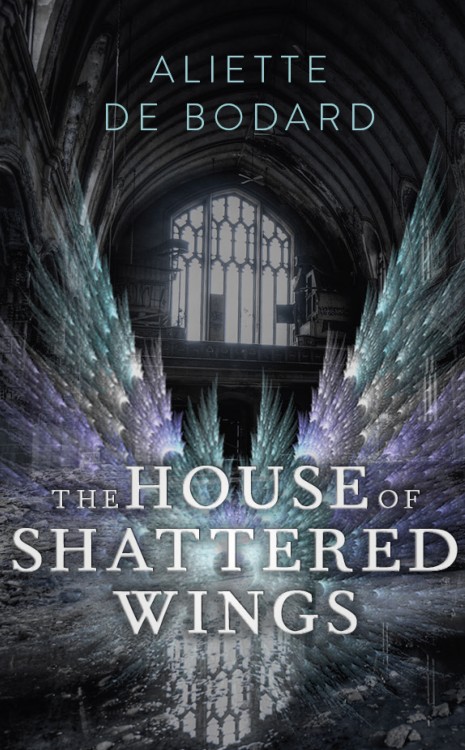
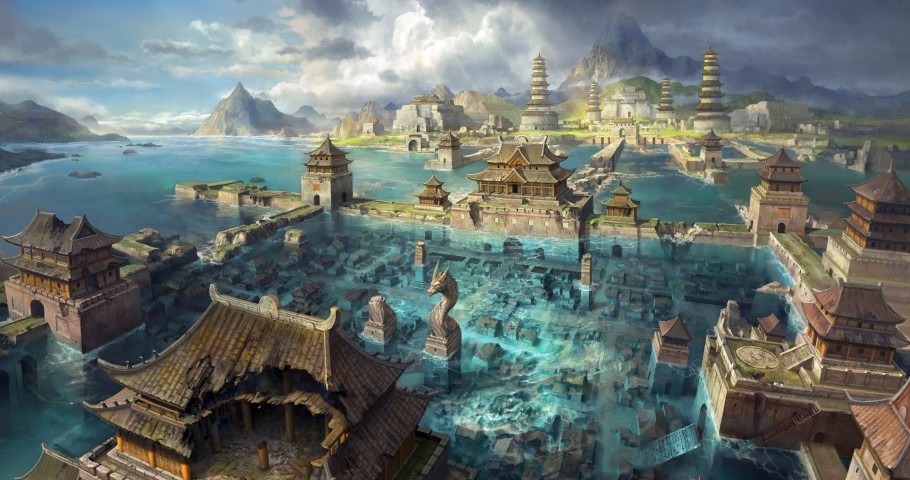
Gollancz revealed the cover art for one of my most anticipated novels today, Aliette de Bodard’s The House of Shattered Wings—a post-apocalyptic tale about warring houses and fallen angels. I love, love, love it.
The cover was created by Gollancz in-house designer Graeme Longhorns. Read More »
In the wake of the King’s death, war has come to Vordan.
The Deputies-General has precarious control of the city, but it is led by a zealot who sees traitors in every shadow. Executions have become a grim public spectacle. The new queen, Raesinia Orboan, finds herself nearly powerless as the government tightens its grip and assassins threaten her life. But she did not help free the country from one sort of tyranny to see it fall into another. Placing her trust with the steadfast soldier Marcus D’Ivoire, she sets out to turn the tide of history.
As the hidden hand of the Sworn Church brings all the powers of the continent to war against Vordan, the enigmatic and brilliant general Janus bet Vhalnich offers a path to victory. Winter Ihernglass, newly promoted to command a regiment, has reunited with her lover and her friends, only to face the prospect of leading them into bloody battle.
And the enemy is not just armed with muskets and cannon. Dark priests of an ancient order, wielding forbidden magic, have infiltrated Vordan to stop Janus by whatever means necessary…
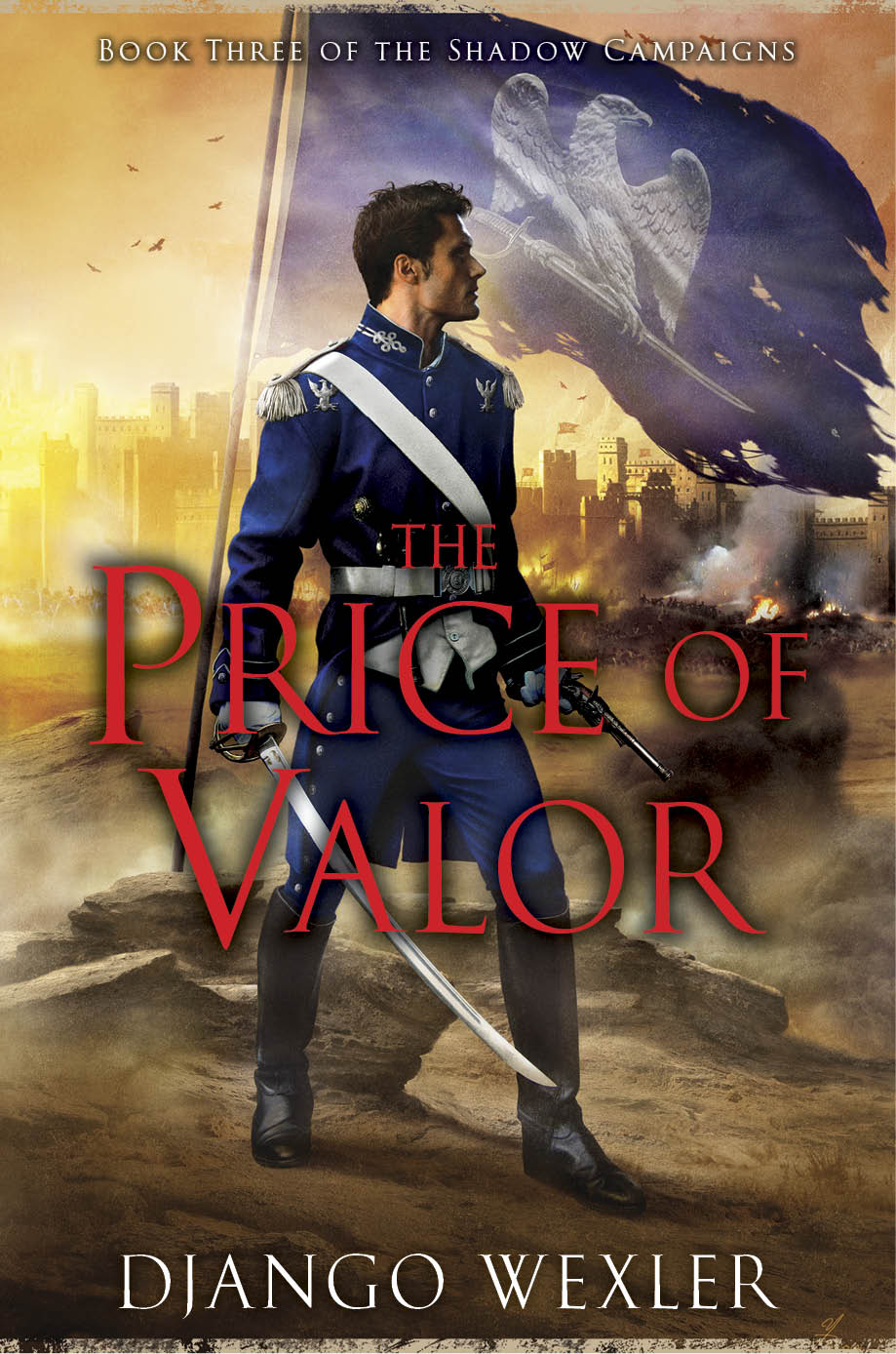
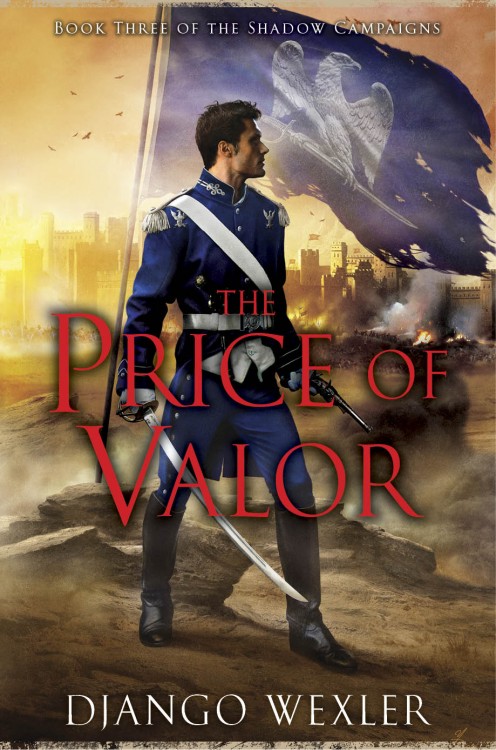
Price of Valor is the third volume of Wexler’s Shadow Campaigns series, which has been popular among readers and critics alike. Reminiscent of the Orbit Books’ covers for Brian McClellan’s Powder Mage series, the covers of all three novels embrace the themes of colonialism that run through Wexler’s series.
As a proper English-speaking blogger, I am, of course, upset that they forgot the ‘U’ in the word ‘Valour,’ but I shall let it slide, forgiving the transgression as a result of the overall Ammmmuuurrriccaaannnaaaa design of the cover. And so, as a cold-blooded Canadian, I’d have much preferred to see the Eagle on the flag replaced with a piece of bacon, the sabre with a wood axe, and the military uniform tossed aside in favour of a nice Canadian Tuxedo. ‘Cause, hey, there can never be enough Canadiana in the world, right?
The cover art for The Price of Valor is by Paul Youll.
Price of Valor is coming from Roc Books in July, 2015.
Publisher: Roc -
Pages: 320 -
Buy: Book/eBook
Fortitude Scott has a sucky life. His girlfriend is cheating on him with his housemate, his housemate stopped paying rent months ago, his job at the Busy Beans cafe pays barely enough to keep him afloat, and his coworkers are unbearable – plus, he’s a vampire, but without any of the perks. In fact, Fort is more of a fledgeling vampire: sure, he occasionally drinks blood (though only his mother Madeline’s, and only under duress – the rest of the time, he’s a vegetarian), and his elder siblings, Chivalry and Prudence, can’t go out in the daylight, but until Fort transitions, he might as well be human – no super strength, no rapid healing, and definitely no supernatural cool factor.
Oh, and when he was nine years old, Prudence brutally murdered his human foster parents in front of him on Madeline’s orders, because Fort made the mistake of telling them what happened when he went to visit his biological family.
Somewhat understandably, then, Fort is hardly jumping for joy at the prospect of one day becoming a vampire himself. As much as possible, he keeps away from his family and everything they stand for; but when Madeline tempts him with an invitation to meet, for the first time, some vampires to whom he isn’t related – thereby raising the possibility that not all of his kind are monsters – Fort’s curiosity gets the better of him. The decision quickly ensnares him in vampire politics of the bloodiest kind, and with no one else to back him up, Fort is forced to look for support from an unlikely source: Suzume Hollis, a dangerous kitsune with a wicked sense of humour whom Madeline has paid to keep him safe. When a young girl is threatened, can Fort and Suzume save her without jeopardizing their own lives? Or will they be trapped by yet more vampiric power games? Read More »
Starting with Tolkien, it’s become practically obligatory that the epic fantasy saga, somewhere around the middle of book three, feature an Epic Confrontation Between Good and Evil with a Cast of Thousands.
I am, I have to admit, a war buff. I read military histories for fun, the kind with fold-out maps covered in little colored arrows and notations like “Kollowrath (40,000)”. As I am also a fantasy novelist, the nature of war in fantasy fiction has always been fascinating to me.
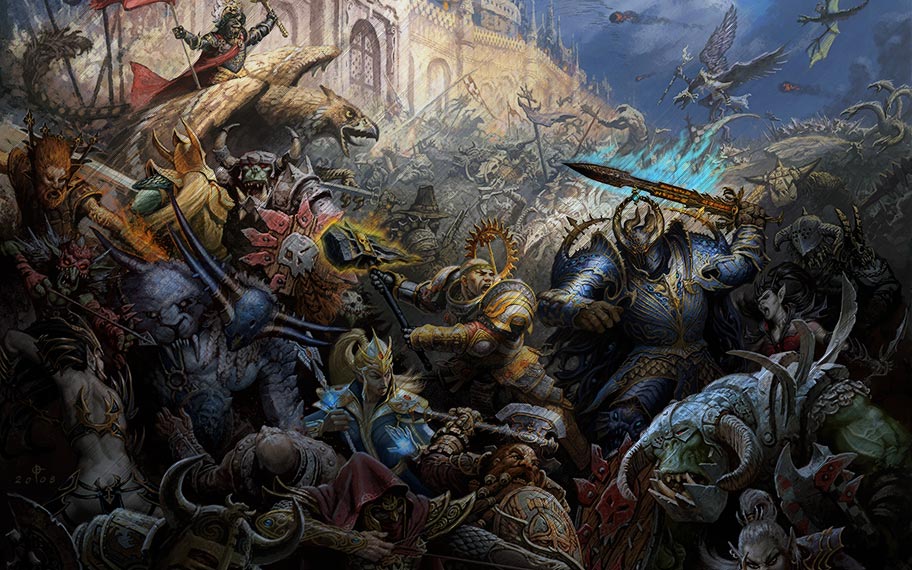
And there is a lot of war in fantasy. Starting with Tolkien, it’s become practically obligatory that the epic fantasy saga, somewhere around the middle of book three, feature an Epic Confrontation Between Good and Evil with a Cast of Thousands. Various allies, painfully recruited over the course of the hero’s journey, turn up to lend a hand at the Final Battle. Various villains are dispatched, hapless orcs or equivalent humanoids are mowed down by the score, and just when things seem bleakest Evil is defeated forever. A beloved secondary character or two bites the dust, and someone gets to make a Heroic Sacrifice. Afterward, we may be treated to a scene where the hero roams a battlefield strewn with corpses, or visits the injured to bring home the horrors of combat. You know, war, right?
Back before I wrote fantasy myself, my wargamer friends and I used to snicker a bit at this. Most of the fantasy authors wouldn’t know a halberd from a half-pike, and their descriptions of battles were usually heavy on bold strokes and dramatic confrontations and light on tactics and the important of proper reconnaissance. I wouldn’t want to be a poor foot-slogger in either army, given the rate at which they tend to be chewed up by either the hero and his friends or some villain demonstrating the full extent of his power. Read More »