Yearly Archives: 2009

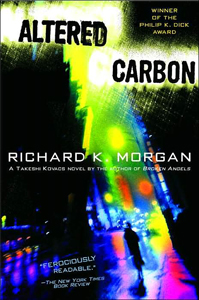
Richard Morgan’s best known for his balls-to-the-wall Takeshi Kovacs novels, beginning with Altered Carbon. Violent gunplay, moody set-pieces, breakneck pacing and visual artistry, Morgan is on the bleeding edge of contemporary Science Fiction. In what seems like a match made in heave, Morgan has been hired by Electronic Arts, the publisher behind Mass Effect, Mirror’s Edge and the newly released Dragon Age: Origins, to work on scripts for three of their upcoming games:

About a year ago, and out of the blue, I got an e-mail from one John Miles, an enforcer (okay, not really) for the British arm of EA Games. He had a proposition for me, was I interested? Interested, of course, was putting it mildly. Video gaming is the only thing in my life that I would fully qualify as an addiction. I like a fairly limited number of games (there’s an awful lot of dross out there), but those I like, I really like, and will play them until the game paths, enemy spawning points and scripted incidentals are graven into my synapses. Some game spaces I probably know better than the streets of the city I live in. And, as I’ve said once or twice on this site, I think the gaming medium has a potential for storytelling every bit as charged and exciting as literature or film. So was I interested? Yeah – just a little bit.

Well, John flew up to Glasgow to buy me lunch, and brought with him fellow enforcer Jeff Gamon and development capo Colin Robinson, who framed their proposition thus: was I interested in coming aboard with EA to write and script for a particular game project they had going, with a view to other game projects thereafter, and if so could I be in Berlin in a week’s time?

Talk about your offers you can’t refuse.

That was a year ago. Now, without breaking any Non-Disclosure Agreements, I can cautiously reveal that I’ve been pulled in to consult on three separate games, have spent more time on airplanes and in overseas hotels during the last year than in my entire previous life, and have hit one of the steeper learning curves of my creative existence. Gaming turns out not only to be exactly as fascinating a medium as you’d expect, it’s also a very young industry and its norms have yet to be fully formed. So while it shares some characteristics with the movie world, gaming has yet to produce its version of Story guru Robert McKee or the cut-and-dried writing formula requirements that have strangled so much creativity in places like Hollywood. What you can put into a big budget game is still very much up for grabs, and what’s more, with the breakneck pace of technological development backing the field, it’s constantly changing as well. One producer I’m working with at the moment likens what we’re doing to working in Hollywood circa 1920, when everyone was still working out what you could do with this wild, new medium called film; the only difference is that the rate of evolution in technique for video games is running at about a dozen times the speed it ever did for film. The field is open, the potential huge and, in story terms, only just beginning to be properly tapped

For a writer, that’s a pretty close definition of paradise.

And it hasn’t hurt that the projects I’m working on are all science fiction, so while I chisel patiently away in fantasy at The Dark Commands, my SF muscles are being kept in trim by the concepts at the heart of each game.

Source

What’s most intriguing is Morgan’s stance on videogames as a medium for storytelling. I’ve always felt similarily to Morgan, that Videogaming is still in its infancy, trying to figure itself out, and it’s nice to have a proven storyteller like Morgan involved in helping the medium find its legs. Morgan’s style of storytelling lends itself well to the Videogame medium, and it’s encouraging to see a souless huge company like EA reach out to snag him into their midst. Really, it’s hard to think of an author better suited to the job, and certainly it rings truer than Graham Joyce being chosen to pen Doom 4.
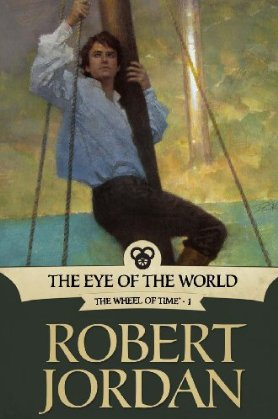
Though a little confusing to a book-loving luddite like me, some people are really into this E-book thing. Kindle-clutching Fantasy lovers are in luck, with Tor Books finally releasing electronic version of Robert Jordan’s Wheel of Time series. Shockingly, the first release just happened to coincide with the release of The Gathering Storm. Imagine that! Tor has now shored up the release schedule for the remaining novels.

The Eye of the World by Robert Jordan

These electronic editions are being created from original page layout files, and are being updated with the latest copyedits and corrections from Robert Jordan and later, from Team Jordan. They also boast all-new covers designed by Jamie Stafford-Hill and featuring art from a variety of illustrators, including David Grove, Donato Giancola, Sam Weber, and Ketai Kotaki, all commissioned by Tor Books (and Tor.com) Art Director Irene Gallo.

Since these books are being put together basically from scratch, in many cases from new or updated files, Tor Books is putting them out at the rate of one per month. Below is a schedule of publication, for your handy reference:

October 27, 2009: The Eye of the World
November 17, 2009: The Great Hunt
December 15, 2009: The Dragon Reborn
January 19, 2010: The Shadow Rising
February 16, 2010: The Fires of Heaven
March 16, 2010: Lord of Chaos
April 20, 2010: A Crown of Swords
May 18, 2010: The Path of Daggers
June 22, 2010: Winter’s Heart
July 20, 2010: Crossroads of Twilight
August 24, 2010: Knife of Dreams
September 28, 2010: New Spring
November 2, 2010: The Gathering Storm

Also coming down the road (though lord knows why anyone would purchase them…) are the split volume version of The Eye of the World and The Great Hunt, respectively:

November 16, 2010: From Two Rivers
November 16, 2010: To The Blight
November 16, 2010: The Hunt Begins
November 16, 2010: New Threads in the Pattern

It’s hard to wrap my head aroun the fact that we’re going to have to wait an entire year for the series to be released in full (well, what’s been published previously, at least) and it seems strange that Tor is holding back on releasing The Gathering Storm until next year as well. I suppose the profit margin on Hardcovers must be higher than E-books, which is how Tor wants you to consume their biggest release of the year. In any case, for those of you on the bleeding edge of technology, there you go.

I normally stick to one story for each edition of Free Readin’, but this time I’m feeling generous! Paul Jessup (@pauljessup) and Jay Lake (jay_lake) are two of my favourite folk on Twitter and I wanted to point some of my readers to some of their (great) short fiction.

Ghost Technology From the Sun by Paul Jessup

Master told us that the earth was hollow, and that we lived on the inside of it, clinging to the top of the crust. Below us was another world, a world inside the world, a glowing bright sun of a place. What Master called the summerlands. That is where the dead live, he said. That is how we can talk to them, he said. They send us signals across the air, and the mediums pick them up and drink them in.

And when the words came in, we had to speak them. We cannot deny the dead our voices–the dead would be angry if we did. And nobody wanted the angry dead to fly their zeppelins up from the sun and attack us crust dwellers.

That wouldn’t do anyone any good.

Master knew this because he is an ambassador to the land of the dead. At night he walked through the door of the dead, and it beamed his body down above us, into the summer sun inside of the earth. That is where he talked to them, worked out trade between our two peoples.

The dead have a lot to offer the living.

He came back with schematics.

Ways of building circuit boards.

Ghost technology from the sun.

Ghost Technology From the Sun can be read in full HERE.

People of Leaf and Branch by Jay Lake

Maribel ran along the top boards. The planks went from roof to roof, along the ridges, with a jumping-space to reach the peaks of the round huts. She didn’t have the skill of a danseuse, nor the grace of the best of the girls from the stone city below her, but among the woodkin, she was often accounted the most lithe and best.

The Tower Wander was ahead, with Shrike House clinging to its neck like a collar. The old wall had long since been swallowed by the spread of the stone city, gone from defense to landmark to landform in the space of a few generations. The Duke of Copper Downs had forbidden the woodkin to enter the abandoned towers, but their exteriors had never been under such a rule.

So the seven surviving towers acquired names, and superstructures, and held the long, narrow village that ran from the Broken Gate to the Tower Harbor. The towers were part of the stone city, but the houses were the woodkin’s memory of another time and place.

She slipped through the roof of Shrike House, dropping to the floor in a shower of dust and straw.

There was no one there, of course. Shrike House had been empty since Maribel’s mother’s childhood. Seven towers, seven houses, but in every generation more went down to the stone and found lives among the city. None returned.

You can read People of Leaf and Branch in its entirety HERE.

Jessup and (in particular) Lake (a Multiple Hugo and World Fantasy Award nominee) are both well known for their short fiction, and there’s nowhere better to get introduced to them than through Ghost Technology From the Sun and People of Leaf and Branch.

Torchlight Logo

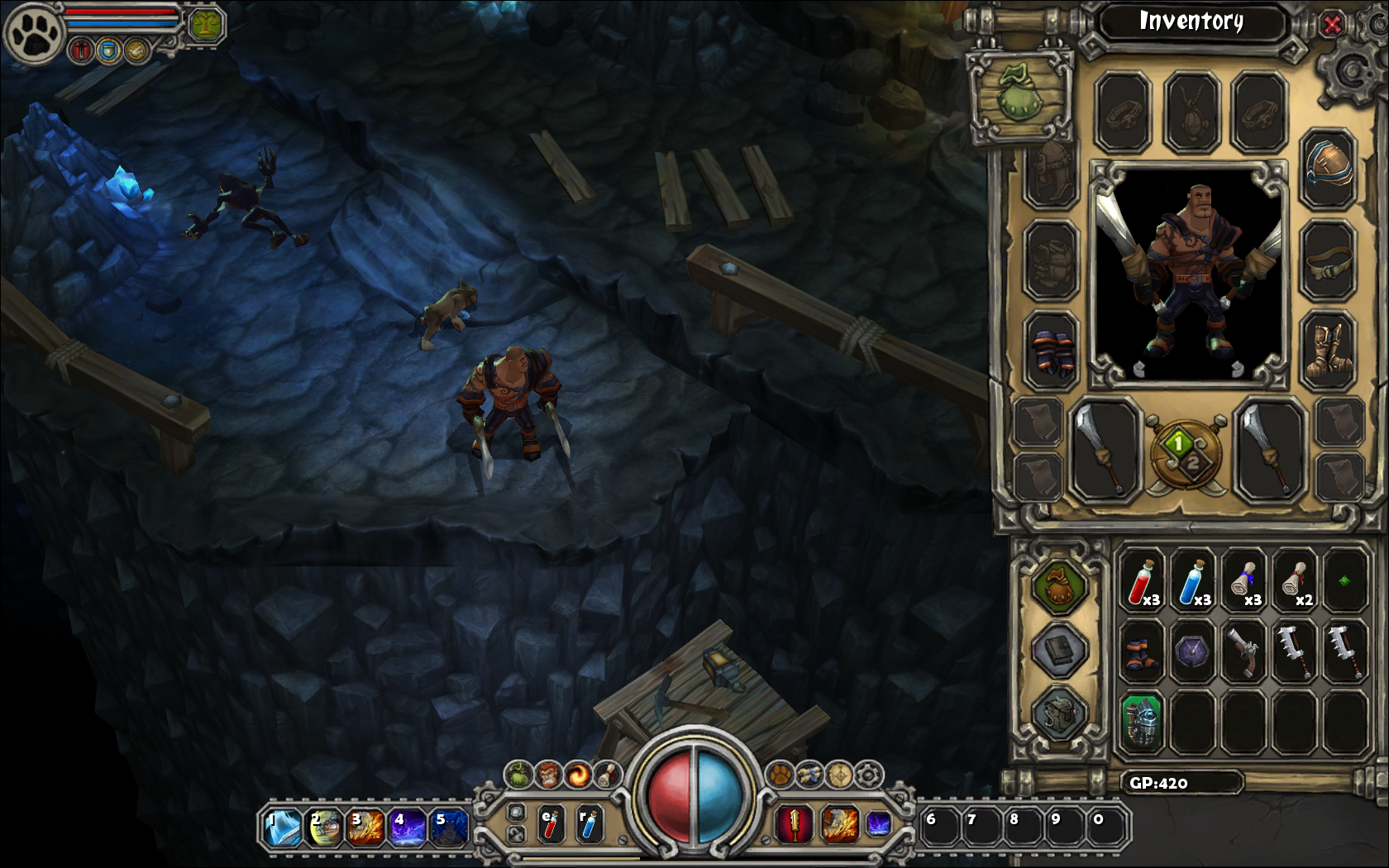
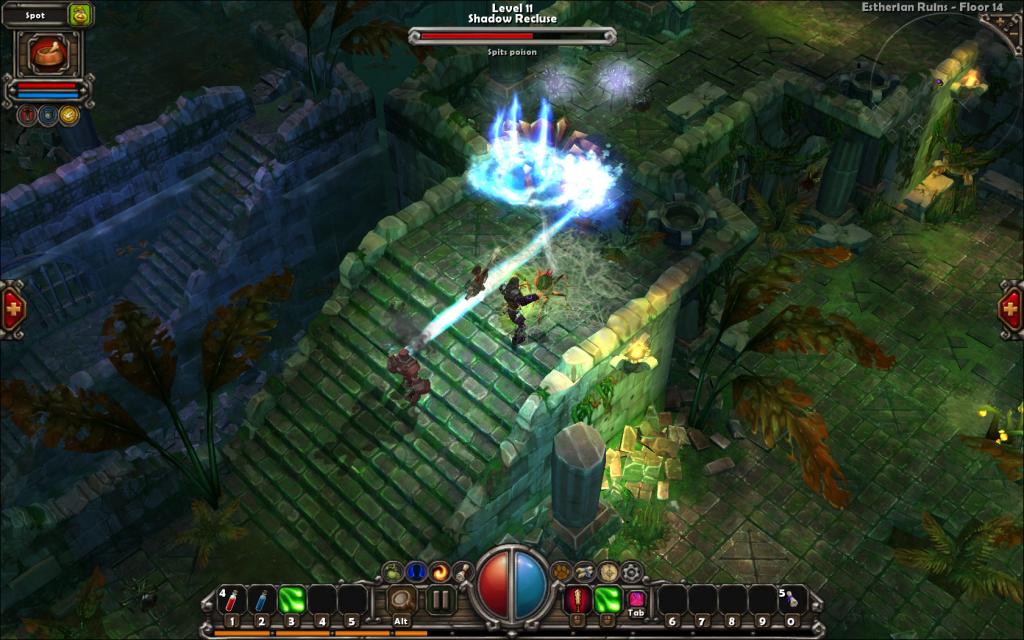
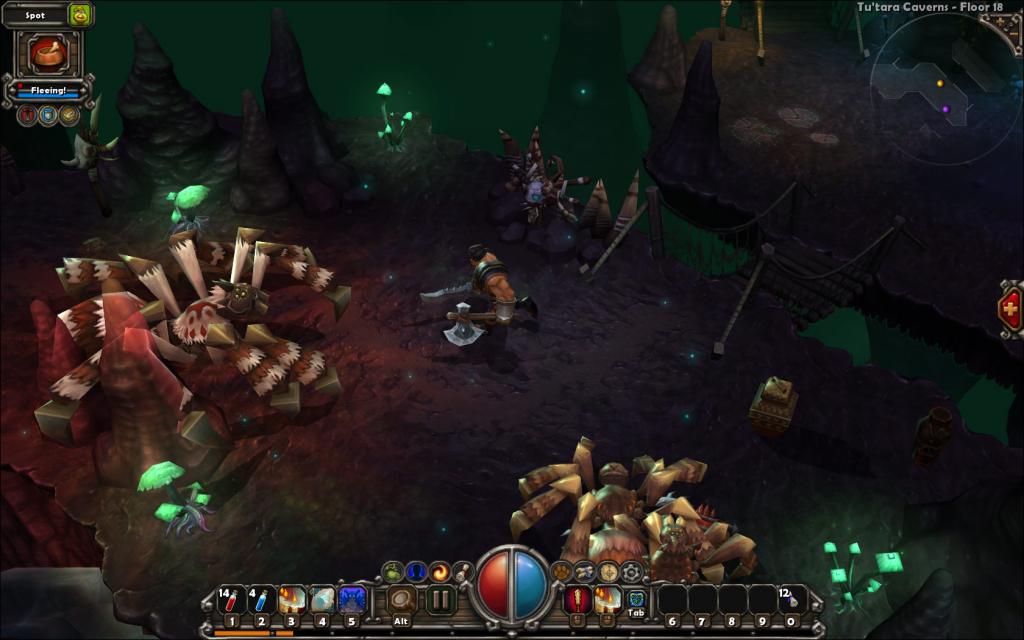
I’ll keep this short. If you’re anything like me, you probably poured an embarrassing amount of hours into the original Diablo and it’s sequel, Diablo II. You’re probably also waiting impatiently for Diablo III. Well, Torchlight is here to fill that void.

Torchlight Screenshot Torchlight Screenshot Torchlight Screenshot

Word of Ember blazed across the land, and the town of Torchlight flared to life.

Ember is the essence of magic and the keystone of alchemy; it lures the restless with promises of power and riches. Miners burrowed deep beneath the dirt streets of Torchlight, discovering veins of the ore richer than any found in living memory- but they were not the first to covet these mines. The miners broke through into the buried past, a dangerous labyrinth of caverns and ruined civilizations, twisted creatures and the bones of those who came before. Evil bubbles up from the depths and threatens to overrun this town as it has so many others. The heart of a villain has infused the Ember, and his darkness seeps through the veins. To survive, the townspeople must break the cycle of destruction; they need a champion who can destroy the evil at its root. Removing the source of the rot may purify the Ember, but it is a long and perilous journey. The champion must battle through rock and fire, through lost cities and ancient tombs, into the palace of the villain himself.

The adventure is set in the mining settlement of Torchlight, a boomtown founded on the discovery of rich veins of Ember – a rare and mysterious ore with the power to enchant or corrupt all that it contacts. This corruptive power may have dire consequences however, and players set out into the nearby mountains and depths below to discover the full extent of Ember’s influence on the civilizations that have come before.

Made by Runic Games a company formed by many of the people behind the Diablo games, Torchlight hits all the same notes. Loot, baddies, cartoony World of Warcraftish graphics, loot, fantastic music, great locations, loot, and more loot. And, hey, it runs smooth as butter even on my three-year-old Macbook, so it’ll certainly run on nearly anything. The guys over at Giant Bomb have a great video preview.

If that isn’t enought to convince you, the game’s only twenty bucks. Still not convniced? There’s a demo, which allows you to carry over your character when you buy the full game. Seriously, though, I’ve been playing it almost non-stop for the last few days and it’s grabbed with that same addictive embrach that Blizzard’s classic dungeon-crawlers did back in high school. If you like the genre, check it out. It’s awesome. I promise.

Torchlight is available for purchase through its Official Website and through Steam.

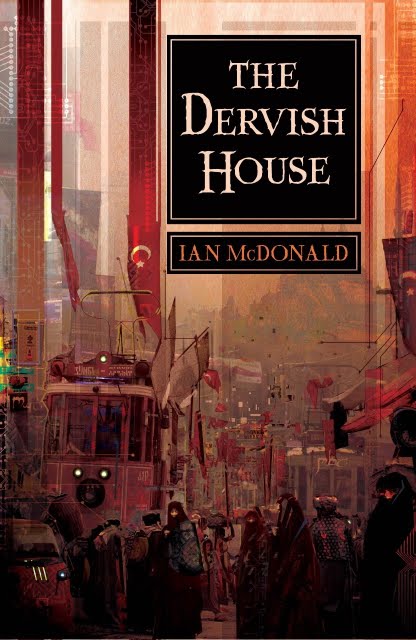
After yesterday’s travesty, I thought it was time to redeem the Cover Art section of the website to its former glory. As with most Pyr novels, The Dervish House by Ian McDonald is a marvel to look at.

The Dervish House by Ian Mcdonald

Lou Anders, who wears many hats at Pyr has another hit on his hands. Patrick, over at Stomping the Yeti, sums up my thoughts rather accurately:

This is a great, great cover. Stephan Martiniere is responsible as usual. I can’t count the number of times I see a cover and think to myself, “Wow, I wonder who did that” and then go on to find its a Martiniere. The computer circuitry gives a subtle touch to an image that otherwise appears fairly timeless. I also really dig the text box and the way the horizontal banners and building interplay with the sharp angles of the title and author borders. Sometimes great cover art is ruined by bad font choice or placement. This is not one of those times.

And, hey, the book itself sounds like a winner, also:

In the sleepy Istanbul district of Eskiköy stands the former whirling dervish house of Adem Dede. Over the space of five days of an Istanbul heatwave, six lives weave a story of corporate wheeling and dealing, Islamic mysticism, political and economic intrigue, ancient Ottoman mysteries, a terrifying new terrorist threat, and a nanotechnology with the potential to transform every human on the planet.

McDonald’s books have been on my radar for a while now, but every time I think about buying up, I get a little intimidated. The Turkish setting of this one appeals to me more than India and Brazil, which might just push me over the edge.