Yearly Archives: 2010

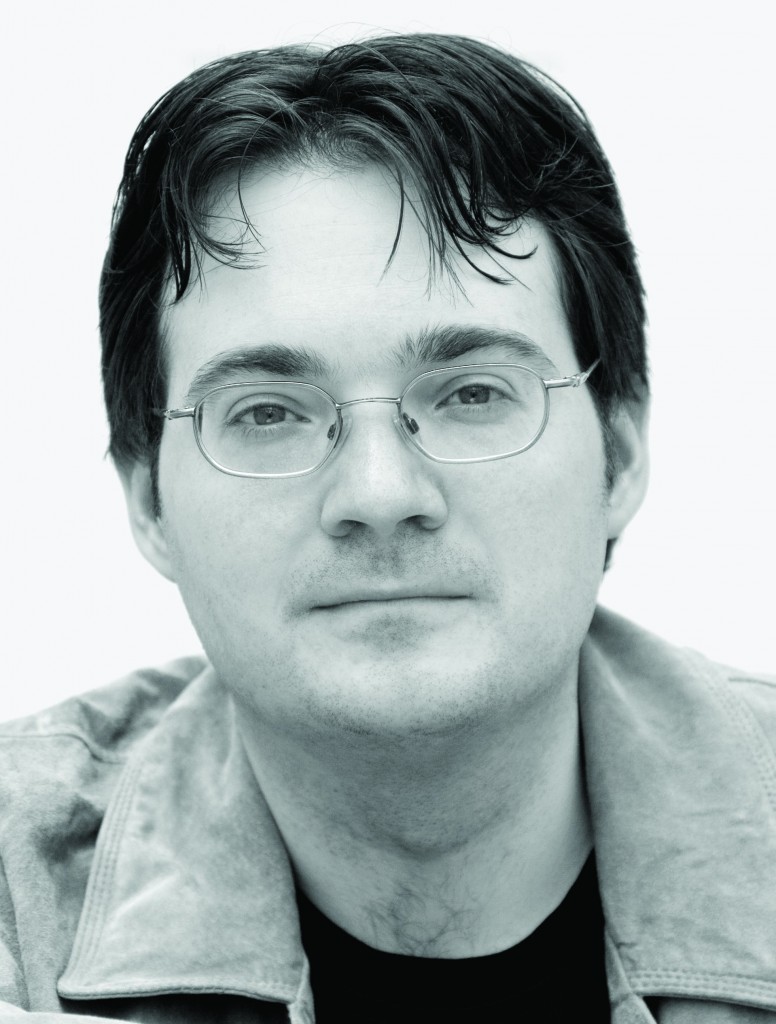
Brandon Sanderson, author of TOWERS OF MIDNIGHT and THE WAY OF KINGSThe last time I interviewed Brandon Sanderson, he’d just released his third novel, The Well of Ascension and was putting his teeth to the grindstone and trying to establish himself in the Fantasy genre. Boy how things can change in just a few years.

Now, he’s the guy holding the reins of Robert Jordan’s Wheel of Time series and carries all the weight of its finale on his shoulders. Luckily, if there’s anything Sanderson’s known for, it’s being able to write some of the best conclusions in the genre.

What’s more amazing is that he’s not only managed to publish two Wheel of Time novels in two years, he’s also published a 1,000 page novel, The Way of Kings, from a new Fantasy series called The Stormlight Archive. The dude’s prolific and the quality never seems to dip. So, enjoy the interview, and thank him for staying up into the deep parts of the night, just hours before one of the most important novels of his career is launched, to complete an interview with silly old me. Few gentlemen still exist in the world, but Brandon Sanderson’s certainly among their number.

The Interview

Brandon, welcome back to A Dribble of Ink. It’s been a while and *a lot* has changed since we last chatted back in 2007!

   Ha! Yeah, you could say that. It’s been a busy few years.

It’s been one year since The Gathering Storm was first published. How much did feedback from fans and critics affect you while writing Towers of Midnight?

   The relationship between artist and critic/fan is a curious one in this regard. On one hand, I do think feedback is important, particularly on a project like this (where, as I’ve stated, I feel that the project rightly belongs more to the fans than it does to me.) However, a writer must keep their artistic integrity. Allowing yourself to get pulled in too many directions by fan requests can be a disaster for an artist. Basically, you can’t try to please everyone–if you do, you risk ending up with either a completely schizophrenic project, or one that is so bland it lacks emotional depth or power.
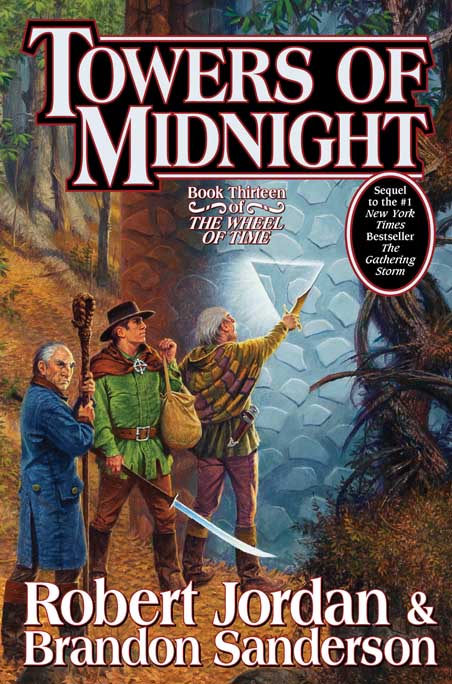
Towers of Midnight by Robert Jordan and Brandon Sanderson   So, like I said, fine line. I looked at fan responses on TGS very cautiously and carefully, trying to keep in the same mindset that I use when getting feedback from my critique group. Basically, that mindset is this: “I will do what I feel is best for the story, regardless of what other people think. Even if I’m the only one who feels that way. But if someone raises a complaint that either strikes a cord within me, or which gains a lot of support from others, I WILL look into it and try to approach it objectively.”

   That’s a mouthful. Basically, what it means is keeping an open mind for ideas that will make the story a better version of what I wany it to be. On TGS, there were two basic areas I felt fans were right about that I could and should fix. The first had to do with some voice issues in Mat’s narrative. (I’ve spoken of that elsewhere.) The second had to do with continuity errors. I am not nearly as good at dealing with those as Robert Jordan was–I know he made mistakes, but I felt I made more. So for this project, I enlisted the help of some very detail-oriented members of the fan community as beta readers in an attempt to keep myself honest and catch mistakes before they went to press.

   There are things in this book, like in any book I’ve written, that I fully suspect will draw complaints. In some cases, I know exactly what they are–and I did them that way because I felt it was best for the story and the best way to remain true to Robert Jordan’s vision. It’s the ones that I DON’T expect, but which ring true, that I want to find and correct.
Read More »
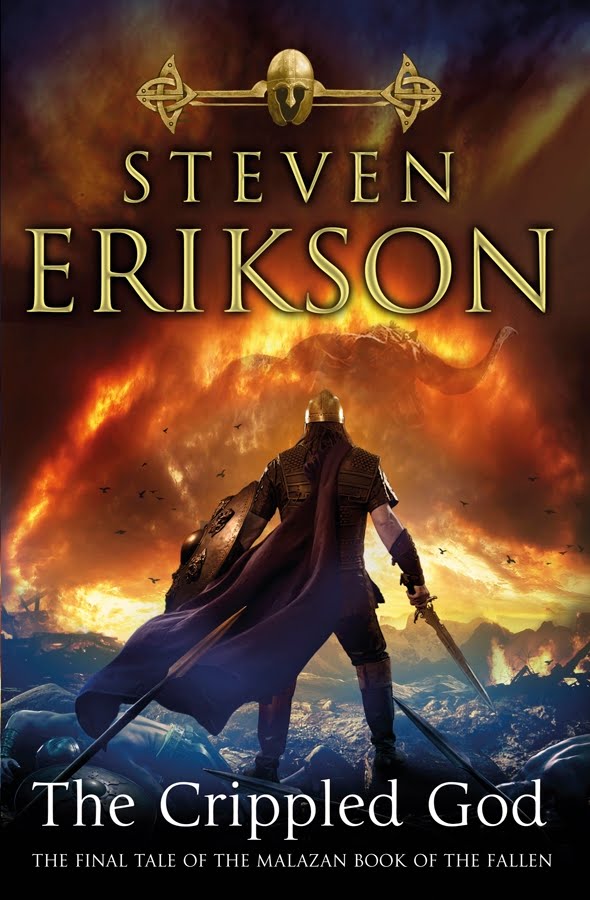
The Crippled God by Steven EriksonCourtesy of The Wertzone, we’ve not got a title and a simple synopsis for Steven Erikson’s next novel.

Erikson revealed that his next book will be The Forge of Darkness,, the first book in the Kharkanas trilogy, set in the Tiste Andii home city of Kharkanas hundreds of thousands of years before the events of Gardens of the Moon.

The Forge of Darkness doesn’t ring so nicely as some of his previous titles, but fans will be happy to know that the book exists. Some have likened the title to a generic Forgotten Realms novel and, hey! who knows, maybe we’ll see Erikson open up the world to the Philip Athans, R.A. Salvatores and Elaine Cunninghams of the world.

I’m just kidding Malazan fans. Chill out.

That said, Adam also has news of Ian Cameron Esslemont’s next novel set in that same universe:

Esslemont also confirmed that his fourth Malazan novel will be set in Darujhistan, picking up after the events of Erikson’s Toll the Hounds with characters like Kruppe playing a major role. The remaining two books will be set in Jacuruku and the oft-mentioned, never-seen continent of Assail.

It’s a good time to be a Malazan fan!

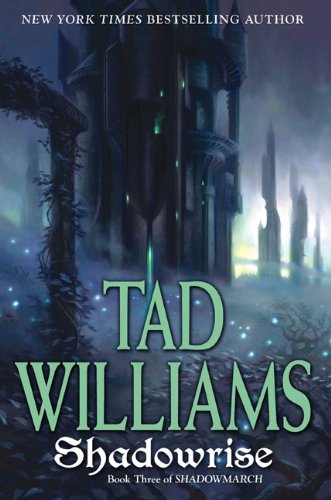
Shadowrise

AuthorTad Williams

Hardcover
Pages: 672
Publisher: DAW
Release Date: March 2nd, 2010
ISBN-10: 0756405491
ISBN-13: 978-0756405496

SYNOPSIS
READ AN EXCERPT


My path to becoming a Tad Williams fan is a twisted affair. Not in the macabre sense, but in the I-got-lost-a-few-times-along-the-way sense. Way back in highschool, I was foolishly determined to like his books. I don’t know what prompted it, I just had this idea in my head that I was a big Tad Williams fan. There was a problem, though: every time I tried to read Memory, Sorrow and Thorn, I put it down midway through. Sometimes I’d finish The Dragonbone Chair, sometimes I’d drop it half-way through, unfinished, unmotivated. I think I did this three times. No matter how hard I tried, no matter how hard I wanted it, the tale just wouldn’t click with me.

But, I’m a stubborn asshole, even at the best of times. Still determined to enjoy Williams’ work, I eventually picked up Shadowmarch, the first volume in a new Epic Fantasy trilogy* and, finally, after years of trying, I really loved a Tad Williams novel. There were no more released volumes in that series, so I went back to The Dragonbone Chair for a fourth go around… and fell head-over-heels in love. After that, I burned through the rest of the trilogy and it stands, to this day, as my favourite completed Fantasy series of all time. I knew there was a Tad Williams fan inside of me, it just took a little bit of time and perspective to drag him out.

So, the Shadowmarch novels hold a special place in my heart. I recognize now that they’re not quite so genre-defying as Memory, Sorrow and Thorn (hell, those novels inspired George R.R. Martin to write A Song of Ice and Fire!), nor does it have the mythological gravitas that made Memory, Sorrow and Thorn so entrancing, but there’s something special about the series that has become more evident in its third volume, Shadowrise.
Read More »

Tor.com Logo

Over on Tor.com, they’ve got a fun little game going on, tasking their readers with writing a Science Fiction or Fantasy story in only six words! There’s also a twitter hashtag thread.

I submitted two:

Steam powers his wings, he flies.

and

When Sara died, the future began.

It’s just for fun, but I’d love to see what you folk can come up with (either here in the comments section, or over at Tor.com). Also, make sure to point out your favourites that have already been submitted!

Comments closed

Over at Tor.com, Jo Walton, a World Fantasy Award-nominated author, is taking an expansive look at the Hugo Awards, one of the most respected and revered trophies in the Literature world. She’ll be covering the award’s history year-by-year, breaking down the nominees, the winners and who might have been left undeservedly in the dust.

Walton explains the motive behind the series of articles.

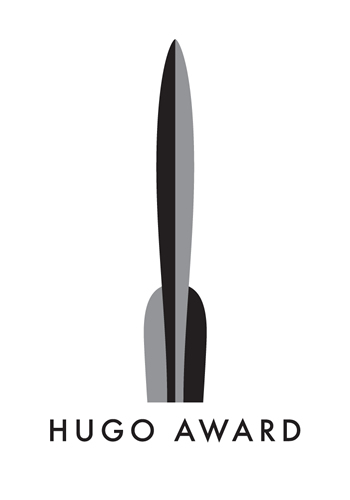
The Hugo is undoubtedly science fiction’s premier award, and it’s entirely fan-administered and fan-voted. It was first awarded in 1953, and has been awarded annually without a break since 1955. I’ve been told that it’s the only award that actually affects sales of a book. The winner gets a rocketship statuette and the inscribed bases are different every year.

I’m going to be talking about books, and sometimes stories, and only occasionally looking at the other categories. I’ll mention when new categories were introduced. I may mention fanzines and fan writers from time to time. I shall look at the Campbell nominees. I am a reader. I’m really not qualified to say anything about the visual categories. (In 1958, “No Award” won for Dramatic Presentation, and I think this excellent precedent could have been followed much more often since.) I shall be using the lists at Locus online, an invaluable resource, and at the official Hugo Awards site.

I haven’t, of course, read every single book nominated for the Hugos since 1953. (What have I been doing with my time?) If I haven’t read it, I shall say so, and I shall say why. Otherwise I shall talk briefly about the books and their place in the field. If I’m inspired to re-read a book and talk about it in detail, I’ll do that separately. I’ll be very interested to hear other opinions and especially suggestions for other things of the year that should have been nominated. My views are, of course, my views, but I’ll be interested to see if there is a consensus—my feeling is that for most years there is, and also that the Hugo nominators are often right, but there are occasionally some startling omissions and some live controversies out there.

So far, she’s taken a look at 1953, the very first year the Hugo Award was presented. Here’s what she had to say about 1953’s best novel:

Between 1953 and 1958 the Hugo Awards were fairly disorganized. The categories weren’t fixed, and there was only one round of voting—no nominees were announced. The 1953 first ever Hugo awards were presented at Philcon II, in Philadelphia.

The winning novel was Alfred Bester’s The Demolished Man. (Review here.) It’s not in print, but it was recently, in Gollancz’s Science Fiction Masterworks series, and it’s never been hard to find. I read it when I was reading my way through science fiction in alphabetical order when I was twelve. It’s an examination of how it might be possible to commit a murder in a world of telepaths where not even your thoughts are private. There are some aspects of it that seem dated, but I’d say it was an enduring classic, and a worthy winner.

If you’re interested in gaining a better understanding and a deeper insight into the history of the Science Fiction and Fantasy genres, Walton’s series of articles can’t be missed. Though there’re a lot of great novels being released today, the genre’s got a history too deep to ignore and this is the perfect way to discover some of the gems lost to history.