Yearly Archives: 2010

Dreamsongs by George R.R. Martin

Prior to releasing A Game of Thrones, and subsequently becoming one of the brightest and most respected authors in the Fantasy field, George R.R. Martin was perhaps best known for his short fiction, much of it in the Science Fiction genre, and a far cry from his current bread and butter. Foremost among those is Sandkings.

He flew his skimmer to Asgard, a journey of some two hundred kilometers. Asgard was Baldur’s largest city and boasted the oldest and largest starport as well. Kress liked to impress his friends with animals that were unusual, entertaining, and expensive; Asgard was the place to buy them.

This time, though, he had poor luck. Xenopets had closed its doors, t’Etherane the Pet seller tried to foist another carrion hawk off on him, and Strange Waters offered nothing more exotic than piranha, glow sharks, and spider squids. Kress had had all those; he wanted something new, something that would stand out.

Near dusk he found himself walking down Rainbow Boulevard, looking for places he had not patronized before. So close to the starport, the street was lined by importers’ marts. The big corporate emporiums had impressive long windows, in which rare and costly alien artifacts reposed on felt cushions against dark drapes that made the interiors of the stores a mystery. Between them were the junk shops-​narrow, nasty little places whose display areas were crammed with all manner of off world bric-​a-​brac. Kress tried both kinds of shops, with equal dissatisfaction.

Then he came across a store that was different.

Set in the far future city of Asgard, Sandkings tells the lamentable story of playboy Simon Kress, a man ruled by passions, but lacking in wit. Kress is a purveyor of exotic (and dangerous) animals, which he uses to entertain his guests at parties. A lonely attention whore. To this end, he acquires four sets of Sandkings – rare, insect-like hiveminds drawn to tribal warfare and worshipping their owner, all within the confines of a large aquarium. Just imagine being a kid and watching your pet turtles, or the ants in your ant-farm, war with each other over land and food. They promised to be the crown jewel of Kress’ collection.

Martin’s strength of creating characters you hate, yet understand at the same time, a hallmark of A Song of Ice and Fire is evident even in his early short fiction. Sandkings follows Kress’s travails as he raises the sandkings, cruelly using them to his amusement, wading into an addiction to the popularity they bring him. In a remarkably short space, Martin manages to make Kress both despicable, but interesting and likable at the same time. As the reader, we can see all the mistakes the man makes, but, equally, we understand his reasoning for making them. It all comes back to that loneliness, that cry for attention.

Martin’s A Song of Ice and Fire is known for its uncompromising twists and turns, for setting up plot twists hundreds of pages in advance, but only clear to the reader upon reflection. Sandkings is no different, and shows the roots of the storytelling that would go on to make Martin famous and rewards the reader with a cruel twist ending, that leaves several juicy questions to gnaw on.

Equally viable as a horror story and a psychological profile of the downfall of a greedy, lonely man, SandKings is an absolute pleasure to read, and justifies those that claim Martin’s true strength lies not in his Epic Fantasy but in short fiction. Speaking also to its quality is the fact that despite being published 30+ years ago, the story holds up to every one of its contemporaries, with not a wrinkle or liver spot to be seen. If you’ve only read Martin’s A Song of Ice and Fire, or haven’t read anything by Martin at all, do yourself a favour and pick up Dreamsongs Volume I & II, and discover Sandkings, and the other roots of one of the most compelling storytellers of our generation.
From Dragonmount:

Towers of Midnight by Robert Jordan and Brandon Sanderson

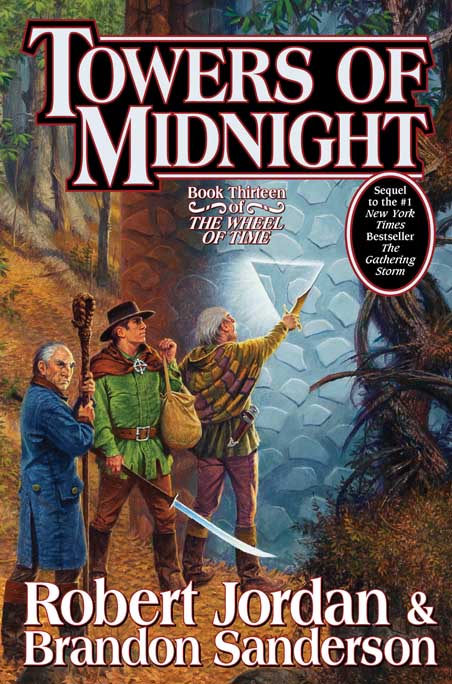
Like The Gathering Storm before it, the first image available of the cover for Towers of Midnight was an early mockup, giving a good idea of the final cover, but lacking polish. Unlike The Gathering Storm, the final cover for Towers of Midnightturned out… not half bad! For a Darryl K. Sweet cover, at least. Much, much, much better than flatulent Rand!

Thoughts?

FOR THOSE HUNTING THE HORN OF VALERE: Don’t dig so deep.

I stole this from James at Speculative Horizons:

The Republic of Thieves by Scott Lynch

After their adventures on the high seas, Locke and Jean are brought back to earth with a thump. Jean is mourning the loss of his lover and Locke must live with the fallout of crossing the all-powerful magical assassins the Bonds Magi. It is a fall-out that will pit both men against Locke’s own long lost love. Sabetha is Locke’s childhood sweetheart, the love of Locke’s life and now it is time for them to meet again. Employed on different sides of a vicious dispute between factions of the Bonds Sabetha has just one goal – to destroy Locke for ever. The Gentleman Bastard sequence has become a literary sensation in fantasy circles and now, with the third book, Scott Lynch is set to seal that success.

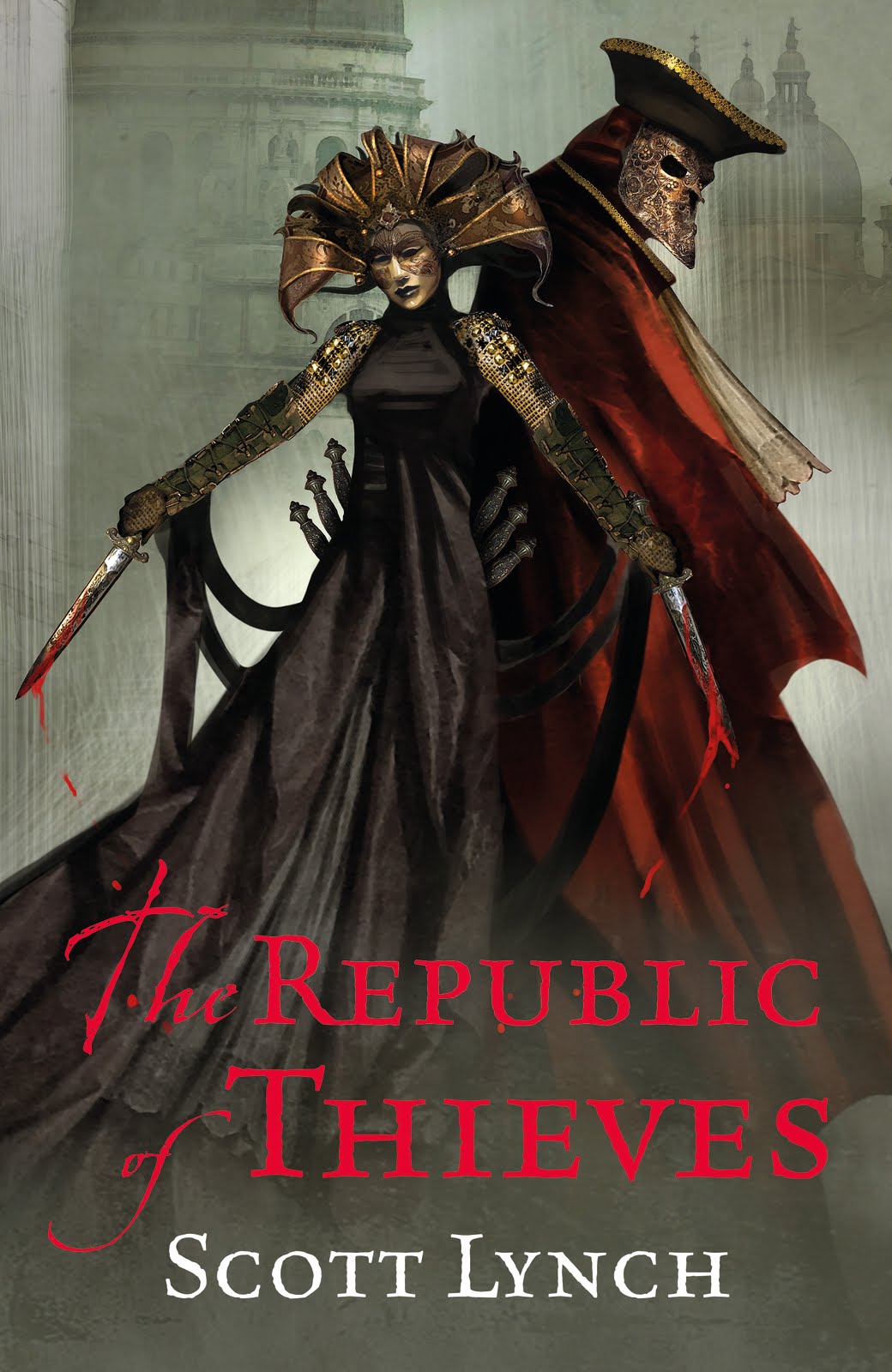
I’m rather partial to the original style of covers for the series (well, the original UK covers, at least), but can’t deny that the art is astounding. I’m not terribly sold on the nebulous grey background/buildings, but the characters fit the Venetian vibe of the novels, and are suitably garbed in black and red (a colour scheme you couldn’t botch if you tried). I like the originally leaked cover better (or was it the cover for The Bastards & The Knives? I can never tell…). Either way, Lynch has to be happy with the covers he’s been getting. Hopefully the novel’s so successful a mix of sophistication and bloody daggers as the cover!

If you’re interested, Amanda Rutter, over at the lovely Floor to Ceiling Books, has interviewed me about, well… blogging! We talk about all sorts of things, from reviews and social networking, to voice and curmudgeonly (yet lovable) bloggers. We don’t talk much about books, really, but if you’re interested in hearing me stroke my blogging ego, you can read the interview here.

Comments closed

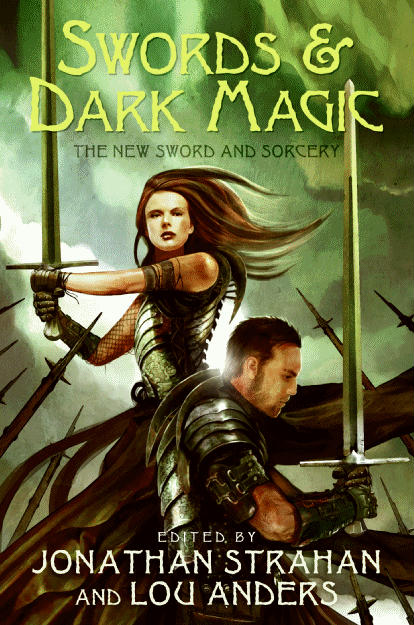
With the release of The Lies of Locke Lamora in 2006 (REVIEW), Scott Lynch made a lot of noise and quickly established himself as one of the most promising young writers in the genre. It was an impressive debut, mixing Sword & Sorcery with an Ocean’s Eleven-style heist, and was quickly followed by an entertaining (if slightly disappointing) sequel, Red Seas Under Red Skies. Since then, Lynch has been quiet, periodically popping online, but mostly working on the third volume of his series, The Republic of Theives, in silence. It’s been a hard wait; doubly so after reading Lynch’s contribution to Swords & Dark Magic. In the Stacks is an over-too-soon story that showcases Lynch’s best qualities as a writer – his wit, grasp on character and layered (but never too intricate) plotting.

In the Stacks is set in the High University of Hazar; more particularly in its library. The story follows three youths as they attempt to pass their year-end exam. Simply, they have to return a book to its place among the shelves. As expected of a Swords & Sorcery story, things are never quite so simple as they seem and the charming chaos that ensues forces the characters to stretch their magic and fight with a very unconventional weapon. The library is full of grimoire’s, and the creatures they spawn, that would like nothing less than to devour any outside presence, including the words spoken from mouths of errant students.

“Aspirant d’Courin, what is a grimoire?”

“Well,” she began, seemingly taken aback by the simplicity of the question. “As you said, a magician’s personal reference. Details of spells, and experiments–”

“A catalog of a magician’s private obsessions,” said Molnar.

“I suppose, sir.”

“More private than a diary, every page stained with a sorcerer’s hidden character, their private demons, their wildest ambitions. Some magicians produce collections, others produce only a single book, but nearly all of them produce something before they die. Chances are the four of you will produce something, in your time. Some of you have certainly begun them by now.

[…]

“Grimoires,” continued Molnar, “are firsthand witnesses to every triumph and every shame of their creators. They are left in laboratories, stored haphazardly next to untold powers, exposed to magical materials and energies for years. Their pages are saturated with arcane dust and residue, as well as deliberate sorceries. They are magical artifacts, uniquely infused with what can only be called the divine madness of individuals such as yourselves. They evolve, as many magical artifacts do, a faint quasi-intelligence. A distinct sort of low cunning that your run-of-the-mill chair or rock or library does not possess.

“Individually, this characteristic is harmless. But when you take grimoires … powerful grimoires, from the hands and minds of powerful magicians, and you store them together by the hundreds, by the thousands, by the tens of thousands, by the millions … “

[…]

“You need thick walls

It reads, well… like Scott Lynch writing Harry Potter. There’s bite to the dialogue (though it’s not as ribald as his Gentlemen Bastard Sequence), lots of action, and a suitably clever climax. The school setting, the camaraderie and even the magic system (light and nebulous as it is), are reminiscent of Blake Charlton’s recent Spellwright, but with more cheek, and a bit of a chip on their shoulder. The only low comes in the last pages, when Lynch throws an unnecessary (but, admittedly, well-established) twist at the reader that shines a different light on one of the characters. Still, it’s a small flaw amidst a wonderful story.

If there are connections to Lynch’s earlier work they are not easily noticed, but I couldn’t help but see shades of Locke Lamora and his gang of thieves among the students. Lynch’s clever prose and easy command of his characters will wrap you up, and rambunctiously steal you away to that mysterious library. In The Stacks is a strong addition to a heavyweight anthology, and promises of great things when The Republic of Thieves hits shelves in several months.