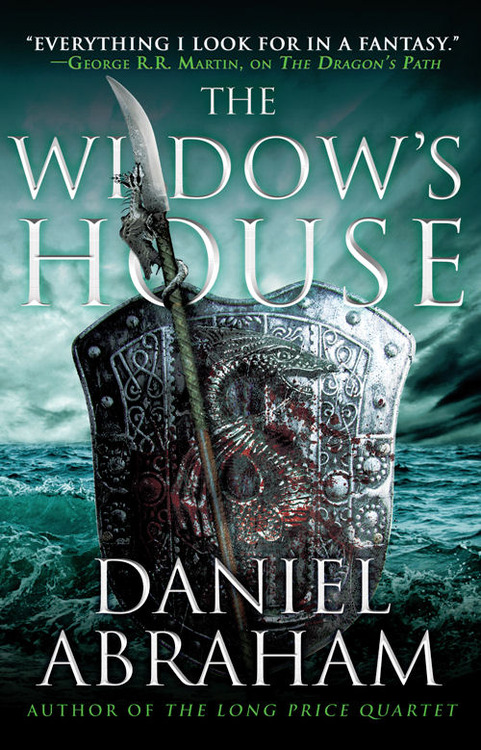
Sexy, and a huge step up from the weird cover for The Tyrant’s Law.
Sexy, and a huge step up from the weird cover for The Tyrant’s Law.
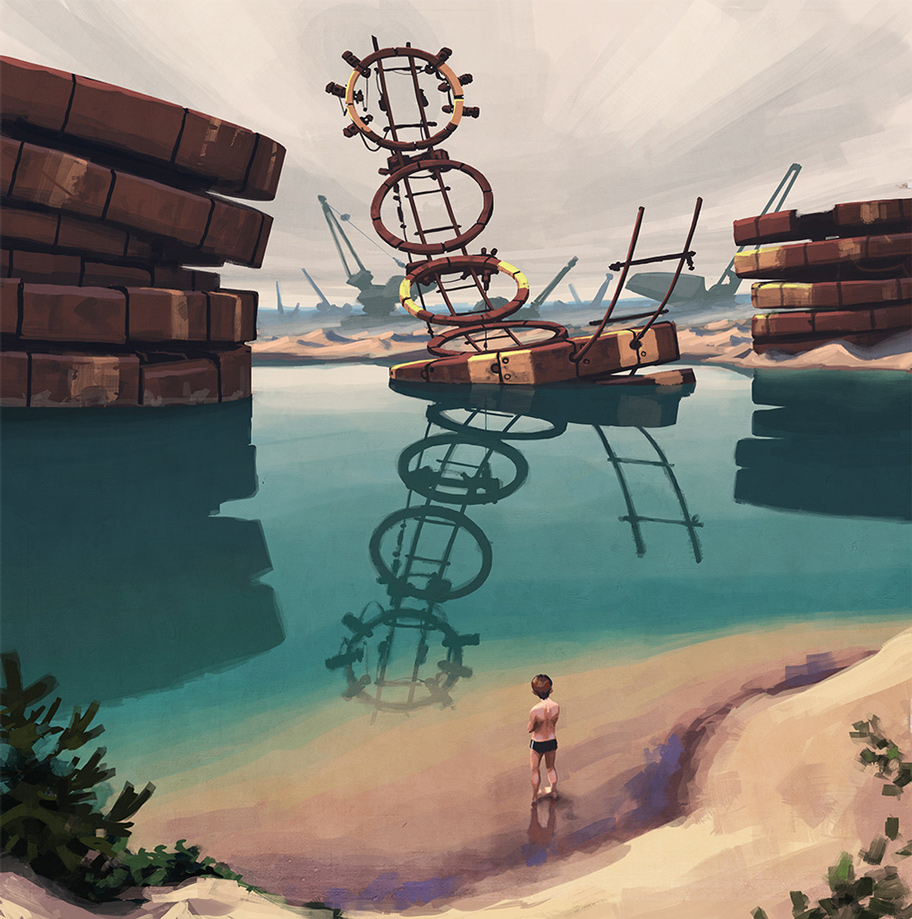
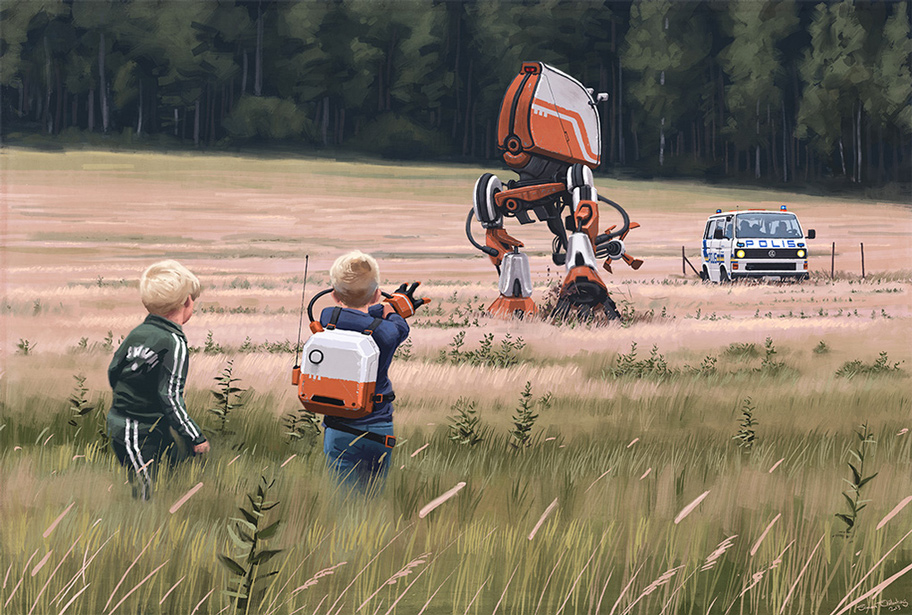
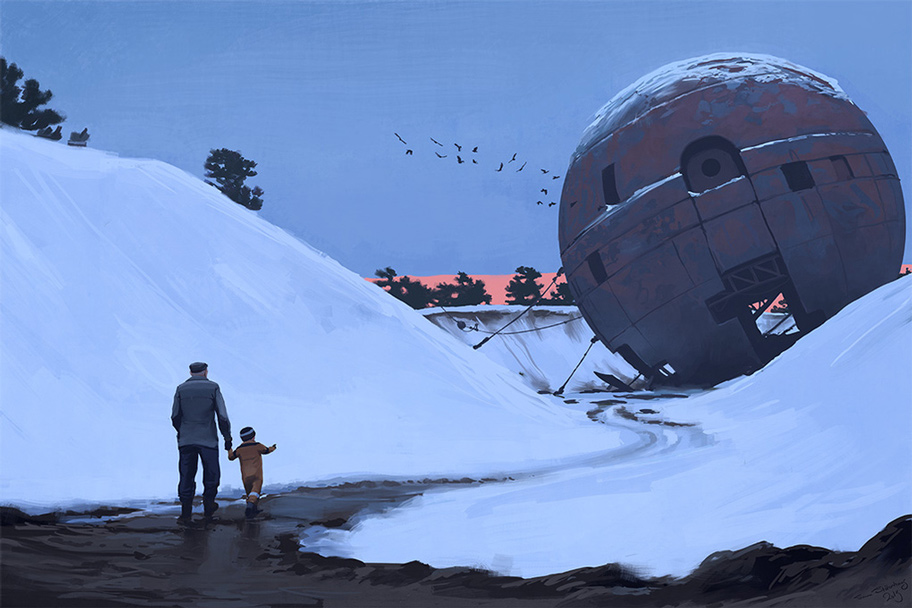
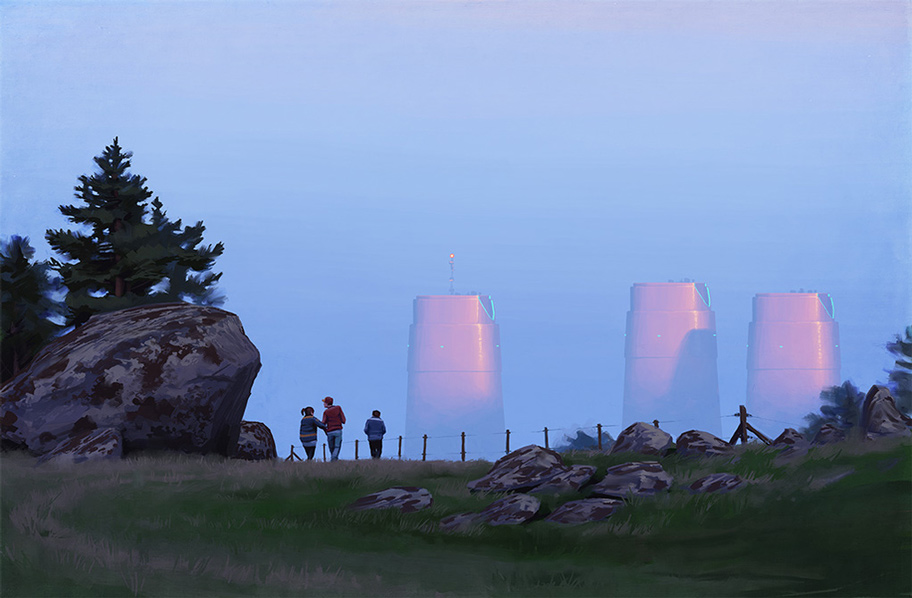
Welcome to rural Sweden, sometime in the late ’80s. Citizens go about their mundane lives and children explore the countryside. But something isn’t quite right. Robots and hovercrafts are commonplace, and decaying science facilities sprout from the harsh Scandinavian landscape. There’s even a rumor circulating that dinosaurs have returned from the dead after some failed experiment.
As a huge fan of Valve’s Half-Life series, and particularly Viktor Antonov’s relentlessly haunting, but startlingly believable, visual direction and world building for a dystopian future, I was immediately drawn to Stålenhag’s art. Where Antonov’s vision was used to flesh out a videogame that, for the most part, requires the lead character to shoot his way to safety, Stålenhag explores a similar world, Sweden, post-disaster, and takes a snapshot of what civilian life might be like under those conditions.
In a profile of his work by Dante D’Orazio, Stålenhag explained that “the only difference in the world of my art and our world is that … ever since the early 20th century, attitudes and budgets were much more in favor of science and technology. D’Orazio described Stålenhag’s world and a future that looks, in many ways, like our present. “Despite developments in robotics and ‘anti-grav’ technology, the difficulties of the modern human experience haven’t changed,” D’Orazio said.
Stålenhag juxtaposes the looming threat of the decaying glory of a dystopian far future with the mundanity of everyday life, that effectively illustrates the idea that life happens no matter what else is going on around it. Children are featured in many of Stålenhag’s paintings and its through their eyes that we are shown the grandeur and lost history of a world that crumbled under its own weight.
More of Stålenhag’s artwork can be found at his profile on The Verge, or by visiting his portfolio.
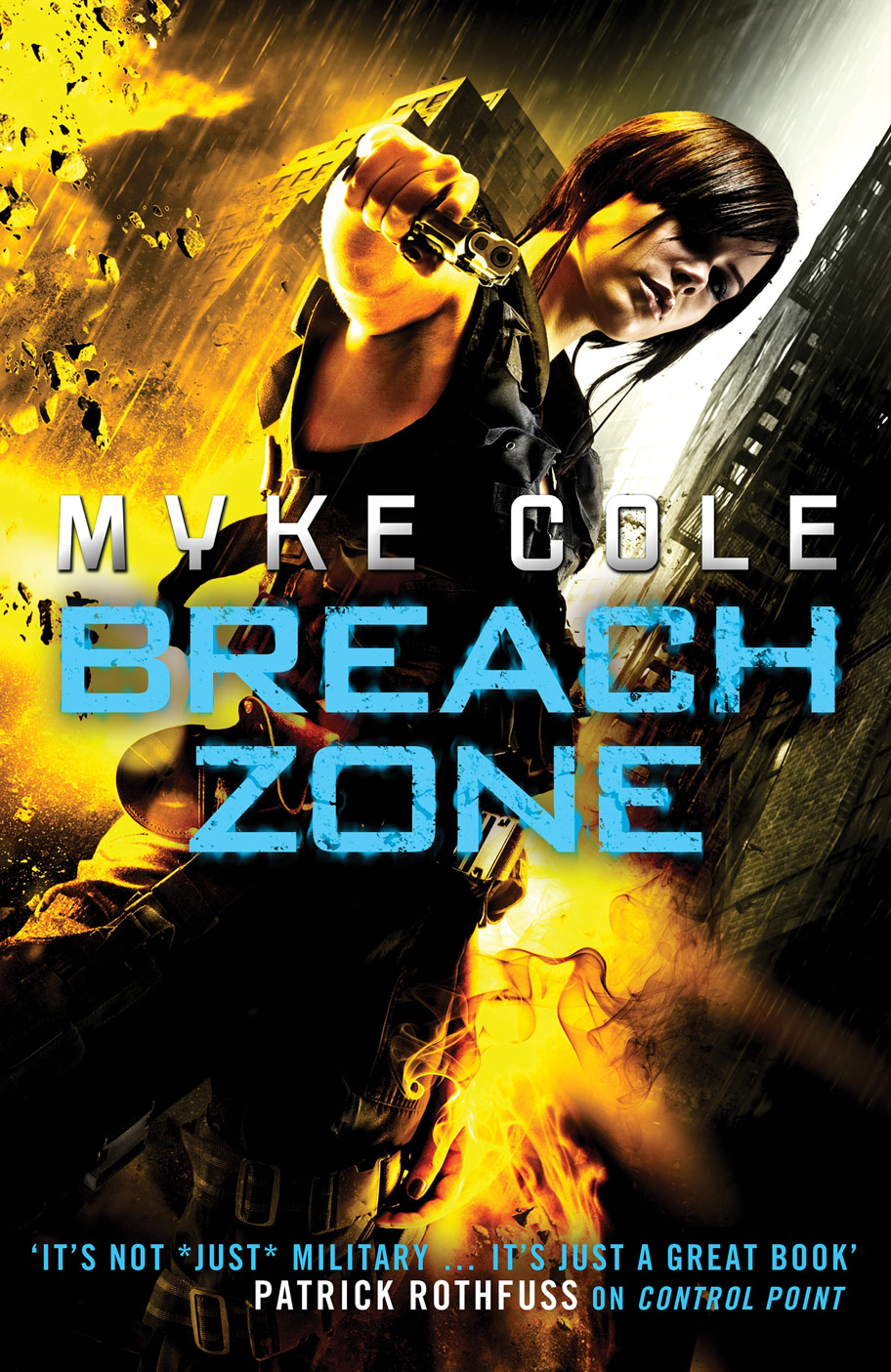
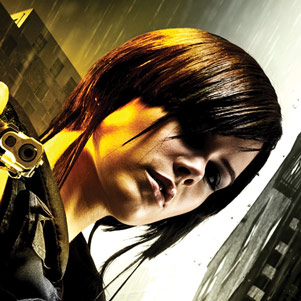
When Fantasy Faction debuted the cover for Myke Cole’s Breach Zone last week, I was struck by the impact of the cover. Not just by the impactful art from Larry Rostant, or the aggressive pose of the woman, but, that, well.. there was a woman. Cole writes military fantasy (science fiction?) and the covers of his past books have featured male-heavy casts aimed to appeal at a particular crowd of reader. I’m still not terribly sure what I think about the cover, so I reached out to Cole and asked him for his thoughts on the new cover and, specifically, the inclusion of a woman. Read More »
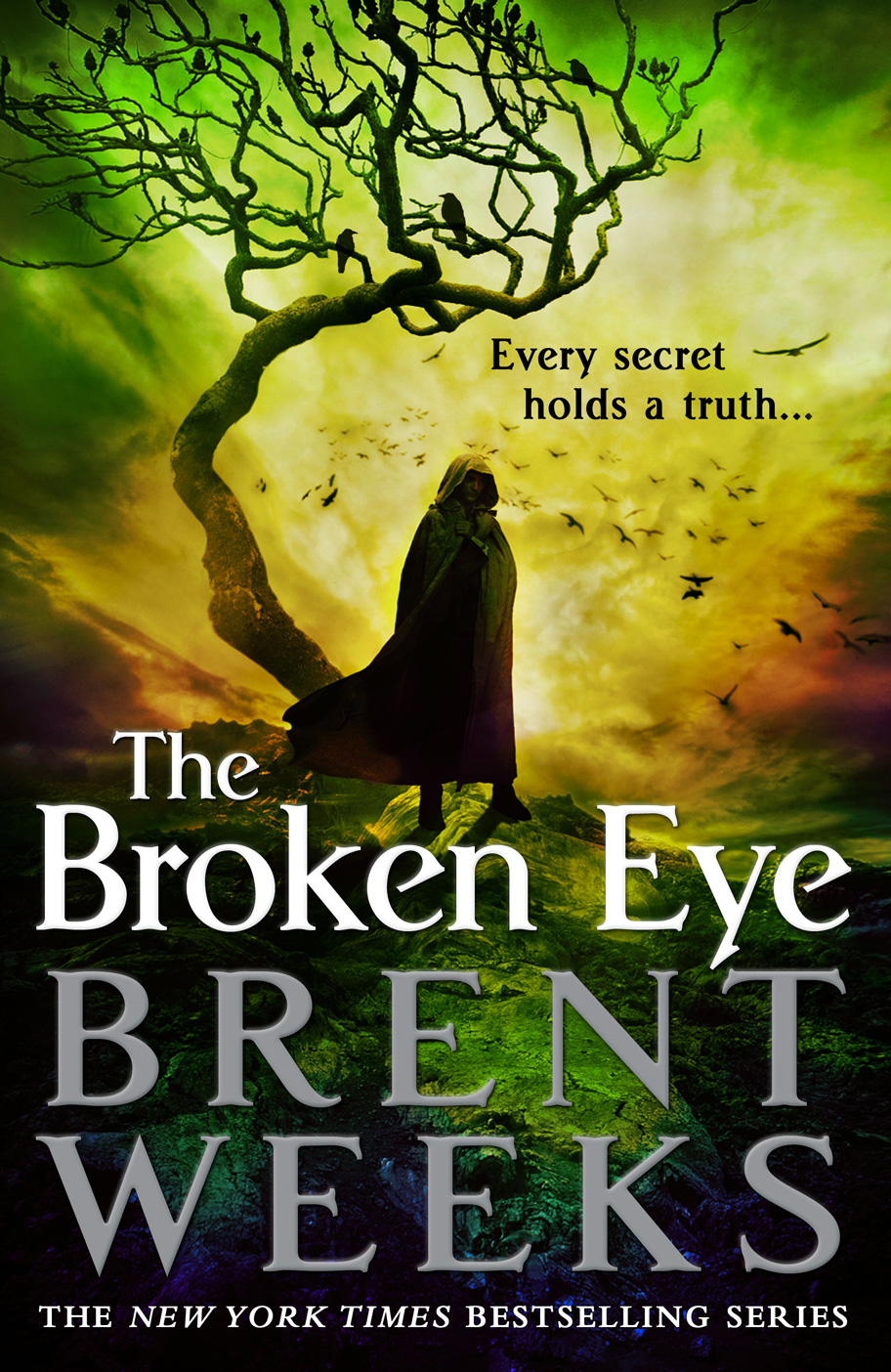
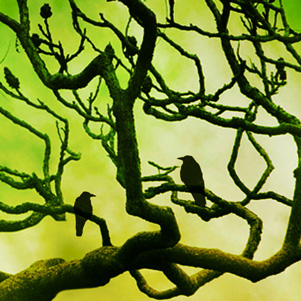
Some part of Weeks’ original (and screamingly fast) success is the result of the bold and unique (at the time, one must remember) covers for his original trilogy. Generally, a publisher is able to bring this sort of branding along with an author, but the hooded man (and the minimalist cover style) became so popular that Weeks brand was essentially stolen by the genre at large. Seriously, blame him for the hooded man, for he unleashed that demon on the world. Orbit has done a great job of evolving the look of the series to feel unique and impactfully branded, despite incorporating one of the most (nay, the most) overused tropes in Fantasy covers. The hooded man is prevalent, but the bold (and series-appropriate) splashes of colour, contrasted sharply against the black background, is striking and immediately recognizable as a Weeks book. Read More »
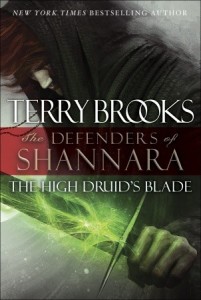 In recent years, Brooks has seen several revisions to the look and feel of his novels, even switching styles midway through a series because the first volume didn’t sell as well as expected (Armageddon’s Children to The Elves of Cintra). His most recent trilogy, The Dark Heritage of Shannara, used a bold, emblematic approach that I found quite appealing, so it’s interesting to see Del Rey shifting focus again to this new style. On first glance, I think it’s great all around. The typography and composition of the various cover elements is good, and the illustration is striking. It is sort of weird that the series title is larger than the book’s title and the two aren’t distinguished from one another, but that’s a small complaint. It’s funny, and somewhat telling, to see Terry Brooks all-of-a-sudden mimicing the look of Brent Weeks’ novels.
And I say all this despite the hooded man striking again. Even the big guys can’t get away from him. Who’s his agent, anyway?
Released alongside the cover is the first official blurb from the novel:
Paxon Leah never thought of the old family sword hanging above his living room hearth as anything other than an intriguing ornament—until his sister is kidnapped by a sorceror. Following the dark mage with nothing but this piece of steel to protect him, Paxon stumbles into a plot to remake the world . . . and accidentally unlocks the powers of the ancient blade.
In the most recent edition of ‘Ask Terry’ (a monthly feature where Brooks answers fan questions), Brooks revealed specifics about the plot that, when paired alongside this official description, paint a fairly clear image of the books’ plot:
The High Druid’s Blade is a stand-alone story, complete unto itself. But it is linked by a handful of common characters to two more stand-alones that will immediately follow. The principle link is complex and very dangerous sorcerer named Arcannen and a shared history of magic with Leahs and Ohmsfords. It will tie up a few loose ends from Witch Wraith, and it will further expand the growing conflict between magic and science. For the first time, the Druids and the Federation are mostly allies. The title to the book refers to a position created by the Ard Rhys of the Fourth Druid Order for a Druid protector.
In addition, Brooks’ official website reveals that The High Druid’s Blade, “features a Leah rather than an Ohmsford. It takes place about 100 years after the events of Witch Wraith. And it takes place largely in the Southland.”
Putting two-and-two together, it doesn’t take much to figure out that young Paxon is wielding the mythic Sword of Leah, imbued with the power of the druid’s, and likely fills the position referred to in Brooks’ answer. The book has been described to me as more character-focussed, with only two point-of-view characters (against Brooks more recent novels, most of which contained several POV characters), and less complex than usually expected.
I’m looking forward to this novel tremendously. After a few years of disappointment, Brooks had me grinning with his latest trilogy, which, if you ask me, is the best thing he’s written in a decade. Seriously, it’s that good.
