“Gosh, Bear,” you might think, “at least she’s a good person, in spite of being a prostitute!”
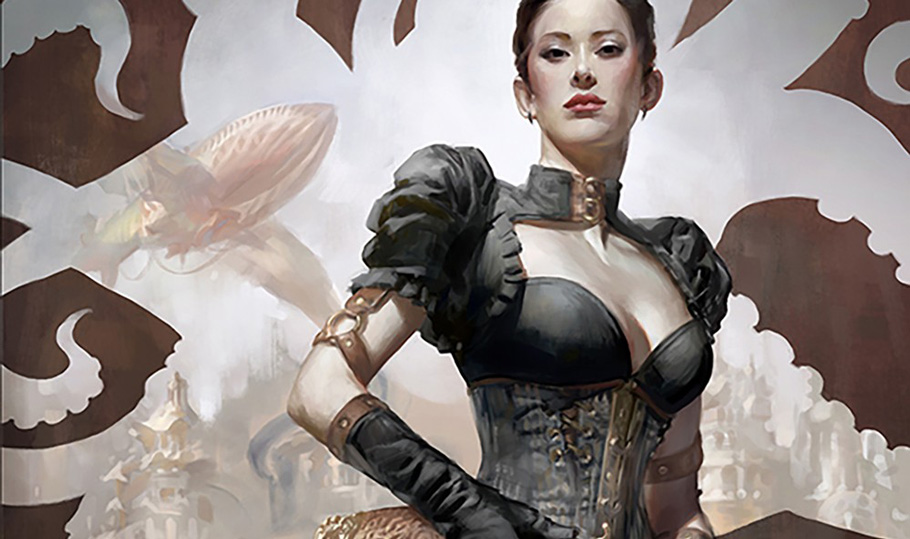
Hi! I’m Elizabeth Bear, the author of Karen Memory, and I’m here to talk about the fine art of avoiding some of Western literature’s most tired sex-worker tropes, such as The Disposable Prostitute and The Hooker with a Heart Of Gold.
On The Hooker with a Heart of Gold… words to strike dread into the hearts of… well, everybody who ever consciously tried, in their work, to avoid a stereotype. Any stereotype. And it’s not the only—or worst—stereotype—of sex workers around!
“Gosh, Bear,” you might think, “at least she’s a good person, in spite of being a prostitute!” Read More »
“Petite, her silver hair shining, Le Guin shrugged and grinned when Neil Gaiman placed the medal around her neck,” described The New Yorker of Ursula K. Le Guin when she accepted the Medal for Distinguished Contribution to American Letters presented by the National Book Awards on November 19, 2014. Le Guin might be petite in stature, perhaps, but her words in acceptance of the achievement were anything but small.
“Hard times are coming,” she said, her voice ringing out over an awed crowd. . “We’ll be wanting the voices of writers who can see alternatives to how we live now, can see through our fear-stricken society and its obsessive technologies to other ways of being, and even imagine real grounds for hope. We’ll need writers who can remember freedom – poets, visionaries – realists of a larger reality.”
Le Guin is a legendary figure in science fiction and fantasy, author of many classics, such as The Left Hand of Darkness and The Wizard of Earthsea, and a champion for literature’s place in the every changing landscape of modern society — a “realist of a larger reality” is there ever was one. Her acceptance speech rang through the SFF community and beyond, a tolling bell of optimism. Through her ongoing insistence to use fiction as a lens through which we examine ourselves, Le Guin, and writers like her — poets, visionaries, realists of a larger reality — has continued to challenge speculative fiction to be a catalyst for positive change, a limitless medium that can offer hope to a world that obsesses over hopelessness. Read More »
So, it’s that time again. 2014 is in the rear-view mirror and we’re all puking nostalgia for the year gone by. Below is a list of some of my very favourite things from 2014.
This is very intentionally not a Hugo ballot (because who likes being strapped down by those rules if they don’t have to be), as I wanted some freedom to group things as I feel they should be grouped, and because I want to be able to celebrate stuff that I enjoyed immensely, but isn’t quite right for the Hugo Ballot (*coughFantasyLifecough*). My Hugo nominations will come later, but this should give you a hint of what’s to come.)
So, without further adieu, let’s jump into my favourite things of 2014!
My Favourite Novel
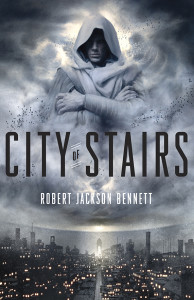
City of Stairs by Robert Jackson Bennett
Who would have thought that Robert Jackson Bennett, author of quirky horror/urban fantasy mash-up novels, would write the best secondary world fantasy of the year? City of Stairs is an absolute delight from beginning to end. It’s a chain-smoking, edge-of-your-seat, snarl of a novel with a wonderfully grizzled cast. The broken city of Bulikov, decimated when its gods were killed, is one of the most tragic and fascinating examples of “setting as character,” and its an absolute joy to explore its mysteries as Shara and Sigurd (an odd couple that you can’t help but love) unravel its mysteries. To top it off, Bennett wraps things up with a conclusion so satisfying and epic that you can’t hardly believe the novel’s only 450 pages. Other authors only manage to fit half so much into novels twice as long.
Even as I was startled by its twisted depth, I adored every moment I spent with City of Stairs. Colonialism lies at the centre novel’s centre, and RJB handles it with equal parts boldness and delicacy. The ruined beauty of Bulikov and its fallen gods haunted me long after I turned the final page. Read More »
From Tiptree to Leckie to L’Engle and Cherryh, science fiction has a rich history of women writing progressive and popular fiction. One could argue that modern science fiction was vitalized by Shelley, and Ursula K. Le Guin has been an ambassador for fantastic and thoughtful fiction for decades. And, of course, now they’re the destroying it one novel at a time.
Recently, the /r/printSF sub-Reddit began a conversation about the best science fiction by women. I realized that I’ve read a woefully small number of the listed books, and this spurred some thought in my head about continuing this conversation, and using it as an opportunity to highlight some of the best science fiction books by women.
My own experiences within science fiction are fairly shallow (at least in terms of the scope of this project), so I asked some of my favourite authors and writers to tell me a bit about their favourites. So, join me, Julie Czerneda, Ann Leckie, Francis Knight, Andrew Liptak, Teresa Frohock, and Maureen Kincaid Speller as we gush about some of the best novels that science fiction has on offer. Read More »
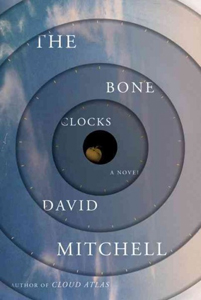
This is not a review of David Mitchell’s The Bone Clocks.
I don’t even mean that in the self-consciously Magrittesque kind of way. If this were a review I’d tell you to read the book, or not, which I don’t plan to do. I mean, okay, for those of you who haven’t made up your minds on David Mitchell’s latest opus: while I had an excellent time on every individual page, the book landed strange for me, and this essay is me trying to figure out why. Asking “Should I read this book” is like asking “Should I take up power lifting?” or “Should I learn Chinese?” Answer: depending on your goals, your experience, your medical history, your ambitions, how much free time you have—Maybe?
I do, though, think this book succeeds at something really really cool and interesting, even if it fails as a unit. And the shape of this cool interesting thing challenges the goals and underlying structures of modern science fiction and fantasy—especially fantasy.
Because Mitchell’s written a fantasy novel. That point seems impossible to argue. His world contains immortals who teleport, throw fireballs around, and kill people with a thought. To call it anything else would be silly. And yet… Read More »