I get the question “Why insects?” quite a lot. My stock response depends on how flippant I’m feeling at the time, but comes in two flavours. One is all about lofty literary ideals and exploring the human condition via the chitinous mirror that is insects. The other is “I just like insects.” Both are true1.
The lofty literary business is a thing, though. There is a genuine tradition, mostly a Central/Eastern European one, of using insects to examine human nature. Kafka’s Metamorphosis, of course, but also the Insect Play by the brothers Capek, and Viktor Pelevin’s Life of Insects. Even the ant section in T.H. White’s Sword in the Stone is worth a mention2.
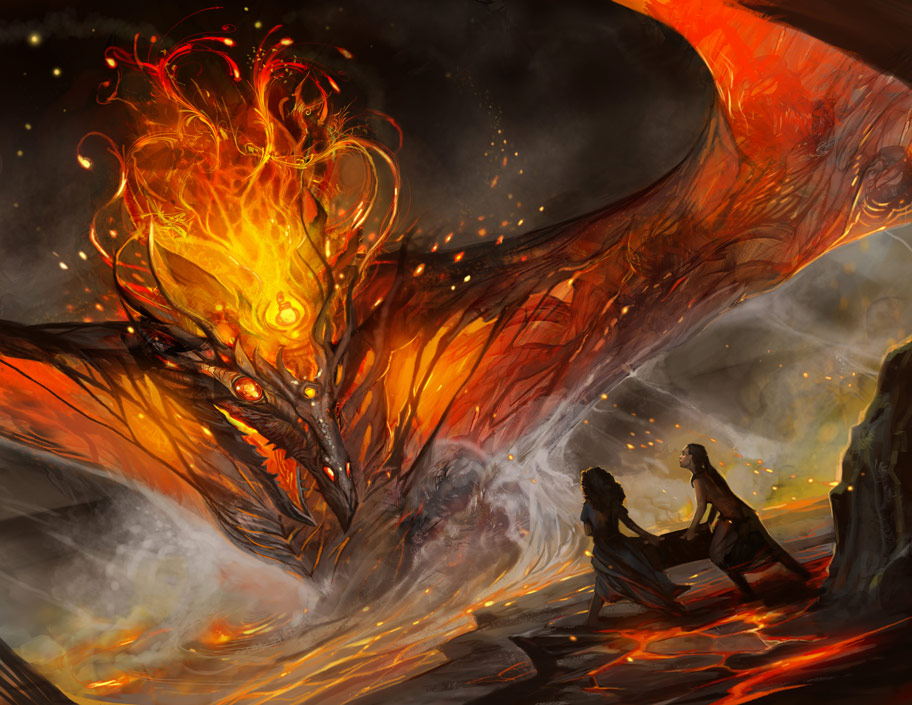
These are all great works, but for me – the lover of insects – they share a problem. Their portrayals are all very negative. When Samsa wakes up as a cockroach3, it is both to the revulsion of his family and peers, and to considerable physical difficulty just getting around in a human world4, and the various insects in Pelevin and Capek are shown as human, but the worst of what humanity has to offer – selfish, rigid, murderous, warlike. They are an object lesson in where we’ve gone wrong as a species. Read More »
Last year was ink drawings of samurais, and this year it’s knights.
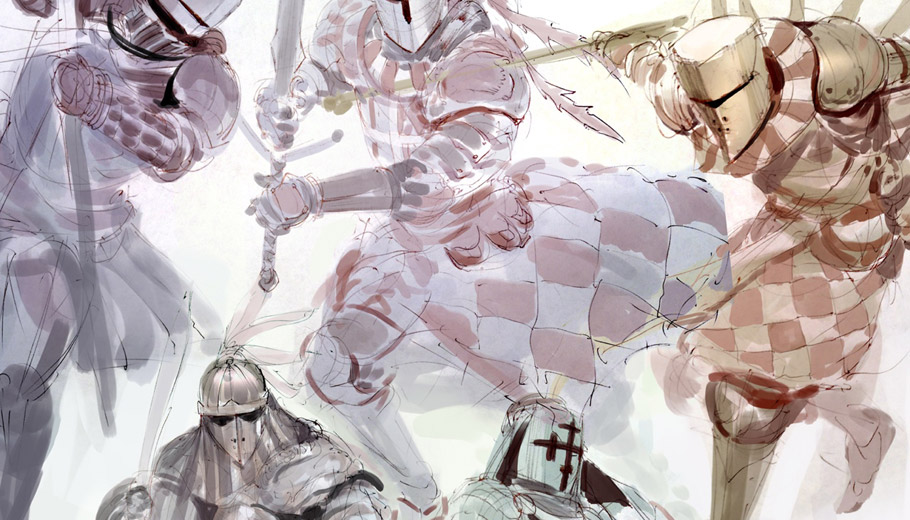
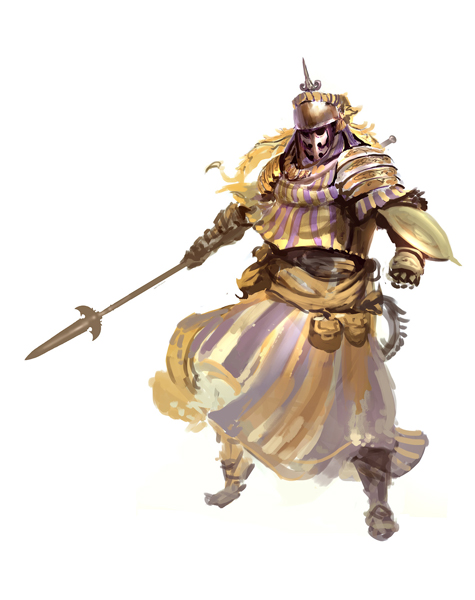
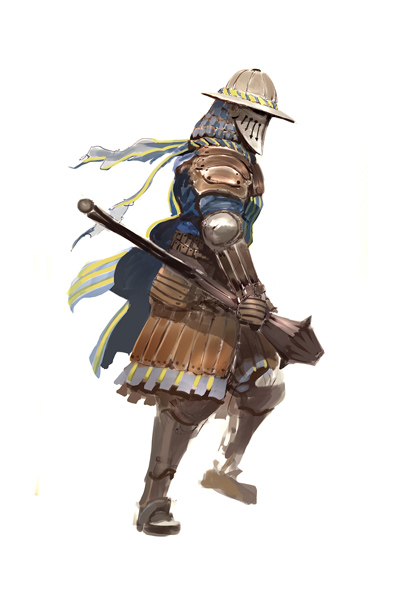
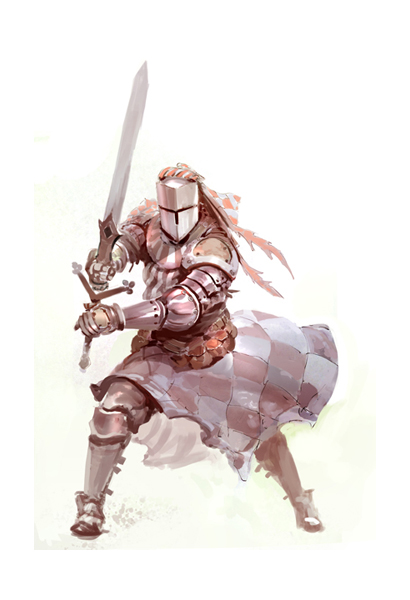
From the moment Seattle-based artist Kekai Kotaki posted the first of his thousand and one knights, I knew it’d become a weekly delight to see his new creations. Last Year, Kotaki did a small set of sketches featuring samurai designs, which featured stylish heavy inks, accented by bold colours, and showcased his ability to apply creative license to an iconic warrior. I loved the project so much, that I reached out to Kotaki to have a chat about his knights.
“I tend to try pick a theme each year and try to run with it as long as possible,” Kotaki explained when I asked him about the project’s origins. “Last year was ink drawings of samurais, and this year it’s knights.”
I even joke about making a book called The One Thousand and One Knights, but I had to hold off on it, because 1,001 is quite a lot of knights.
Most readers of A Dribble of Ink will know Kotaki for his work as a cover artist (notably, Peter Orullian’s The Unremembered, and The Malazan Book of the Fallen by Steven Erikson). In addition to his work as a cover artist, Kotaki is also known for his work on Guild Wars 2, ArenaNet’s popular MMORPG with some of the most iconic world and character design in the genre. Kotaki’s fans will recognize the abstract, ethereal concept art and landscapes from his time with Guild Wars 2. He does tone and epic encounters better than anyone else in biz, so these character studies — simple armoured knights, direct and full of personality despite their facelessness — are a pleasing diversion for the artist. Read More »
Voting for the 2014 Hugo Awards opened on Friday, June 6th. I’m using this opportunity to reprint the introduction to A Dribble of Ink’s collection included in the voter packet provided to all eligible voters. Whether you’re a voter or not, you can download the collection below -ed.
Over the past several years, vast change has come to many of the fan categories at the Hugos.
The “Best Fanzine” category has seen a dramatic shift in the past two years, since SF Signal’s first nomination, and traditional zines are being replaced by blogs and online magazines. “So never the twain shall meet…,” said Mike Glyer, of the many-times nominated File 770, describing the seemingly impassable gulf that exists between the online community and the traditional fan community. I don’t believe Mr. Glyer. While this divide between the two fan communities is undeniable, genre fandom is ripe with opportunity for creating a global fan community that embraces diversity—of voice and publishing platform—and challenges readers, authors, and publishers to become more inclusive and welcoming than ever before. Read More »
After I finished writing Cold Steel, the third and final book in the Spiritwalker Trilogy, I knew I wanted to add a coda. The trilogy is narrated in first person by Cat Barahal, but her close friendship with her cousin Beatrice is the central relationship in the series.
Bee happens to be an artist who carries a sketchbook with her everywhere, and I conceived of the idea of writing a journal as from Bee’s point of view, in which she relates the adventures she had as she sees them, since in the trilogy everything is seen through Cat’s eyes. Such a journal would necessarily need illustrations “as drawn by” Bee.
Because the story is set in an alternate history 19th century, the illustrations would need to have a realistic style (rather than a comics or manga style) of art. To that end, I commissioned Julie Dillon to create a set of 29 illustrations to accompany the story I wrote. Read More »
Life is a game of chance, a series of lucky breaks and coincidences, cause and effect.
But fuck if we want to talk about it that way.
No, we’re humans. We like patterns. We like stories.
I careened into adulthood while bumbling around at a night club in South Africa, drinking whiskey and puffing endlessly at Peter Stuyvesant cigarettes. I sat at a table of people far more witty and interesting and worldly than I, and I tried and failed, in my young, drunken stupor, to understand how some rural hick fleeing a narrow little town and a failed abusive relationship had somehow ended up here on the other side of the world. I felt like a fake. A poser. A white American girl running around the world for the opposite reason most folks did.
See, I wasn’t running away to find myself. No. Indeed. I knew exactly who I was.
I was trying to run as far and as fast from myself as possible. Read More »