Child of Light
Publisher: Ubisoft – Genre: RPG – System: Multi-platform
Buy: PC Download
tl;dr (spoiler free)
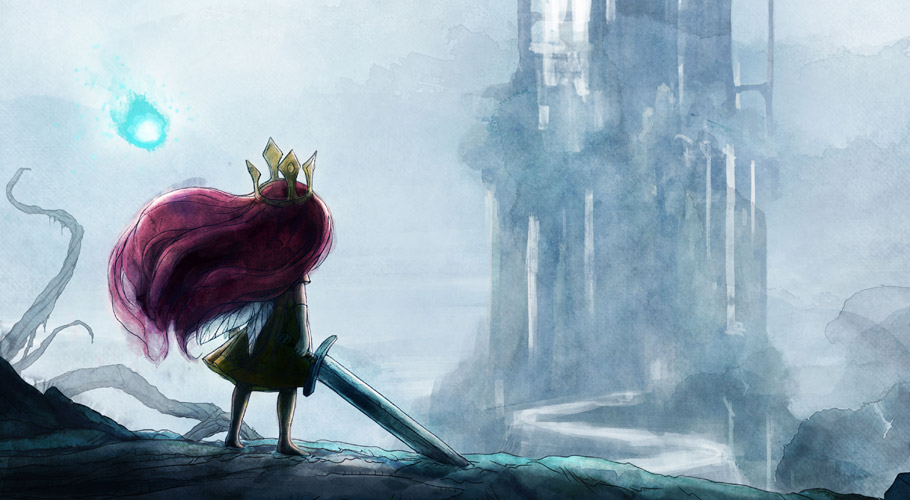
Child of Light, a side-scrolling JPRG developed by Ubisoft, features gorgeous 2D visuals (complete with great use of parallax scrolling of multiple layers), a beautiful and very non-traditional musical score, and fun strategic combat heavily inspired by the Grandia series. I didn’t like the story or the writing, but I enjoyed the game otherwise.
Full Review
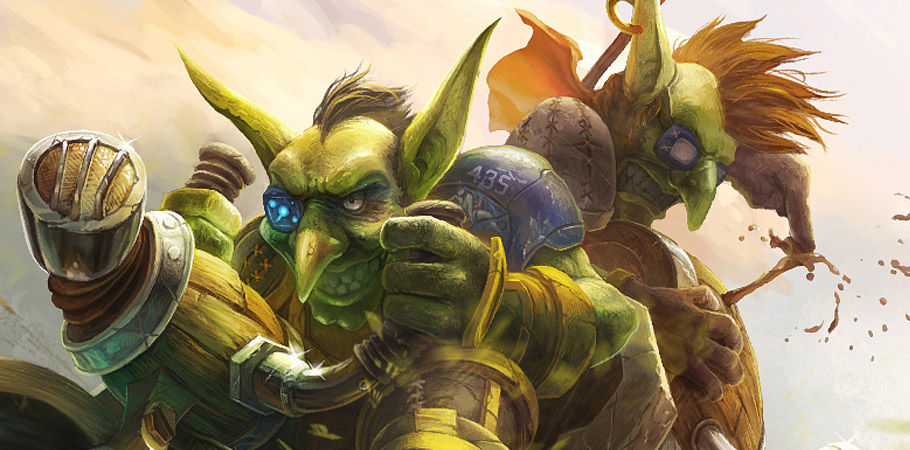
Child of Light uses a modified Grandia combat system. For those unfamiliar with the system (and who haven’t played our own Penny Arcade RPGs which use a similar system), the core is that by hitting enemies right before they make their next move, you interrupt them which knocks them back on the time bar, essentially stunning them briefly. Child of Light makes a few changes to the basic Grandia system: your party consists of only two characters at a time (Grandia had a four person party); you can swap characters in and out mid-battle with ease; there is no positioning aspect (in Grandia, allies and enemies moved around the battlefield and different attacks had different ranges and areas of effect); all attacks can interrupt enemies (in Grandia, only specifically marked interrupt abilities did this); and you have a firefly friend, Igniculus, who can slow down enemies. Read More »
“I pretend I am a princess, so that I can try and behave like one.”
-Sara Crewe in A Little Princess
I had loved reading fantasy as a child, but even as an older teen I struggled to find speculative fiction that challenged me without making me feel unwelcome and unvalued.
In the early oughts, I nearly gave up on epic fantasy altogether. Until I stumbled across a copy of The Dragonbone Chair at a used bookstore. I can’t quite remember why I decided to give it a chance, but I’m incredibly glad that I did. My love for Tad William’s Memory, Sorrow, and Thorn isn’t unconditional, but it did a lot to restore my faith that I could find fantasy stories that I would enjoy as an adult. I had loved reading fantasy as a child, but even as an older teen I struggled to find speculative fiction that challenged me without making me feel unwelcome and unvalued. After all, Terry Brooks may have given me Brin Ohmsford, but he also turned Amberle into a tree. It wasn’t just that the lives of the girls and women in these novels seemed to revolve around men. What bothered me more was that they rarely acted in ways that seemed logical, consistent, or grounded in anything resembling human behavior. My problem was not that Amberle sacrificed herself, but that I was never convinced it was in character for her to do so, especially as described in the book. And we won’t speak of Piers Anthony, and what it was like to read his novels, which came highly recommended, while also trying to deal with grown men yelling things about my body at me while I walked home from the library. Read More »
Given my interests in Native American literature and genre fiction, it is inevitable that I’ve also become interested in the ways in which the indigenous peoples of North America are represented in science fiction and fantasy. For the purposes of this particular article I’m thinking primarily of their representation in Anglo-American sf and fantasy, and I’ll be focusing on, so far as I’m aware, representations by non-Native writers. (Nor is this intended to be a comprehensive survey of appearances by Native Americans in sf though that may be a project for the future.)
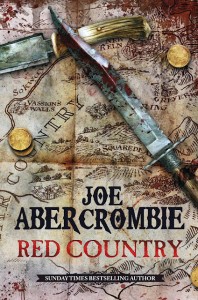
I want to begin with Joe Abercrombie’s Red Country (2012), where we meet Crying Rock, described as ‘an old Ghost woman with a broken sideways nose, grey hair all bound up with what looked like the tatters of an old Imperial flag, and a face so deep-lined you could’ve used it for a plate rack’ (p. 55). A couple of pages later, one character says of another, ‘His Ghosts massacred a whole fellowship o’ prospectors out on the dusty not two weeks ago. Thirty men, maybe. Took their ears and their noses and I shouldn’t wonder got their cocks besides’ (p. 57). A few pages later, ‘[t]he old Ghost woman had the reins, creased face as empty as it had been at the inn, a singed old chagga pipe gripped between her teeth, not smoking it, just chewing it’ (p. 64). Only on the following page is Crying Rock finally introduced by name, having said a few words ‘[s]o slow and solemn it might have been the eulogy at a funeral’ (p. 65). And much later still, we see Crying Rock as tracker: ‘’Til that moment Shy had been wondering whether she’d frozen to death hours before with her pipe still clamped in her mouth. She’d scarcely blinked all morning, staring through the brush they’d arranged the previous night as cover’ (p. 301). Read More »
I was asked for this post to write about hope in fantasy. And that means I need to talk about grimdark.
I was asked for this post to write about hope in fantasy. And that means I need to talk about grimdark. (Definition from TV Tropes here, for those who need it.) And I need to say, before I start, that I am a practitioner of grimdark; the Doctrine of Labyrinths quartet (Melusine (2005), The Virtu (2006), The Mirador (2007), Corambis (2009)) can be nothing but. So I’m not speaking as someone who abhors grimdark, but as someone who loves it.
One of the things behind grimdark, I think–and it’s not just grimdark, either, but most of Anglophone literature since somewhere around World War I–is a conviction that being pessimistic, tragic, depressing, dark means that a text is more “realistic,” more “serious,” and therefore inherently “better” than it would be if it allowed optimism and hope. I’ll get into the issue of “realism” later, but I want to point out here that tragedy is not inherently “better” as a literary form than comedy and writing a tragedy does not demonstrate greater skill/talent/genius than writing a comedy. (Kind of the reverse, in fact. Comedy is hard.) Read More »
Via Tor.com, the list of nominees for the 2014 Hugo Award nominees (with added squee!):
2014 Hugo Award nominees
Best Novel (1595 ballots)
-
Ancillary Justice by Ann Leckie (Orbit)
-
Neptune’s Brood by Charles Stross (Ace / Orbit)
-
Parasite by Mira Grant (Orbit)
-
Warbound, Book III of the Grimnoir Chronicles by Larry Correia (Baen Books)
-
The Wheel of Time by Robert Jordan and Brandon Sanderson (Tor Books)
Read More »