The New Yorker is about as uppity and high-brow as it gets, so imagine the shock when they ran an online article about the best jumping in points for our great genre. And, you know what, the list is pretty damn good.
I’ve read a few best-selling fantasy series – Harry Potter, The Lord of the Rings, His Dark Materials, Twilight, Narnia, A Wrinkle in Time, The Dark Is Rising – but I would never describe myself as an aficionado. First because all these books are on about a fourth-grade reading level, and second because I read them for their best-sellerness, not their fantasy-ness (to stay in the loop, I tell myself).
[…]
I asked [a friend] what he would recommend for someone like me – a beginning fantasy reader ready to graduate to more serious (but not too serious) fare. Here are his picks, complete with explanations of their greatness. He sent them to me with the reassurance that ‘there is no shame in being a real fantasy reader.’
The List
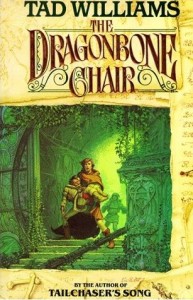 The Dragonbone Chair by Tad Williams
This is the stereotypical epic fantasy that begins with a young, inexperienced, immature youth toiling away as a kitchen boy in a castle, daydreaming his life away. […] And it’s easily the best in the genre’if you want to read a classic epic fantasy series that is not the Lord of the Rings, start here. Williams has several other books (the Otherland series, “The War of the Flowers”) that are also worth reading.
Considering Memory, Sorrow and Thorn is my favourite completed work of Epic Fantasy, I’d say they hit the nail on the head with their first choice. It’s a slow burn in places, but a great look at what can be achieved with the basic framework laid down by Tolkien.
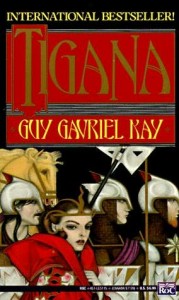 Anything by Guy Gavriel Kay
For those who don’t want to jump into a long series right away, Kay has written a number of standalone novels that take place in alternate worlds with a similar geography and history to our own, and they are all excellent. His strengths are strong characters and fantastic set pieces […] Kay also has a rather flowery writing style, which in most cases adds to the romance of the novel, although in some books (not listed here) he can get a bit carried away. Two of the books in the Fionavar Tapestry were the last books that I can remember making me cry.
Kay is a personal favourite of mine, and it’s nice to see he author of the article not confining his choice to only one of Kay’s novels. He’s an author who I save for a rainy day, when I feel like I’m beginning to become jaded on the genre, and he always sucks me right back in. His novels probably hold the most appeal for those who don’t read within the genre.
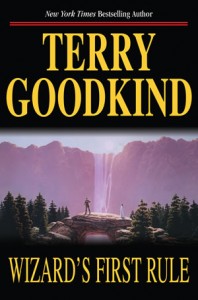 Wizard’s First Rule by Terry Goodkind
A fabulous single-volume epic fantasy. […] Sadly, Goodkind did so well on this completely self-contained fantasy that he wrote ten sequels, each one worse than the one before and more prone to excruciatingly long Ayn Randian monologues from the main characters. Read this book, and then pretend the others don’t exist.
Yeah, yeah, Terry Goodkind sucks. I know… but so does the author of the list. But, he’s right that Wizard’s First Rule (and a few of the following books) was a decent novel, and an easy starting off point for anyone looking to get into Fantasy. Plus, it only barely hinted at the tripe that Goodkind would start trying to sell.
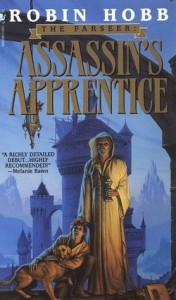 Assassin’s Apprentice by Robin Hobb
Hobb puts a slight twist on the usual starting point, as her protagonist is a royal bastard (and therefore not the unknown kitchen boy who secretly is the son of a king) who must find his place in court as an assassin. Hobb can be pretty hard on her characters, but it’s definitely worth the effort.
Again, another personal favourite of mine, and an author that I save for those rainy days, similar to Kay. Another slow burn, like The Dragonbone Chair, but worth every second of the read. Hobb’s stories are much more about the characters, and their relationships to the world around them, than it is about action and warfare. Hobb single handedly turned me away from my I-only-read-Brooks-Salvatore-and-Feist-because-they-rock-my-socks-off phase, and for that she has my eternal gratitude.
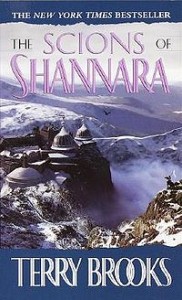 The Scions of Shannara by Terry Brooks
Terry Brooks is one of the old names in fantasy, having written one of the templates, “The Sword of Shannara,” back in 1977, one of the first (rather explicit) copies of Tolkien, complete with Sauron in the form of the “Warlock Lord” and Ringwraiths as “Skull Bearers.” Brooks improved with experience, and wrote “The Scions of Shannara,” the first of a much better four-book series (starring the descendants of the previous books), in 1990.
I’ve always thought that Terry Brooks doesn’t get the respect he deserves. Sure The Sword of Shannara was a bit of a rip-off of The Lord of the Rings, but it’s after that that things start to get really good. Personally, I would have put The Elfstones of Shannara on the list, rather than The Scions of Shannara.
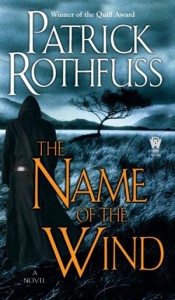 The Name of the Wind by Patrick Rothfuss
The main character, Kvothe, is already an infamous figure in semi-retirement at the beginning of the novel (known as the “King-killer”), and the book is centered on his telling the story of how he became who he is. It is well-executed and paced, and it has a section that takes place at a school – I always love a school setting.
Easily the newest novel on the list, it seems like Rothfuss continues on his destined path of becoming the next great name in Fantasy. The Name of the Wind was fantastic, so here’s hoping the two sequels maintain that quality. Rothfuss does an interesting job juggling both first-person writing with third-person perspective, which is difficult to pull off. All said, there’s a reason than fans are getting rabid and ravenous at the news of each further delay in the publication of the novel.
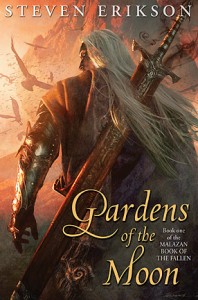 Gardens of the Moon by Steven Erikson
This book really isn’t for beginners, but if one reads the others and decides, like so many have before, that fantasy is where it’s at, then Erikson will be the reward. […] This book really isn’t for beginners, but if one reads the others and decides, like so many have before, that fantasy is where it’s at, then Erikson will be the reward.
Now, here’s a choice I disagree with. Erikson’s novels are dense, confusing and overwhelming – great if you’re willing to put the work in, but I can’t imagine a novel that would scare a fantasy-newbie off faster than Gardens of the Moon. If you want to go for the more complex, multi-layered Fantasy, go with A Game of Thrones George R.R. Martin.
In all, though, it’s nice to see a list like this from a publication like The New Yorker. When one considers that it’s not a list of the best Fantasy has to offer, but rather a good starting-off point for those wanting to jump into Epic Fantasy. With the exception of Erikson and Goodkind, I can’t really argue with much on the list, though it might have been nice to see it expanded to include the likes of Vance, Keyes and Abercrombie.
I’m sure this list will cause all sorts of uproarious commentary, so I’m curious to see who you all would include on your list?

Glad to see Robin Hobb on the list, though I’m disappointed in the exclusion of Greg Keyes, George RR Martin, and Joe Abercrombie (only just started The Blade Itself and already enamored with his writing). I can easily see Brooks, Goodkind, and Erikson bumped off the list to make room for those three.
I had seen the New Yorker list previously, but love the commentary on it. I couldn’t agree with Aidan’s take more. MST is part of my top-shelf and GGK will always fix what ails you.
I like Gardens of the Moon, so I’m happy to see it there, but they really could have replaced Goodkind with some good Fantasy like A Song of Ice and Fire, and I thing Brooks is debatable as well.
Had the first Fantasy book I read after LOTR been that horribly written Wizard’s First Rule, I’d never have touched the genre again. ;)
This is a list that could be the subject for endless debate. I wouldn’t include GotM on my list of essential reads; especially for a beginning fantasy reader. I might include Glenn Cook as a more approachable replacement.
The biggest omission on their list is most definitely Brandon Sanderson. Elantris or Warbreaker would be great intros in single volumes, and Mistborn is superb in every way. I’ve introduced many non-fantasy readers, and some non-readers entirely into the genre by means of Sanderson’s fluid pacing, interesting characters, and innovative plot twists.
My problem with the list is that it’s just too safe for me. I guess it’s a shock coming from them, but I expect some originality from The New Yorker. Here, I see none of that. Just very safe, very repetitive choices.
I think the list represents the worst of fantasy. and the first choice of tad williams is just representative of everything that is wrong with so much fantasy.
the Memory, Sorrow, and Thorn book given as the first example of where to start are the exact reason why i gave up most fantasy years ago (although that whole aspect of fantasy ive come to realise is only a sub genre even if its the dominant one)
Both the plot and ‘universe’ are utterly banal and generic and one of any number of LOTR identikit worlds, the characters are dull and, like everything else in it, generic. The prose is bland to say the least. and to call it overlong would be a massive massive understatement, its like it didnt have an editor.
of this kind of fantasy medieval/magic/knights/hero/ subgenre
the only author i intend to read any more of at some point in the future is GRR Martin, at least he has some fun and isnt so mind numbingly derivative and dull as most authors write that sort of stuff
fantasy can be so much more and so brilliant and limitless and more writers are beginning to realise that now, its a shame the list only reflects the narrowest view of fantasy. just thank god it didnt include the wheel of time books
I couldn’t disagree more with the choice of Tad Williams. As a longtime fantasy reader when I first attempted it, I couldn’t finish it the first three times I tried the book. As a book for a new fantasy reader? That’s a horrible choice.
Erikson is a rough choice, too.
Wizard’s First Rule isn’t a bad choice for a beginning high fantasy series.
I’d consider stuff like GRRM’s The Armageddon Rag, though.
If I was going to recommend any Big Fantasy series book on a list like that, it would be GRRM’s A Game of Thrones. Much as I love the Erikson, that would be a tough one for someone new to fantasy. And it does hurt not to put in Keyes or Paul Kearney.
But otherwise I would stick to Not So Big series openers where the novel is complete in itself and you don’t have to read more to feel satisfied (although you may want to): Martha Wells’s The Element of Fire, Holdstock’s Mythago Wood, Walter Jon Williams’s Metropolitan, and Hodgell’s God Stalk.
Then add a couple of standalones like The Anubis Gates by Powers and Waking the Moon by Elizabeth Hand.
That gives the new reader a range of different types of works that have stood the test of time well enough to be known quality, by authors who are still alive and writing.
The list looks pretty good… except that I’d have “A Game Of Thrones” instead of “Gardens Of The Moon”. And I’d seriously, seriously hesitate in picking Rothfuss over Abercrombie.
Some further comments,
Looking at the titles in the original article’s introduction GRRM would be an author I’d hesitate to add. From a reader’s advisory perspective (I am a librarian) GRRM’s distinctively realistic approach to fantasy and penchant for violence might be a bit too jarring for a reader whose only experience with fantasy has been through bestselling YA/children’s series (Harry Potter, Twilight, the Dark Is Rising).
I like the inclusion of Memory, Sorrow, and Thorne precisely because it is a rote, though well-written, example of stereotypical fantasy.
Tigana is an excellent choice for a standalone fantasy. I remember it being a powerful read.
Wizard’s First Rule, despite the craptastic nature of the late books, is a pretty solid epic fantasy that follows the trend of the “stereotypical” fantasy though has slightly more adult content then the Williams.
Assassin’s Apprentice is another good choice. Not only does it provide a nice twist on the typical fantasy hero but also includes the other fantasy staple: a talking animal (well, kind of) AND is a first-person narrative; something I’m of the opinion is rare in the fantasy field.
I haven’t read much Brooks so I can’t comment on that inclusion.
For a “beginning” fantasy reader I think Rothfuss is a better inclusion over Abercrombie. Abercrombie’s charm requires foreknowledge of many of the tropes and trends fantasy readers are familiar with; things a beginning reader might not be aware of.
Again, I might look for a different option over GotM, but the rest of the list is really solid. As a vanilla introduction to fantasy each of the novels chosen here provides a nice entry point and, based on the reader’s reaction, can inform future recomendations quite nicely.
I would think of adding David Eddings, David Gemmell, or James Barclay to the list. Have used these authors to successfully introduce people to fantasy in the past at work (I’m a librarian). I would probably leave off Erikson as he can be quite hard to read, and keeping all the plot lines straight can be a chore. I also really love Tad Williams but I’m not sure if I would suggest him for a new reader.
I’m pretty surprised that Dragonbone Chair and Gardens of the Moon made the list.
If the Memory, Sorrow, and Thorn series wasn’t so long, it’d be a great starter because it seems pretty representative of traditional fantasy (castles, hero, maiden in distress, etc.)
I’m not so sure about the Malzan series because it took me two tries to read it all the way through.
It really struck me looking back at this list how completely it consists of books concerned with wars, or other types of power struggles with nation-shaking (or even cosmic) consequences that must be resolved by violence (physical, magical or psychic).
Trying to come up with 7 good fantasy books that are NOT like that without going the full bore hyper-literary route (i.e., authors dead, non-American, or confirmed postmodernists), I came up with the following list:
1. Little, Big (John Crowley)
2. A Fine and Private Place (Peter Beagle)
3. Reindeer Moon (Elizabeth Marshall Thomas)
4. Winter Rose (Patricia McKillip)
5. Galveston (Sean Stewart)
6. The Crow Maiden (Sarah Singleton)
7. The Starts Dispose (Michaela Roessner)
Not easy. It’s pretty amazing how much of fantasy centers on tribal/nation/cosmic violence, just as mysteries center on personal violence.
I think the author of the list has identified several different types of epic fantasy (in itself an interesting idea) and pursued a good example of each. Unfortunately, I think he missed the spot more than he hit it.
The Big Traditional Epic High Fantasy:
He went for Tad Williams which is not a bad choice. I think the only viable alternative is really Jordan, which has the disadvantage of being incomplete and five times as long as MST. So Williams I think is a reasonably decent choice.
The Pseudohistorical Epic Fantasy:
A much more open field. Really, it’s either Kay or Elliott’s Crown of Stars series and in that contest Kay is always going to win. So good choice there as well.
The Gritty and Adult Epic Fantasy:
I’m always amazed when people say WIZARDS’ FIRST RULE is ‘okay’. It’s only ‘okay’ when compared to the later books in the series, which says a lot more about them than it does about this atrocious excuse of a novel. Sure, the Evil Chicken, Noble Goat and 150-page Objectivist rants are still to come, but this book alone has the child abuse, the tongue-severing, the magical castration scene, the 75-page BDSM torture sequence, several almost-rapes and quite a lot of Goodkind’s other pleasent tendencies, with the writing as bad as ever. Drop kick this entry off the end of the nearest pier and whack in A GAME OF THRONES.
The Thoughtful Character-Based Epic Fantasy:
If Hobb ever wrote a stand-alone that actually ended when the narrative drive actually ran out rather than carrying on for another 2,000 pages for no real reason, then I’d agree. As she never has, I’d boot her off the list and replace her with Daniel Abraham’s LONG PRICE QUARTET. Better prose, better characters, better pacing, better books.
The Cheesy 1980s Entry-Level Epic Fantasy:
If he’d said ELFSTONES I might have said maybe, but the HERITAGE OF SHANNARA sequence is overlong and turgid, so SCIONS can go. I’d replace it with Raymond Feist’s MAGICIAN, which is not only better and more original, it’s also relatively stand-alone (the 29 sequels are strictly optional).
The New Kids on the Block:
Rothfuss is a decent choice but it is very serialised and doesn’t have a climax, it just halts, almost mid-chapter. For that reason I think I’d have to replace it with Scott Lynch’s LIES OF LOCKE LAMORA, which is stronger and much more of a stand-alone. I’m tempted to suggest Abercrombie’s FIRST LAW, but I think the FIRST LAW works a little bit better once you’re familiar with the genre, then Abercrombie’s gradual messing around with the genre tropes is a lot more satisfying.
The Balls-to-the-wall, WTF is Going On Philosophical Epic Fantasy With Huge Explosions:
As with Abercrombie, I think Erikson works much better once you’re familiar with the genre and know what is going on a bit better. Also, given the series sharply divides even hardened fantasy readers, I’d say it would potentially scare off newcomers. So, as a total no-brainer, I’d substitute this for R. Scott Bakker’s PRINCE OF NOTHING TRILOGY, which is more approachable for newcomers to the genre (especially if they’ve already read SF like DUNE or mainstream historicals about the Crusades or the birth of religions) whilst addressing some of the same ideas and issues as Erikson far more coherently.
As someone pointed out, this is a very ‘safe’ list. Boring, even. I guess their thinking was that when you are trying to introduce people to the genre, you want to go with safe choices.
As someone who basically got into the genre through Eddings and Tad Williams, I agree that Dragonbone Chair is probably not a bad choice, but I am surprised that Eddings is missing. I’m glad Rothfuss is on the list, he is very readable. Gardens of the Moon? Very odd selection. As other people pointed out, if you are new, it will just scare you off (heck, even my husband, who’s been reading fantasy for years, could not get through it).
I guess my main point is that they should have included a few more books that do not necessarily fall into traditional fantasy categories. Lies of Locke Lamora has been mentioned already. It’s a really fun read and would be a good choice.
Funny how he essentially says that LOTR is ‘on about a fourth-grade reading level’. Really?
The problem with “Gardens Of The Moon” is that it reads like the _second_ book of a series, like we already know who all the players are and what’s been going on. (Also, Erikson has a regrettable tendency to back the wrong horse–that is, he writes extremely interesting characters who don’t make it through the book because Erikson decided that they were side characters.)
I also agree that GRRM is a better choice for the slot occupied by Goodkind. If anything, Goodkind writes on about the level of an airport-bookstore murder mystery; GRRM at least brings some craft to the page.
Locke Lamora: I dunno, I enjoyed what I was reading but I don’t think it’s what people really think of when they think “fantasy”. It’s a little too conventional– I’d recommend Cook’s “Garrett” series instead.
Abraham: Yes indeedy!
[…] Graham Sleight’s corrective at the Locus bog; Mark Newton’s corrective; Aidam Moher basically likes the original; Adam at The Wertzone thinks the focus is right, but quibbles with particular choices; and Larry […]
[…] Aidan Moher doesn’t think Brooks gets the respect he deserves, but I’m not going to be the first one to step up to the plate. I admit that I haven’t read this book in particular, but I can’t really get behind Terry Brooks in general. To be diplomatic, when I read Sword of Shannara I realized that it hadn’t age well. I read through as much of Elfstones as I could, but had to stop. So I figured I would jump ahead in his writing career and read what was then his latest book: Ilse Witch (”Voyage of the Jerle Shannara”). I haven’t gone back since, and I don’t know when I will. […]