It was a dark and stormy night.
The young farmer sat at the bar, a watered beer wrapped in his hands. The Wizard beside him, beard long and grey, was fidgeting in the worst way, making the country bumpkin even more nervous. This was all more than he bargained for.
Lightning flashed outside, setting sparks to dancing in the Wizard’s gimlet eyes.
“You’re a Wizard, Larry,” said the Wizard.
The young lad gawped at the old man. Could this day get any worse? His family had been killed by orcs, and now this Wizard was telling him that he was the only hope to destroy the Evil Dark Lord™ by finding the mythical magical weapon, which was lost further back in time than even the memories of the oldest crones stretched.
“I can’t do this!” said Larry. “I can’t even read, but you expect me to defeat the Dark Lord, who has enslaved entire races?”
“Of course. You are the only one who can. You have a hidden legacy, passed to you from your royal ancestors.”
Larry shook his head, resigned. It was going to be a long day.
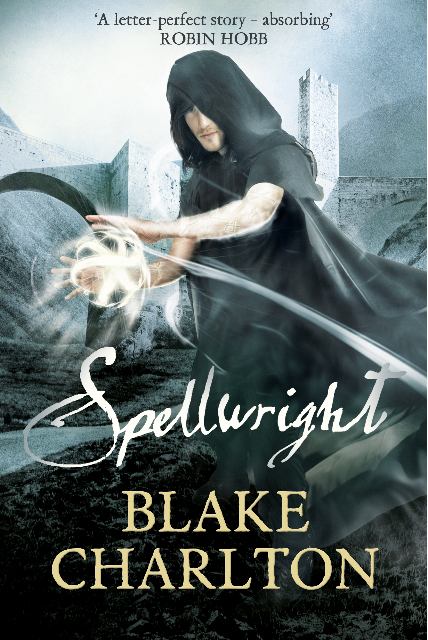
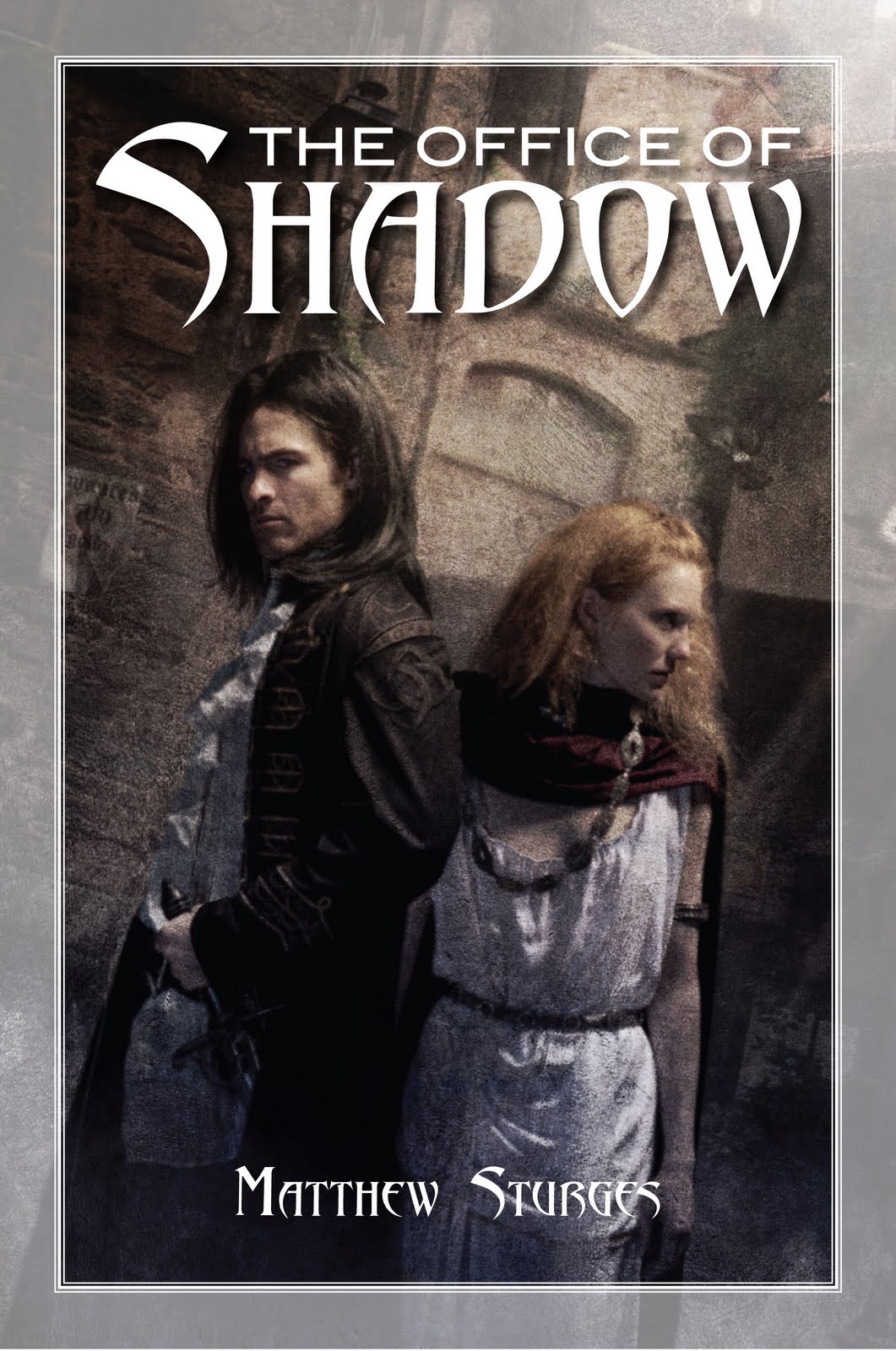
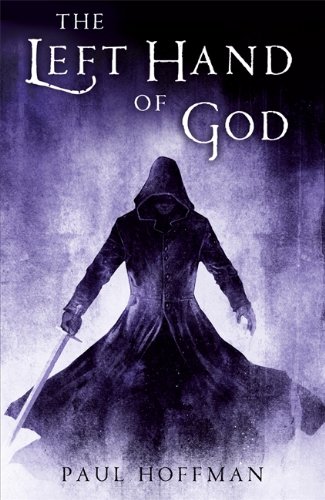
We all know them. When subverted, they work to the authors advantage, when let run wild, they bog down a story. If an author approached an editor or agent with a story like the one I wrote above, they’d be lucky to have the first page of their manuscript read… yet, when a book does get picked up, and it moves down the line to the marketing department, it often comes out the other end with a cover riddled with cliches. What’s the deal with this? Clichés within a novel are bad, but clichés on the cover help sell more novels?
So, my question for you:
Why are clichés shunned in the text of novels, but often embraced on the cover? Should publishers look for the same originality in their art departments that they seek in their authors?
So, great readers, writers and publishers, what are your thoughts on clichéd novels and clichéd covers?

I don’t think clichés are frowned upon in stories that much. For example, you love a good trad fantasy yourself, right? And so do a heck of a lot of other readers. Personally with my own writing, I hope to veer heavily away from any clichés where possible, but that’s my own thing, a challenge to myself. I have nothing against those who do embrace cliché from time to time (though I might not read those books – I simply don’t have enough time to read them).
With regards to Art, you have to remember that a cover is doing a totally different thing altogether. It’s not pioneering – it’s acting out a marketing role, and its success or failure (at least as far as a writer is concerned) should be judged on how well it sells.
I want my book to be read, not put in a frame. The right cover can – and does – make the difference in a successful career or otherwise. Yes, it is that simple.
I think the point though, Mark, is this:
Readers love the stuff. That’s definitely not in question. It’s publishers who do not. Not the current people publishing, at least.
The question is, why, when they are more than willing to put cliched covers on the books?
Reading this twitter comment thread is like having a seizure.
I think there are other factors at work than just creativity vs. marketing. Some publishers are moving away from artists entirely, because it’s cheaper to have a full-time graphic designer who makes all your covers by manipulating stock art/textures in Photoshop to please the committee than it is to commission every cover separately. A lot of the hackish covers we see are the result of that, and I think it’s penny-wise and pound-foolish.
@Shawn – Yep. That was more or less my point.
@Peat – Yeah… this twitter plugin might not be working so well as I had hoped. It’s fine for the odd comment, a little terrifying for twitter conversations.
To your point, if covers are so important, doesn’t it behoove publishers to have the best cover possible for every novel, regardless of money? I don’t know enough about the inner workings of the industry to really have an answer for that.
Orbit did this with the paperback release of Best Served Cold and Version 43, both of which I liked. But the same technique didn’t work so well with something like the UK version of Spellwright, which I posted above. Then there’s The Hundred Thousand Kingdoms, which has beautiful art and is gaining a huge amount of buzz based partially on the strength of the cover.
Every publisher is different, but I think the industry in general underinvests in marketing, which is what leads to these cost-saving decisions that minimize risk but also stifle creativity and likely hurt profit in the long run.
It’s easy to blame marketing departments, especially when they make seemingly bone-headed decisions, but when you see that in many cases there are just a handful of people handling marketing and publicity for hundreds of books every year, it becomes a lot harder to point fingers at those relatively low people on the totem pole who are just trying to make the most out of budgets that are cut on a regular basis.
Orbit is a generally smaller operation, and their management has taken a much more creative approach to covers with some home runs and some foul balls. I’m happy to see it and respect what they’re doing, but time will tell if it pays off in the grand scheme of things. It certainly helps that they have a lot of great authors.
I’m not sure which I dislike more; cliches or covers with photos of real people on them.
I think that cliches are something that’s generally frowned upon, but is liked regardless. Pretty much an (almost) industry wide guilty pleasure. We like to say that we’re all doing something different, but at the same time there’s an incredible lure about reliving that one great story…
Though it’s also worth pointing out that the authors you mentioned who’re generally brought up for originality AREN’T the ones with the cloaked-figure covers. Not saying that a cliched cover reflects a cliched book, but it is true that you don’t see a cloaked Meerkat on the cover of Veniss Underground.
It must come down to dollars…because the covers are meant to catch the eye, and even though we are told not to, people judge books by their covers. (I have been guilty of this in the past). I guess certain styles of covers must sell well, or somehow are correlated to good sales and thus we see more of the same kind of cover. I’m not a fan of the “guy in a cloak looking tough” covers…but it beats the hell out those old Wheel of Time covers by Sweet.
A vote against the Twitter feed here. I don’t like those tweets creeping in through the backdoor (I don’t touch Twitter with a Roman pugio;) ).
That said, it’s your blog and if you enjoy them, I’ll have to try and pick the real comments out of the bird talk. :)
Covers appeal to people’s knee-jerk, instant first impression. It’s mostly thoughtless and readers respond instinctively. If it looks like a cover of a book they liked before, they’ll pick it off the shelf and take a closer look. Cliches work very well here. It doesn’t matter if you look back at the cover later more closely and realize how crappy it is–it’s too late! It succeeded in its job to get you to pick up the book.
I don’t like it any more than you do, but the marketing people know how consumers behave and they’ve got us pegged.
I agree that people do judge books by their covers. I remember when I was young and I would go to the bookstore, and I would browse the Science Fiction/Fantasy section and covers were the things that grabbed my eye in a vast rows of books because sometimes they are just so much more appealing than reading dozens of back-cover blurbs. Admittedly I now tend to base my next read off of reviews and actual knowledge of the genre, but I think the cover-art debate is important. Look at how much buzz The Hundred Thousand Kingdoms has gotten, and a lot of it involving the cover. But I think this is partially because it is not a cliched cover, so moving over to that topic, I think people really want to see something new and original from covers, if they are going to be artistic. I don’t like the covers that seem to be popular a lot now a days where it almost looks like a photograph taken of 2 people and then ‘altered’ to look more fantastical. For me, the good covers will always be ones that look artistically drawn (i.e. the Eye of the World cover) or the simple ones.
Also, @Gabriele- I agree to some extent. I don’t mind twitter feeds generally, but it does but me a bit when people are posting comments longer than a twitter feed allows so they do it in chunks so you have 4 comments for what is really 1 comment. Sorry twitterers, not trying to be harsh!
There’s actually a pretty interesting discussion of this over on Joe Abercrombie’s blog (cover art for art’s sake vs shifting units): http://www.joeabercrombie.com/2010/02/interview-with-artist.html
I don’t mind cliched covers too much, my problem with most fantasy books is that the quality of the artwork is generally just appalling, to the extent where it’s embarrassing to get the book out on the train. Until we all have e-readers, cover art is important. Everyone does judge books (and the person reading the book) by their covers on some level.
The ‘cliched’ covers just seem to be following trends. One book with a certain type of cover does well, so a whole load of books published after it have the same type of cover, hoping to lure in the readers who bought the first one. It happens with everything. It’s not original, but marketing isn’t necessarily about originality, it’s about brands, trends and recognition. You have about 2 seconds for a cover to appeal to someone who glances at it in a bookshop – much easier (and safer) to go with something easily recognisable – that shouts ‘this is a fantasy novel of X type’.
Well I am glad there are some excellent and really original novelists out there, but sometimes it’s quite nice to curl up with something comfortingly familiar. Is almost the same argument as a series in many ways. I know what I will get from each new Dresden book and I can’t wait, but I wouldn’t read only series forever, that would be dull.
“Reading this twitter comment thread is like having a seizure.”
Glad I’m not the only one that felt like that. Well said.
From a consumer stand point I can tell you that I roll my eyes at both: cookie cutter covers, and cliched writing. Not always, but both can keep me from a purchase.
“Reading this twitter comment thread is like having a seizure.”
x3.
As I understand it, one big purpose of those covers is to signal to the casual browser that “THIS IS A FANTASY BOOK” in 1.5 seconds or less. Visual “cliches” are easily recognized symbols that help readers make that connection faster. They’re just like the radioactive trefoil — except, uh, the opposite, in that you want to grab the viewer instead of warning them off. But the point’s to have something that the casual browser can categorize at a glance.
It would be spiffy if we could all have those symbols rendered beautifully by Dan Dos Santos, but alas, art budgets are finite.
FWIW I have a secret pet theory that we’ll see a resurgence in quality art on covers as a result of two factors converging:
(1) the Internet, and collection/display sites like Epilogue and CGTalk, make it easier than ever before for art directors to find amazing new talent all over the world; and
(2) quality original art on the cover of a book is one of the quickest and most surefire ways of distinguishing a professionally produced novel from a self-published work. No judgment on the quality of the work inside — as they say, don’t judge a book by its cover — but to the extent that readers shy away from self-published work, and associate clumsy photomanipulations with self-published fiction, pro publishers will probably start moving back toward the use of good original art.
That’s my crackpot theory, at least. Maybe it’s wishful thinking because I love original fantasy art and want to see more of it, but… it _could_ happen, right?
However clichéd those hooded figures are, I still prefer them to the anatomically challenged horrors that got slapped on the WoT paperbacks and JV Jones’ Fortress of Black Ice. ;)
[…] raised its ugly head once again: Why are clichés shunned in the text of novels, but often embraced on the cover? Should publishers […]
We all love clichés! If say you don’t, then you are lying! That’s why I am reading Sci-Fi and Fantasy novels. It is how and the amount of clichés used in a novel that is important.
Budget is a HUGE factor. And the plethora of e-publishers blossoming every day demands quicker, cheesier, and cheaper covers. (Most really small e-presses actually let the authors art direct; there’s your cliche’s.) But I do think the public is getting jaded with the slick, digital stuff. Even the digital paintings are beginning to get less buffed and polished, more HUMAN. I certainly hope photomanipping loses its appeal, and variety starts gracing covers again!
You used my first name to tell such a clichéd tale? You’re dead to me!
;)
Hah! I’d love to take credit for such snark, but it was simply the first name to pop into my head that rhymed with ‘Harry’.
[…] whose take on Fantasy covers are infamous for their keen assessment and criticism) and his post “I ask you: Clichés – A Double Standard” over at A Dribble of Ink, we will be addressing some of the questions he asked (Why are clichés […]