Yearly Archives: 2009

As perhaps you’ve noticed, the New Yorker’s list of Seven Essential Fantasy Reads caused a bit of a stir in the blogosphere when it was released a short while ago. Some people liked it (like me), some people did not (like Mark Charan Newton, author of Nights of Villjamur), and opinions popped up all over the place.

I’ve read a few best-selling fantasy series – Harry Potter, The Lord of the Rings, His Dark Materials, Twilight, Narnia, A Wrinkle in Time, The Dark Is Rising – but I would never describe myself as an aficionado. First because all these books are on about a fourth-grade reading level, and second because I read them for their best-sellerness, not their fantasy-ness (to stay in the loop, I tell myself).

[…]

I asked [a friend] what he would recommend for someone like me – a beginning fantasy reader ready to graduate to more serious (but not too serious) fare. Here are his picks, complete with explanations of their greatness. He sent them to me with the reassurance that ‘there is no shame in being a real fantasy reader.’

It dismayed me a bit, to see that I think some of the commentors seemed to miss the point of the thread. Adam at the Wertzone and James at Speculative Horizons and Suvudu had nice,even responses, but Newton and Larry of OF Blog of the Fallen presented lists that, while great for someone like me who’s decently well-read in the genre, are probably unstuiable for someone who’s just come off of The Lord of the Rings and Harry Potter.

In the spirit of the blogosphere and vanity, I figured I would throw my name into the hat, and present my own list of books I consider essential second-step Fantasy novels. Just keep in mind that my tastes (and history) in the genre tend towards Epic Fantasy, and also that we naturally want to direct people down the same path we followed into the genre we love so much. I took the Tolkien -> Brooks/Feist/Salvatore -> Goodkind/Jordan -> Martin/Erikson route into Fantasy, and my list will reflect that, if just a little. Of course, my tastes have broadened significantly, so I’ll slip a few wildcards into the mix as well, just for a bit of the variety that the New Yorker list was missing.

The List
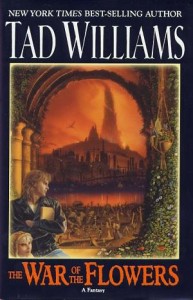
The War of the Flowers by Tad Williams

War of the Flowers by Tad Williams

This space could be occupied by Terry Brooks’ Running with the Demon or Neil Gaiman’s American Gods, which are both fantastic examples of what Urban/Contemporary can be, but The War of the Flowers is the one that’s stuck with me the most. It’s an eerie look at the classic tale of a person from our world getting sucked into a mysterious Fey world, but told in a way unlike any other I’ve come across. Instead of a quasi-medieval setting, Williams’ version of the Fey world has progressed along with ours and is filled with Skyscrapers and and warring Fey lords, night clubs and goblins, skyscrapers and obnoxious pixies. It’s another stand-alone novel, and it’s been a huge inspiration on me as a writer. Is there any higher praise I can heap upon it?
Read More »
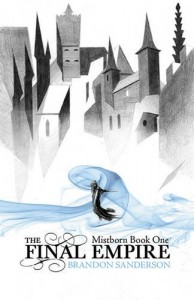
The Final Empire by Brandon Sanderson

The Final Empire

AuthorBrandon Sanderson

Paperback
Pages: 672 pages
Publisher: Tor
Release Date: July 31, 2007
ISBN-10: 0765350386
ISBN-13: 978-0765350381


Back in December of 2007, Brandon Sanderson was just like every other new-to-the-scene author, just trying to make his way as a young author of Fantasy novels. He had a few published novels under his belt (and a whole slew more hidden in the deep corners of his house), had been getting good critical acclaim and decent sales, but was far from a household name. Things were looking up for Sanderson, but no one had any idea of just how high he would climb. Then came the announcement: Brandon Sanderson was chosen to complete the late Robert Jordan’s legendary Wheel of Time series.

Since then, Sanderson’s stock has risen to meteoric heights. His own novels have been released to strong critical acclaim and he’s landed himself on the New York Times Bestseller list. Wheel of Time fans wait with bated breath for the fall release of The Gathering Storm, eager and/or reluctant to see whether Sanderson is able to do justice to their favourite work. As someone who will not be reading The Gathering Storm when it arrives, I was nonetheless curious to see what all the fuss was about. I had dipped my toe in his work before (a half-finished copy of Elantris still sits on my bookshelf), and being on the hunt for some meaty Fantasy, I picked up The Final Empire, the first volume of his Mistborn trilogy.
Read More »

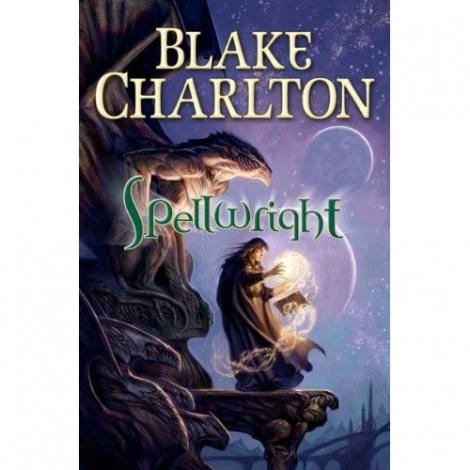
Just the other day, I featured Blake Charlton’s Spellwright as a book to keep an eye on. It’s got neat cover art, great early buzz and an interesting (if slightly typical) setup.

Spellwright by Blake Charlton

Imagine a world in which the written word can leave a page to physically lift a man into the air, sharpen his pitchfork, or stop his beating heart.

Such a world is home to Nicodemus Weal, a young wizard with tremendous talent for forging the magical runes which can create spells. Indeed, throughout his adolescence, Nicodemus was thought to be the Halcyon, a powerful magic-user prophesized to save the land from a coming apocalypse known only as the Disjunction.

There was only one problem: runes must be placed in an exact order to create a spell. Any deviation results in a “misspell”–a flawed spell that behaves in an erratic, sometimes lethal, manner. It so happens that Nicodemus is a “cacographer,” one unable to correctly reproduce even simple texts.

Now twenty-three, Nicodemus lives in the devastating aftermath of having failed to live up to prophecy. His magical talent is restricted to the kitchen, where he cleans pots and scrubs walls with childish language. Life slips by one aggravating day at a time until a visiting author identifies an ancient curse infesting the young wizard’s mind. The malicious text has, in fact, stolen his ability to spell. Suddenly, the two wizards closest to Nicodemus are murdered violently and he is forced to flee his home in a desperate quest to recover the stolen part of his mind.

SPELLWRIGHT is the first volume of Nicodemus’ journey across the kingdoms of Faragard, his encounters with monsters and gods who distort language to their own ends, and his internal struggle to accept himself as whole without his ability to spell.

I didn’t know it at the time, but Charlton has made the prologue at the first four chapters of the novel available to read for free on his web site. Just be warned that they are early drafts, and may not totally represent the final published novel.

You can find the sneak peek of Spellwright HERE.

Comments closed

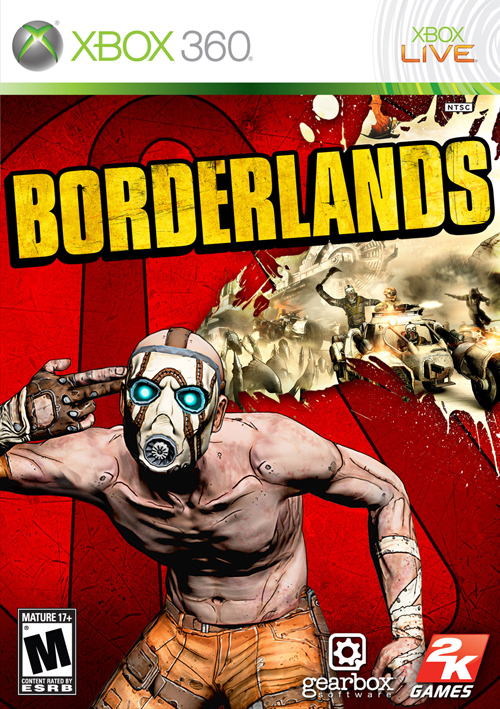
Despite loving to post new Cover Art for novels, I don’t do a whole lot of posts about videogame Box Art. When I saw the artwork for Borderlands the upcoming FPS/RPG hybrid from Gearbox and 2K Games, I knew I had to go out on a limb.

Borderlands Box Art

So rad. It’s nice to see some publishers still willing to take a chance with their box art, instead of just resorting to the same lame-o designs we see all over the place. 1up.com has a nice preview, if you’re interested in learning more about Borderlands.

Comments closed

The New Yorker is about as uppity and high-brow as it gets, so imagine the shock when they ran an online article about the best jumping in points for our great genre. And, you know what, the list is pretty damn good.

I’ve read a few best-selling fantasy series – Harry Potter, The Lord of the Rings, His Dark Materials, Twilight, Narnia, A Wrinkle in Time, The Dark Is Rising – but I would never describe myself as an aficionado. First because all these books are on about a fourth-grade reading level, and second because I read them for their best-sellerness, not their fantasy-ness (to stay in the loop, I tell myself).

[…]

I asked [a friend] what he would recommend for someone like me – a beginning fantasy reader ready to graduate to more serious (but not too serious) fare. Here are his picks, complete with explanations of their greatness. He sent them to me with the reassurance that ‘there is no shame in being a real fantasy reader.’

The List

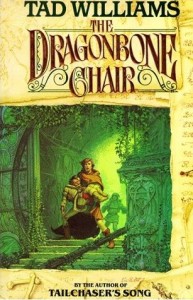
The Dragonbone Chair by Tad WilliamsThe Dragonbone Chair by Tad Williams

This is the stereotypical epic fantasy that begins with a young, inexperienced, immature youth toiling away as a kitchen boy in a castle, daydreaming his life away. […] And it’s easily the best in the genre’if you want to read a classic epic fantasy series that is not the Lord of the Rings, start here. Williams has several other books (the Otherland series, “The War of the Flowers”) that are also worth reading.

Considering Memory, Sorrow and Thorn is my favourite completed work of Epic Fantasy, I’d say they hit the nail on the head with their first choice. It’s a slow burn in places, but a great look at what can be achieved with the basic framework laid down by Tolkien.

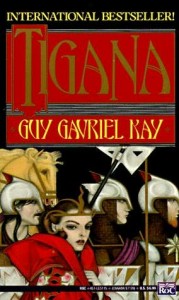
Tigana by Guy Gavriel KayAnything by Guy Gavriel Kay

For those who don’t want to jump into a long series right away, Kay has written a number of standalone novels that take place in alternate worlds with a similar geography and history to our own, and they are all excellent. His strengths are strong characters and fantastic set pieces […] Kay also has a rather flowery writing style, which in most cases adds to the romance of the novel, although in some books (not listed here) he can get a bit carried away. Two of the books in the Fionavar Tapestry were the last books that I can remember making me cry.

Kay is a personal favourite of mine, and it’s nice to see he author of the article not confining his choice to only one of Kay’s novels. He’s an author who I save for a rainy day, when I feel like I’m beginning to become jaded on the genre, and he always sucks me right back in. His novels probably hold the most appeal for those who don’t read within the genre.

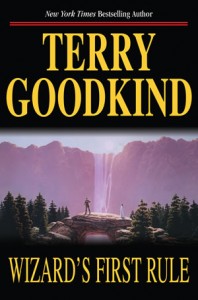
Wizard's First Rule by Terry GoodkindWizard’s First Rule by Terry Goodkind

A fabulous single-volume epic fantasy. […] Sadly, Goodkind did so well on this completely self-contained fantasy that he wrote ten sequels, each one worse than the one before and more prone to excruciatingly long Ayn Randian monologues from the main characters. Read this book, and then pretend the others don’t exist.

Yeah, yeah, Terry Goodkind sucks. I know… but so does the author of the list. But, he’s right that Wizard’s First Rule (and a few of the following books) was a decent novel, and an easy starting off point for anyone looking to get into Fantasy. Plus, it only barely hinted at the tripe that Goodkind would start trying to sell.
Read More »