Yearly Archives: 2011

'The Grinders' by Adam CallawaySetting is king in ‘Walls of Paper, Soft as Skin,’ and Ars Lacuna, Callaway’s fictional city and muse, is an absolute wonder, even in the brief time we get to spend with it in this (very) short story. A haunting, weird city, Ars Lacuna breathes originality and creativity, and in very few words Callaway is able to conjure up another world that just begs to be explored. There are several quotable passages within the thousand words of the story, but this was possibly my favourite:

“Tomai. Did you hear Tomai? An entire debarking team swam into the termite’s jaws. On purpose Tomai!” Kork said pulling at Tomai’s frayed shirt. Kork stood waist high on his tiptoes.

“I can believe it,” Tomai said. He looked for a pine or birch pole.

“Really Tomai? I can’t. Debarkers have sickle bone arms. They can swim better than any trout Tomai! Who’d want to kill themselves with features like that Tomai?” Kork made wild hand gestures.

“I can believe it.”

“Even if they decided, ‘Okay, let’s do this girls,’ they could have come up with a better way. The autoblades would have made short work of them. The paper sizers down the way too. But being hacked up and digested by a bug the size of a city block though! Really Tomai? Can you believe it Tomai?”

Tomai spotted a curved pine pole under a stack of oak. He grabbed it.

“I can believe it.”

Kork squinted. “I’m not talking to you anymore today.”

Tomai dragged his pole through the inside flap. Into Parchment Run. Where the river exchanged a canopy of sky for corrugated tin. Dozens of pole workers were straightening sawn, debarked logs to enter the jaws of the bug. He took an open spot.

Callaway’s creation is unlike anything I’ve run across before, a city built on paper and books, words and whims; a loveletter to literature. But, like Tomai, I can believe it.

Within this wonderful setting is only the barest hint of a plot or forward narrative; instead, Callaway lulls the reader in with his quiet, abrupt prose and paints a stark picture for them. Only at the very last does Callaway call back to the opening of the story and, in a lovely bit of world- and character-building, twists things around in a way that encourages the reader to go back and re-read the tale from a new perspective, making its brevity not a weakness but a strength. An enchanting introduction to Callaway’s fiction and more than enough to convince me to explore his other work set in Ars Lacuna.
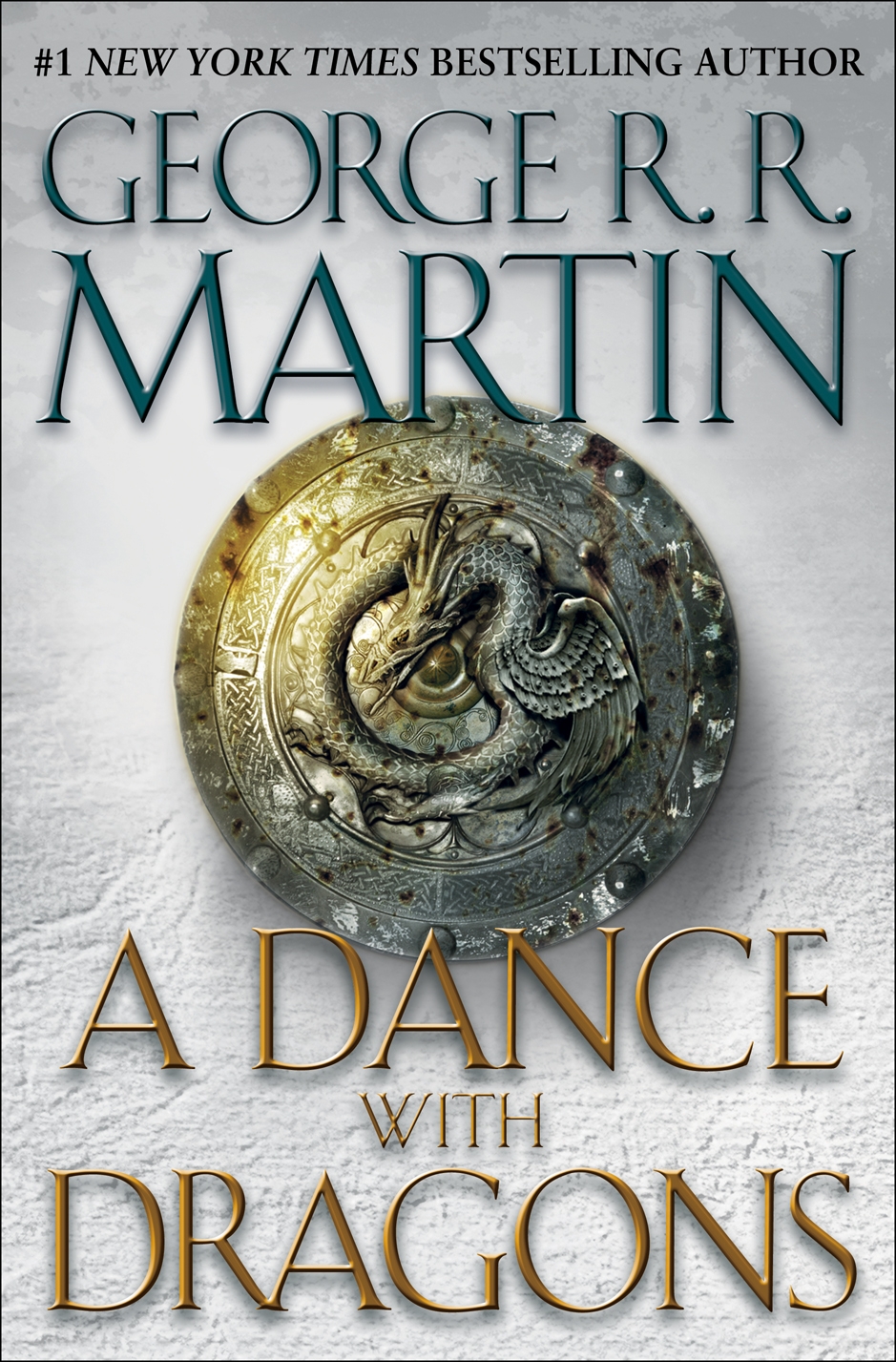
A DANCE WITH DRAGONS by George R.R. MartinYarr! Some mild spoilers for A Dance with Dragons and some egregious spoilers for the entirety of A Song of Ice and Fire appear in this article!

Well, well. Where to even begin? Having read several handfuls of reviews for A Dance with Dragons around the ‘net, it seems impossible to begin a commentary on the novel without referencing the infamous Wait™ and the fan vitriol (and endless passion) associated with Martin’s ever-growing audience. Of course, I’ve gone on record now and then to mentioned that I don’t really give a damn about waiting for a novel, this one or otherwise; there were plenty of wonderful stories to keep me occupied between A Feast for Crows and A Dance with Dragons, because, well… I enjoy many authors (new and well-established) alongside Mr. Martin — something I’m sure he would appreciate.

I’m now about 300 pages in. (I’m a slow reader, remember?) Bombs have been dropped (or eggs, mayhap?), ground has be re-tread (hello, Jon Snow!) and Tyrion has drank (drunk? drinked?) a lion’s share of wine. Besides one or two ‘twists’ (and one ‘fuck yeah!’ beheading), the pace of the narrative has been glacially slow, but enjoyable and engrossing all the same. The concise, labyrinthine storytelling of A Game of Thrones is now gone completely, replaced instead by a huge, sprawling behemoth of storytelling. Instead of having each chapter of the novel moving an overall novel-spanning narrative arc towards its conclusion (adding elements or perspectives only available to the viewpoint character), we now have three disparate stories running in parallel. Two of the major storylines, Dany and Tyrion, appear to be on a collision course (and, as the earlier novels would indicate, I expect that all the little connecting threads will appear retroactively once I look back on the completed novel), but Jon Snow’s chapters seem entirely self-contained (though, I suppose it could be argued that they were as such even as early as A Game of Thrones); and Bran Stark’s chapters, few-and-far-between (much to my chagrin) as they are, are even more disconnected from the rest of the narrative.
Read More »

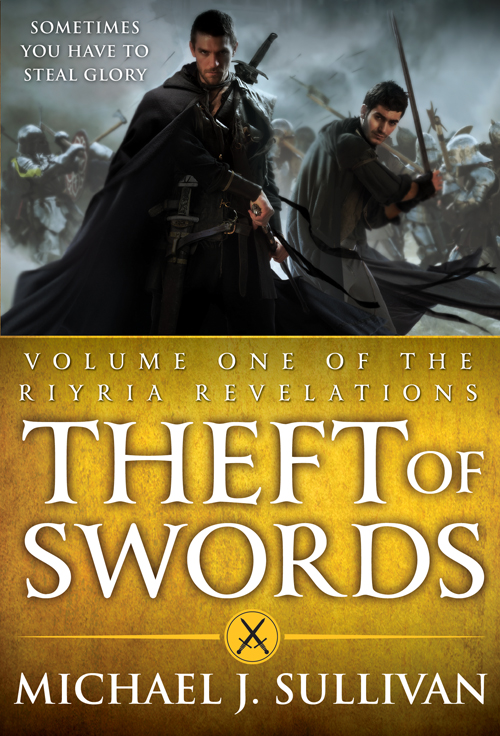
Theft of Swords by Michael J. SullivanSome ideas have great power, and in fantastic literature, one of the mightiest of these is the idea of The Hero. The Hero is a very particular sort of creature: it (quite often “he”) is the protagonist of many stories and serves as paragon, savior, and metaphoric proponent/enactor of ideology. The Hero reflects aspirations and serves as inspiration both in the story and to the reader. This can be a useful, evocative device to employ in a story. The problem is, some of The Hero’s admirers use this device to constrain the idea of fantasy and limit the boundaries of imagination that writers and readers use in their engagement with fantasy literature.

Author Michael J. Sullivan discussed “Fantasy as Fantasy” on his blog recently, and after reading his opinion, I wanted to respond not as a proponent of “the other side” that he establishes, but as a critical reader of fantastika. I was perturbed not by his defense of The Hero, but by his assumption that his position encompassed all of “fantasy” and that fantasy should ideally be Just One Thing. This idea extended not only to the literary genre, but to the very notion of what “fantasy” means. I think that there is far more potential in both of these ideas when we open them up rather than try to set limits upon them.
Read More »

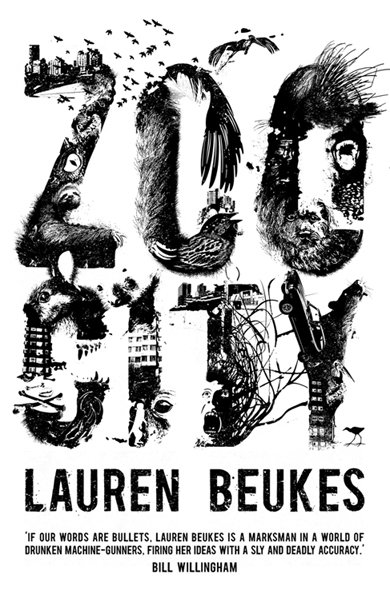
Zoo City by Lauren BeukesI’ve often joked about how much I need clones. But alas, like time machines and teleportation devices, photocopy-style human cloning just isn’t there yet (unless you believe the dubious claims of the Raelian cult). Luckily I’ve got something even better than an army of Laurenz: a collection of brilliant brains.

It would be neat if they were brains in jars, directly hooked up to word processors to churn out pages while I sleep, but I suspect that probably takes a lot of electricity and probably a mad scientist to maintain them – and mad scientists and their inevitable slobbering loathsome assistants cost a lot to feed.

So, nope. I’m talking the kind of brains that walk around in people casings – the kind that feed themselves because they have jobs and credit cards. And when it came to writing some of the additional materials for Zoo City, I was very happy to be able to raid those brains for their genius.
Read More »