Posts Categorized: Cover Art

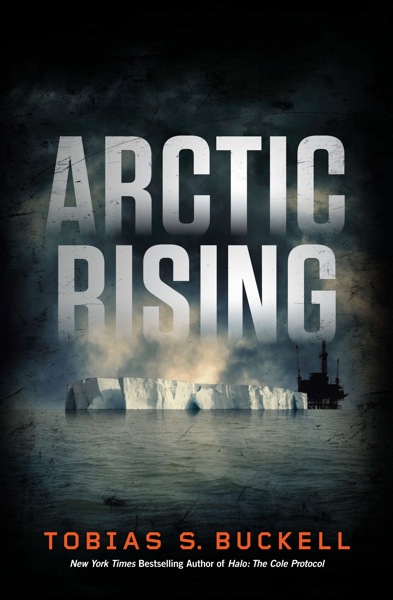
ARCTIC RISING by Tobias Buckell

Global warming has transformed the Earth, and it’s about to get even hotter. The Arctic ice cap has all but melted, and the international community is racing desperately to claim the
massive amounts of oil beneath the newly accessible ocean.

Enter the Gaia Corporation. Its two founders have come up with a plan to roll back global warming. They plan to terraform Earth to save it from itself—but in doing so, they have created a superweapon the likes of which the world has never seen.

Anika Duncan is an airship pilot for the underfunded United Nations Polar Guard. She’s intent on capturing a smuggled nuclear weapon that has made it into the Polar Circle and bringing the smugglers to justice.

Anika finds herself caught up in a plot by a cabal of military agencies and corporations who want Gaia Corporation stopped. But when Gaia loses control of their superweapon, it will be Anika who has to decide the future of the world.

It looks like exactly what it’s meant to: a near-future eco/political-thriller. Bold; forboding. Nice, clean typeface. Though I’m sad to see Buckell temporarily leave his Xenowealth setting behind, he’s a smart guy who (if his blog‘s any indication) has the uncanny ability to take dense science and pare it down in a way that’s interesting and and easy to wade through to his readers without losing any of the meat of the issues (in this case, global warming and the general downward spiral of our home planet) discussed. Not my typical sort of novel, but with Buckell’s name attached to it, it’s a must-read.

Via Tor.com:

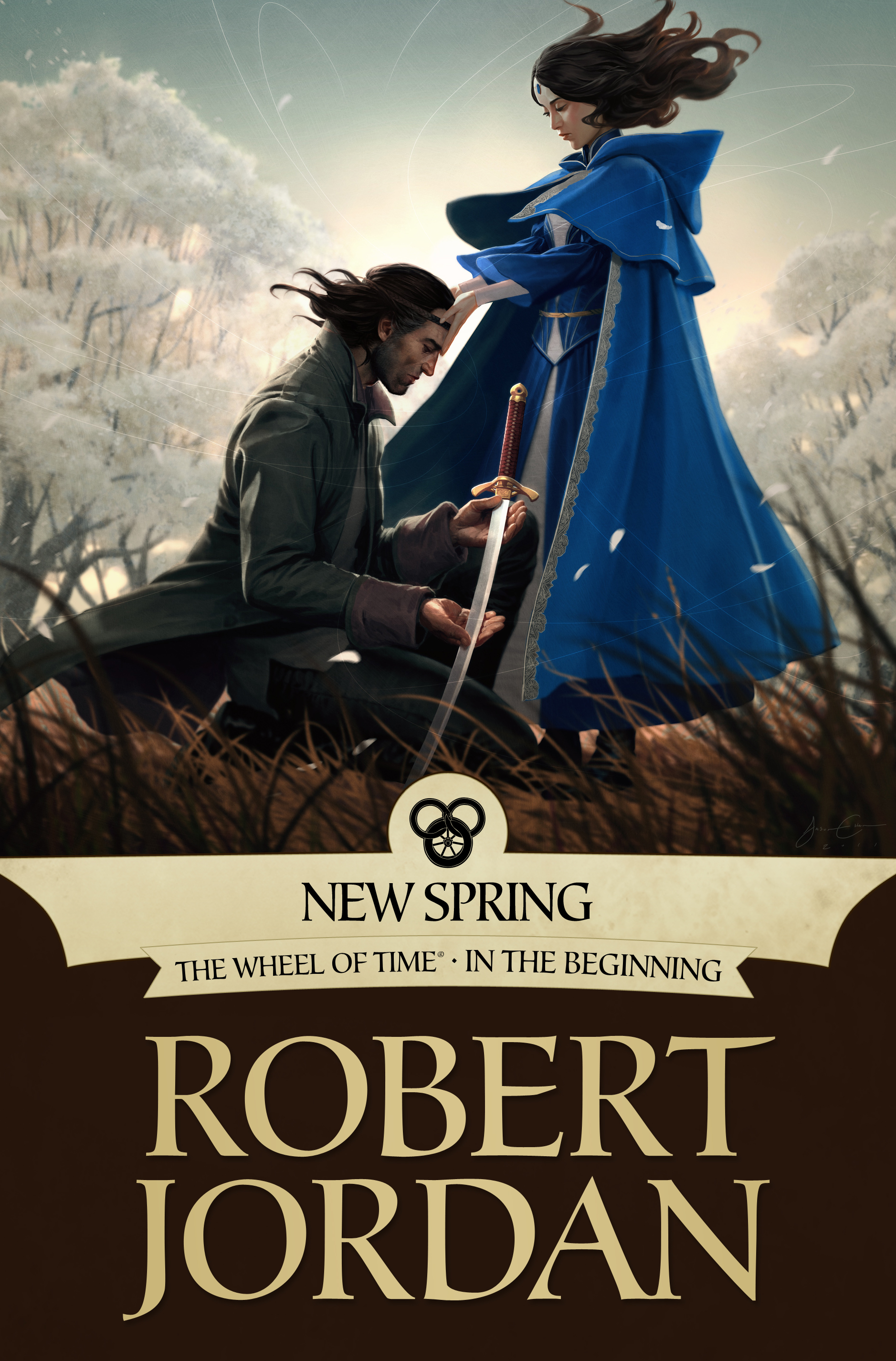
NEW SPRING by Robert Jordan (eBook Edition)

Irene Gallo, art director at Tor, on Chan and the cover:

I’ve been a fan of Jason Chan’s since he was still in school, although I didn’t know he was still in school at the time. I had been following his work online for a while and, yes, clearly he was a young artists but I was still shocked when he mentioned going to his graduation during our first project together. He is a quiet and thoughtful artist and over the past handful of years has worked to hone his craft, both as a freelance illustrator and video game concept artist. Jason combines a love of manga with a strong background in traditional narrative painting and I was excited to get the chance to work with him on New Spring.

When it came to scenes to depict, it seemed natural to revisit Moiriane and Lan. New Spring is their story before Rand’s begins. Jason chose to express a quiet and contemplative moment. The early spring blossoms suggest changes about to occur, yet it is still cold. It is a heavy moment. The weight of their mission is just starting to take over youthful abandon.

Recently, I’ve gushed about Jason Chan and his lovely artwork. I enjoyed his cover for Ari Marmell’s Thief’s Covenant, and this cover for the eBook edition of New Spring by Robert Jordan is another fine addition to Chan’s portfolio. On first blush, I like the soft, asian-inspired atmosphere of the piece, but it wasn’t until I got a closer look at the details (by clicking on the image), that I really started to appreciate Chan’s subtlety. Just look at the trim on Moiraine’s cloak! Maybe not my favourite cover from the series, but certainly another strong piece of art from the team at Tor Books.

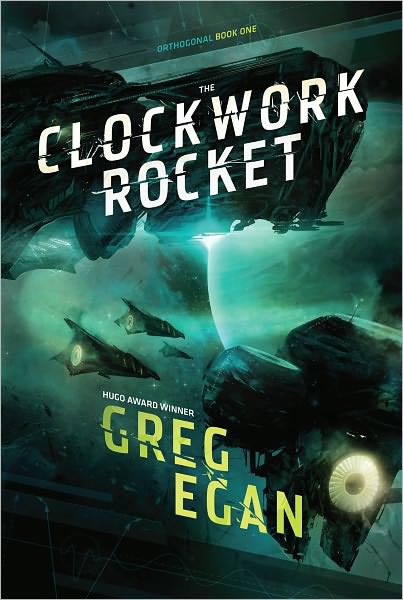
THE CLOCKWORK ROCKET by Greg Egan

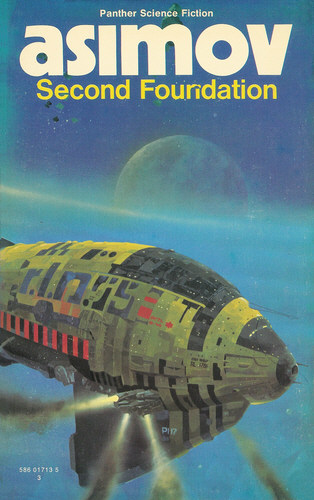
OMG, I love this cover. Along with Daniel Dociu‘s cover for Leviathan Wakes, I’m happy to see this trend of artists winking slyly at old-school Science Fiction covers while updating them with bold and modern typography. They remind me a lot of the old covers to Isaac Asimov’s Foundation trilogy (or series, or whatever).

The synopsis:

In Yalda’s universe, light has no universal speed and its creation generates energy.

On Yalda’s world, plants make food by emitting their own light into the dark night sky.

As a child Yalda witnesses one of a series of strange meteors, the Hurtlers, that are entering the planetary system at an immense, unprecedented speed. It becomes apparent that her world is in imminent danger — and that the task of dealing with the Hurtlers will require knowledge and technology far beyond anything her civilisation has yet achieved.

Only one solution seems tenable: if a spacecraft can be sent on a journey at sufficiently high speed, its trip will last many generations for those on board, but it will return after just a few years have passed at home. The travellers will have a chance to discover the science their planet urgently needs, and bring it back in time to avert disaster.

Orthogonal is the story of Yalda and her descendants, trying to survive the perils of their long mission and carve out meaningful lives for themselves, while the threat of annihilation hangs over the world they left behind.

Stefan Raets review for Tor.com also has me interested:

Greg Egan really integrates his science into his story, to the point where the novel wouldn’t make sense without it. When he shows Yalda discovering that universe’s equivalent of the Theory of Relativity, it’s both scientifically impressive and highly relevant to the story. But at the same time, I’m a humble liberal arts major who already knows that he’ll have trouble helping his children with their high school math homework, and for people like me, some of the endless scientific explanations in this book are frankly tough sledding.

[…]

Nevertheless, I’m still eager to read the rest of the Orthogonal trilogy, because Greg Egan achieves something very few SF novels manage: he creates some real, old-fashioned sensawunda. Just the concept of the clockwork generation starship would be enough to keep me coming back for more, not to mention the curiosity about what will happen when the descendants of Yalda’s crew—no doubt evolved towards vastly different social norms—return to their home planet. And as alien as the characters are, Greg Egan manages to make you empathize with them and sometimes even forget they’re not human, which is quite an achievement.

The Clockwork Rocket is probably the hardest hard science fiction novel I’ve ever read, but it also has a surprising amount of heart.

Like Raets, I’m math-deficient and generally stay away from Science Fiction-with-a-capital-‘SCIENCE’, preferring to spend my time with more accessible Science Fiction-with-a-capital-‘FICTION’, like the aforementioned Leviathan Wakes by James S.A. Corey (REVIEW). Still, his mention of heart and Egan’s take on explaining the unexplainable (a universe where the laws of physics are different, for instance) are enough to intrigue me.