Posts Categorized: News

Paolo Bacigalupi’s novel, The Windup Girl, was recently released by Nightshade Books, and has been met with positive buzz from fans, authors reviewers alike.
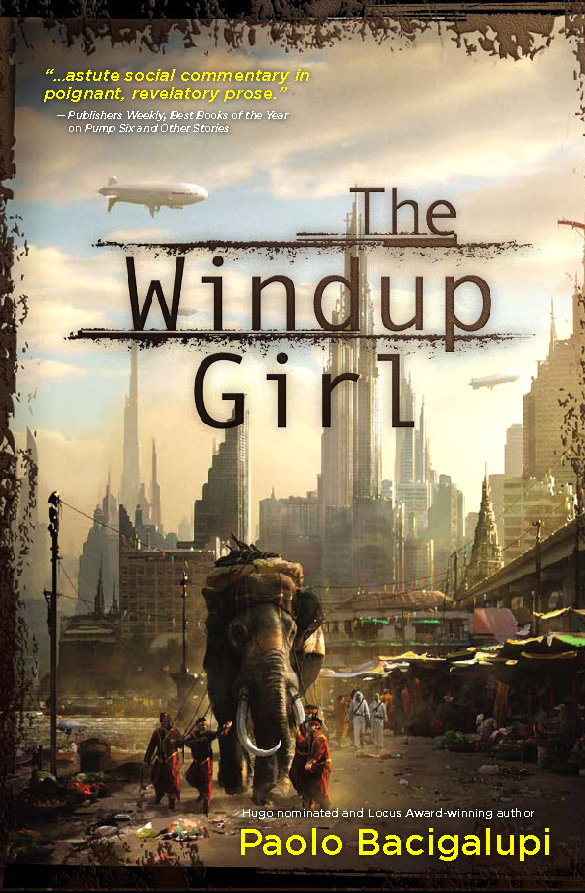
The Windup Girl by Paolo Bacigalupi

Anderson Lake is a company man, AgriGen’s Calorie Man in Thailand. Under cover as a factory manager, Anderson combs Bangkok’s street markets in search of foodstuffs thought to be extinct, hoping to reap the bounty of history’s lost calories. There, he encounters Emiko…

Emiko is the Windup Girl, a strange and beautiful creature. One of the New People, Emiko is not human; instead, she is an engineered being, creche-grown and programmed to satisfy the decadent whims of a Kyoto businessman, but now abandoned to the streets of Bangkok. Regarded as soulless beings by some, devils by others, New People are slaves, soldiers, and toys of the rich in a chilling near future in which calorie companies rule the world, the oil age has passed, and the side effects of bio-engineered plagues run rampant across the globe.

What Happens when calories become currency? What happens when bio-terrorism becomes a tool for corporate profits, when said bio-terrorism’s genetic drift forces mankind to the cusp of post-human evolution? In The Windup Girl, award-winning author Paolo Bacigalupi returns to the world of “The Calorie Man” ( Theodore Sturgeon Memorial Award-winner, Hugo Award nominee, 2006) and “Yellow Card Man” (Hugo Award nominee, 2007) in order to address these poignant questions.

Bacigalupi also released a collection of his short fiction, Pump Six, which contains a prequel to The Windup Girl called The Calorie Man, and it’s been garnering some strong recommendations:

Paolo Bacigalupi is the best short-fiction writer to emerge in the past decade; he’s the Ted Chiang of the new millennium. He combines beautiful prose, startling imagery, and shocking ideas in unforgettable ways.
– Robert J. Sawyer, Hugo Award-winning author of Hominids

[These stories] are extrapolative – some rigorously so and some more whimsical. They can be visceral and violent. Viewed toward questions of prose and storytelling, they are well-written. But most importantly, they refuse to flinch from addressing today’s issues. They take today’s scientific, technological, economic, and especially environmental trends and examine them for what they might mean today and into the future.
The Fix

Thanks to Free Speculative Fiction Online, Bacigalupi’s Hugo nominated short story, The Calorie Man (along with a couple of other short fiction pieces from Bacigalupi), is available as a free download HERE.

You can find Bacigalupi’s website HERE.
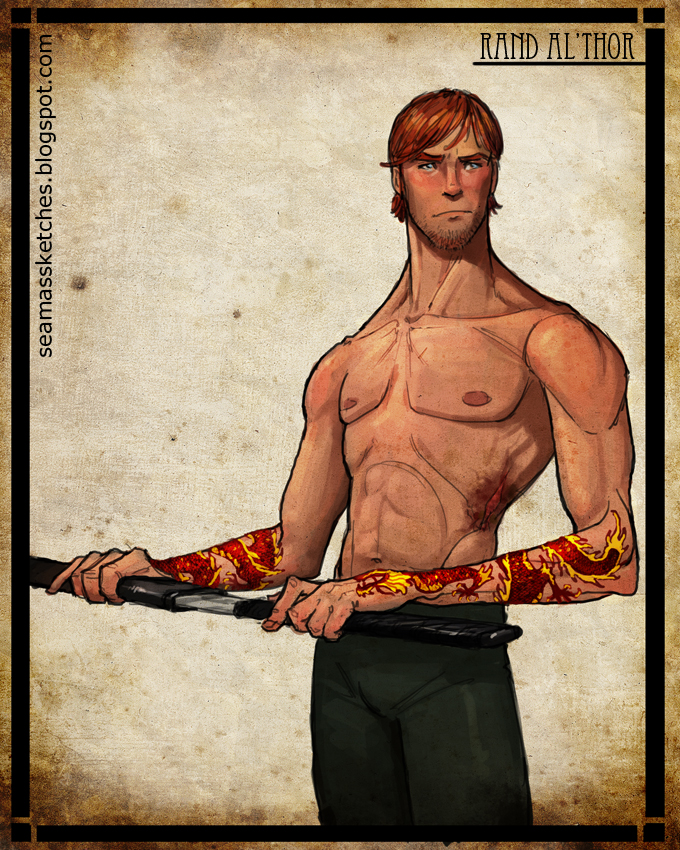
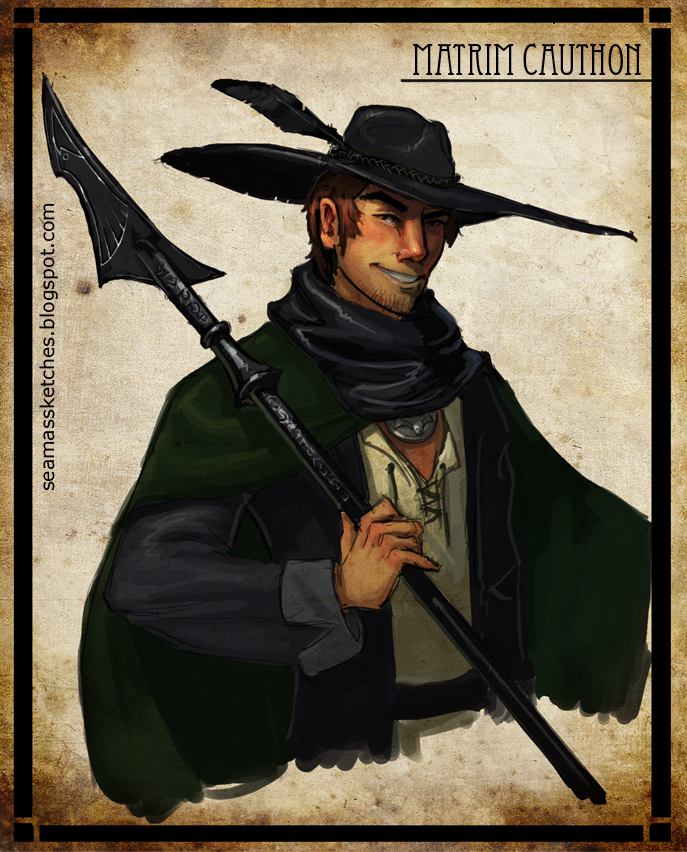
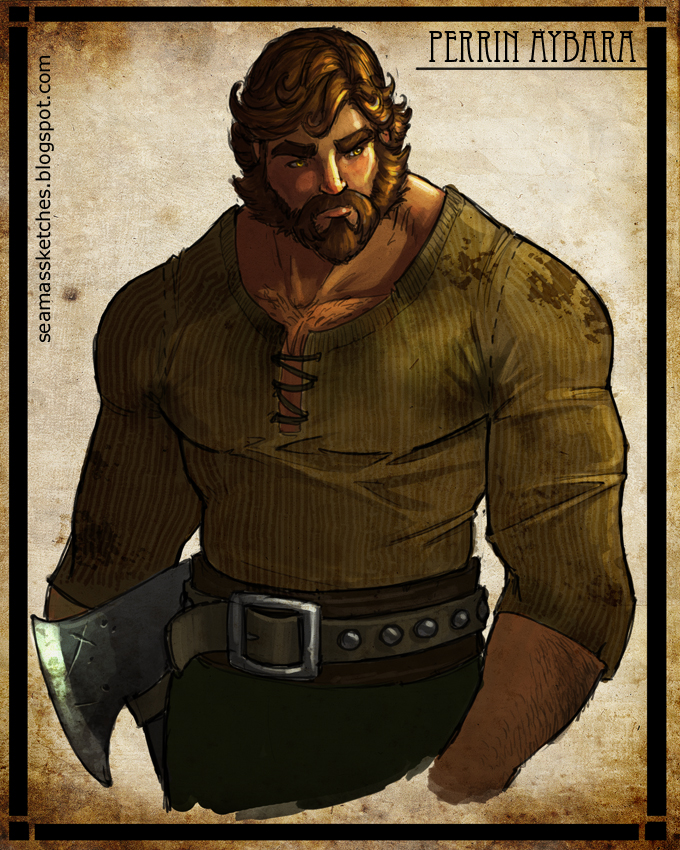
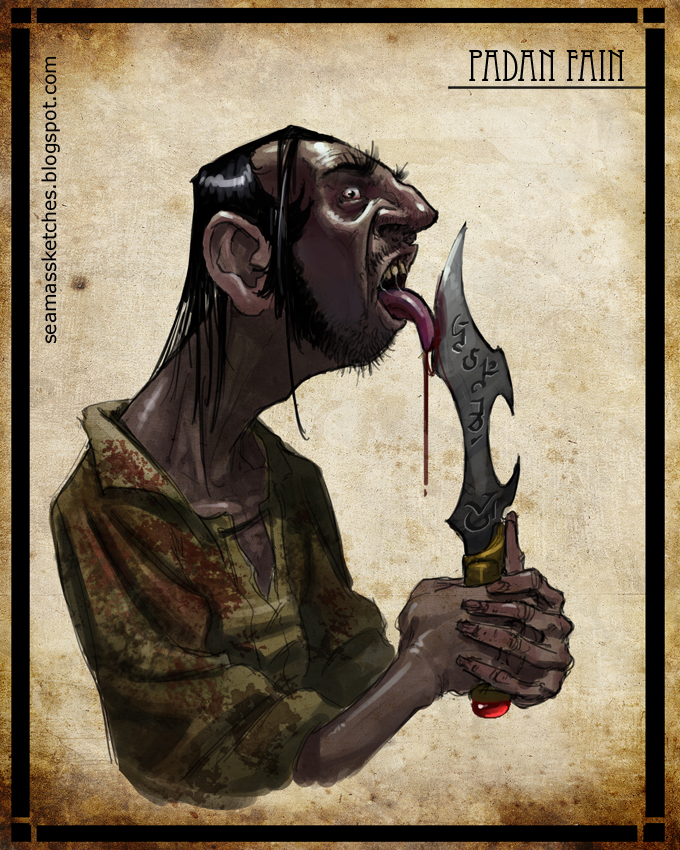
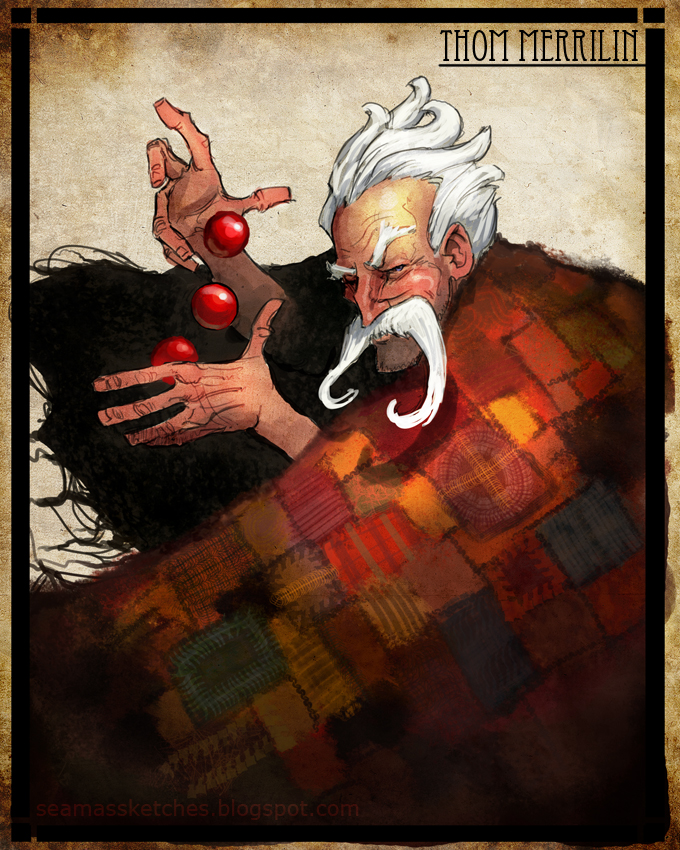
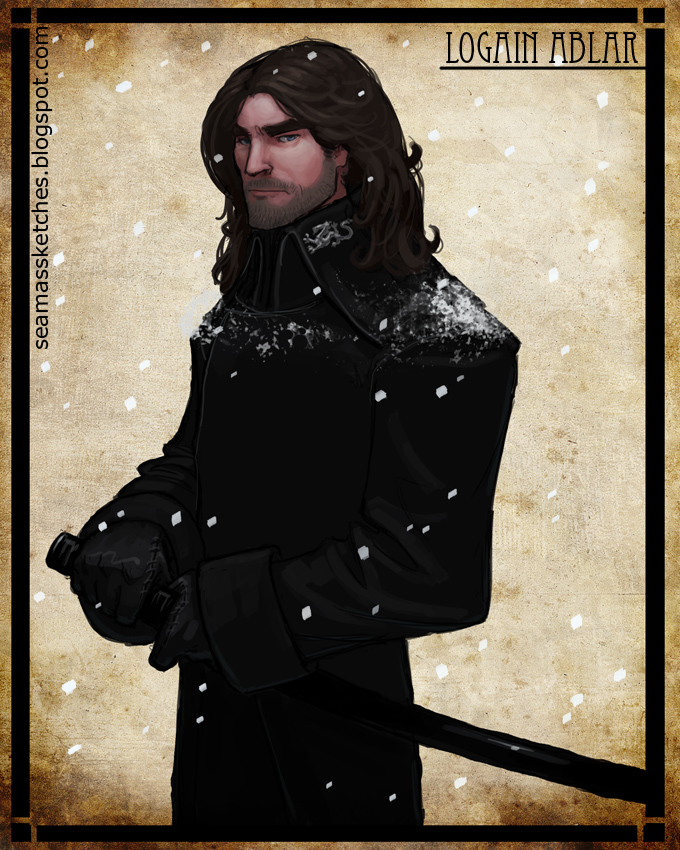
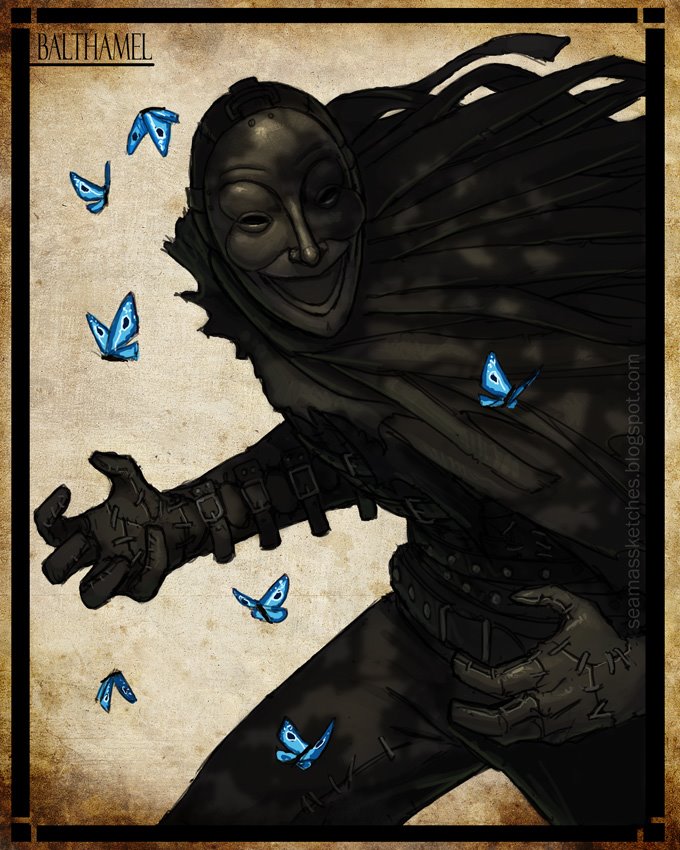
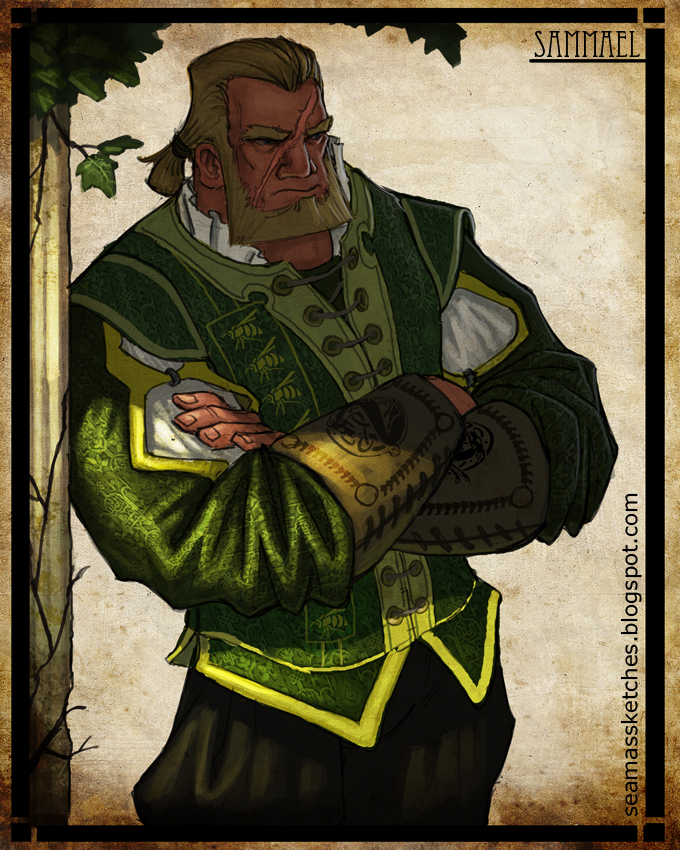
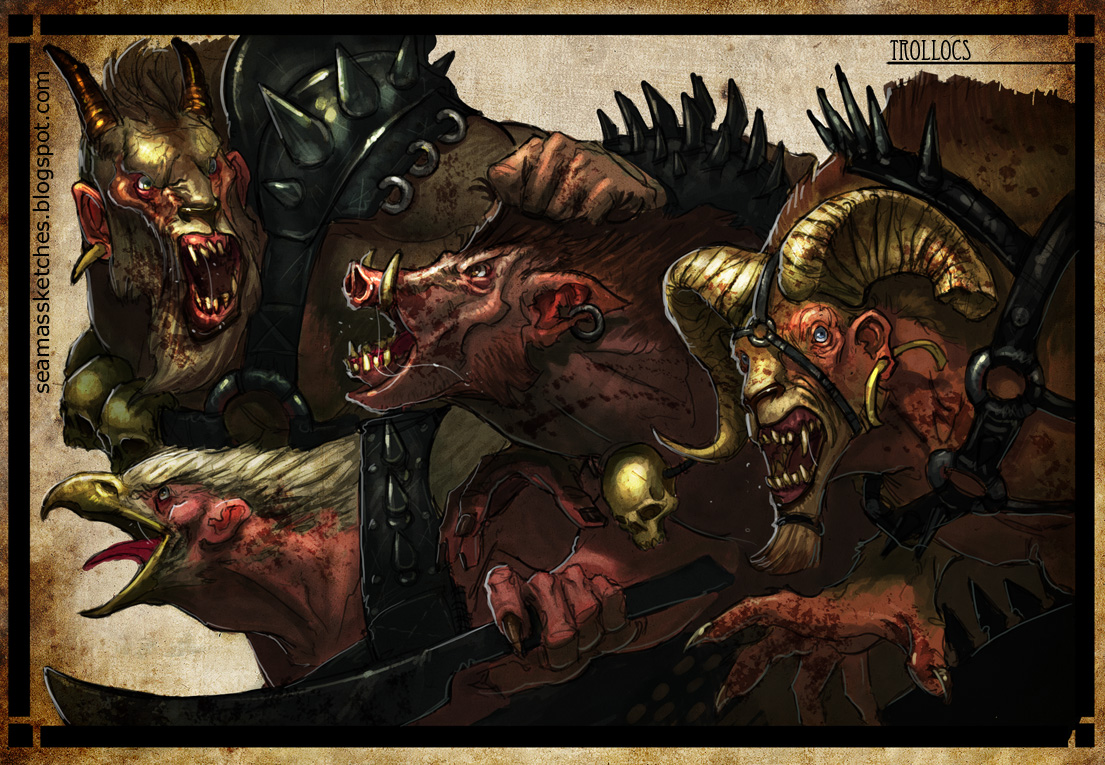
I stumbled across the blog of artist Seamas Gallagher, and found some pretty neat artwork based on Robert Jordan’s Wheel of Time series. It turns out that Seamas is involved with the Dabel Bros. and is behind some of the cover variants for their upcoming comic book adaptation of The Wheel of Time. You can click on each of the pictures to see a larger version.

Ran al'Thor from Robert Jordan's The Wheel of Time, painted by Seamas Gallagher.Mat Cauthon from Robert Jordan's The Wheel of Time, painted by Seamas Gallagher. Perring Aybara from Robert Jordan's The Wheel of Time, painted by Seamas Gallagher.Padan Fain from Robert Jordan's The Wheel of Time, painted by Seamas Gallagher. Thom Merrilin from Robert Jordan's The Wheel of Time, painted by Seamas Gallagher.Logain Ablar from Robert Jordan's The Wheel of Time, painted by Seamas Gallagher. Balthamel from Robert Jordan's The Wheel of Time, painted by Seamas Gallagher.Sammael from Robert Jordan's The Wheel of Time, painted by Seamas Gallagher.
 
Trollocs from Robert Jordan's The Wheel of Time, painted by Seamas Gallagher.
 

I’ve always been a fan of the over-exaggerated, comic-booky style used here, so these immediately appealed to me, even if they don’t exactly match the images in my head. I suppose they won’t be for everyone, though. Seamas has a ton of art on his blog and online portfolio, including more Wheel of Time artwork. He seems to have portraits done of most of the major characters in the series, so if I left out your favourite, give his blog a look and you’re sure to find it.

The Hollywood Reporter, via Winter is Coming, is reporting on several majors roles being cast for the upcoming HBO adaptation of George R.R. Martin’s A Song of Ice and Fire:

In the adaptation of the George R.R. Martin fantasy-book series, Coster-Waldau will play Jaime Lannister, one of the king’s guards and a ruthless usurper of the previous king. The actor, most recently seen in Ron Moore’s Fox pilot “Virtuality,” is repped by WME, Impression and Independent Talent Group.

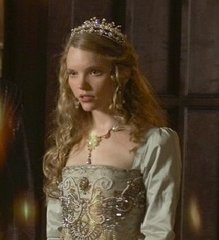
Another addition is Tamzin Merchant (Showtime’s “The Tudors”), who’ll play Daenerys, an exiled teenage princess.

Also new to the cast: Richard Madden (“Hope Springs”) as Stark’s eldest son, Robb; Iain Glen (“Into the Storm”) as Ser Jorah Mormont, a disgraced knight; Alfie Allen (“The Other Boleyn Girl”) as Theon, Stark’s young ward; Sophie Turner (“Doctor Who”), as Stark’s eldest daughter, Sansa; Maisie Williams as Stark’s young tomboy daughter, Arya.

Martin has been dropping hints about these castings for a while now, and members of the Winter is Coming community manage to figure out the identity of each actor beforehand. Still, it’s nice to have it all confirmed.

Martin had a bit to say about each of the actors cast:

Nikolaj Coster-Waldau as Jaime Lannister
Nikolaj Coster-Waldau - Jaime Lannister in A Song of Ice and Fire

he’ll make a terrific Jaime.

Tamzin Merchant as Daenerys Targaryen

Dany is very difficult role. She starts out vulnerable and scared, but blooms on the Dothraki sea, and becomes a powerful leader by book’s end. It’s no secret that HBO’s Dany will start out older than Dany does in the book; that was a change that had to be made, if we wanted to keep the sex scenes, and David and Dan and I were all agreed that the sex scenes were essential. Tamzin can play much younger than her actual age (as she does when playing Katheryn) and her sex scenes on THE TUDORS were as hot as anything I’ve ever seen on TV. In her readings, she showed Dany’s other side as well, commanding and charismatic after Drogo’s death. I think she’ll be marvelous.

Read More »

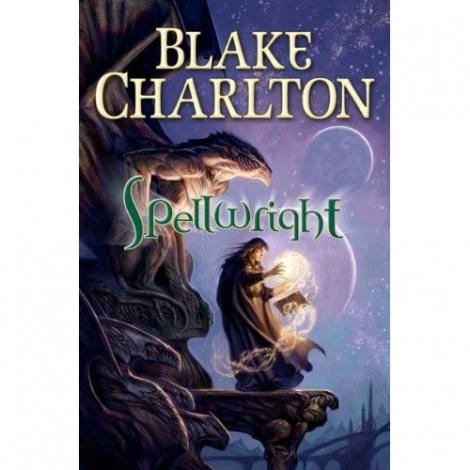
Just the other day, I featured Blake Charlton’s Spellwright as a book to keep an eye on. It’s got neat cover art, great early buzz and an interesting (if slightly typical) setup.

Spellwright by Blake Charlton

Imagine a world in which the written word can leave a page to physically lift a man into the air, sharpen his pitchfork, or stop his beating heart.

Such a world is home to Nicodemus Weal, a young wizard with tremendous talent for forging the magical runes which can create spells. Indeed, throughout his adolescence, Nicodemus was thought to be the Halcyon, a powerful magic-user prophesized to save the land from a coming apocalypse known only as the Disjunction.

There was only one problem: runes must be placed in an exact order to create a spell. Any deviation results in a “misspell”–a flawed spell that behaves in an erratic, sometimes lethal, manner. It so happens that Nicodemus is a “cacographer,” one unable to correctly reproduce even simple texts.

Now twenty-three, Nicodemus lives in the devastating aftermath of having failed to live up to prophecy. His magical talent is restricted to the kitchen, where he cleans pots and scrubs walls with childish language. Life slips by one aggravating day at a time until a visiting author identifies an ancient curse infesting the young wizard’s mind. The malicious text has, in fact, stolen his ability to spell. Suddenly, the two wizards closest to Nicodemus are murdered violently and he is forced to flee his home in a desperate quest to recover the stolen part of his mind.

SPELLWRIGHT is the first volume of Nicodemus’ journey across the kingdoms of Faragard, his encounters with monsters and gods who distort language to their own ends, and his internal struggle to accept himself as whole without his ability to spell.

I didn’t know it at the time, but Charlton has made the prologue at the first four chapters of the novel available to read for free on his web site. Just be warned that they are early drafts, and may not totally represent the final published novel.

You can find the sneak peek of Spellwright HERE.

Comments closed

The New Yorker is about as uppity and high-brow as it gets, so imagine the shock when they ran an online article about the best jumping in points for our great genre. And, you know what, the list is pretty damn good.

I’ve read a few best-selling fantasy series – Harry Potter, The Lord of the Rings, His Dark Materials, Twilight, Narnia, A Wrinkle in Time, The Dark Is Rising – but I would never describe myself as an aficionado. First because all these books are on about a fourth-grade reading level, and second because I read them for their best-sellerness, not their fantasy-ness (to stay in the loop, I tell myself).

[…]

I asked [a friend] what he would recommend for someone like me – a beginning fantasy reader ready to graduate to more serious (but not too serious) fare. Here are his picks, complete with explanations of their greatness. He sent them to me with the reassurance that ‘there is no shame in being a real fantasy reader.’

The List

The Dragonbone Chair by Tad WilliamsThe Dragonbone Chair by Tad Williams

This is the stereotypical epic fantasy that begins with a young, inexperienced, immature youth toiling away as a kitchen boy in a castle, daydreaming his life away. […] And it’s easily the best in the genre’if you want to read a classic epic fantasy series that is not the Lord of the Rings, start here. Williams has several other books (the Otherland series, “The War of the Flowers”) that are also worth reading.

Considering Memory, Sorrow and Thorn is my favourite completed work of Epic Fantasy, I’d say they hit the nail on the head with their first choice. It’s a slow burn in places, but a great look at what can be achieved with the basic framework laid down by Tolkien.

Tigana by Guy Gavriel KayAnything by Guy Gavriel Kay

For those who don’t want to jump into a long series right away, Kay has written a number of standalone novels that take place in alternate worlds with a similar geography and history to our own, and they are all excellent. His strengths are strong characters and fantastic set pieces […] Kay also has a rather flowery writing style, which in most cases adds to the romance of the novel, although in some books (not listed here) he can get a bit carried away. Two of the books in the Fionavar Tapestry were the last books that I can remember making me cry.

Kay is a personal favourite of mine, and it’s nice to see he author of the article not confining his choice to only one of Kay’s novels. He’s an author who I save for a rainy day, when I feel like I’m beginning to become jaded on the genre, and he always sucks me right back in. His novels probably hold the most appeal for those who don’t read within the genre.

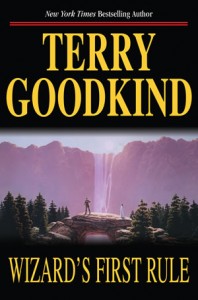
Wizard's First Rule by Terry GoodkindWizard’s First Rule by Terry Goodkind

A fabulous single-volume epic fantasy. […] Sadly, Goodkind did so well on this completely self-contained fantasy that he wrote ten sequels, each one worse than the one before and more prone to excruciatingly long Ayn Randian monologues from the main characters. Read this book, and then pretend the others don’t exist.

Yeah, yeah, Terry Goodkind sucks. I know… but so does the author of the list. But, he’s right that Wizard’s First Rule (and a few of the following books) was a decent novel, and an easy starting off point for anyone looking to get into Fantasy. Plus, it only barely hinted at the tripe that Goodkind would start trying to sell.
Read More »