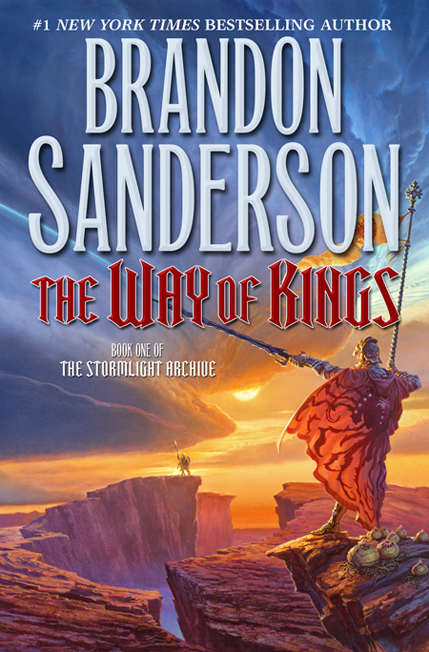
The Way of Kings by Brandon Sanderson

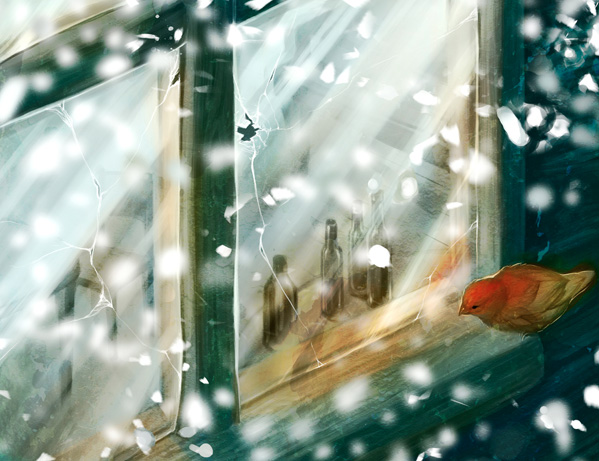
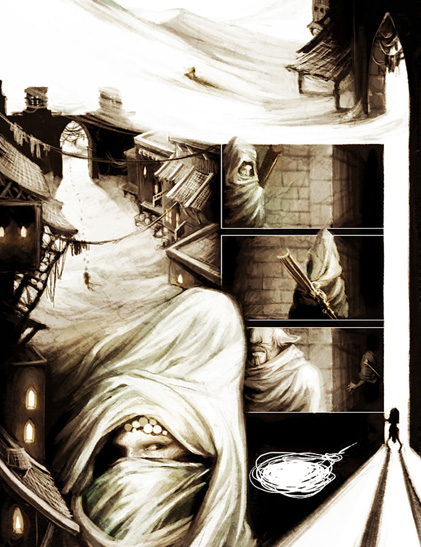
As the release of Brandon Sanderson’s The Way of Kings draws near, publisher Tor Books continues to release tantalizing glimpses at the novel. To go along with the Prologue through Chapter Six, Tor has just released Chapters Nine and Eleven (along with some great interior artwork) to members of their website. If you haven’t signed up yet, it’s free, only takes a moment, and is absolutely worth doing.

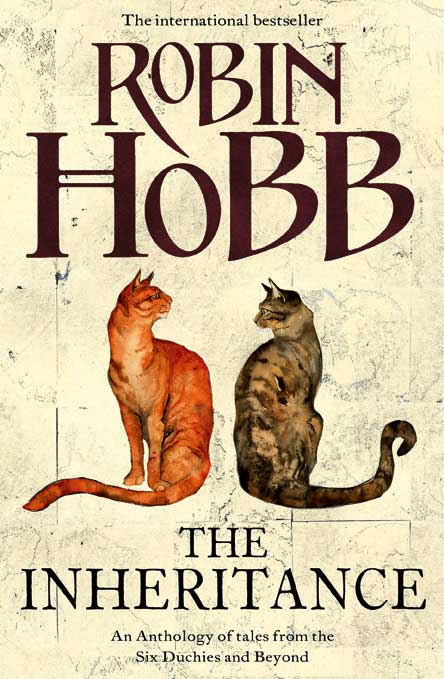
The Inheritance by Robin Hobb (UK Edition)

It’s, uhh… catastic? I dunno. I wasn’t a fan of the style when there were Dragons involved, and I’m not really any more keen on it now. Just seems like a strange marketing decision. I do appreciate the consistency in style, though. Long gone are the days of wonderful John Howe art gracing the covers of Hobb’s work.

That said, though it’s an odd fit for this book cover, artist Jackie Morris does have a wonderful portfolio of art, and it’s absolutely worth visiting.

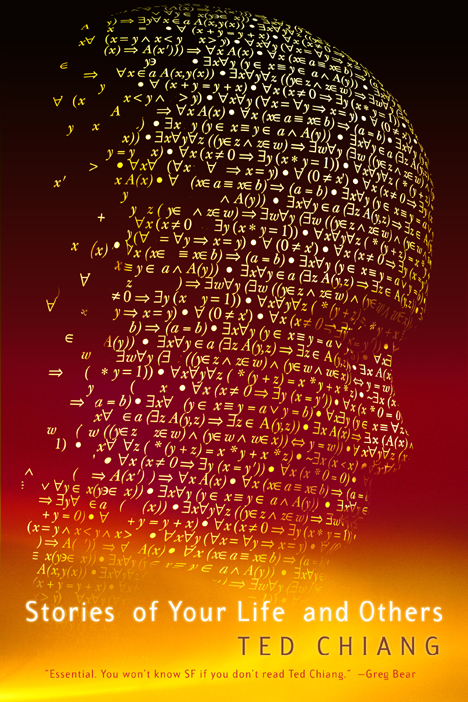
Stories of Your Life and Others by Ted Chiang

Of all the Short Fiction writers I’ve recently discovered, Ted Chiang is perhaps the highest regarded, but also the least prolific. He’s been nominated for the Hugo Award eight times; of those he won three. He’s won five Nebula Awards and been nominated for the World Fantasy Award. All those awards and nomination, yet only 12 pieces of fiction published in his 20 year career – all short fiction, no novels. Half the stories he’s written have won major literary awards. That’s a hell of a resume. The Merchant and the Alchemist’s Gate won both the Nebula Award and Hugo Award for Best Novelette, and, frankly it’s easy to see why.

Time travel stories are notoriously hard to tell with any success. Time paradoxes, physics being broken and non-linear timelines all lead to plot holes in the hands of an inexperienced author. Novels that pull off the conceit well, like The Anubis Gates by Tim Powers or Slaughterhouse-Five by Kurt Vonnegut are few and far between. Chiang, though, tackles the time travel motif with aplomb and challenges the reader by filling every plot hole just when they think they’ve found one. It’s at turns both clever and profound, full of smart twists and genuine insights into the compulsion we all have to live in the past, to regret turns not made or choices gone wrong. So often, time travel stories present fluid timelines, easily saved or ruined by the hero or antagonist, but Chiang plays with the idea that only the present is fluid and that what’s before us is every bit as defined as what’s passed us by. It’s a story of redemption and regret, with a melancholy air hiding just under the serpentine switchbacks of the puzzle-like time travel narrative.

A free audio version of The Merchant and the Alchemist’s Gate is available on StarShipSofa. It also collected, along with several of Chiang’s other stories, in Stories of Your Life and Others.

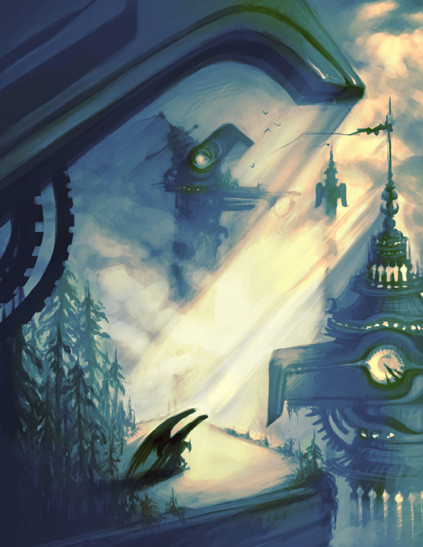
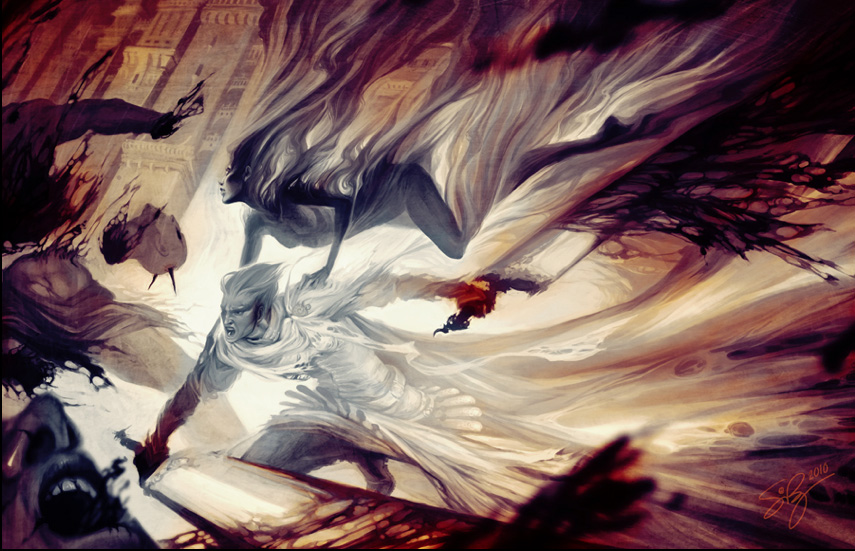
Art © Hunter Bonyun Art © Hunter Bonyun Art © Hunter Bonyun Art © Hunter Bonyun

As anyone who’s followed A Dribble of Ink for some time should know, I’m a big fan of fun, atmospheric artwork. So, when I stumbled across Hunter Boyun’s portfolio (via fan art she did for Brandon Sanderson‘s Mistborn series, pictured above), I thought it would be fun to show off to my readers. Bonyun is still a student, but it wouldn’t surprise me to see her working in the industry and gracing covers of Fantasy novels a few years from now!

So who are your favourite under-appreciated artists?

The Stable Master’s Tale by Rachel Swirsky is a modern parable, with echos of the bite found in the works of The Brothers Grimm. Though there’re no animals in sight, Swirsky has a point to make, a moral to bring to light, and she does so in a grim, honest way that reveals both the light and the dark in humanity. We’re neither good, nor bad. Rather, we’re both at once.

It’s painful to remember them–my brothers, my sisters, my parents, my cousins. When I do, a single memory dominates. It was summer and I was six summers old, standing in the corral with my eldest brother. The day was hot and golden, the air strong with the reek of flowers and horse droppings. My brother sat beside me, stealing a moment to practice the flute he’d wheedled from our nurse.

A great wind began to blow. My brother jumped to his feet. At first, I thought he was scared; my brother was as lazy as a housecat, and ordinarily nothing but a swat on the rear could make him move quickly. The horses panicked, tossing their heads, eyes wild. The rushing wind gained speed. Yet my brother laughed. He spread his arms to the sky.

“What? What is it?” I demanded.

He picked me up. I saw nothing. “Look toward the mountains,” he shouted.

Suddenly, I saw them: great, golden bodies extending enormous gossamer wings. There were half a dozen flying in a circle, chasing each other’s tails. Sunlight sparkled off their bodies. They were glorious and terrifying.

I whimpered and hid my eyes.

“Don’t worry,” my brother said. “They’re too far away to hurt you.”

The great golden bodies circled in the darkness behind my eyelids. They were terrifying. They were beautiful. By the time I opened my eyes, the dragons were gone.

I did not see a dragon again for many years.

Swirsky’s prose is suitable to the tone of the story, and the voice of her nameless narrator is lively, but never so overwhelming that it takes the focus away from the themes and plot of the novel. It’s a novel about both the relationship between a girl and a dragon, and the parallels in their respective imprisonments (her’s through choices she’s made, its through mutilation and literal captivity), and also explores the limits of the human propensity to allow greed and narrow-mindedness to lead to self-destruction. Swirsky never forgets the ultimate strength of the classic fables: though they’ve a lesson to tell, but they never forget that they’re supposed to be fun. Like the best stories, The Stable Master’s Tale could potentially be read, and enjoyed, by young and old alike, It’s never bogged down by overwrought prose or too heavy moralism. Even with the themes removed, it’s a classic bed time tale.

In recent years, Rachel Swirsky’s short fiction has shown up on ballots for the Hugo, Nebula and Locus awards (among other honours). Though The Stable Master’s Tale is not one of her nominated works (and likely won’t be, given that it treads very familiar ground, unlike works such as The Memory of Wind and Eros, Philia, Agape), it’s more than enough to convince me that Swirsky is more than capable of sitting alongside writers like Caitlin R. Kiernan and Saladin Ahmed atop my list of exciting young authors to keep an eye on.

You can read for free The Stable Master’s Tale on the Fantasy Magazine Website.