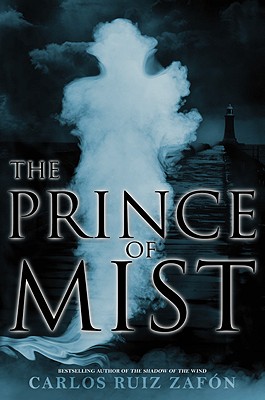
The Prince of Mist by Carlos Ruiz Zafon

The Prince of Mist

AuthorCarlos Ruiz Zafon
Hardcover
Pages: 224
Publisher: Little, Brown Books for Young Readers
Release Date: May 4, 2010
ISBN-10: 0316044776

EXCERPT

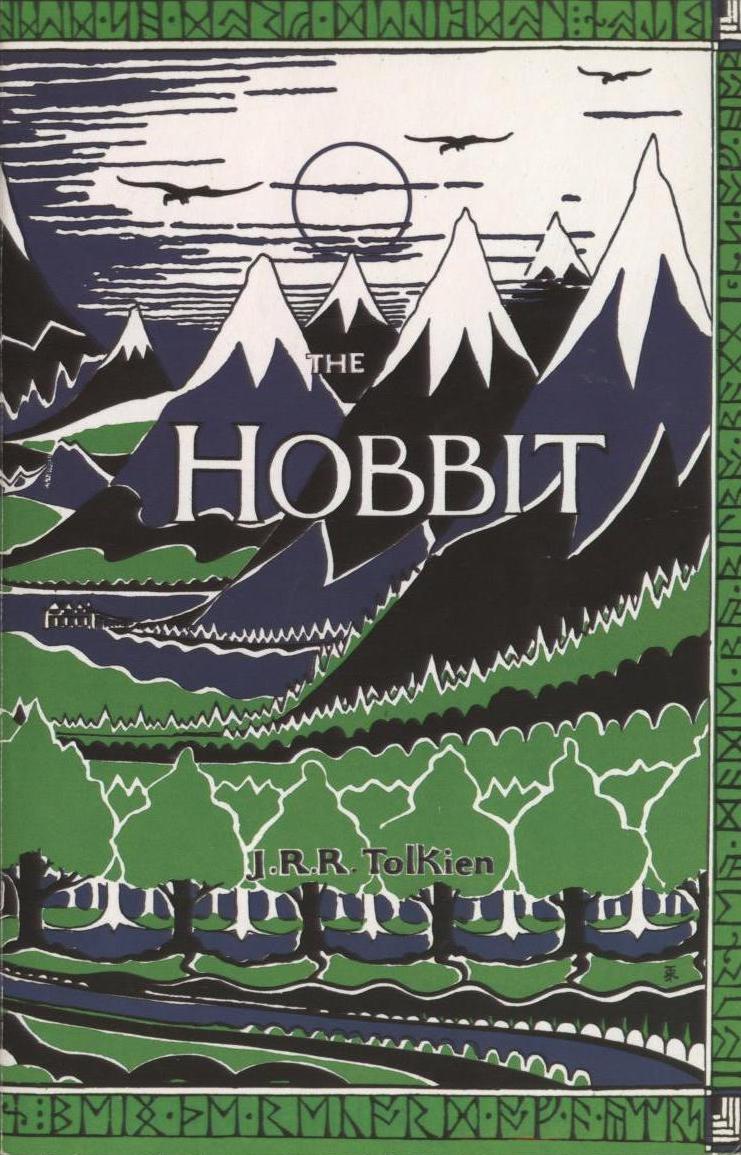
Carlos Ruiz Zafon’s The Shadow of the Wind is one of my two favourite novels. The other is The Hobbit by J.R.R. Tolkien. On the surface, these novels appear to have little in common – one is quest Fantasy, set in a mythical world, the other is a coming-of-age story set in 1940’s Spain. Where they’re similar, though, is in their origins and the reasons they were written.

Tolkien originally wrote The Hobbit for his children, a tale of adventure and hijinks meant to entertain and excite them. I much prefer it to The Lord of the Rings for its brevity, for its ability to get to the point and tell a story for storytelling’s sake.

I once saw young adult (YA) novels described as (and I’m paraphrasing) ‘Adult novels without all the crap’. I thought this a rather apt description of the oft-maligned publishing category. Though I’m ultimately a reader of adult novels, I’m drawn to YA for its hungry veracity to lay the story out before its audience, to cut out all the nuance and posturing and let the reader into its secrets, to reward them quickly for their commitment. It’s like a moped to a motorcycle: simple, little stress the reader, but ultimately enjoyable.

I like to think of The Shadow of the Wind as an evolution of this style of storytelling. It’s more drawn out than typical YA, with much of that extraneous fat and muscle added back on, but Zafon was able to draw on his experience writing YA and apply what he’d learned to craft a story that was as fable-like as the best YA. From a small cast of characters, to a youthful, zesty voice, to its ability and willingness to question the world, The Shadow of the Wind is a YA Adult novel grown up. This bumbling, awkward kid’s turned into a sophisticated gentleman.
Read More »

A screenshot of The PortalOver the past month or so, you’ve likely noticed the increase in Short Fiction coverage on A Dribble of Ink. This has been a deliberate move on my part, to fill a gaping hole in my knowledge of the genre. I’ve been doing my damnedest to catch up on some of the classic and contemporary stories published by some of my favourite authors.

Fittingly, a new online magazine called The Portal has recently opened and is looking to add to their review staff:

The Portal is an online review of short-form science fiction, fantasy, and horror that will launch at World Fantasy in October 2010. Although we do intend to review work in English, we will give equal emphasis to providing English-language coverage of short fiction markets, anthologies, and genre literary activities in many language communities around the world. Our goal is to publish at least one article from each region or language for which we have a bureau head in each monthly issue; bureau heads will write these pieces themselves or delegate them to fellow critics in their area. For regions with less activity, we’ll take quarterly or yearly reports from our coordinators. If you are interested in working with us, please send an inquiry letter and writing sample to thesffportal at gmail dot com.

There’s no content yet, but it promises to be an interested resource for those looking to gain a wider appreciation of the genre. Doubly so for their interest in covering SFF short fiction from every region on the planet, rather than focussing on the English-speaking countries. You can be sure I’ll be sending in an application and some samples of my own reviews, in hopes of joining their ranks.

In the meantime, if you’re a reviewer, or a reader looking to jump into the reviewing scene, send them a line and show them what you’ve got!

Comments closed

The Hobbit by JRR TolkienVia /Film, Guillermo del Toro on leaving his position as director of the upcoming film version of JRR Tolkien’s The Hobbit:

In light of ongoing delays in the setting of a start date for filming “The Hobbit,” I am faced with the hardest decision of my life. After nearly two years of living, breathing and designing a world as rich as Tolkien’s Middle Earth, I must, with great regret, take leave from helming these wonderful pictures. I remain grateful to Peter, Fran and Philippa Boyens, New Line and Warner Brothers and to all my crew in New Zealand. I’ve been privileged to work in one of the greatest countries on earth with some of the best people ever in our craft and my life will be forever changed. The blessings have been plenty, but the mounting pressures of conflicting schedules have overwhelmed the time slot originally allocated for the project. Both as a co-writer and as a director, I wish the production nothing but the very best of luck and I will be first in line to see the finished product. I remain an ally to it and its makers, present and future, and fully support a smooth transition to a new director.

Peter Jackson, director of The Lord of the Rings trilogy, and producer of The Hobbit, confirms that del Toro will be staying on as part of the writing team:

Guillermo is co-writing the Hobbit screenplays with Philippa Boyens, Fran Walsh and myself, and happily our writing partnership will continue for several more months, until the scripts are fine tuned and polished…New Line and Warner Bros will sit down with us this week, to ensure a smooth and uneventful transition, as we secure a new director for the Hobbit. We do not anticipate any delay or disruption to ongoing pre-production work

Disappointment aside, the big question is who’ll fill del Toro’s shoes. The obvious choice, to me at any rate, is Jackson. Despite being a fan of del Toro, he’s always struck me as too dark a director for the project, and one of The Hobbits biggest strengths (and why I much prefer it to The Lord of the Rings, is its whimsical, storybook nature. That’s not saying del Toro couldn’t have pulled it off (and we know it’d have been stunning visually), but Jackson nailed the look and feel of The Lord of the Rings, and I have no doubt that he’d do justice to the spirit of The Hobbit.

UPDATE:

Looks like Jackson might direct after all, if no other suitable director is found:

Sir Peter Jackson says he will step into the breach and direct The Hobbit himself if it becomes the only way to ensure the US$150 million (NZ$219m) film is made after the sudden departure of director Guillermo del Toro.

Good news, if true.

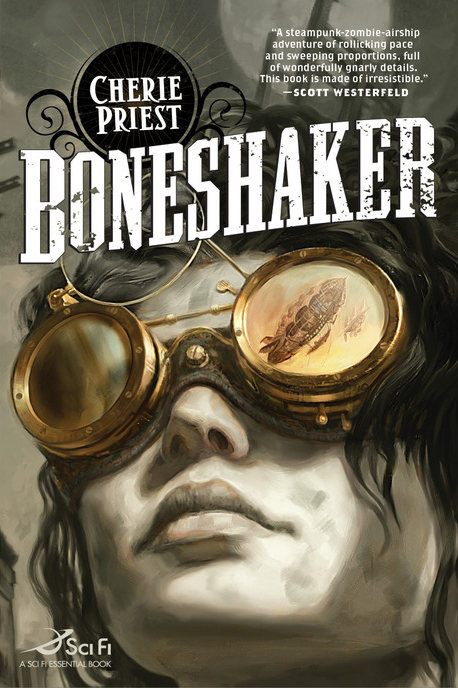
Boneshaker by Cherie Priest

Down in the laundry room with the bloody- wet floors and the ceiling- high stacks of sheets, wraps, and blankets, Vinita Lynch was elbows- deep in a vat full of dirty pillowcases because she’d promised— she’d sworn on her mother’s life— that she’d find a certain windup pocket watch belonging to Private Hugh Morton before the device was plunged into a tub of simmering soapy water and surely destroyed for good.

Why the private had stashed it in a pillowcase wasn’t much of a mystery: even in an upstanding place like the Robertson Hospital, small and shiny valuables went missing from personal stashes with unsettling regularity. And him forgetting about it was no great leap either: the shot he took in the forehead had been a lucky one because he’d survived it, but it left him addled at times— and this morning at breakfast had been one of those times. At the first bell announcing morning food, against the strict orders of Captain Sally he’d sat up and bolted into the mess hall, which existed only in that bullet- buffeted brain of his. In the time it took for him to be captured and redirected to his cot, where the meal would come to him, thank you very kindly, if only he’d be patient enough to receive it, the junior nursing staff had come through and stripped the bedding of all and sundry.

None of them had noticed the watch, but it would’ve been easy to miss.

Cherie Priest’s Boneshaker, a tale of Steampunk Seattle beset by zombies, is hugely popular, into its seventh printing and collecting nominations for both the Hugo and Nebula Awards for Best Novel. It’s easy, then, to imagine the excitement building for the stand alone follow-up Dreadnought. To sate some of that exicement, Macmillan, the parent company of Tor Books, has posted the first chapter of Dreadnought for free on their website.

Dreamsongs by George R.R. Martin

Prior to releasing A Game of Thrones, and subsequently becoming one of the brightest and most respected authors in the Fantasy field, George R.R. Martin was perhaps best known for his short fiction, much of it in the Science Fiction genre, and a far cry from his current bread and butter. Foremost among those is Sandkings.

He flew his skimmer to Asgard, a journey of some two hundred kilometers. Asgard was Baldur’s largest city and boasted the oldest and largest starport as well. Kress liked to impress his friends with animals that were unusual, entertaining, and expensive; Asgard was the place to buy them.

This time, though, he had poor luck. Xenopets had closed its doors, t’Etherane the Pet seller tried to foist another carrion hawk off on him, and Strange Waters offered nothing more exotic than piranha, glow sharks, and spider squids. Kress had had all those; he wanted something new, something that would stand out.

Near dusk he found himself walking down Rainbow Boulevard, looking for places he had not patronized before. So close to the starport, the street was lined by importers’ marts. The big corporate emporiums had impressive long windows, in which rare and costly alien artifacts reposed on felt cushions against dark drapes that made the interiors of the stores a mystery. Between them were the junk shops-​narrow, nasty little places whose display areas were crammed with all manner of off world bric-​a-​brac. Kress tried both kinds of shops, with equal dissatisfaction.

Then he came across a store that was different.

Set in the far future city of Asgard, Sandkings tells the lamentable story of playboy Simon Kress, a man ruled by passions, but lacking in wit. Kress is a purveyor of exotic (and dangerous) animals, which he uses to entertain his guests at parties. A lonely attention whore. To this end, he acquires four sets of Sandkings – rare, insect-like hiveminds drawn to tribal warfare and worshipping their owner, all within the confines of a large aquarium. Just imagine being a kid and watching your pet turtles, or the ants in your ant-farm, war with each other over land and food. They promised to be the crown jewel of Kress’ collection.

Martin’s strength of creating characters you hate, yet understand at the same time, a hallmark of A Song of Ice and Fire is evident even in his early short fiction. Sandkings follows Kress’s travails as he raises the sandkings, cruelly using them to his amusement, wading into an addiction to the popularity they bring him. In a remarkably short space, Martin manages to make Kress both despicable, but interesting and likable at the same time. As the reader, we can see all the mistakes the man makes, but, equally, we understand his reasoning for making them. It all comes back to that loneliness, that cry for attention.

Martin’s A Song of Ice and Fire is known for its uncompromising twists and turns, for setting up plot twists hundreds of pages in advance, but only clear to the reader upon reflection. Sandkings is no different, and shows the roots of the storytelling that would go on to make Martin famous and rewards the reader with a cruel twist ending, that leaves several juicy questions to gnaw on.

Equally viable as a horror story and a psychological profile of the downfall of a greedy, lonely man, SandKings is an absolute pleasure to read, and justifies those that claim Martin’s true strength lies not in his Epic Fantasy but in short fiction. Speaking also to its quality is the fact that despite being published 30+ years ago, the story holds up to every one of its contemporaries, with not a wrinkle or liver spot to be seen. If you’ve only read Martin’s A Song of Ice and Fire, or haven’t read anything by Martin at all, do yourself a favour and pick up Dreamsongs Volume I & II, and discover Sandkings, and the other roots of one of the most compelling storytellers of our generation.