Orbit BooksFrom Orbit Books:

Orbit, the Science Fiction and Fantasy imprint of Hachette Book Group, announces a digital short fiction publishing program launching later this year.

Orbit (US) has offered to publish digital editions of all original short fiction written by its authors. The digital editions will be distributed widely through major retail channels, for reading on a variety of devices. Authors will be paid a royalty for each story sold, rather than the flat fee more common in the short story market.

Tim Holman, Orbit VP & Publisher, said: “We know that writing short fiction is important for many of our authors. By offering to publish their short fiction – and to publish it quickly – we will be providing a new way for them to connect with readers. The initial response from our authors has been great, and we are looking forward to launching the first stories later this year.”

Maja Thomas, SVP Hachette Digital, said: “Publishing timely and well-priced short fiction has long been one of HBG’s goals. The digital reading revolution and the proliferation of new devices and mobile platforms now make this possible.”

Launched in 2007, Orbit (US) is the Science Fiction and Fantasy imprint at Hachette Book Group. Its authors include Joe Abercrombie, Iain M. Banks, Greg Bear, Gail Carriger, Karen Miller, Kim Stanley Robinson, and Brent Weeks.

Hachette Book Group (HBG) is a leading trade publisher based in New York and a division of Hachette Livre, the second-largest publisher in the world. HBG publishes under the divisions of Little, Brown and Company, Little Brown Books for Young Readers, Grand Central Publishing, FaithWords, Center Street, Orbit, and Hachette Digital.

I’m currently neck deep in writing short fiction, something I haven’t done for years. So, when I caught wind that Orbit Books was stepping into the world of Short Fiction publication, I let out a little girly yelp. Then I read the full press release, and realized that they’ll only be publishing short fiction from authors they already represent. Too bad for me, but still exciting news from a publisher with some great writers under their belt.

For further insight into the program, check out John Scalzi’s post, plus the comments that follow.
Comments closed
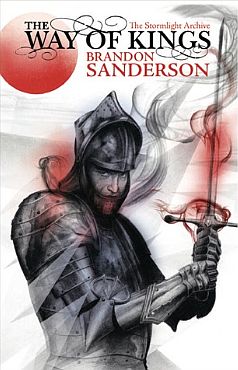
The Way of Kings by Brandon Sanderson (UK Edition)

From The Wertzone:

Just a brief update from Gollancz. Whilst The Way of Kings will be a simultaneous launch with the US edition in August 2010, the UK edition is being held back to February 2011, to give Gollancz a little more time to prepare the book for release, as they see it as a major title. Slightly disappointing news, but given that the sequel is probably not expected until 2012 or later (with Sanderson having to deliver the last two Wheel of Time books on a tight schedule), not too much of an issue.

An odd decision, given Sanderson’s popularity and the ease at which books can be imported (I certainly know that it’s not uncommon, at least in the online world, for North Americans to import novels from the UK) with relative ease, thanks to the likes of Amazon.com and Chapters.ca. Still, Sanderson’s Mistborn trilogy is still fresh on the shelves of UK bookstores, so it may not be so egregious a delay as it might seem to folk on my side of the pond.

Given that Sanderson is still working on revisions (or, was, until a few days ago), one wonders if we might not see a similar delay from Tor Books.

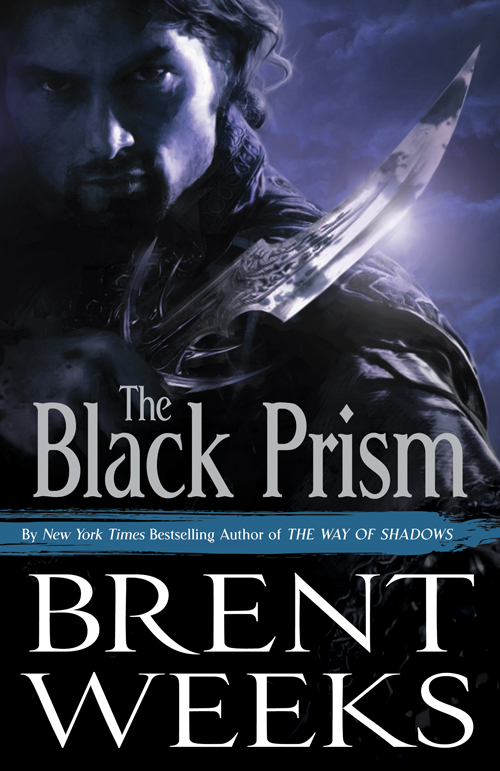
The Black Prism by Brent Weeks

Kip crawled toward the battlefield in the darkness, the mist pressing down, blotting out sound, scattering starlight. Though the adults shunned it, he’d played on the open field a hundred times–during the day. Tonight, his purpose was grimmer.

Reaching the top of the hill, Kip stood and hiked up his pants. The river behind him was muttering obscenities, or maybe that was the warriors beneath its surface, dead these sixteen years. Kip squared his shoulders, ignoring his imagination. The mists made it seem he was suspended, outside of time. But even if there was no evidence of it, the sun was coming. By the time it did, he had to get to the far side of the battlefield. Farther than he’d ever gone searching.

Even Ramir, wouldn’t come out here at night. Everyone knew Sundered Rock was haunted. But Ram didn’t have to feed his family; his mother didn’t smoke her wages.

Gripping his little belt knife tightly, Kip started walking. It wasn’t just the unquiet dead that might pull him down to the evernight. A pack of giant javelinas had been seen roaming the night, tusks cruel, hooves sharp. They were good eating if you had a matchlock, iron nerves, and good aim, but since the Prisms’ War had wiped out all the town’s men, there weren’t many people who braved death for a little bacon. Rekton was already a shell of what it had once been. The alcaldesa wasn’t eager for any of her townspeople to throw their lives away. Besides, Kip didn’t have a matchlock.

Nor were javelinas the only creatures that roamed the night. A mountain lion or a golden bear would also probably enjoy a well-marbled Kip.

A low howl cut the mist and the darkness hundreds of paces deeper into the battlefield. Kip froze. Oh, there were wolves too. How’d he forget wolves?

Thanks to the lovely folks at Orbit Books, we get a three chapter preview of Brent Weeks’ The Black Prism, an unrelated follow-up to his incredibly successful The Night Angel Trilogy. Given that Weeks is still wrapping up the first draft of the book, remember that these early chapters are likely to change in the published novel. In any case, it’s a nice treat for fans of Weeks’ work.

You can read the excerpt HERE.

Ari Marmell, author of The Conquerer's ShadowAri Marmell’s been around the writing scene for years, but his name only hit my ears with the release of The Conquerer’s Shadow, his first work outside the world of Pen & Paper RPGS and tie-in Novels.

The Conquerer’s Shadow is a twist on the genre, throwing the reader into the story alongside a former ‘evil lord’-type and challenging them to re-consider what it means to be a protagonist… and a hero.

Intrigued by Marmell’s take on the genre, as well as his experience with the under-explored world of tie-in fiction, I gathered him up and ran him through my gauntlet of questions. Did he survive? Read on and find out.

The Interview

Ari! Welcome to A Dribble of Ink! Anything you’d like to say to set the tone?

   To set the tone? F-sharp major.

   Or possibly just thanks for having me here.

Mouseferatu, the official alias of Ari Marmell

Okay, I gotta get this one out of the way early. Blake Charlton can be found at blakecharlton.com. Neil Gaiman can be found at neilgaiman.com. Paul Kearney, predictably, can be found at paulkearney.com. Starting to see a trend? Ari Marmell can be found at… wait, mouseferatu.com?

What’s the deal with Mouseferatu?

   Way back in ’99 or thereabouts, I was looking for a handle to use on the White Wolf forums. I came up with “Mouseferatu, Rodent of the Dark” pretty much on a lark. But that’s how I became known on the forums, so when I started freelancing for White Wolf, it just sort of stuck. Once I’d had the name on various forums and the e-mail, I just figured I’d run with it, make it sort of a “brand.” (The awesome logo that my friend Chung-Mau Cheng designed certainly helped, too.)

   But if people find it less confusing, you can also get to the site by typing in www.arimarmell.com. I’m easy.

Speaking of the online world, social networking sites like Facebook, Twitter and the blogosphere have changed the way fans interact with their favourite authors, blurring that mystical line that used to separate the two except at conventions and readings.

What sort of effect has this had on your writing career? Does it make the job easier or more difficult?

   Hmm. Some of each, if I may be allowed a wishy-washy answer.

   I enjoy interacting with fans. It adds a level of immediacy to the process, it can be a lot of fun, and it reminds me constantly that, hey, there are actual people who are part of this great amorphous mass that we call “the market.” It’s a reminder of one of the main reasons I do this (the other reason being that I love doing it, and pretty much suck at everything else). And it helps me improve; when it’s offered thoughtfully, I really do try to pay attention to criticism, and if I find it contains valid points, to learn from it.

   But it can also be distracting. It’s very easy for a writer—especially a neurotic one, like me—to get so wrapped up in the social networking that it takes time from the actual, y’know, writing. And it’s very easy for us to forget that the people online still represent only a portion of the audience; we can easily get a swelled head from the kudos, or be seriously discouraged by the complaints.

   Given the choice between having it or not having it, I’m really glad it’s there. But like everything else, it requires a strong sense of moderation (something I’m still working on).
Read More »