Adam over at The Wertzone has compiled a huge list of upcoming novels for 2009. just taking a brief look at the list has me confident that we won’t have nearly as many bloggers bellyaching at the end of the year about the supposed quality of released (2008 has been much maligned in the past several weeks….)

A few of the standouts for me:

The Steel Remains by Richard Morgan
Gollancz (UK): out now
Del Rey (USA): 20/01/09

Richard Morgan’s first fantasy novel is a gripping, taut and visceral story with some brilliant worldbuilding and terrific ideas. Expect more criticism of the explicit sex and violence when the book hits US stores, but this is a first-rate novel, although admittedly not Morgan’s best work.

Drood by Dan Simmons
Little, Brown (USA): 09/02/09
Quercus (UK): 05/03/09

Simmons’ new novel is a mammoth historical tome about the end of Charles Dickens’ life and his incomplete final novel, The Mystery of Edwin Drood. The SF&F elements are reportedly minor, but this should prove to be an interesting read regardless.

The Warded Man by Peter V. Brett
HarperCollins Voyager (UK): out now
Del Rey (USA): 10/03/09

The US publication of Peter Brett’s much-acclaimed debut novel, which was published last year under the title The Painted Man. A vivid and interesting premise and world give rise to a story with plenty of excellent twists and turns.

The City and the City by China Mieville
Macmillan (UK): 15/05/09
Del Rey (USA): 26/05/09

Mieville’s new book is a stand-alone noir thriller set in a fictional pair of eastern European cities. His publishers are extremely excited about this novel, naming it his best work to date. This is easily one of my most eagerly-awaited books of the year.

Warbreaker by Brandon Sanderson
Tor (USA): 09/06/09

Sanderson’s new stand-alone following his acclaimed Mistborn trilogy has been developed in full public view on his website, with new full drafts of chapters and the entire book published upon completion so readers can follow the writing process. The published novel will likely be another big success for him, and raise awareness of his name ahead of the publication of the final Wheel of Time novel – which he is completing – at the end of the year.

Nights of Villjamur by Mark Charan Newton
Tor (UK): 12/06/09

SF&F blogger and commentator Newton’s debut novel and the first book in his Legends of the Red Sun series is already generating some pre-release buzz, and should be well worth a look when it comes out.

Best Served Cold by Joe Abercrombie
Gollancz (UK): 18/06/09
Orbit US: 29/07/09

Abercrombie’s follow-up to the First Law trilogy is a stand-alone set in the same world, although expect a few cross-overs from minor characters. It is a tale of mayhem, blood and murder set in the lands of Styria, and should be an interesting change of pace and focus from Abercrombie’s debut work.

Dragon Keeper by Robin Hobb
HarperCollins Voyager (UK): 01/07/09

Hobb returns to the world of the Six Duchies with this stand-alone novel set in the Liveship Traders mileu.

Shadowrise by Tad Williams
DAW (USA): November 2009
Orbit Books (UK): tbc

The epic conclusion to Williams’ Shadowmarch Trilogy.

Quite a list, eh? Adam also has other major releases like Patrick Rothfuss’ The Wise Man’s Fear, George R.R. Martin’s A Dance With Dragons and Scott Lynch’s The Republic of Theives, but I’ll have to be holding copies of those in my hands before I truly believe they’re coming. If even two of the three make it out in 2009, we’re sure in for a hell of a treat.

Make sure you check out Adam’s whole list (because I haven’t touched on even half the novels on there) HERE.
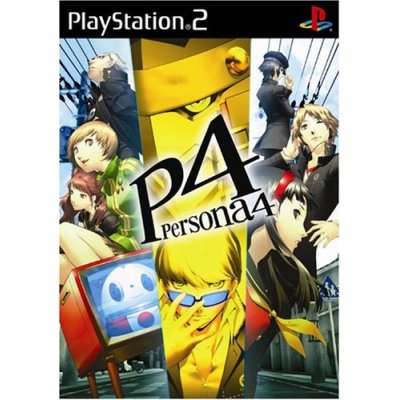

Persona 4 for Playstation 2.

Persona 4

In a year dominated by ‘Next Gen’ hardware, a lowly little RPG on the nearly dead Playstation 2 came along and stole the award out from under them. Proving that shiny graphics and heavy tech aren’t always necessary to create a dynamic narrative, Persona 4 took everything that made its predecessor great (my personal favourite game from 2007, and one of my favourite games of all time) and improved it in the subtle ways that count.

Unlike most RPGs, Persona 4 thrusts the player not into a cliche medieval/futuristic world, but rather into a rural Japanese town. The nameless protagonist, though young, then has to deal with the social aspects of life as he battles through both dungeons (created by the personality flaws of the people he meets) and the halls (and twisting social structure) of high school. Even as someone long removed from high school (well, several years, at least), the unique style of the narrative and the deft handling of the social aspects drew me right into the story and the small setting it takes place in.

What drives Persona 4 home, just like the previous entries in the trilogy, are the characters and the interactions between them. When I first started Persona 4, I wasn’t sure how I would like the new characters, considering how attached I had become to those of the previous game, only a few hours in all of my fears were washed away. The top notch character interaction is improved, the characters are just as relateable (if not more so) and the gameplay systems driving the social interaction elements is buttery smooth.

Everything I loved about Persona 3 is back again in finer form and I couldn’t be happier to declare Persona 4 as my personal Game of the Year.

Runner-ups:

Fallout 3
Xbox360/Playstation 3/PC
   A fantastic follow-up to two classic PC games.

Chrono Trigger DS
Nintendo DS
   My favourite game of all time, in portable form, with added stuff. Damn.

Persona 3: FES
Playstation 2
   Like Chrono Trigger DS, this takes a classic RPG and makes it better.

Professor Layton and the Curious Village
Nintendo DS
   A charming romp with a gorgeous art style.

Boom Blox
Nintendo Wii
   An ugly puzzle game from Steven Spielberg that just somehow works.

What was your favourite game to come out this year? What game not on my list should I try to get my hands on?

Few genres outside of Speculative Fiction see such a consistent dearth of doorstopper novels. The average novel outside of SF averages about 90k words whereas inside SF it would probably clock nearer to 120k. Charles Stross, a well regarded author of Science Fiction, explains how this trend originated and where those choppy, fast paced SF novels of the 60’s have gone.

It’s a question that comes up quite often — back in the 1960s a typical SF novel ran to 60,000 words (130-150 pages); one that topped 80,000 words was considered lengthy. But today, I’m more or less required by contract to hand in 100,000 word novels; and some of them are considerably longer. (At 145,000 words, “Accelerando” would have been considered a whopper back in the 1970s.) So what happened?

Until the early 1990s, mass market SF/F paperbacks in the US were primarily sold via grocery store racks, supplied by local distributors (400+ of them). The standard wire rack held books face-out, either against a wall or on a rotating stand. And that’s where the short form factor novel became established. Thinner books meant you could shove more of them into a rack that was, say, three inches deep. Go over half an inch thick, and you could no longer fit six paperbacks in a 3″ rack. And there was only so much rack space to go around.

During the inflationary 1970s and early 1980s, prices of just about everything soared. The publishers needed to increase their cover prices to compensate. But the grocery wholesalers who sold the books insisted “the product’s gotta weigh more if you want to charge more”. They weren’t in the book business, after all, so just as buffalo tomatoes got bigger, so did paperbacks. (Even though this meant there was less room to go round in the wire racks.) You can only get so much milage by using thicker paper and a bigger typeface; so they began looking for longer novels.

Anyway. I began selling novels (in 2001-02) just as the trend for longer novels peaked. I’m actually writing shorter books than my earlier ones — my last two finished manuscripts ran to 102,000 and 107,000 words respectively, whereas my first three SF novels ran to 118,000, 138,000 and 145,000 words each. (On the other hand, I’m not necessarily writing less. Two bloated 150,000 word behemoths take nearly as long to write as three relatively slim 100,000 word novels, if you’ve got your future projects planned out well in advance.)

You can check out the whole article, with more details about how companies like Walmart and Borders have a direct effect on the length of novels being published, HERE.

Comments closed

I recently became aware of Passage by its release on the iPhone and the strong words of 1UP.com editor and retro gamer extraordinaire Jeremy Parish. I was about to take the dive on the ninety-nine cent iPhone version, when I stumbled across the fact that the game was available for free for Windows, OSX and Linux. The price was right and I wasn’t quite sure what to expect.

Passage – free for Windows, OSX, Linux..

Passage is an experience that’s hard to define, but difficult not to recommend. Thought provoking, melancholy, adventurous, touching, grand and minute, Passage manages to be all of these things within the five minutes it takes to start and ultimately finish the narrative. There’s no dialogue, no cut scenes, the characters are little more than 8×8 sprites, but Passage contains more verve and characters than many of the blockbuster Xbox360 and Playstation 3 games released this year.

I won’t ruin the experience for you by spoiling the story, but give it a shot, it’s free afterall.

Passage can be downloaded for free HERE

Established only a few months ago, The David Gemmell Award has received a lot of buzz in its quest to crown the top Fantasy novel of the year.

From the The David Gemmell Awardweb site:

The DGLA will be presented for the very first time in 2009 for the best Fantasy novel of 2008. The award will be given to a work written in the ‘spirit’ of the late, great David Gemmell, a true Master of Heroic Fantasy.

And, we want YOU – the readers who love the genre to VOTE to decide who makes the Short-list!

Though seeming to focus mostly on the Epic Fantasy sub-genre, The David Gemmell Award is a great cause in turning the spotlight towards an oft maligned (at least in Internetland of late) area of Fantasy, and honouring a legend. So get on over there and vote! There are over 80 novels on the long list, so there’s sure to be something there you’ve read and enjoyed.

You can vote HERE.