Posts Tagged: Fantasy

'The Grinders' by Adam CallawayI submitted my first story ever to a contest called Inkspotter on July 2nd, 2008. Two months later, I submitted my second story to Apex Magazine. A day after that, I received my first rejection letter, from Apex Magazine.

In the three years since those first stories, I have collected 192 rejection letters, a handful of fanzine sales, one pro level sale, and one, SFWA-qualifying pro sale. I heard an anecdote that Ray Bradbury had 800 rejections before his first sale, so, by that metric, I’m not doing too bad.

I’m convinced that there are only two things required to become a published author. One is the dedication to write. The other is the ability to take a rejection. If you possess those two qualities, you will be published someday.
Read More »
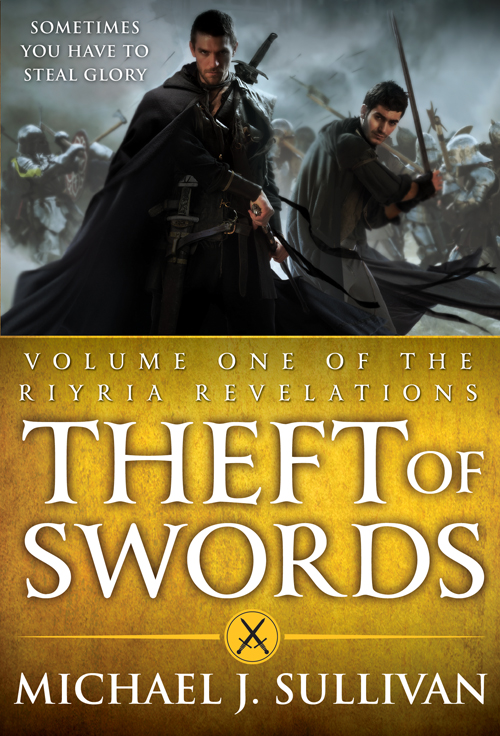
Theft of Swords by Michael J. SullivanSome ideas have great power, and in fantastic literature, one of the mightiest of these is the idea of The Hero. The Hero is a very particular sort of creature: it (quite often “he”) is the protagonist of many stories and serves as paragon, savior, and metaphoric proponent/enactor of ideology. The Hero reflects aspirations and serves as inspiration both in the story and to the reader. This can be a useful, evocative device to employ in a story. The problem is, some of The Hero’s admirers use this device to constrain the idea of fantasy and limit the boundaries of imagination that writers and readers use in their engagement with fantasy literature.

Author Michael J. Sullivan discussed “Fantasy as Fantasy” on his blog recently, and after reading his opinion, I wanted to respond not as a proponent of “the other side” that he establishes, but as a critical reader of fantastika. I was perturbed not by his defense of The Hero, but by his assumption that his position encompassed all of “fantasy” and that fantasy should ideally be Just One Thing. This idea extended not only to the literary genre, but to the very notion of what “fantasy” means. I think that there is far more potential in both of these ideas when we open them up rather than try to set limits upon them.
Read More »

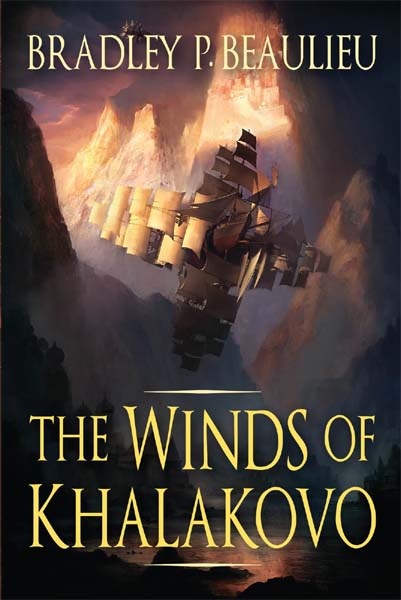
The Winds of Khalakovo by Bradley P. BeaulieuI recently published my debut novel, The Winds of Khalakovo. I also recently finished the first draft of the second novel in The Lays of Anuskaya trilogy, so when Aidan brought up the possibility of a guest post, one of the things I immediately thought of was talking a bit about the differences in writing Book 2 vs. Book 1.

I had been wary of writing the second novel in a series for quite some time. That sounds strange, even to my ear, but it’s true. I didn’t used to think this way. When I first starting writing seriously, ten years ago or so, I thought a sequel would be a natural extension of the first book, and in many ways that’s true, but as I grew in my craft and began to go to conventions and get advice about writing a sequel, I grew … not worried, but certainly concerned.

Why? Well, there are a few things going on here.

First of all, you don’t want to be complacent. The Winds of Khalakovo was my first published book. Not my first book, mind you (I have a trunk filled with three others), but the first one I’d published. By the time Night Shade Books accepted Winds for publication, it had been workshopped and critiqued a number of times. It was tight, but it had taken a lot of energy from a lot of people (not just me).
Read More »

Fabio FernandesWhen you write a story, what is the first thing that comes to your mind as an all-powerful, God-like creator? The world on which the action will take place or the characters?

Worldbuilding is both about the macro and the micro, you know – you must pay as much attention to one single person in your story as you would of the city you are creating or borrowing details from.

As I recently wrote for the Culture Share column in Juliette Wade’s blog, I have this recent story (still unpublished) called ‘The Remaker’. It’s based on a short story by Jorge Luis Borges, Pierre Menard, Author of The Quixote. My novelette basically tells the story of a researcher who discovers a future writer who revels in rewriting works by famous authors of the past, and how this can be done (and why someone even would do this) in the mid-21st Century.

One of the biggest challenges I faced in this story wasn’t creating the protagonist (a 60-year old scholar who still loves paper books in an all-digital era), not even his sort-of nemesis/antagonist (the Remaker of the title), but his girlfriend, who doesn’t appear in more than half a dozen pages, if that much.

Let me tell you what little the reader knows about her right in the beginning of the story: her name is Midori, she is a scholar on Gender Studies (a PhD), she met our protagonist in a conference in Canada, and they have a steady relationship, each one living in their own apartment in São Paulo.

She is also a transsexual.
Read More »

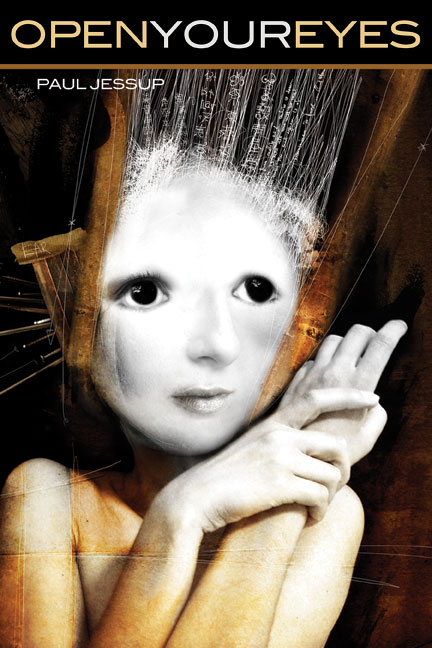
Open Your Eyes by Paul Jessup(or how I stopped worrying and learned to love the genre name game)

Fatastika, speculative fiction, science fiction, scifi, slipstream, interstitial, magical realism…

You’re probably reading all these posts from all these different authors swimming around in the blogosphere, and you feel like you’re drowning in a soup of labels and categorizations. You probably think you can’t possibly keep all this crap in your head right, and you wonder why (why? WHY?) do we need a million different ways to say the same damn thing. I mean, they’re all Science Fiction, right? Or they’re all Fantasy right? Why not just SFF? Or F/SF?

Let’s slip aside taxonomy for a moment here, and just focus on the labels that are all seeming to say the exact same thing differently. We’re skipping taxonomy and sub classifications and spin off genres for the simple reason that genre fiction is geek fiction, and geeks like to break things down and classify them. That’s what geeks do, and the more classifications we can make, the more complex this living organism of rules and logic and labels becomes, the happier we are. So we’re going to strip those away for a moment and focus on the big guns: Speculative Fiction, Fantasy, Science Fiction, Fantastika.
Read More »