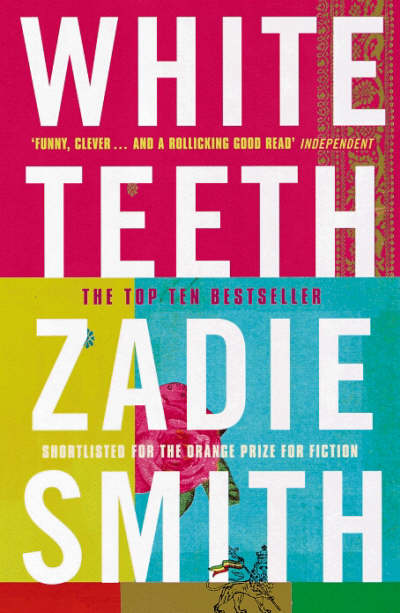
 Zadie Smith is best known for writing White Teeth, a many times-nominated novel that takes a Dickensian look at the lives of two North London friends, and along the way explores the ideals and vices of family, multiculturalism and religion. So, it’s with some amount of pride (but mostly deserved happiness) to see her mention Science Fiction, a genre oft-maligned by mainstream critics and writers, with keen interest and enthusiam.
From a recent interview:
‘Only Connect’ is the motto of Forster’s Howards End, the novel that you use as ‘scaffolding’ in On Beauty. You deliberately recreate entire scenes from the novel, from the opening series of letters, to the concert scene, and certain characters are recognizable as being from Howards End. What made you decide to make these references so clear, and are there any other novels that you would like to pay homage to in a similar way?
I’d never do it again. At the time I couldn’t really explain why I had done it. Now, in retrospect, I can see it was an act of tribute, and also a goodbye: a way of laying to rest the influences that dominated me as a child, which were quite conservative literary influences. The thing is, it’s contextual. When I was a fourteen year old all I wanted to prove was that I was English, that I could read the ‘classics’ as well as anyone, that if I passed my exams I had a right to go to this posh university just like any of these posh kids who considered it their birthright. I was outside of everything and I wanted to be inside. That’s the opposite position of a lot of young British writers, who took their Britishness as an undeniable fact and wanted to break out – to French shores, for example, or beyond. I just wanted to prove I had a right to write, to add to the literature of the country in which I found myself. Hence the Forster, hence the Eliot, hence the Woolf, hence all of that. It was personal and political. I was absolutely determined that no-one was going to say to me “Oh, they only let you into Cambridge out of some kind of working-class/race affirmative action.” I wanted it to be clear that I could do the work as well as the next Etonian. So my childhood was all about being this good student, because I had no money, and without the grades I knew I wasn’t going to get out of Willesden. To me ‘wanting to be a writer’ meant first passing these A levels. I knew I was fucked without them.
It was only when I got to college that I realized I had concerned myself with a lot of stuff my peers weren’t concerned with. A friend said to me at the time that I was ‘fatally out of step with my generation’ – but in a way I think that embedded Nerdism, being more familiar, at that time, with Milton than Bukowski or whatever, helped me. It gave me a very solid foundation.
Anyway, the Forster thing was part of that out-of-stepness. So then it was so strange to find myself published and hear some people saying ‘you only got published because you’re trendy and black.’ I felt black, but not trendy. But of course, if people want to see you that way, you can’t win with them – trying to ‘prove yourself’ to people like that, I see now that it’s a hiding to nothing. I try and write the best books I can and people are of course free to like or dislike them, but there will always be people who say ‘she got published because she’s black’. Consider for a moment how it would be possible to win this argument? You can’t win it. The only objective test I can think of is if ten young white writers and I submit anonymous essays or stories to a board of readers convinced that blackness is an enormous secret advantage in the publishing industry. Would they be able to spot my affirmative-action prose? Is it really so poor next to my white peers? Maybe. We should set up that test somehow.
No, the real, unquestionable advantage was Cambridge. A publisher wrote to me in my final year because he’d read something of mine in a Cambridge publication. That was the absurd luck and privilege of the institution. All I can say is that I worked my arse off to get into that institution. And I felt guilty, because I had so much luck. The only way I could justify my luck to myself was to try and write as well as the next guy. What else can you do?
This is a long way of saying that On Beauty was the end of all that for me – of trying to get people’s approval by writing myself IN to this English tradition. I just don’t care any more. All I can do is continue to work very hard on my little projects, taking in any influence I feel like, and not fearing subjects that interest me. 19th century Jamaica interests me. The 70’s Black Power movement in London interests me. The feminist lesbian movements of the 60’s and 70’s interest me. At the moment, sci fi, speculative fiction, interests me enormously. I’m so excited now about the next decade. I feel free!
As fans of genre literature, we all know how wonderful it can be. We know the beauty and the possibilities presented by the creative minds who have helped define the field; but we also know how difficult it can often be to convince readers outside the genre to give it the consideration and credit it deserves. With advocation from authors like Smith, however, we’re one step closer to shedding that undeserved reputation and moving into the spotlight among ’proper’ literary novels and novelists.
Read More »
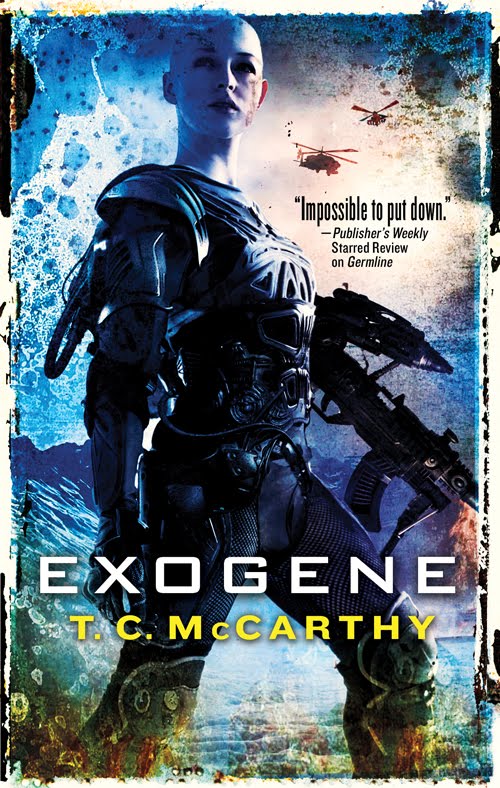 Some people treat genre fiction as if it’s a dirty diaper – to be held at arms length and stuffed in a pail as soon as possible. At least that’s the impression I got on Friday, September 23rd. It all started when I went downtown to hand out fliers for my upcoming book signing and to let local representatives have free copies of my debut novel, Germline, because it seemed to me like civic organizations might want to help a local author. My expectations were a little unrealistic (see the moral of the story at the bottom)…