Posts Categorized: Feature Article

Aside from reading, I spend a lot of my downtime playing videogames. I always have, I suspect I always will. Here’s a list of my favourite videogames published this year, a few I missed out on and one that’s so special that I had to include it, even though it came out in 2010.

Honourable Mentions

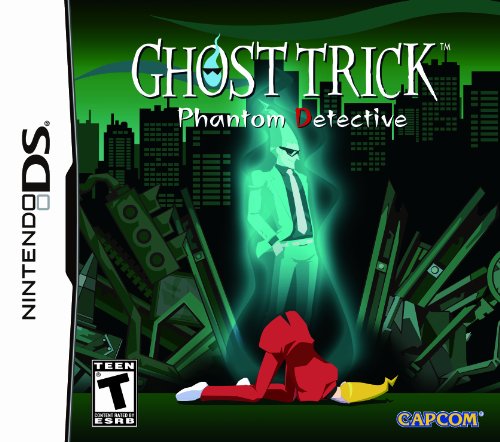
Ghost Trick: Phantom DetectiveGhost Trick: Phantom Detective, published by Nintendo

It’s stylish and funny, has a labyrinthine storyline that never peters out even as it gets more and more twisty, more and more zany, and the animations are some of the best in the genre despite being on hardware that’s almost seven years old. It does everything right and deserves more attention.


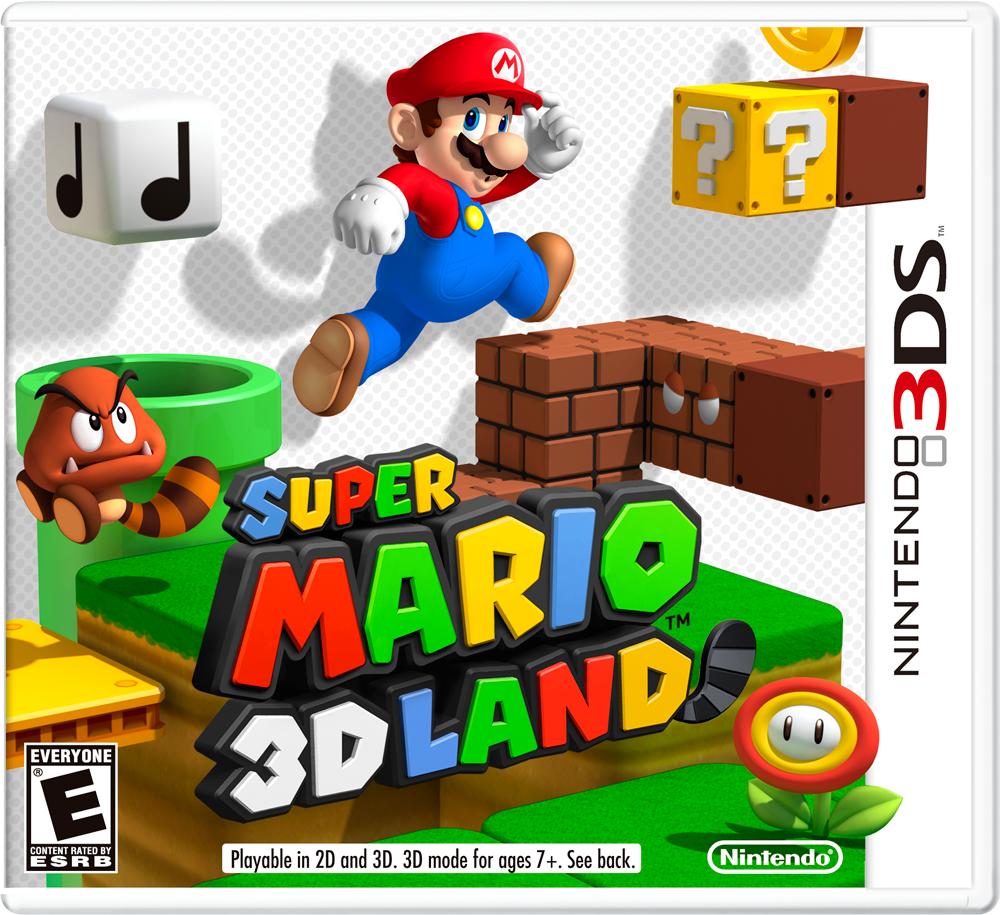
Super Mario 3D LandSuper Mario 3D Land, published by Nintendo

Clever bite-size levels make this the best 3D Mario game since Super Mario 64. What more needs to be said?

Read More »

Another year, another list of great novels. I don’t read widely enough to declare a ‘best of 2011,’ so instead here is a collection of my favourite novels published in 2011, starting with honourable mentioned (in no order) and capped off with my favourite novel of 2011, which might come as a bit of a surprise.

Enjoy!

Honorable Mentions

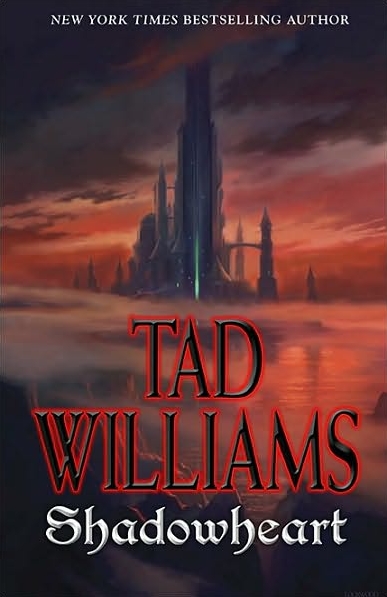
Shadowheart by Tad Williams

SHADOWHEART by Tad WilliamsShadowheart is, essentially, one enormous climax. The pacing is frenetic (for a Williams novel…) and the author fills every nook and cranny of the novel with feverish action, enlightening observations on the plot or characters and enough twists and turns to keep fans of the series happy. It’s always bittersweet to see a series come to an end; as fans, we are always eager to find out what happens to our heroes and heroines, but, equally, we don’t want them to ever leave our lives. Perhaps the greatest thing I can say about Shadowheart is that through four long volumes of a story, Williams convinced me to care utterly for his characters and there’s a hole now in my life where they once lived. Few story tellers can do that. Williams does it with alarming regularity.
Read my full review of Shadowheart by Tad Williams.
Read More »

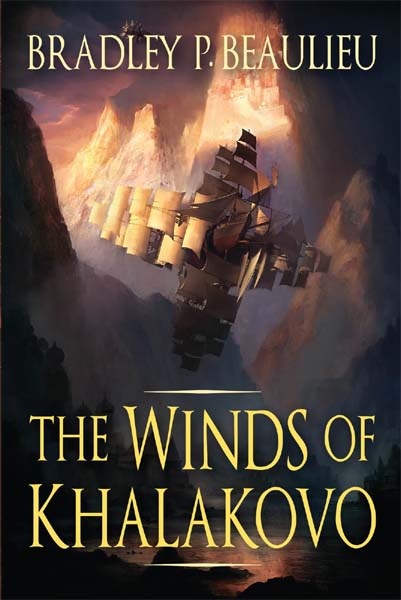
The Winds of Khalakovo by Bradley P. BeaulieuMy friends, sometimes you have to be careful what you ask for. When I first started talking to Aidan about a guest post on A Dribble of Ink, I thought of a couple of subjects that seemed easy at the time. The first was about the differences between writing a Book 1 in a series vs. its sequel. The second was about finding the sweet spot in terms of the number of POV characters for an epic fantasy. The first one was pretty easy to knock out, because it was more about relating my experiences over the course of writing the first and second novels in my trilogy. This second one, though, has been a tough nut to crack.

Why? That’s a fair question, because let’s face it: on the surface this question is easy to answer. How many POVs do you need? However many the story needs to tell it effectively. While I believe this to be true, it’s also about as useful as a screen door on a submarine. It doesn’t really illuminate the choices that have to be made with respect to POV, so I think what I’ll try to do is examine the question using two epics I’ve read recently.

On the one extreme, we have George R.R. Martin’s A Song of Ice and Fire. How many POVs does Martin have now? A few dozen between A Feast for Crows and A Dance with Dragons, which really comprise a single novel broken up geographically (as opposed to breaking a large novel up temporally). Had anyone told an editor twenty years ago that they were going to start a series in which the novels would expand to twenty POV characters, they would have been laughed out of New York. And yet, here it is, a masterful story with a scope about as wide as you can have in fiction.
Read More »

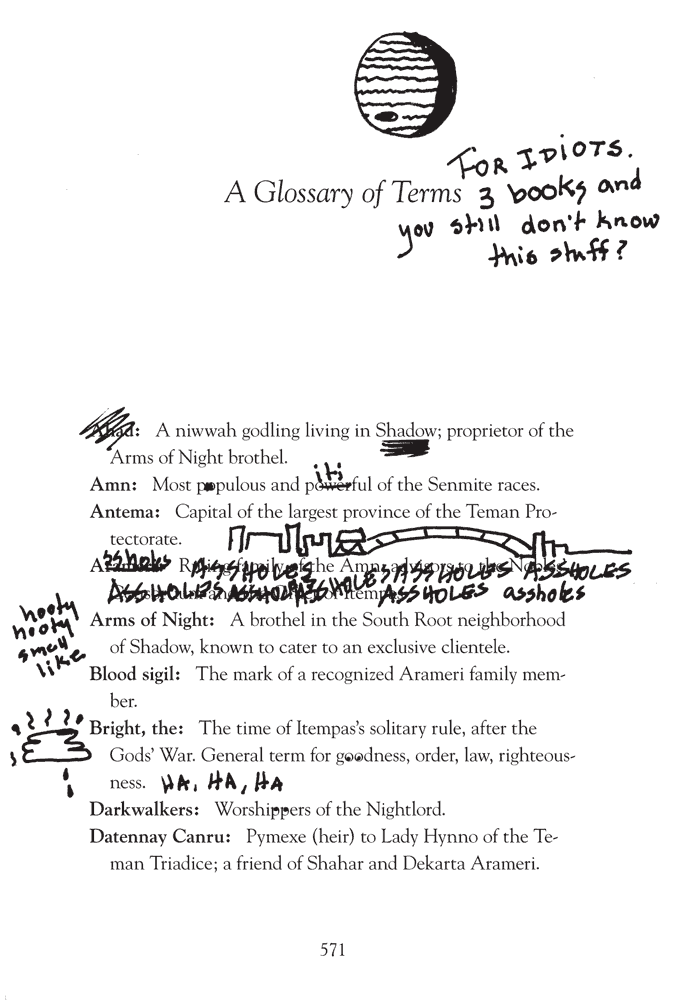
Recently, I picked up a copy of N.K. Jemisin’s latest novel, The Kingdoms of God and was surprised and delighted when I flipped through to the glossary and saw this (click to embiggen):
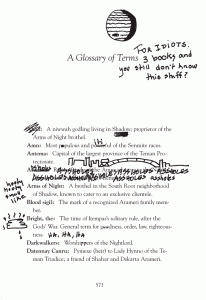
N.K. Jemisin on God-doodled Appendices

I amused myself for a few more minutes by reading the rest of the glossary and immediately knew I needed the story behind it. I contacted Ms. Jemisin and she was kind enough to share the story behind the creation of Sieh’s tomfoolery.

The idea hit shortly after my editor had accepted the book. She asked me if I had any additional end-matter to include, like the “scrivener’s notes” that were at the end of the previous two books. Orbit likes to include extras when it can, a sort of lagniappe for readers. At the time I couldn’t think of any. (Later, the short story “Not the End” popped into my head, and I wrote it and sent that to her.) But as I tried to think of what sort of end-matter would befit Sieh, it occurred to me that there wouldn’t be any, not like I’d written before. Any scrivener who tried to take notes on Sieh would become so exasperated with his pranks and blatant lies that he wouldn’t commit the report to paper, or he’d have to cover it in “none of this may be true” disclaimers. And as soon as that scrivener wrote it down, Sieh would sneak in during the night and doodle all over the thing, just to teach the scrivener a lesson. Meddle not in the affairs of trickster gods, for they will drive you nuts.

But it gradually occurred to me that Sieh wouldn’t stop there. Throughout THE KINGDOM OF GODS, he breaks the fourth wall to address the reader. He’s a god, aware of things beyond mortal ken; he knows we’re here, reading about him. So it occurred to me that Sieh would also sneak in and doodle all over *my* work. Ideally just before it went to print, so that he could prank not just me, but my entire readership.

I asked my editor if something like that was do-able. I expected her to say it would cost too much; I have no idea how they figure these things. But she seemed delighted by the idea, so I scribbled some stuff on the copyedited glossary and sent that back to her, just to give her an idea of what I had in mind. I kept it short and black and white only, mindful of costs. But because I’m no artist by far, I asked if they could get a real artist to play around with it, maybe make it look more childlike somehow. The designer they sent it to (Fearn de Vicq), however, sent it back virtually unchanged and said my own doodles were fine. (She did clean up the giant glops of liquid paper, and rearranged the doodles to make them integrate with the text better.) So what you’re seeing is my own inept artwork and handwriting.

I’ve had to issue a few disclaimers since the book came out, because I’ve seen some concerned emails and blog posts from people who honestly thought their copy of the book was defaced. One librarian was absolutely furious on my behalf — though he laughed when I told him *I* had done it. It’s fun when people fall for a prank, but even better when they’re good-natured
about it.

I also intended for it to be a part of the story in a way, so pay attention to how Sieh’s reacting to various entries. If someone skips to the glossary, it shouldn’t spoil them, but for people who’ve already read it, I think they’ll notice, for example, where Sieh stops doodling and sort of freaks out.

If you haven’t already, go grab The Kingdom of Gods and check out the terrific glossary. Or, if you haven’t read Jemisin, run out and buy her first novel, The Hundred Thousand Kingdoms (REVIEW) because it seriously rocks.
 'Fantasy: Why I left and why I came back' by Justin LandonThere’s an expectation that someone who reads from the Science Fiction & Fantasy section lacks maturity. They suffer from social anxiety and enjoys the not so occasional twinky. Because at the end of the day reading genre fiction demonstrates a complete lack of life acumen. Sound about right? It’s possible this is an American phenomenon and not something that’s shared worldwide, but I believe these assumptions are pervasive. There was a time I agreed with them.

When I turned 18 the law told me I was an adult. I still couldn’t buy beer which seemed more of a marker of adulthood than the right to vote or being able to give “consent”, yet I followed the advice set down in Corinthians (you know, from one of those books full of factual things):

When I was a child, I spoke as a child, I understood as a child, I thought as a child: but when I became a man, I put away childish things.

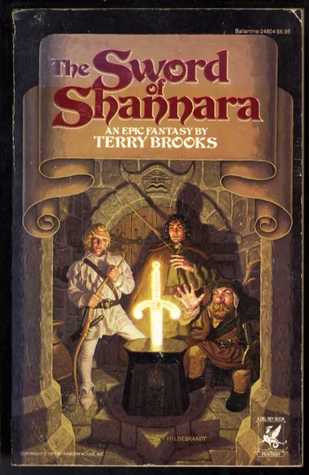
The Sword of Shannara by Terry Brooks

I taped up my books and stashed them in my parent’s garage. That box contained a lot of Terry Brooks, Piers Anthony, David Eddings, and Raymond Feist. It may also have contained the first three books in the Sword of Truth series. I cannot confirm or deny these malicious rumors. If I was going to be an adult, I thought I should read like one.
Read More »