Posts Categorized: Feature Article

Winner

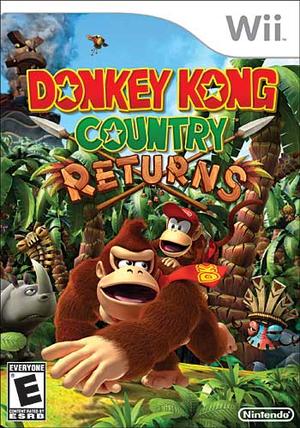
Donkey Kong Country Returns

Donkey Kong Country Returns — It’s not often that a non-RPG will top my Game of the Year list… but Donkey Kong Country Returns, developed by the out-of-left-field Retro Studios (developers of the Metroid Prime series), is an easy pick for me in an RPG-light year.

From the charming art direction (Those silhouette levels? Gorgeous) to the tight, responsive controls and top-notch level design, Donkey Kong Country Returns hit all the same buttons as the original SNES entries in the series and blew other recent platformers (like New! Super Mario Bros. Wii and Kirby’s Epic Yarn) right out of the water. Another classic in the long-running Nintendo franchise.

Honourable Mentions
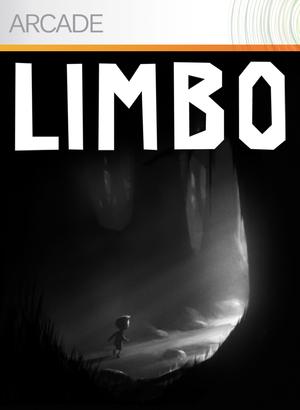
Limbo

Limbo — A stylish puzzle/platformer unlike anything I’ve played before. A testament to small development teams with big vision.
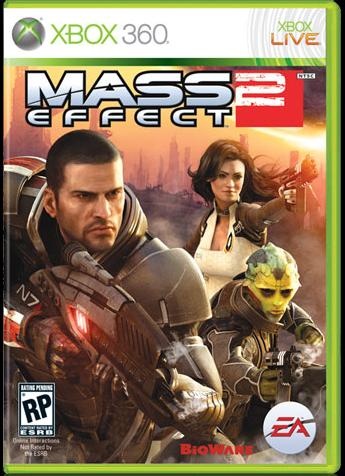
Mass Effect 2

Mass Effect 2 — Improved over the first game in some ways (atmosphere, graphics, cast), downgraded in others (exploration, RPG-elements, story). A good-but-flawed sequel to one of my favourite games of this console generation.
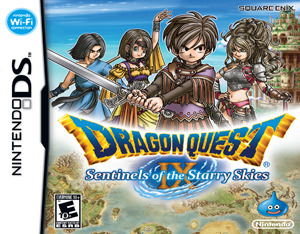
Dragon Quest IX

Dragon Quest IX — I had huge hopes for this game (being an enormous fan of the earlier games), but was left both satisfied and disappointed by the ninth entry in the long-running series. The gameplay was addictive, but the story just didn’t grasp me in the way that Dragon Quest V did.
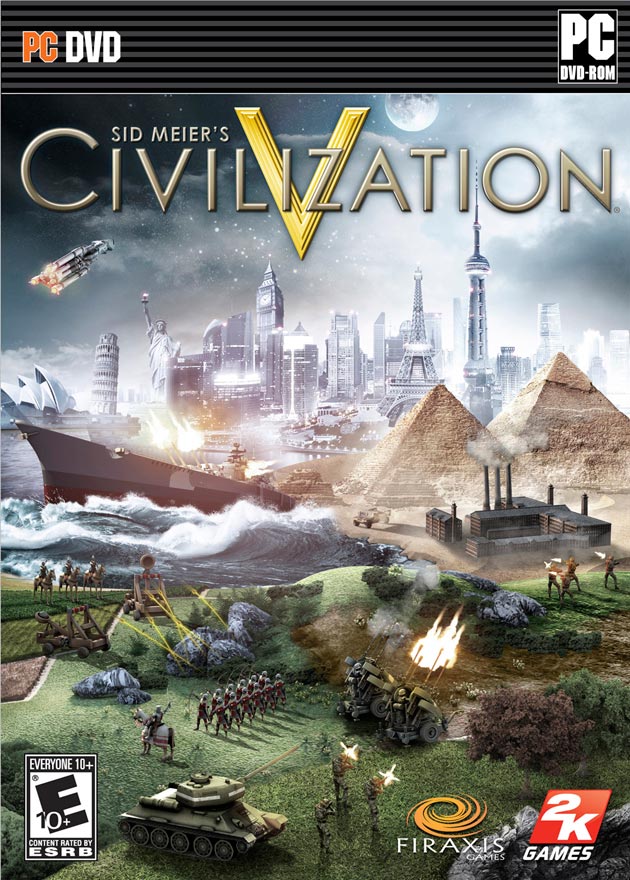
Civilization V

Civilization V — What is there to say? As a casual fan of the series, I love the streamlining of the game systems and the new combat mechanics. Just as addicting as the previous Civilization games, with an added layer of pretty graphics on top.

Biggest Disappointment
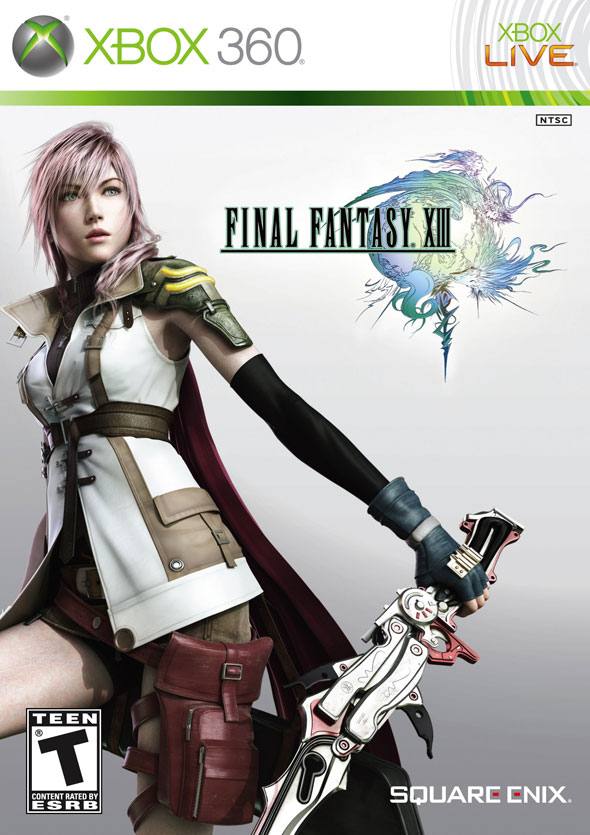
Final Fantasy XIII

Final Fantasy XIII — It’s hard not to put Fable III in this spot… but at least I managed to finish that one. Unlike Donkey Kong Country Returns, Final Fantasy XIII was missing absolutely everything that make the early entries in the series so important to me as a gamer. It’s incredibly linear, the characters are under-developed, the scenario is contrived and poorly directed, and the writing… oh god, the writing.
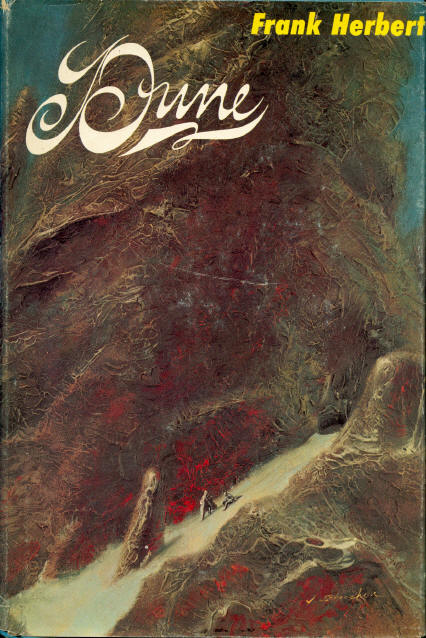
Dune by Frank HerbertYesterday, I hooked into the twitter hivemind and posed a question:

Let’s pretend I’ve never read a Science Fiction novel. What novels would you suggest?

Now, of course, that’s not entirely true. I have read Science Fiction, but my experience in the genre is, well… lacking. Rather, I was curious to see what people would consider the staples and foundations of the genre. Would we see a lot of recommendations for contemporary Science Fiction? Or aging classics? Space Opera or Dystopian Fiction? It’s an incredibly varied genre, and, predictably, the responses were just as broad, with a few authors/series popping up with some regularity.

The results:

@JasonBakiForge of God by Greg Bear is a favourite of mine

@ALRutter — When I asked my housemate the same question a few years back, he said Pandora’s Star [by Peter F. Hamilton]. Never looked back since.

@EwaSRI, Robot [by Issac Asimov] and any [John] Wyndham. And I’d want to recommend the Forbidden Planet film as well.

@BookwormBlues — The first scifi book I read was The Reality Dysfunction [by Peter F. Hamilton], but I have a feeling most people wouldn’t start w/scifi there.

Read More »

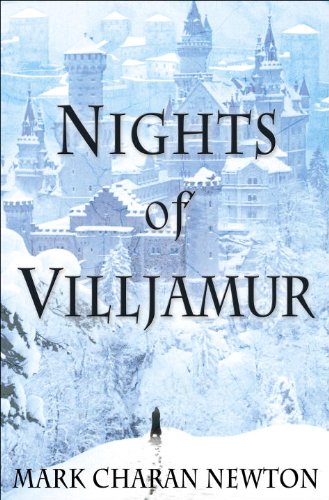
Nights of Villjamur by Mark Charan Newton

This article was originally written for and published at SFSignal. Go check it out!

Recently, Mark Charan Newton, author of Nights of Villjamur, as he’s wont to do, stirred some feathers when he challenged several bloggers to diversify their book coverage, to shift focus from all the frontlist new releases and give more coverage to the wonderful backlist of the genre. Long story short, the blogosphere can only handle so many reviews of Mockingjay by Suzanne Collins, The Way of Kings by Brandon Sanderson and The Black Prism by Brent Weeks. Authors and novels of high profile get a huge push from their publishers, and that results in coverage from every blogger under the sun; Newton argues that it would do everyone (reader, author and reviewer alike) some good to look into the past.

Myself and Larry Nolen, from OF Blog of the Fallen, disagreed with Newton, at least in part. We agreed with Newton that diversification is a good thing, but that true diversification means so much more than just dipping your toe into the forgotten classics of the genre; rather, it’s about stepping outside the boundaries of the frontlist books (you know, those ones that are shoved down your throat through blogs, twitter, Facebook, newsletters, bookstore promotions and heft marketing budgets) and explore what else the genre has to offer, regardless of whether it was released today, a month ago or before the Toronto Maple Leafs won their last Stanley Cup (1967, for all you non-Hockey fans reading this). The Speculative Fiction genre has so much to offer that you could pick books out at random and never run out of good reading (granted, there’s an equal share of bad reading in there, but it’s good to experience that from time to time, to keep perspective), so why are we bloggers and reviewers often obsessed with keeping up with the times?

Of course, discussions on the ethics of bloggers are boring. But this call for diversification is something all readers might consider, whether they end up taking Newton’s advice or not.

Read More »

Last week, I ran an article about one Librarian’s experiences as a buyer for a library chain. It was a nice look at a side of the industry that doesn’t receive a whole lot of coverage online, yet is a very powerful influence on everything from cover art to which books publishers are buying from authors.

* Professional Reviews: I spend time diligently going through Library Journal, Kirkus, Publisher’s Weekly, and other professional review journals. The majority of my selections come from there, and that’s probably what you’ll catch me perusing at the reference desk.

In the article, I was put off by the above comment, which seems to exclude reviewers like myself (bloggers/amateurs/essayist reviewers/etc…) from being useful to this librarian, citing capsule review (short, paragraph-long reviews) from publications like Kirkus and Publisher’s Weekly as being part of the determining factors. This came as a surprise to me, as I’ve always felt these capsule reviews were more or less useless. A little egotistical of me? Sure. But a valid curiousity. One tongue-in-cheek comment from myself led to some interesting discussion in the comments section.

As one librarian points out, I’m far from an authority on book buying, with any influence I have swinging towards the enthusiast crowd, so I went to someone I knew had experience writing both as a long-form reviewer and a ‘capsule’ reviewer for Publisher’s Weekly. John Ottinger, from the lovely Grasping for the Wind to drop by and give his insight into how both styles of review benefit the industry in different ways.

The Article


About a week ago, Aidan linked to a librarian who posted an essay on how she chooses books for purchase at the local library. It was a fascinating read, but of even more interest were the comments that Aidan’s post generated from several librarians and reviewers on the effectiveness of capsule reviews versus the long and/or more in-depth reviews one can find online.

As someone who writes capsule reviews for Publisher’s Weekly, and who also writes more lengthy, semi-in-depth analyses of different books at my blog, I bridge the gap (at least in terms of what I write) between the two schools of thought, namely, that capsule reviews contain too little information to be of use and online reviews would be a better choice for finding out what readers really want, and that capsule reviews are essential to the industry and without them, librarians could not make decisions about what to buy.

Both types of reviews have value, or I wouldn’t write both. But each has a different sort of value and to expect one to perform as another does is to walk a path of frustration. To my mind, capsule reviews have more value to the librarian due to their format and nature and “online/lengthier reviews have more value to the reader.
Read More »

Several days ago, Pat’s Fantasy Hotlist posted an excerpt from George R.R. Martin’s upcoming novella, The Mystery Knight. I don’t think anyone was prepared for the volume of vitriol and caustic commentary that would follow. Nearly 250 comments in a matter of hours, most condemning Martin for the usual reasons: he’s fat, he’s old, he’s lazy, he likes Football, he should be writing, not sleeping or shitting. These are his most die-hard ‘fans’, remember. Pat had to turn off comments on his very popular blog, something he’s never done before.

Shawn Speakman from Suvudu first caught the attention of Martin fans a year ago with his article In Defense of George R.R. Martin. I wrote a response of my own with an article titled Why You Should Cut George RR Martin Some Slack. Now, spurred by the response to the excerpt from The Mystery Knight, Speakman and Suvudu have rounded up a few bloggers and posed a series of Martin-related questions. Is new ground tread? Likely not. But it’s a subject that keeps rearing its head with every year that passes and A Dance of Dragons is not on store shelves.

Below you will find my answers to the questions posed by Suvudu. Also involved are Adam from The Wertzone, Jeff’s Fantasy Review and, of course, Shawn from Suvudu.
Read More »