Posts Categorized: Feature Article

Songs of the Earth by Elspeth CooperI was in hospital recently (my gallbladder and I were in the middle of an acrimonious break-up) and as you do, I got chatting with my fellow inmates.

‘So, what do you do?’ asked the woman in the opposite bed, in the pink bunny slippers.

‘I’m a writer.’

‘Oh!’ Her eyes lit up. ‘Romance, is it?’

‘Er, no.’

‘Crime?’

I wouldn’t mind Val McDermid’s sales, I thought. ‘Actually, I write fantasy.’ I held up my copy of The Name of the Wind. ‘Like this.’

My interlocutor peered at the cover, but obviously didn’t recognise the name. ‘Is that like that Twilight, then? All vampires and werewolves and stuff?’

‘Not really. It’s more sword and sorcery.’ In the face of her blank expression, I fumbled for the one name I was sure she would have heard of. ‘Lord of the Rings.’

The shutters of indifference came down with a near-audible clang. ‘Oh. Stories for boys.’

I did try to explain, but apparently because I didn’t write about oversexed earls in pursuit of fluttering virgins, or ghastly Yakuza executions in grim grey cities, I was now off the lady’s literary radar. What she would have made of the longsword hanging up in my office I do not know.

The doctor who came to draw some blood asked me the same question, in a hearty, take-your-mind-off-what-I’m-doing-with-this-needle voice, whilst prodding my inner elbow for a vein.

‘So, what do you do?’

‘I’m a writer.’

‘Historicals?’

‘No, fantasy. Ow.’

‘My son’s into all that whatchamacallit, Assassins’ Creed, on his X-Box. I’ll get some gauze to wipe that up.’

A year previously, I’d had a similar conversation with my publisher. She’d just had a meeting with the fiction buyer from Waterstones, and the author gender vs target readership issue had reared its ugly head: boys won’t buy books written by girls, and it can affect sales by as much as ten percent – the horror! My publisher and I even went so far as to toss around some gender-neutral pen names like Alex Cooper before she decided that female was the new black for fantasy writers, and that was that.

Clearly, the publishing industry is well ahead of the curve here; for the rest of the population, fantasy is just not something that girls do. It is still perceived as a very male-dominated genre, the province of geeks and gamers and lank-haired Lurches in Slipknot hoodies. The likes of Jemisin, Downum, and Cashore have not yet penetrated the wider public consciousness. Meyer has, Charlaine Harris has, but we can’t all have big-budget TV shows and movies and enough with the damn vampires already! You’re giving us girls a bad name.

I was rather hoping that the Game of Thrones mini-series would start a few more cracks in the genre glass ceiling; if anything it seems to be reinforcing it, but that’s another issue, being debated elsewhere by minds more articulate than mine.

So, a question for the floor: if a woman tells you she’s a writer, do you assume that because she’s a woman, she won’t be writing about sharp edges, harsh realities? Does the gender of the author alter your perceptions of a book as you’re browsing in the store, and make you more likely to pick it up, or less?
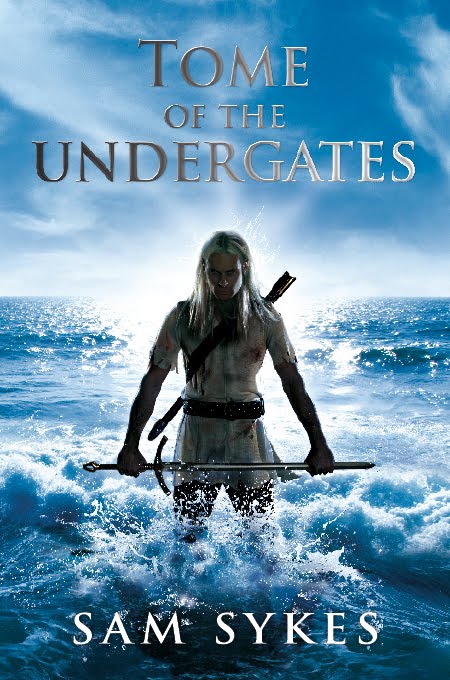
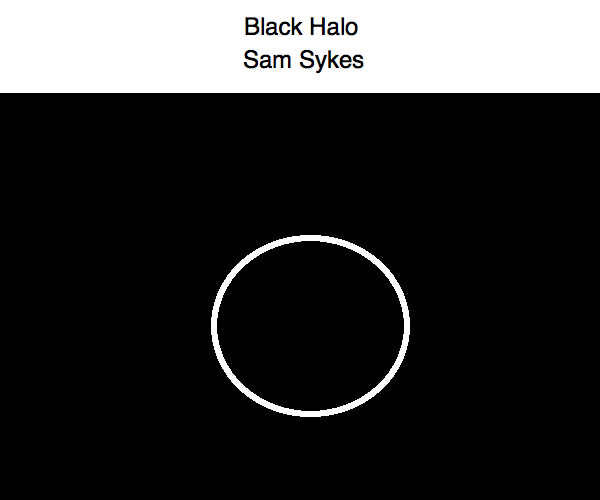
If you’re at all familiar with this blog, you’ve probably realized, by now, one thing: Aidan Moher does not like my covers. Not since the discovery of the hooded man has Aidan Moher despised so thoroughly a creature. Perhaps this is something to take pride in: that man standing in water has overtaken hooded man as most despotic cover criminal. But I could not take heart in this, my friends. Not when I knew I had wounded Aidan so.

Admittedly, this was tragic news to hear when I first discovered it. It took some time, but I did heal. It took even more time to recover from when he kept raising giant, blown-up prints of Black Halo’s cover on my lawn and setting them on fire, but even then, my commitment to restoring my honor with Clan Moher did not falter.

And then, joy of joys, he delivered me this terse, brusque invitation to do a guest blog for A Dribble of Ink. And thus, a child of opportunity was vomited forth from the womb of fate, cleaned by the doctor of second chances and delivered squealing into the heaving bosom of mother friendship to nurse at the teats of–

Well, you understand where I’m going with this, anyway.

So this blog post, Aidan, is my wedding present to you. Inspired by the elegant simplicity of the Criterion Collection series of DVDs, I create, for you, a re-imagined set of artistically tasteful covers. May I present…the Moher Collection.

Black Halo by Sam Sykes

Tome of the Undergates by Sam Sykes
Read More »

I Wrote a couple of Cage Matches for Suvudu!Love ’em or hate ’em, the Suvudu Cage Matches are popular. When I was asked to come back again this year and write a few of the mock battles, I couldn’t say no.

I’ll admit, I was giddy to get my hands on some of the contestants. Last year, I was tasked with writing a faux-fight between Kahlen Amnell vs. Drizzt Do’Urden and Kvothe vs. Garet Jax, four characters I was very familiar with. This time around, I was given Severus Snape, Corvis Rebaine, Allanon and Paul Atreides. Awesome, right? Two classic badasses; a superstar Wizard; and an up-and-coming Warlord. But, wait. I was only familiar with two of them, one in each cage match.

What was I to do?

Well, several hours of research (and two skimmed novels) later, I felt mildly prepared to approach these characters and pit them against two familiar opponents. It was a challenge, I’ll admit, but I feel confident that even if I wasn’t able to nail them perfectly, I would be able to at least fool some of the readers into thinking I knew what I was writing about. One of them won their match, the other lost. I’ll let you decide who I was familiar with and who I worked with from scratch.

The matchups:

Severus Snape vs. Corvis Rebaine:

The Warlord swung his giant axe in the direction of the black shape, but the attack crawled through the air like it was cutting through water. Not a vicious charge on horseback, but a slow stroll through the park with a baby carriage.

Suddenly Snape was gone. The black shape disappeared and Sunder slammed heavily into the fountain in the middle of the courtyard, cutting through the ageless stone like it was nothing. Gradually, the spell slowing him lessened, until finally, it broke. The mobility in his arms returned. He spun, eyes searching the courtyard.

/Your grandmother could swing harder than that!/

“And that’s my fault? Counterspell, you useless thing!” Corvis raised a hand, gauntleted fist clenched tightly.

Allanon vs. Paul Atreides:

An eruption of blue flame engulfed the head of the enormous sandworm and tore the dunes apart around the beast. Endless sand was sucked into the superheated air, a vacuum of shredding, swirling madness. Paul was thrown violently from the back of his enormous steed. He fell heavily to the earth. Heated sand and melted globules of glass rained down on him. The acid smell of burning Spice and the sweet smell of charred Sandworm flesh filled the air, reminiscent of war.

Allanon tumbled from high above, shielded still by Druid Fire. He rolled as he hit the ground, came lightly to his feet, black cloaked billowing behind him. His dark face was grim, unharmed.

Not even this miraculous turn of events could shake Muad’Dib. He picked himself up off the ground so gracefully that one would never have thought he’d just been thrown so unceremoniously from the back of his blasted, dying, and—until recently—thought near-invincible steed.

“Impressive,” Paul said. “An army couldn’t defeat a sandworm so handily.”

The Druid stared back impassively. His Druid Fire shield had dropped, but his hands were still sheathed in cerulean flame.

So, go read the two matches, vote and let me know who you think would win in a fight to the death. After you’re done with my stories, check out the rest of the matches and make sure your favourites win!

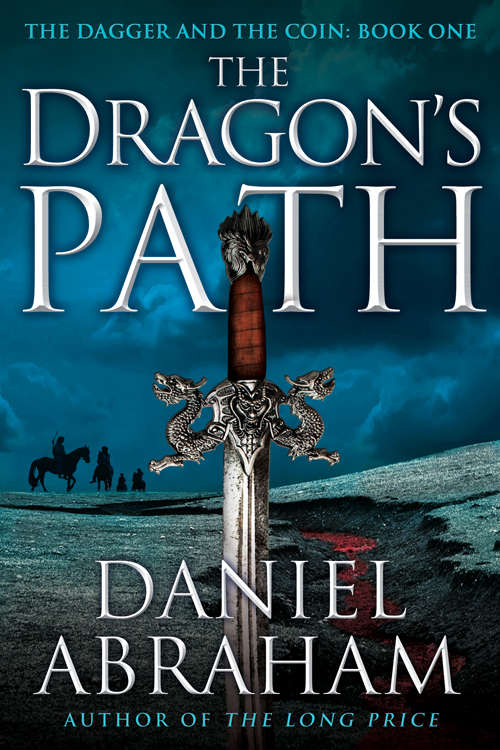
The Dragon's Path by Daniel AbrahamToday, I woke up to find an interesting comment on my review of Daniel Abraham‘s The Dragon’s Path.

One of my readers, Jim Cormier, had this to say:

What’s unfortunate is that despite all of the great new authors that seem to have sprung up in the last few years, the criticisms leveled against Abraham (and presumably Tor’s decision to drop him) suggest that the genre is still in a sad state. I’ve only just finished A Shadow in Summer, but I can’t see how anyone of even marginal intelligence would have trouble “grasping” the poses Abraham worked into the primary culture. He describes it organically but in a way that makes it perfectly obvious how the custom works. It also seems inspired, at least in part, by the nuances of Japanese bowing, something that many people might know anyway. The feeling of some that readers might not understand something this basic seems to be another example of the publishing world vastly underestimating its audience and prioritizing the lowest common denominator.

I remember reading reviews of the Long Price Quartet before beginning the first book: most of them mentioned how amazing it was that Abraham worked economics into the plot of his story. Going into it I was expecting some kind of complex, macroeconomic subplot involving finance and evil market influence. I was surprised to find that the “economics” referenced by the reviews referred to the simple (but effective) point that the Khaiem, having yet to invent the cotton gin, rely upon their andat to clean the seeds from cotton instantly, thereby making them a dominant force in the cotton market.

It’s a great idea, it works, and I respect Abraham’s originality and talent, but the fact that this was seemingly all viewed (at least by publishers and some critics) as being beyond the grasp of fantasy readers is sad. The reason we don’t have more authors like Abraham is not because they don’t exist but because so few publishing houses are willing to take risks on stories that don’t fit a stereotypical fantasy pattern.

Even writers like Joe Abercrombie, whose work I love, seem to have become the successes they were because they were willing to work from the inside out: writing something that bore the hallmarks of traditional epic fantasy but twisted to produce something new.

It makes me wonder: do publishers see fantasy fans as somehow “dumber” than science fiction? I can think of any number of science fiction stories that involve extremely complex scientific and even economic ideas, yet those authors aren’t set apart for those complexities.

Instead of responding there, where the conversation would not be seen by the majority of my readers, I thought it would be interesting to open the board to the community, so we can discuss as a group this idea that Fantasy is being held back by a perception that the genre and its readers are not as smart as Science Fiction and its audience.

To those of you who read both Science Fiction and Fantasy, would you say that one genre taxes you more than the other? To those who write Fantasy, how do you respond to this allegation that smart Fantasy exists but isn’t being published?

Is Fantasy dumber than Science Fiction?

So what do you think?

You know how it is. There are few people who can (rightly) claim to have read widely enough to create an honest-to-goodnes ‘best’ novel of 2010 list. I know I certainly didn’t. For every great book I read, there is a handful of others out there that are likely just as deserving. So, instead, here’s a neat little list of my ‘favourite’ books from 2010, published during the year or otherwise.

Favourite Novel Published in 2010

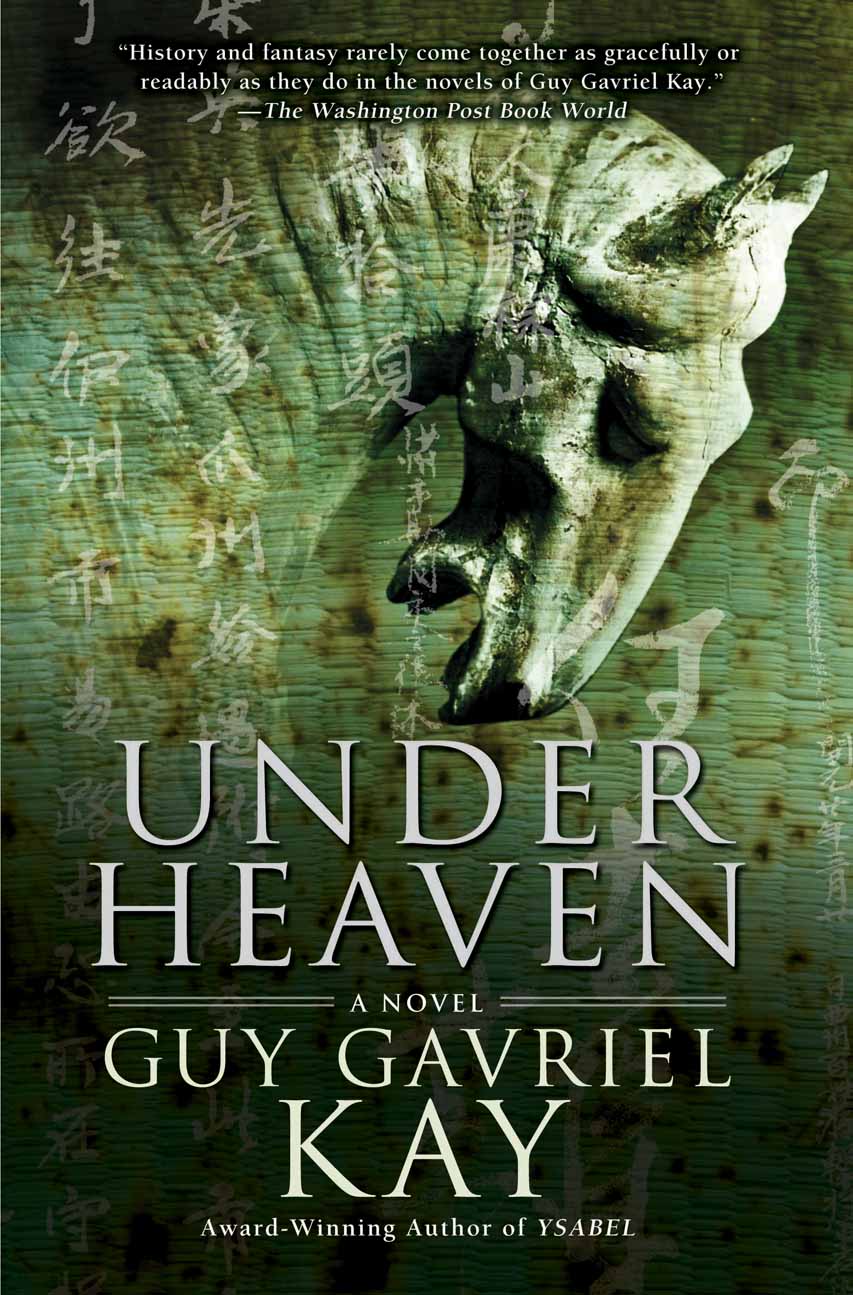
Under Heaven by Guy Gavriel Kay

I mean, really, what is there to be said about Kay that hasn’t been said before and with more eloquent words than I can write. The man’s a master of the genre and his ability to weave real world history with the fantastic is second to none. Under Heaven is a lovely, lyrical novel that continues to resonate with me months after turning its final page.

Favourite Novel Not Published in 2010

A Betrayal in Winter by Daniel Abraham

Last year I named Daniel Abraham’s A Shadow in Summer (REVIEW) as my favourite book of the year. This year, I’m going back to the Abraham pot. I’ve not yet finished the series, because I’m almost too intimidated by the series’ reputation and how strong the final two volumes are supposed to be. Like Guy Gavriel Kay, Abraham is an author I keep on the shelf for a time when I feel jaded about the genre and need to be reminded of how wonderful Fantasy can be.

Best Debut of 2010

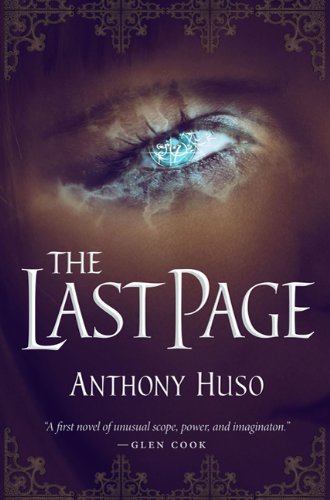
The Last Page by Anthony Huso

It’s not often that a new author hits the stage with as much aplomb as Anthony Huso. His debut novel, The Last Page is weird and wonderful, sorrowful and heartbreaking and will appeal to fans of Steven Erikson, Mark Charan Newton and China Mieville. Quite a list of names, but one he deserves to be among. There’s not been as much talk about The Last Page as I’d like, but I hope more people are able to discover Huso’s work in 2011 and with the upcoming release of Black Bottle, the final volume in the duology.

Favourite Short Story

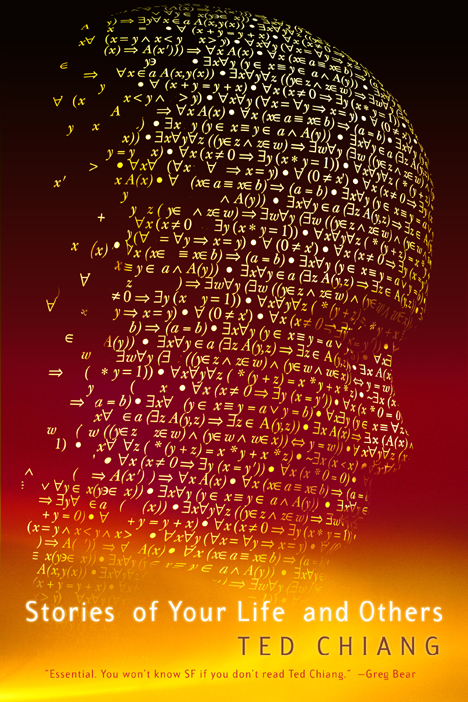
Stories of Your Life and Others by Ted Chiang
The Merchant and the Alchemist’s Gate by Ted Chiang

My review of this story still perfectly sums up its triumph and why Ted Chiang is as good a writer as you’ve probably heard:

Time travel stories are notoriously hard to tell with any success. Time paradoxes, physics being broken and non-linear timelines all lead to plot holes in the hands of an inexperienced author. Novels that pull off the conceit well, like The Anubis Gates by Tim Powers or Slaughterhouse-Five by Kurt Vonnegut are few and far between. Chiang, though, tackles the time travel motif with aplomb and challenges the reader by filling every plot hole just when they think they’ve found one. It’s at turns both clever and profound, full of smart twists and genuine insights into the compulsion we all have to live in the past, to regret turns not made or choices gone wrong. So often, time travel stories present fluid timelines, easily saved or ruined by the hero or antagonist, but Chiang plays with the idea that only the present is fluid and that what’s before us is every bit as defined as what’s passed us by. It’s a story of redemption and regret, with a melancholy air hiding just under the serpentine switchbacks of the puzzle-like time travel narrative.

A free audio version of The Merchant and the Alchemist’s Gate is available on StarShipSofa.

And, there you go! I read a lot of bloody good novels and short stories this year, but there’s the cream that rose to the absolute top. Hopefully 2011 will be filled with so many good reads as 2010!