Posts Categorized: Review

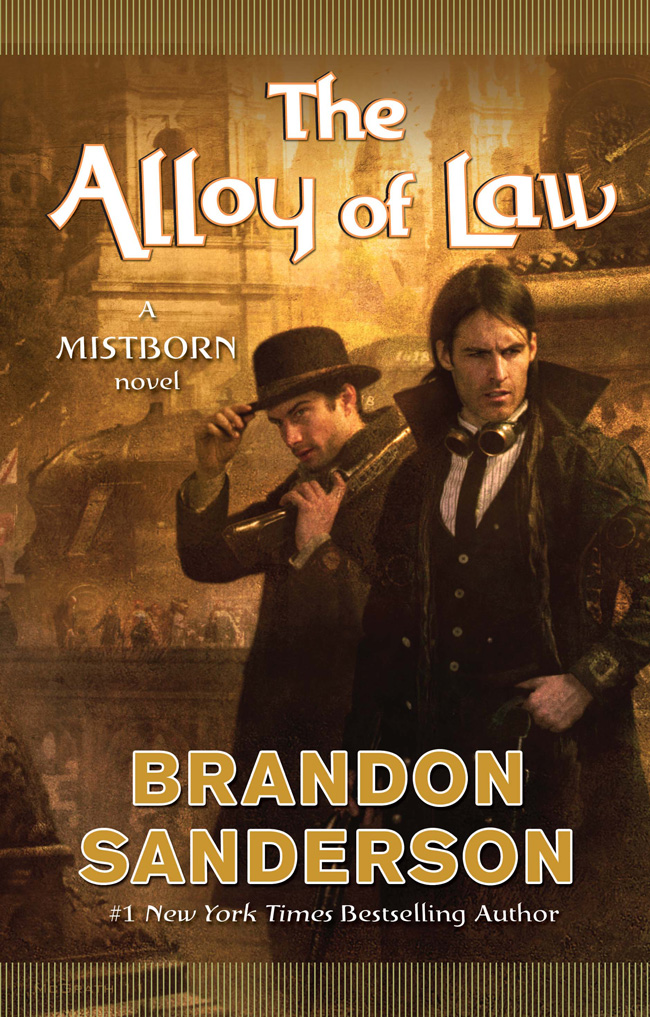
THE ALLOY OF LAW by Brandon Sanderson

The Hero of Ages

AuthorBrandon Sanderson

Paperback
Pages: 336 pages
Publisher: Tor
Release Date: November 8th, 2011
ISBN-10: 0765330423
ISBN-13: 978-0765330420

EXCERPT


By my estimation, Brandon Sanderson’s Mistborn: The Final Empire is a modern classic of Fantasy literature. That’s not to say it’s perfect, just that it has clearly carved out a well deserved niche in the Fantasy conversation. It did so by taking chances with the tired tropes of the genre, subverting those tropes and character archetypes without feeling forced (as is the current soup du jour in Fantasy) and telling a memorable, vast story in one volume. It’s been over two years since I finished The Final Empire, and it’s stuck with me since, constantly asserting itself as a recent Fantasy novel against which I judge the rest of the genre’s new faces. Unfortunately, it’s sequels, The Well of Ascension and The Hero of Ages were never able to capture that magic.

Those sequels faltered by exchanging The Final Empire’s dense, tightly plotted narrative and dashing lead, with an over-long, wordy tale full of tangential storylines and character arcs, a meandering pace and a male lead that takes too long to to evolve from a nervous, self-righteous boy to a confident, believable saviour. Ultimately, each novel ends with some of the genre’s strongest storytelling, but the first three-to-four hundred pages are generally difficult. Had Sanderson stripped the two novels down and combined them into one, we’d have one of the finest Fantasy duologies of modern times; as it is, however, we are left with a trilogy full of wonderful highs, turgid lows and much wasted promise.

But now, finally, there’s a Mistborn sequel that equals the promise and quality of the first novel. Almost.
Read More »
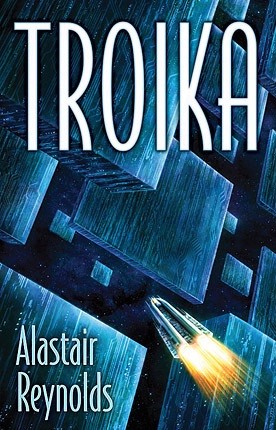
TROIKA by Alastair Reynolds

Troika

AuthorAlastair Reynolds

Hardcover
Pages: 104 pages
Publisher: Subterranean Press
Release Date: July 31st, 2011
ISBN-10: 1596063769
ISBN-13: 978-1596063761


Troika, a novella by Alastair Reynolds, best known for his Revelation Space series, starts off with so much promise, but is ultimately constrained by the nature and natural boundaries of its length. Reminiscent (both structurally and thematically) of Robert Charles Wilson’s Hugo-winning Spin, Troika tells its tale through two parallel stories–one a light-thriller/mystery in ‘present’ day that deals with the fallout of the second story, a past-tense first-contact narrative detailing the narrator’s experiences with the Matryoshka, an enormous space-bound monolith of alien origin that mysteriously appears in Earth’s solar system. There’s terrific tension and mystery in both narratives, which are balanced nicely by having the narrator fleeing in the ‘present’ narrative and seeking in the ‘past’ narrative.

The setting of the novella also excels. Showcasing the space age from the point of view of the Russians (who have reclaimed the space race after all the other nations dropped out, deeming it irrelevant and/or too expensive) is a nice change of pace from the typically American- or Chinese-dominated near future space tales. There’s a certain bite to the characters and the pride they show in their status as a cosmonaut and their mission to solve the mystery of the Matryoshka.
Read More »

'The Grinders' by Adam CallawaySetting is king in ‘Walls of Paper, Soft as Skin,’ and Ars Lacuna, Callaway’s fictional city and muse, is an absolute wonder, even in the brief time we get to spend with it in this (very) short story. A haunting, weird city, Ars Lacuna breathes originality and creativity, and in very few words Callaway is able to conjure up another world that just begs to be explored. There are several quotable passages within the thousand words of the story, but this was possibly my favourite:

“Tomai. Did you hear Tomai? An entire debarking team swam into the termite’s jaws. On purpose Tomai!” Kork said pulling at Tomai’s frayed shirt. Kork stood waist high on his tiptoes.

“I can believe it,” Tomai said. He looked for a pine or birch pole.

“Really Tomai? I can’t. Debarkers have sickle bone arms. They can swim better than any trout Tomai! Who’d want to kill themselves with features like that Tomai?” Kork made wild hand gestures.

“I can believe it.”

“Even if they decided, ‘Okay, let’s do this girls,’ they could have come up with a better way. The autoblades would have made short work of them. The paper sizers down the way too. But being hacked up and digested by a bug the size of a city block though! Really Tomai? Can you believe it Tomai?”

Tomai spotted a curved pine pole under a stack of oak. He grabbed it.

“I can believe it.”

Kork squinted. “I’m not talking to you anymore today.”

Tomai dragged his pole through the inside flap. Into Parchment Run. Where the river exchanged a canopy of sky for corrugated tin. Dozens of pole workers were straightening sawn, debarked logs to enter the jaws of the bug. He took an open spot.

Callaway’s creation is unlike anything I’ve run across before, a city built on paper and books, words and whims; a loveletter to literature. But, like Tomai, I can believe it.

Within this wonderful setting is only the barest hint of a plot or forward narrative; instead, Callaway lulls the reader in with his quiet, abrupt prose and paints a stark picture for them. Only at the very last does Callaway call back to the opening of the story and, in a lovely bit of world- and character-building, twists things around in a way that encourages the reader to go back and re-read the tale from a new perspective, making its brevity not a weakness but a strength. An enchanting introduction to Callaway’s fiction and more than enough to convince me to explore his other work set in Ars Lacuna.

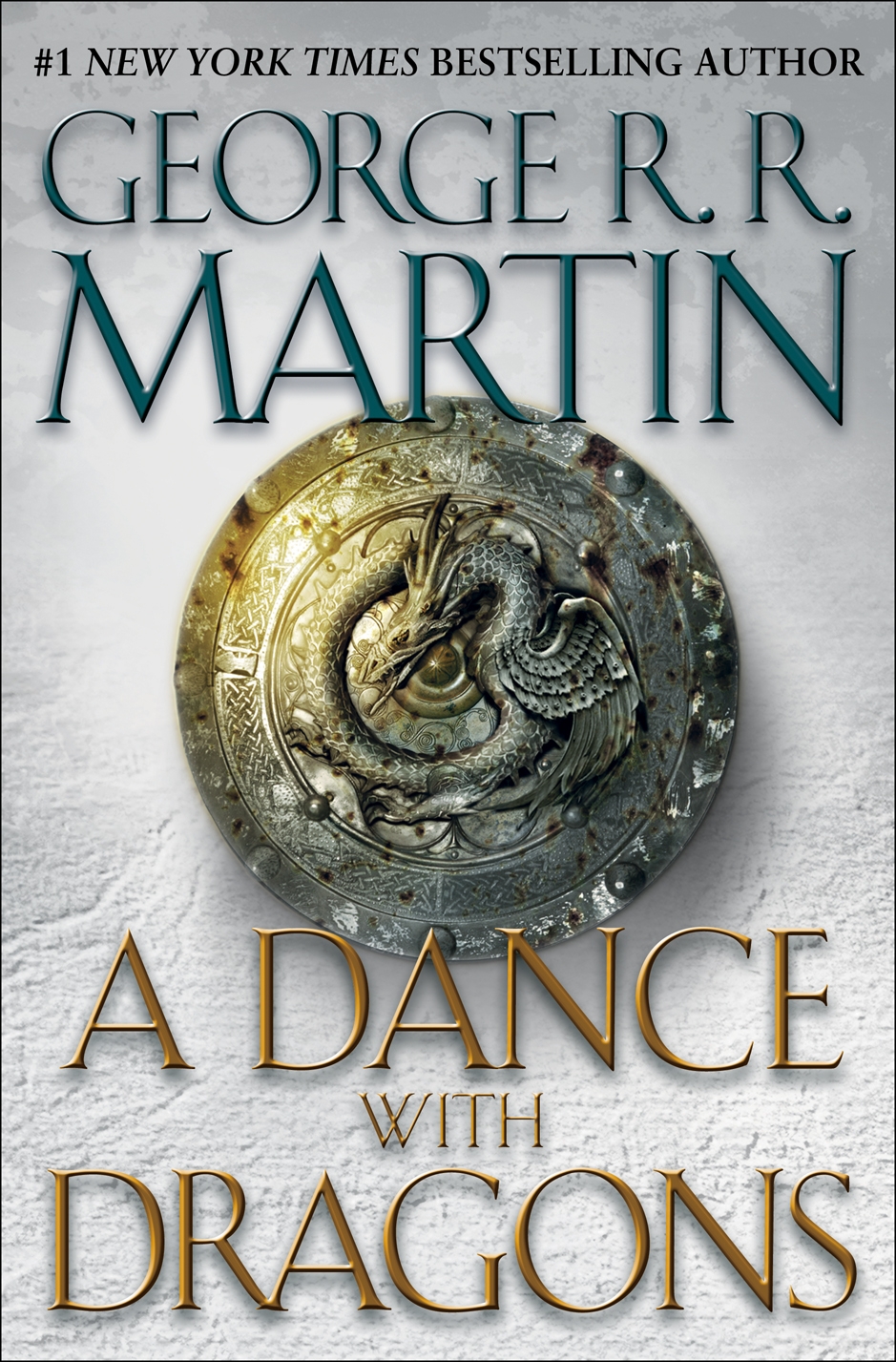
A DANCE WITH DRAGONS by George R.R. MartinYarr! Some mild spoilers for A Dance with Dragons and some egregious spoilers for the entirety of A Song of Ice and Fire appear in this article!

Well, well. Where to even begin? Having read several handfuls of reviews for A Dance with Dragons around the ‘net, it seems impossible to begin a commentary on the novel without referencing the infamous Wait™ and the fan vitriol (and endless passion) associated with Martin’s ever-growing audience. Of course, I’ve gone on record now and then to mentioned that I don’t really give a damn about waiting for a novel, this one or otherwise; there were plenty of wonderful stories to keep me occupied between A Feast for Crows and A Dance with Dragons, because, well… I enjoy many authors (new and well-established) alongside Mr. Martin — something I’m sure he would appreciate.

I’m now about 300 pages in. (I’m a slow reader, remember?) Bombs have been dropped (or eggs, mayhap?), ground has be re-tread (hello, Jon Snow!) and Tyrion has drank (drunk? drinked?) a lion’s share of wine. Besides one or two ‘twists’ (and one ‘fuck yeah!’ beheading), the pace of the narrative has been glacially slow, but enjoyable and engrossing all the same. The concise, labyrinthine storytelling of A Game of Thrones is now gone completely, replaced instead by a huge, sprawling behemoth of storytelling. Instead of having each chapter of the novel moving an overall novel-spanning narrative arc towards its conclusion (adding elements or perspectives only available to the viewpoint character), we now have three disparate stories running in parallel. Two of the major storylines, Dany and Tyrion, appear to be on a collision course (and, as the earlier novels would indicate, I expect that all the little connecting threads will appear retroactively once I look back on the completed novel), but Jon Snow’s chapters seem entirely self-contained (though, I suppose it could be argued that they were as such even as early as A Game of Thrones); and Bran Stark’s chapters, few-and-far-between (much to my chagrin) as they are, are even more disconnected from the rest of the narrative.
Read More »

LEVIATHAN WAKES by James S.A. Corey

Leviathan Wakes

By James S.A. Corey

Trade Paperback
Pages: 592
Publisher: Orbit Books
Release Date: June 15th, 2011
ISBN-10: 0316129089
EXCERPT

On the surface, Leviathan Wakes, volume one of The Expanse, appears like any other space opera—spaceships duke it out in the silent vacuum of space; down-on-their luck security officers spend their time policing backwater space stations; terrorist groups cause mischief in the name of freedom and equality; various factions exist within an uneasy peace, always on the edge of inter-planetary warfare.

So, Leviathan Wakes set itself apart not by its weird aliens, nor its so-cool-I-gotta-have-it technology, but rather by its lack of such genre staples. You see, instead of plumbing the depths of the universe and its trillion stars, author(s) James S.A. Corey (a pseudonym worn by Daniel Abraham and Ty Franck) decided instead to explore a future where interstellar-travel is still only a pipe-dream. Reminiscent of the long-dwindled population of Easter Island, humanity is stuck in a solar system-sized bubble and, as time ticks away, they can’t help but cannibalize everything good in their ever-failing quest to leave the solar system behind.
Read More »