Michael R. Underwood might best be known to those of us in the SFF blogosphere as one of the main sales and marketing managers at Angry Robot Books. However, the really exciting thing about Underwood isn’t his role at the publisher, but his work on the other side of the table, as author of Geekomancy, Celebromancy, and upcoming releases like Attack of the Geek and Shield and Crocus, his first foray into epic fantasy.
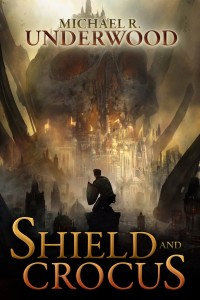
And, my does it sound epic. I caught up with Underwood to chat about Shield and Crocus, the recently revealed cover art, and what it’s like working with 47North.
“This book has meant the world to me for so long, and it’s a dream come true to get to share it with readers,” he told me when I asked him about Shield and Crocus. “I can’t wait to invite people into Audec-Hal to meet the Shields and hear their story.”
Underwood might best be known for his urban fantasy, but “Shield and Crocus is a project that’s been with me for the better part of ten years,” he told me. Read More »
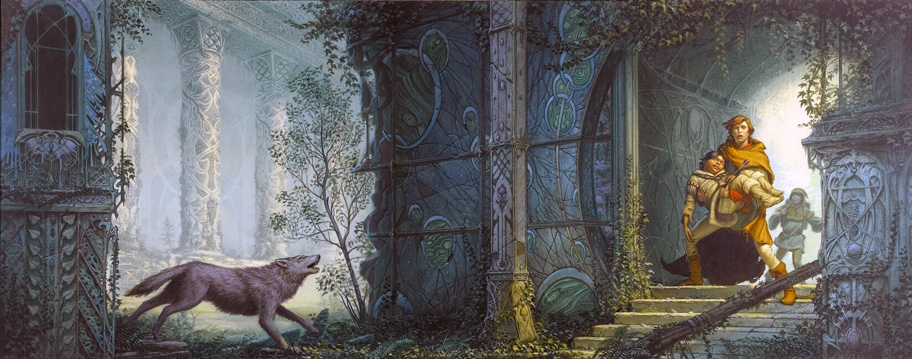
DAW Books announced today via press release that they have bought a new trilogy from Tad Williams, The Last King of Osten Ard. This is a notable event, as Williams returns to the series that launched him to stardom and influenced George R.R. Martin’s A Song of Ice and Fire. The Last King of Osten Ard is a direct sequel to Memory, Sorrow and Thorn.
Which just so happens to be my favourite completed fantasy trilogy of all time.
I’m chuffed.
The press release has the first details about the new trilogy:
In this new trilogy, Williams journeys back to the magical land of Osten Ard and continues the story of beloved characters King Simon and Queen Miriamele, married now for thirty years, and introduces newcomer Prince Morgan, their heir apparent. Also expanded is the story of the twin babies born to Prince Josua and Lady Vorzheva—a birth heralded by prophecy, which has been the subject of feverish fan speculation since the release of To Green Angel Tower in 1993.
In The Last King of Osten Ard, Williams returns with the ingenious worldbuilding, jaw dropping twists and turns, and unparalleled storytelling that have made him one of fantasy’s brightest stars for more thirty years.
The trilogy, The Witchwood Crown, Empire of Grass, and The Navigator’s Children, has no release date.
Publisher: Tor Books -
Pages: 1008 -
Buy: Book/eBook
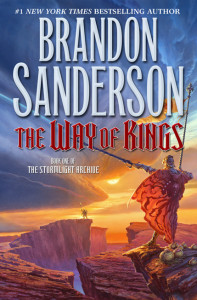
Just one look at the cover of Brandon Sanderson’s The Way of Kings tells you everything you need to know about it. If you’re a fantasy virgin, a passerby in the grocery store, you can tell that it’s about knights and vivid fantastical set pieces. If you’re a long entrenched fantasy reader, you can see that, for all of publisher Tor Books’ will to make it so, the first volume of Brandon Sanderon’s The Stormlight Archives is the “next big fantasy, ” the heir apparent to Robert Jordan’s legendary and flawed opus, the Wheel of Time.
The Way of Kings is big. Thunderously huge. Sanderson might be best known for his work completing the late Robert Jordan’s series, but before that he was known to fantasy fans as one of the more exciting upcoming epic fantasists. His most popular work up to that point was the Mistborn trilogy, a self-contained series that, while applaudable for Sanderson’s eagerness to develop fascinating magic systems, suffered from poor pacing and bloat in both the second and third volumes. The longest of those volumes was two-thirds the length of The Way of Kings, the shortest about half.
Most writers are expected to write an epic fantasy in less than 200,000 words, The Way of Kings flirts with 400,000.
Since then, Sanderson’s star has risen to heights reached by few other working fantasy authors, and as a result the editorial department at Tor has slackened their reins, hoping to nurture the novelist as he attempts to fill the enormous hole left by Jordan’s passing. Even in the early pages The Way of Kings, while Sanderson is busy introducing readers to fallen gods, it’s easy to recognize his excitement at being given the reins to write an epic fantasy in the vein of Jordan, et al. Most writers are expected to write an epic fantasy in less than 200,000 words, yet The Way of Kings flirts with 400,000. Though this immense privilege and freedom for Sanderson’s ambitions hurts the novel, it also allows for a refreshing boldness and scope that the genre has been missing since the completion of the Wheel of Time and Steven Erikson’s Malazan Book of the Fallen. Read More »
A young man of surpassing beauty who rises to a political and romantic career of power and renown mixed with disappointment, betrayal, and demonic possession. Also, he glows.
A minor noblewoman has a tragic love affair with an emperor. She dies, leaving behind her child — a young man of surpassing beauty who rises to a political and romantic career of power and renown mixed with disappointment, betrayal, and demonic possession. Also, he glows.
Welcome to the Tale of Genji, the Japanese story of romance, ghosts, poetry, and politics that has a good claim of being the world’s first novel. To clarify: Genji is a work of prose, not epic poetry, and written in the vernacular rather than the local courtly language (which, in early 11th century Heian Japan, would have been Chinese). It’s also, as far as we can tell, original, without folkloric or legendary precursor. The author, Lady Murusaki Shikibu, wove her hero and his, um, exploits out of whole cloth. And, while many other works deal with mythological high society—gods and demons and so forth—Murusaki seems to have cared a great deal about representing (idealistically but still) her social reality. Genji Monogatari is a work of beauty and passion and (to modern sensibilities) occasional utter weirdness, in which twenty chapters of plot turn on the accidental glimpse of one character by another through a paper screen, astrological prohibitions on travel are used to justify spending the night at a prospective lover’s house, titles take the place of names, violence is anathema, and a twenty-mile exile is worse than death. Read More »

With the release of Speculative Fiction 2013 looming, editors Ana Grilo and Thea James have announced the duo responsible for assembling the 2014 volume of the non-fiction essay collection: Renay and Shaun Duke. Excellent choices, if I do say.
One of the major components to the SpecFic collection series, as originally envisioned by creators Justin Landon and Jared Shurin, was to ensure a fresh take on online SFF conversation by featuring rotating editors every year. Renay and Duke mark the third pair of editors to work on the series. Grilo and James feel that their unique backgrounds offer a compelling opportunity for the series. “We strongly believe that Renay and Shaun’s different backgrounds – fandom and academia – can make for a really interesting editorial dynamic,” they said in the announcement.
Renay has been writing SF and fantasy fan fiction, criticism, and commentary since the early 1990s. She serves as staff within the Organization for Transformative Works, co-edits a media criticism blog, Lady Business, and writes columns for speculative fiction magazine Strange Horizons.
Shaun Duke is an SF/F writer, a critic, and a PhD. student at the University of Florida studying science fiction, Caribbean literature, and postcolonialism. He currently blogs at The World in the Satin Bag, and is a host on The Skiffy and Fanty Show, an SF/F podcast which is currently running its World SF Tour.
“We selected Renay and Shaun as editors for several reasons that go beyond their awesome bios,” said The Book Smugglers, editors of the 2013 volume. “Namely, we admire their writing and the thoughtful ways that they engage with the speculative fiction community. We’ve been following Renay’s online endeavors for years and it’s safe to say that she’s been an incredible source of inspiration for The Book Smugglers and the way we engage in criticism. Similarly, Shaun never fails to impress us with his thoughtful, well-researched and articulate take on SFF books, films, and his contributions to important SFF community discussions.”