Posts Tagged: Orbit Books

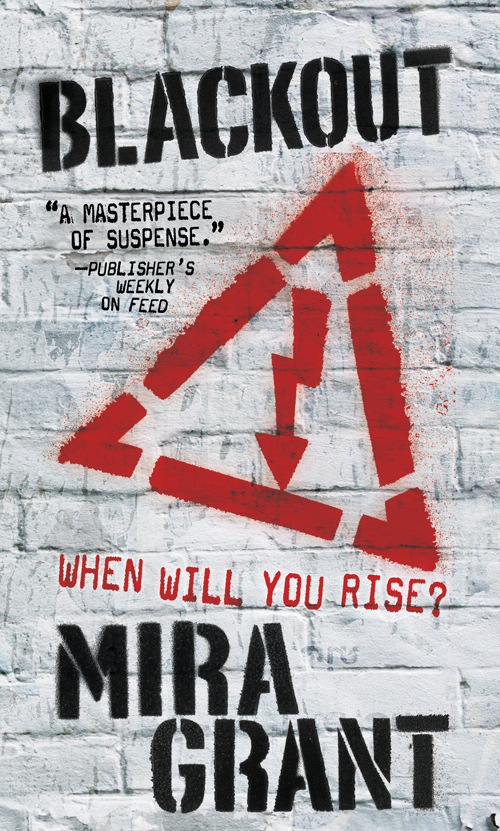
BLACKOUT by Mira GrantFrom Seanan McGuire’s LiveJournal:

Ahem. From today’s announcement at Publishers Weekly:

“Film rights: Mira Grant’s trilogy, Feed, Deadline, and Blackout, optioned to Rachel Olschan, producer at Electric Entertainment, by Pouya Shahbazian of FinePrint, on behlf of Diana Fox at Fox Literary.”

WE OPTIONED THE FILM RIGHTS TO FEED!!!!!!!!!!!!!!!!!!!!!!!!

Now, this doesn’t mean this will necessarily be a movie (although I hope there will), but it takes us a huge, huge step closer to that becoming a reality. Everyone I’ve dealt with has been amazing, supportive, and enthusiastic, and now there’s a beautiful chance that maybe, we can see Shaun and Georgia Mason on the big screen.

I’ve not read any of the books in Grant’s Newsflesh Trilogy, but given the back-to-back Hugo nominations (for Feed and Deadline), it’s certainly on my radar. I generally advise only cautious optimism when a book or series is optioned for film, given the general nature of Hollywood becoming excited about a project for a week and then letting it evaporate long before it reaches theatres, but, given the nature of these books and the popularity of post-apocalyptic SF, I think the Newsflesh Trilogy haa a better-than-average chance of actually materializing into (likely) a film (rather than a trilogy of films). We’ll see, though.

Perhaps not so coincidentally, today is the official release date for the final volume in the trilogy, Blackout.

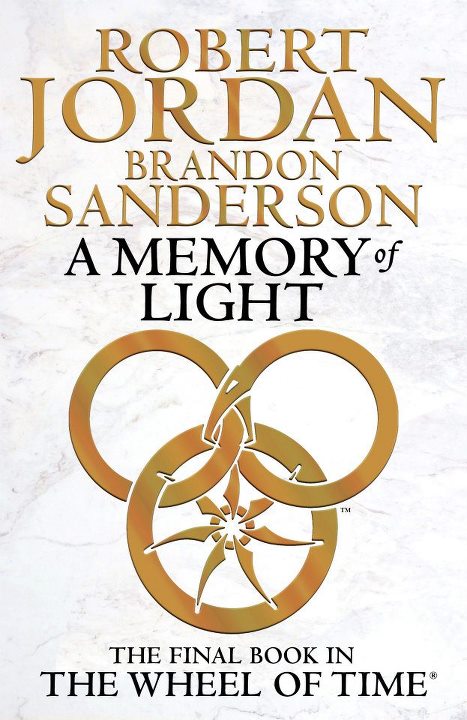
A Memory of Light by Robert Jordan and Brandon Sanderson

And it came to pass in those days, as it had come before and would come again, that the Dark lay heavy on the land and weighed down the hearts of men, and the green things failed, and hope died.’ From Charal Drianaan te Calamon, The Cycle of the Dragon.

In the Field of Merrilor the rulers of the nations gather to join behind Rand al’Thor, or to stop him from his plan to break the seals on the Dark One’s prison – which may be a sign of his madness, or the last hope of humankind. Egwene, the Amyrlin Seat, leans toward the former.

In Andor, the Trollocs seize Caemlyn.

In the wolf dream, Perrin Aybara battles Slayer.

Approaching Ebou Dar, Mat Cauthon plans to visit his wife Tuon, now Fortuona, Empress of the Seanchan.

All humanity is in peril – and the outcome will be decided in Shayol Ghul itself. The Wheel is turning, and the Age is coming to its end. The Last Battle will determine the fate of the world..

Can’t really comment on the synopsis, given that I’ve only read the first seven volumes of the series, but it was written by Harriet McDougal, Jordan’s widow and Wheel of Time overlady, and will appear on both the Tor and Orbit Books editions of A Memory of Light.

The cover itself is pretty, and fitting for the title of the novel, after all the previous volumes were black. It’s simple and classic, if predictable. Good enough for me.

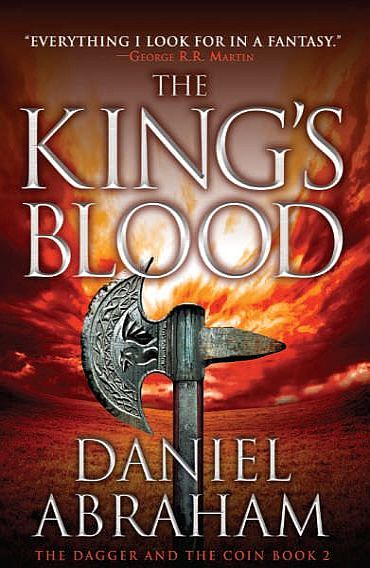
It’s no secret that I’m a fan of Daniel Abraham. So, in my ever increasing efforts to promote the genre’s second-hardest working author (because, let’s be honest here, no one can hold a candle to Brandon Sanderson), and one its best-kept secrets, here’s an exclusive excerpt from The King’s Blood, the second volume in The Dagger and the Coin. It’s a tremendous novel and improves on its predecessor in almost every way. If you’re interested, you can read my review of The King’s Blood.

The King’s Blood is available now in the UK and North America from Orbit Books.

THE KING'S BLOOD by Daniel Abraham

Cithrin bel Sarcour

Cithrin bel Sarcour, voice of the Medean bank in Porte Oliva, stepped out of the bank's office with her head high, her features composed, and rage burning in her breast. Around her, Porte Oliva was entering its springtime. The bright cloth banners and glittering paste jewels of the First Thaw celebrations still lay in the streets and alleyways, slowly decaying into grime. Snow haunted the shadows where the midday sun couldn't reach. Cithrin's breath plumed before her as if her heart were a furnace belching pale smoke, and she felt the bite of the air as a distant thing.

Men and women of several races bustled on the cobbles before her. Kurtadam with their slick, beaded pelts; thin-faced, pale Cinnae; brass-and-gold-scaled Jasuru; black-chitined Timzinae; and fleshy, rose-cheeked Firstblood. Some nodded to her, some stepped out of her way, most ignored her. She might represent one of the greatest banks in the world, but as far as the hazy sky over Porte Oliva cared, she was just another half-Cinnae girl in a well-tailored dress.

When she stepped into the taproom, the warm air caressed her. The related, yeasty scents of beer and bread tried to gentle her, and she felt some of the knot in her gut begin to ease. The anger slipped, showing itself only a mask for the despair and frustration beneath. A young Cinnae man came forward to take her shawl, and she managed a tight-lipped smile as she relinquished it.

"The usual table, Magistra?" he asked.

"Thank you, Verril," she said. "That would be kind."

Grinning, he made an exaggerated bow, and gestured her on. Another day, she might have found it charming. The table was at the back, half hidden from the main room by a draped cloth. It cost a few coins more. When she felt capable of civil conversation, she would sometimes sit at the common benches, striking up conversation with whoever was there. There were more sailors and gossip of travelers farther south at the docks, more word of overland trade north where the dragon's road opened to the main square and the cathedral and the governor's palace, but the taproom was nearest to her bank–her bank, by God–and not every conversation needed to be a bid for advantage.

The Kurtadam girl who most often served in the daytimes brought a plate of cheese and brown bread with a tiny carved-wood bowl full of black raisins. More to the point, she brought a tankard of good beer. Cithrin nodded sharply and tried to make her smile genuine. If the girl saw anything odd in her, the soft fur of her face covered it. Kurtadam would make good card players, Cithrin thought as she drank. All of them wearing masks all the time.

Read More »
THE KING'S BLOOD by Daniel Abraham

The King’s Blood

By Daniel Abraham
Trade Paperback
Pages: 528 pages
Publisher: Orbit Books
Release Date: 05/22/12
ISBN: 0316080772

EXCERPT

When Abraham released The Dragon’s Path, the first volume of The Dagger and the Coin, it was something of a departure from the thoughtful and unique tetralogy that put him on the Fantasy map, The Long Price Quartet. This new series was Abraham’s attempt at stepping into the realm of more traditional Fantasy, drawing influence from a more Medieval Europe, rather than the asian-influenced setting of The Long Price Quartet. In some ways, it was a risk for Abraham to step away from such a unique setting, but, in hindsight, it allowed Abraham to open himself to a whole new range of readers who are looking for novels that draw inspiration from familiar elements and novels. Of The Dragon’s Path, I said:

[A]nticipation is always a double-edged sword. Abraham took many chances with The Long Price Quartet and formed a dedicated (if small) following for those novels and what he managed to accomplish. By moving to a more traditional world and a more tried-and-true premise, Abraham is sure to make wary some of those fans who appreciated the originality of The Long Price Quartet; at the same time, he’s blown open the doors for a new, wider audience and has written a more accessible novel that is sure to appeal to fans of Tad Williams, George R.R. Martin or Scott Lynch. Regardless of whether you’ve discovered Abraham previously, you can rest assured that The Dragon’s Path is a tremendous novel and Abraham deftly mixes the classic foundations of the genre with a sophistication expected of him and rarely found in the work of his compatriots. Look for this one to appear on my ‘Best of 2011′ list come year-end.

And, indeed, it did wind up on my Best of 2011 list at the end of the year. All of the superlatives I spouted about The Dragon’s Path continue to hold true for its sequel, The King’s Blood, and I’d even go so far as to say that it’s a superior book in most ways, solidifying The Dagger and the Coin as one of the most exciting Fantasy series currently being written. Read More »

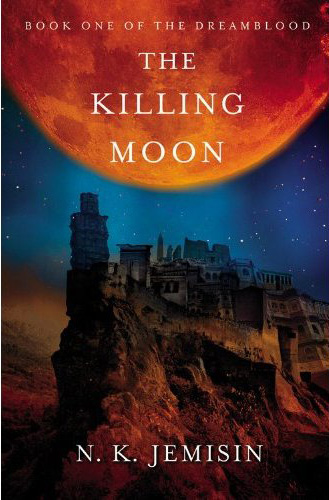
The Killing Moon by N.K. Jemisin

To anyone who’s read this blog, or is generally acquainted with the popular Fantasy fiction from the last several years, N.K. Jemisin needs no introduction. She’s been nominated for a serious number of awards (Locus, Hugo, Nebula), and, since the release of her first novel, The Hundred Thousand Kingdoms (REVIEW), has become something of a force in the Fantasy genre.

The synopsis for The Killing Moon is enough to get any jaded fan interested:

In the ancient city-state of Gujaareh, peace is the only law. Upon its rooftops and amongst the shadows of its cobbled streets wait the Gatherers – the keepers of this peace. Priests of the dream-goddess, their duty is to harvest the magic of the sleeping mind and use it to heal, soothe . . . and kill those judged corrupt.

But when a conspiracy blooms within Gujaareh’s great temple, Ehiru – the most famous of the city’s Gatherers – must question everything he knows. Someone, or something, is stalking its prey both in Gujaareh’s alleys and the realm of dreams. Ehiru must now protect the woman he was sent to kill – or watch the city be devoured by war and forbidden magic.

The Killing Moon is the first volume of her latest series, The Dreamblood Duology, and has received a number of positive reviews around the web. If, like me, you’re excited about Jemisin’s work, it looks like you won’t be let down. If you’re unaware of Jemisin, or haven’t tried her fiction, this is the perfect place to start.

And the reviews:

The Book Smugglers:

Gripping. Fascinating. Cool. All these mighty fine words that can be used to describe The Killing Moon. From lavish descriptions of Gujaareh and its temples and palaces to the detailed aspects of the social, political and religious structures, all of them intrinsically connected around the worship of the Goddess of Dreams, all is superbly well done. Although at points I did think there was a certain excess of exposition, I can’t deny that I gobbled it all up with pleasure. Although it is clear from early on who is behind the conspiracy that, I feel, is not the point of the story – the point is not only the HOW and the WHY but also the ways that said conspiracy and its motivation impact or will impact in the Modus Vivendi of not only the Gujaareh people but also of other peoples. Beyond that, even despite the originality of the setting, the idea behind the magic system being rooted in dream theory and the Dream-world as a PLACE reminded me a lot of Gaiman’s Sandman (not to mention that I thought of the Corinthian as well when the Reaper starts to make an appearance ) and this is a very positive thing in my book.

Also and I don’t think I can emphasise enough the level of coolness present in The Killing Moon but: NINJA PRIESTS. Yeah, baby.

[…]

What is so impressive about Gujaareh (and the other peoples we see in this book, particularly those of Kisua) is in its utterly fantastic holistic believability. We believe in this world and its characters because the culture is so well defined, the rules of magic so wholly conceived, the tensions between classes, between natives and foreigners, so utterly genuine. Reading a society like that of the Gujaareen makes it so glaringly apparent how lacking so many contemporary fantasy novels are in comparison – N.K. Jemisin’s worldbuilding is of the highest grade, and nigh unparalleled.

[…]

I loved this novel deeply, and I cannot wait for The Shadowed Sun. The Killing Moon, to put it simply, is the best book I have read in 2012 thus far.

Read More »