Today, Tor.com announced the launch of a new imprint, called, appropriately, The Imprint, dedicated to publishing “novellas, shorter novels, serializations, and any other pieces of fiction that exceed the traditional novelette length (17,499 words).” This is in addition to their award-winning library of short stories, and aims to further identify Tor.com as one of the leading short fiction (and, now, mid-range fiction) venues in SFF publishing. This is exciting and encouraging for a lot of reasons. First and foremost, more short fiction from a pro-paying market. Second, a glimpse at what the future of “traditional” publishing might hold.
Fritz Foy and Irene Gallo, will continue in their positions of Publisher and Associate Publisher of Tor.com, while Carl Engle-Laird is moving into the role of editorial assistant. Tor.com is also in the hunt for a senior editor, publicity manager, marketing manager, and designer. (Worry not, faithful readers! I’m starting my campaign trail right now.)
Read More »
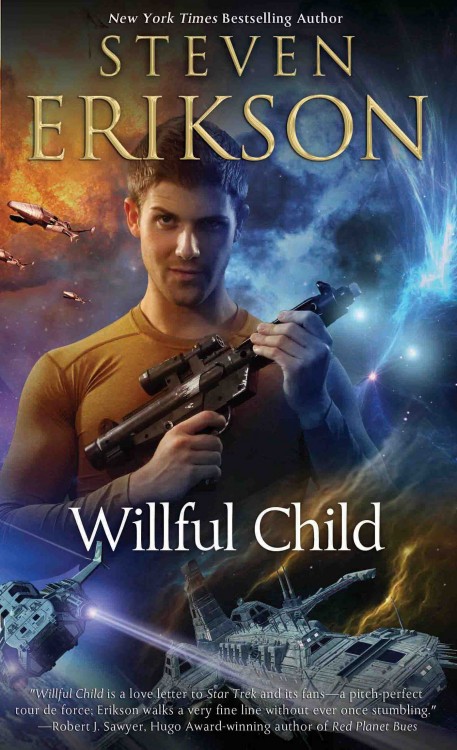
No. No. Just… no.
What is he going to do to me with that gun? No. Oh god. no. Read More »
I was asked for this post to write about hope in fantasy. And that means I need to talk about grimdark.
I was asked for this post to write about hope in fantasy. And that means I need to talk about grimdark. (Definition from TV Tropes here, for those who need it.) And I need to say, before I start, that I am a practitioner of grimdark; the Doctrine of Labyrinths quartet (Melusine (2005), The Virtu (2006), The Mirador (2007), Corambis (2009)) can be nothing but. So I’m not speaking as someone who abhors grimdark, but as someone who loves it.
One of the things behind grimdark, I think–and it’s not just grimdark, either, but most of Anglophone literature since somewhere around World War I–is a conviction that being pessimistic, tragic, depressing, dark means that a text is more “realistic,” more “serious,” and therefore inherently “better” than it would be if it allowed optimism and hope. I’ll get into the issue of “realism” later, but I want to point out here that tragedy is not inherently “better” as a literary form than comedy and writing a tragedy does not demonstrate greater skill/talent/genius than writing a comedy. (Kind of the reverse, in fact. Comedy is hard.) Read More »

I’ve made no secret of my excitement for Elizabeth Bear’s The Eternal Sky trilogy. I recently sang my praise of the trilogy in a review of the final volume, Steles of the Sky, which was released yesterday:
Bear fills Steles of the Sky, and the entire trilogy, with a masterfully crafted meld of Asian and Middle Eastern mythology, legend and history with the wholly unique and deeply considered secondary world she has created. Shedding the tried and true landscapes and politics of faux-medieval western Europe, Bear introduces readers to a diverse world and political landscape that avoids feeling like the same ol’, same ol’, despite readers a story that uses many of the genre’s most recognizable tropes—ancient magic; an exiled youth of royal blood; a journey from one side of the map to the other; evil sorcerers; dragons; clashing armies.
So, it is with no small amount of enthusiasm that I pass along news that Bear has sold a sequel trilogy, The Lotus Kingdom, to Tor Books. “While Range of Ghosts, Shattered Pillars, and Steles of the Sky comprise a complete story arc in and of themselves,” said Bear, via The Big Idea on John Scalzi’s blog, “I can now reveal that Tor will be publishing at least three more books in this world.”
The Lotus Kingdoms, will follow the adventures of two mismatched mercenaries–a metal automaton and a masterless swordsman–who become embroiled in the deadly interkingdom and interfamilial politics in a sweltering tropical land.
The first volume of The Lotus Kingdom will be released in (*gasp*) 2017. Meanwhile, if you haven’t read The Eternal Sky trilogy, you should, starting with Range of Ghosts: Book/eBook.
Publisher: Tor Books -
Pages: 1008 -
Buy: Book/eBook
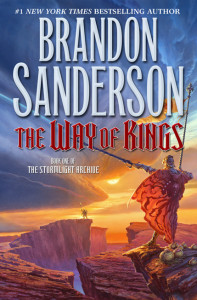
Just one look at the cover of Brandon Sanderson’s The Way of Kings tells you everything you need to know about it. If you’re a fantasy virgin, a passerby in the grocery store, you can tell that it’s about knights and vivid fantastical set pieces. If you’re a long entrenched fantasy reader, you can see that, for all of publisher Tor Books’ will to make it so, the first volume of Brandon Sanderon’s The Stormlight Archives is the “next big fantasy, ” the heir apparent to Robert Jordan’s legendary and flawed opus, the Wheel of Time.
The Way of Kings is big. Thunderously huge. Sanderson might be best known for his work completing the late Robert Jordan’s series, but before that he was known to fantasy fans as one of the more exciting upcoming epic fantasists. His most popular work up to that point was the Mistborn trilogy, a self-contained series that, while applaudable for Sanderson’s eagerness to develop fascinating magic systems, suffered from poor pacing and bloat in both the second and third volumes. The longest of those volumes was two-thirds the length of The Way of Kings, the shortest about half.
Most writers are expected to write an epic fantasy in less than 200,000 words, The Way of Kings flirts with 400,000.
Since then, Sanderson’s star has risen to heights reached by few other working fantasy authors, and as a result the editorial department at Tor has slackened their reins, hoping to nurture the novelist as he attempts to fill the enormous hole left by Jordan’s passing. Even in the early pages The Way of Kings, while Sanderson is busy introducing readers to fallen gods, it’s easy to recognize his excitement at being given the reins to write an epic fantasy in the vein of Jordan, et al. Most writers are expected to write an epic fantasy in less than 200,000 words, yet The Way of Kings flirts with 400,000. Though this immense privilege and freedom for Sanderson’s ambitions hurts the novel, it also allows for a refreshing boldness and scope that the genre has been missing since the completion of the Wheel of Time and Steven Erikson’s Malazan Book of the Fallen. Read More »