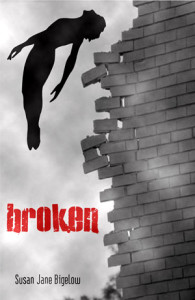
Publisher: Candlemark & Gleam -
Pages: 338 -
Buy: Book/eBook
Whenever I encounter the argument that reviewers ought not to speak negatively of any book they didn’t like, but should instead say simply that the story, while not to their taste, might well be to someone else’s, I experience the overwhelming urge to tear out my hair by the roots. If all reviews were necessarily positive, there’d be little point in reading them: the mere fact of their existence would tell us that the reviewer liked the book, and while there might be some residual interest as to why, after a while, I suspect that the lack of contrast would render the whole endeavour redundant. Individual taste is undeniably a subjective thing, but that doesn’t mean we’re wrong to feel strongly about it, and it certainly doesn’t moot the function of criticism – and subjectivity aside, there’s still such a thing as quality. For instance: if a restaurant served me overcooked steak, flavourless gravy and limp vegetables in a filthy environment, then my best and most useful response is not to swallow my objections on the basis that someone, somewhere might’ve enjoyed the meal, such that warning my friends to eat elsewhere would unfairly endanger the chef’s livelihood.
The point being, it’s incredibly disingenuous to pretend that individual taste is only composed of positives, or that what we enjoy matters more than what we don’t. To stick with the food metaphor, if someone wanted to gain a complete understanding of my palette, my strong dislike of bitter flavours, aniseed products and raw vegetables would be equally as important as my love of good cheese, wine and sashimi. It’s contrast that gives the full picture, and when it comes to book reviews – or reviews of any sort, for that matter – it’s the balance between negative and positive opinions that allows the reader to fully compare the critic’s taste with their own. Read More »
 I’m happy to introduce Foz Meadows, the newest contributing reviewer here at A Dribble of Ink. Foz joins Justin Landon as a contributing reviewer and will be publishing monthly reviews covering a wide range of novels. You might recognize Foz’s work from her own blog, Shattersnipe, her contributions to the Huffington Post, and her past writing here at A Dribble of Ink, including yesterday’s essay on escapism and privilege in Fantasy and Science Fiction. The Book Smugglers, in discussing their choices for the 2013 ‘Best Fan Writer’ Hugo award, described Foz as having ‘written some of the BEST blog posts and articles last year addressing sexism, racism, problematic narratives in Fandom and in YA, all in relation to SF,’ and I’m incredibly proud to bring a writer with such pedigree to A Dribble of Ink.
I was first introduced to Foz’s writing last year after recommendations from several other critics and blogging friends. Her reviews and commentary are sharp, insightful and intelligently engage with many of the important issues being discussed in the overall SFF discussion. For a proper introduction to Foz’s writing, I encourage you to check out her 2012 Year in Review. I feel that adding Foz to the team at A Dribble of Ink will continue to expand and add variety to the areas of coverage and topics of conversation covered, which, in this editor’s opinion, is a very good thing.
So, then, here’s to Foz.
When it comes to discussing the appeal of SFF and its various affiliated subgenres, escapism is an extremely relevant consideration. Given how strongly a pro-escapist perspective correlates with a pro-SFF perspective, and vice versa, the term has become a loaded one, such that a species of argumentative shorthand has developed around its usage. Thus: if escapism is a negative, then so too is the desire for escape, casting those who seek or enable it as naïve, childish daydreamers disconnected from reality. If escapism is a positive, then the pursuit of escape is a noble one, allowing us to transcend the limitations of what is in favour of embracing what could be. Though ostensibly a tried and true dichotomy, the term is ultimately inaccurate in this context: the escapist/realist schism is a false binary, not only because the presence of one element doesn’t preclude the presence of the other, but because both escapism and realism are subjectively realised states, not objective truths.
If escapism is a negative, then so too is the desire for escape, casting those who seek or enable it as naïve, childish daydreamers disconnected from reality.
Despite this fact, the fallacy remains a popular one, both at the external level (SFF is less realistic than straight fiction, and therefore less worthy) and the internal level (aspirational fantasy is less realistic than gritty fantasy, and therefore less worthy). Which isn’t to say such conversations are wholly without merit; indeed, a great deal of useful dialogue is spawned by them. It’s just that, at a fundamental level, there’s a tendency to hark back to an either/or that doesn’t exist, but to which we’ve historically ascribed inordinate importance. By definition, all fiction contains elements of escapism and realism, in that it both includes untruths and, being born of reality, is necessarily tethered to it – the only mitigating factor here is the ratio of truth to lies, and given the wildly divergent ends to which fiction can be turned, to say nothing of the myriad possible interpretations of truth, there’s hardly a rule of thumb for determining even that much with any degree of accuracy. The question of whether escapism constitutes a positive or negative force in SFF has nothing to do with its presence, therefore, but rather with the twofold matter what it is we’re escaping from and into. Read More »
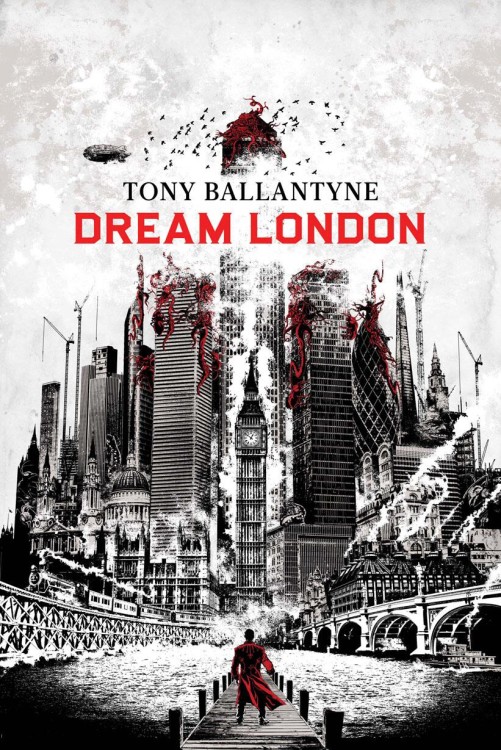
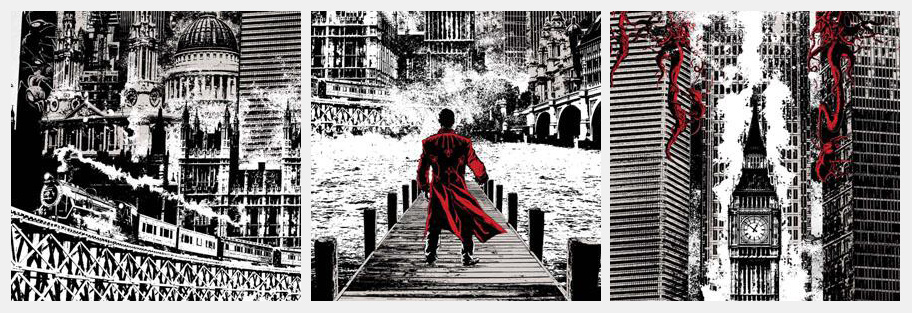
Seriously. There are a lot of great artists out there, but is anyone doing cover art better than Joey Hi-Fi these days? Everything he touches is golden. Tony Ballantyne’s Dream London is slated for release on October 29th, 2013 from Angry Robot Books.
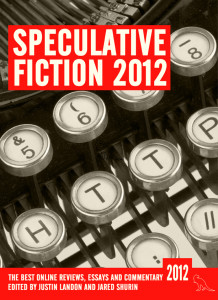
Buy Speculative Fiction 2012: Book/eBook(Coming Soon)
A couple of months ago, I announced that one of my essays was chosen to be included in a book called Speculative Fiction 2012, The Years Best Online Reviews, Essays and Commentary. The book is out now, and I’m all tingly with excitement. Justing Landon, co-editor of the anthology, describes the project:
This collection contains over fifty of the year’s best online essays and reviews, from Tansy Rayner Roberts on Supergirl to Lavie Tidhar on China Miéville to Aishwarya Subramanian on My Little Pony to Joe Abercrombie on, er, himself. It is a diverse collection of some of last year’s best and most interesting writing. We fully expect – and hope – it will cause discussion, debate and a bit of a ruckus.
The book also contains a foreword from Orbit author Mur Lafferty, an introduction from this year’s editors (Jared Shurin and myself) and an afterword from the 2013 editors, Ana Grilo and Thea James of The Booksmugglers. Not to mention the beautiful cover from the talented Sarah Anne Langton.
All proceeds from sales of this book are donated to Room to Read, supporting literacy and gender equality in education around the world.
My contribution to this collection is an essay/critique of A Dance with Dragons by George R.R. Martin, where I analyze how fervor and anticipation can be the enemy of objectivity and fair reviewing practices.
I am thrilled to be included in the anthology alongside other great fan writers such as Ana Grilo, Thea James, Paul Kincaid, Maureen Kincaid Speller, Jonathan McCalmont and Tansy Rayner Roberts. I mean, seriously, my essay comes directly after pieces by Abigail Nussbaum and Adam Roberts. Talk about humbling company. In addition to this, Speculative Fiction 2012 includes two other articles published on A Dribble of Ink: ‘Concerning Historical Authenticity in Fantasy, or Truth Forgives You Nothing’ by Daniel Abraham, and ‘Ma Vie en Zines’ by Chris Garcia. I hope you enjoy the book and, like I have, discover some new writers in the process.
Buy Speculative Fiction 2012: The best online reviews, essays and commentary (Volume 1): Book/eBook (coming soon)