Posts Categorized: Feature Article

As a duo of dual-citizens, we spend a lot of time bounding between the US and UK. Naturally, with every visit, we immediately rush to the bookstore and see what’s changed. The little things always amaze us. When did our neighbourhood Barnes & Noble get such a huge graphic novel section? Why are the Joe Abercrombie covers so different in the US? (And the Daniel Abraham ones so much better in the UK?) Does the American edition Un Lun Dun really have a glossary of British slang?! (It does! And now we have to buy it for the collection…)

Since A Dribble of Ink has a huge American audience, we thought we’d pipe up for a few British talents that might not have been picked up by the US radar… yet.
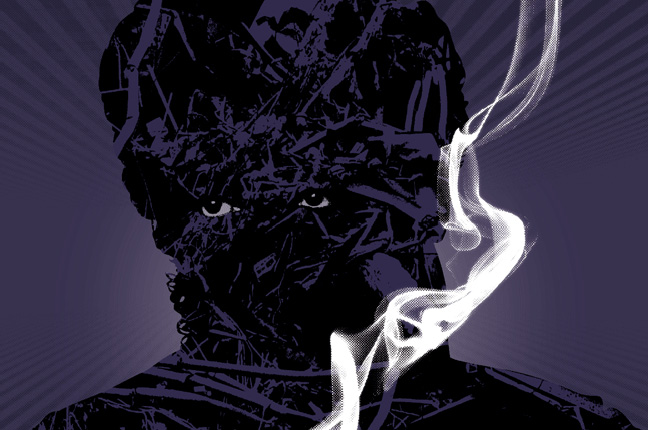
Osama by Lavie Tidhar

Given that Lavie Tidhar’s breakout hit is called Osama (2011), it is easy to appreciate why it hasn’t stormed USA Today’s bestseller list. But there’s a reason that Mr. Tidhar’s semi-slipstream, semi-meta, all-noir detective-SF-thriller-thing (seriously, that’s the best we can do for a one-line description) has picked up critical attention on both sides of the Atlantic. Osama has been a finalist for the Kitschies, the BSFA and the John W Campbell award, and picked up glowing reviews from damn near everyone.

Osama is currently only available as an eBook in the US – but it is far from being the only worthwhile read from the prolific Mr. Tidhar. Hunting down copies of An Occupation of Angels, HebrewPunk, The Apex Book of World SF (which he edited) or his many, many short stories are all well worth the effort. Read More »
Cold Fire by Kate ElliottI wanted to write a post about diversity.

It could open something like this: In a diverse world, is fantasy and science fiction literature open to the largest possible view of the world and its cultures? If not, why not? What am I as writer, as reader, and as viewer doing to promote and highlight a more realistic view of the world’s diversity?

But such an opening already presupposes that I’m writing from the stance of a cultural hegemony centering around Euro/American settings and its structural, political, historical, and religious backdrops. The phrase “a more realistic view” already situates me within a US-centric sphere. It begs the question: More realistic than what?

The instant I say “diversity” what I mean, whether I want to or not, is that I’m writing to an audience in which the default mode lies in being male, white, and mostly straight. Or, to quote writer Aliette de Bodard, the [phrase] “‘importance of diversity’ boils down to ‘why white people benefit from seeing POCs in fiction.’”

POC, for those of you who may not know this acronym, in this instance stands for ‘people of color.’ I agree with Bodard, and I want to add that for the purposes of this post, I’m speaking of diversity in its largest sense, to include gender, gender identity, ethnicity, race, religion, nationality, language, class, and so on.

I’m weary of having this conversation over and over again. Read More »

The Troupe by Robert Jackson BennettThere was a moment the other day when I saw a famous author on twitter point out to everyone that they were not their characters. “If I was,” they said, “we’d all be in danger.” This was a joke, of course – the suggestion was that since a fair share of their characters were murderers or psychotics, then the author could not be them, as the author is not, to the best of anyone’s knowledge, a murderer or a psychotic.

This joke highlights one of the fun, fuzzy, gray areas in writing relationships – where do characters come from? How do writers make them up? Or do they make them up at all?

Characters aren’t precisely “made up,” I don’t think. When we think of fictional characters, we imagine them as just sort of popping into space – they do not exist, and then the writer thinks of them, and suddenly they’re there. Something from nothing, in essence.

But it’s not from nothing. People think writers work with no raw material at all, but they actually do – they work with themselves.

Imagine a writer as a huge, swirling, dripping ball of knowledge, memory, and experience. The ball is so big it’s impossible to hold in your hands, or even to get your arms around – after all, we’re talking about years and years of conscious and subconscious impressions, connotations, associations, all kinds of messy intangibles. And you can’t funnel that into any one character – the ball is just too big and unwieldy for anyone to make a copy of it.

So what does a writer do? They pull off a chunk, like a piece of clay. Then they take that chunk and massage it, and maybe add more chunks from the main ball if they think it’s necessary, and they sculpt it and shape it and adjust it until it has the semblance of a real person – the sculpted chunk’s got emotions, experience, agency, prejudices, goals, all that kind of fun crap.
Read More »

The Weird, edited by Ann and Jeff VandermeerThis week saw the publication in the U.S. of a massive (Amazon shipping weight for the hardcover: 3.1 pounds!) new anthology of fantastic literature: Ann and Jeff VanderMeer’s The Weird: A Compendium of Strange and Dark Stories. Initially published in the U.K. by Corvus last fall, this book contains 110 stories of fabulous, bizarre, sometimes esoteric weirdness. I read the whole thing at the end of last year, and it has produced a lot of fodder for contemplation. I found it difficult to write a brief, crisp review of it (although a review is in progress), but what really made this book significant to me is that I have been able to turn the stories over and over in my mind and find insights into reading, writing, story, genre, and some tenebrous insights into how I look at life and reality. Even better, some of the stories require you to struggle, to navigate your way through discomfort and perplexity, to really experience their value. I’ve written about it several times, and it has inspired a chapter in the book I’m currently working on. What’s great about The Weird is that you can find all kinds of odd, perplexing, sometimes horrible things in it, and once you take them in they start to worm themselves into your thoughts and ideas.

Well, they do for me at least.

And this is what I want to discuss in this blog post: the idea not just of weird fiction, but of how genre expectations — as reading frameworks — condition our engagement with fantastic literature. We all have our preferred categorizations for the stories we read: some people like SF, others speculative fiction or fantastic fiction. Some readers want to organize stories more precisely, right down to very specific sub-genres like paranormal romance or steampunk. Some people like micro-designations, while others like a big playing field. Myself, I was a rabid, obsessive parser of subgenres as a younger reader, but I found after some years that I was reading the same sort of stuff constantly, and I was getting, well, bored. I came to realize that my problem was with how I looked at genre, how I used genre and how my expectations and assumptions influenced my reading of a story. I have evolved into a big-tent sort of reader of fantastic fiction, to the point where I prefer to use the term fantastika, precisely because it opens doors into stories rather than closing them. It also incites discussions about genre and how we look at the stories we enjoy reading, and I like that. Read More »

SHADOWHEART by Tad WilliamsOver at Bookworm Blues, Sarah Chorn is running a series of thematic guest blog posts about the place of disability, whether physical, mental or other, in Speculative Fiction. She’s calling the event “Special Needs in Strange Worlds” and already has several articles from various bloggers and writers about the topic. One of those guest bloggers is me.

Here’s an excerpt from my article, which considers Tad Williams’ Shadowmarch series (beware of spoilers for the entire series):

One of my favourite characters in Memory, Sorrow and Thorn was Prince Josua, a rebellious prince who was the fulcrum of a rebellion that forms the core for much of the trilogy. It happens that Josua was missing a hand. This was a defining feature for Josua, in a visual sense, but had little-to-no effect on his being able to achieve his goals. It’s hard to believe that George R.R. Martin wasn’t influenced by Josua when one of his own characters loses a hand, though Martin takes the concept further, exploring how the loss of his character’s sword-hand affects not only his ability to compete physically against other characters, but how the loss of skill and ability can alter and manipulate a person’s outlook on life. Losing that hand is a major catalyst in allowing Martin’s character to evolve into one of A Song of Ice and Fire’s most conflicted and compelling characters.

[…]

Throughout the course of the latter two volumes in the series, as a result of both his bloodline and being exposed to the magic of the alien Qar, Barrick begins to overcome his physical disabilities. At first it seems like a cop-out by the author, a deus ex machina that allows Barrick to become ‘whole,’ but Williams is too smart for that and Barrick soon realizes that his physical disabilities are, in many ways, a smaller prison compared to the crippling social disabilities he created within himself as a guard against the sympathies of the other people in his life, including his sister, though he loves her dearly. The prince can never crawl out from under the shadow of his disabilities; though his body is healthy, his mind continues to be plagued by the demons of his own devices. Barrick’s lifelong struggle with his disabilities is a defining aspect of his character, and an intelligent foil to the struggles of his sister—where Barrick inwardly deals with the physical and mental shackles placed on his by his disabilities, Briony, physically healthy, must battle equally confining restrictions placed on her by society for being a female fighting for her place in society. To overcome his disabilities, Barrick must first convince himself that it’s possible, for Briony, she must convinces the others that surround her. It’s tough to say who has the more difficult road.

The Shadowmarch series is filled with characters who deal with varying degrees of physical disability, but it never stops a single one of them from having an important and positive impact on their imperiled world. Though a character like Ferras Vansen is physically strong and suffers only from a melancholy heart, his struggles are as difficult and important to him as those faced the physically-challenged Prusus. Different, yes, but equally demanding.

Sarah also writes some flattering things about me and A Dribble of Ink that set equally my ego and my humility into swirling mayhem. So, yes, thank you, Sarah, for inviting me to be a part of this event.

I hope you enjoy my article and encourage you to read the others, they’re all much more eloquent and better considered than my own. In particular, young Dan Goodman, who was diagnosed at birth with spastic cerebral palsy, writes well about the topic and how Fantasy allowed him to find a freedom he didn’t know he could have. Touching stuff.