Posts Categorized: Feature Article

Beware, there are spoilers here for The First Law trilogy, specifically the ending of A Last Argument of Kings.

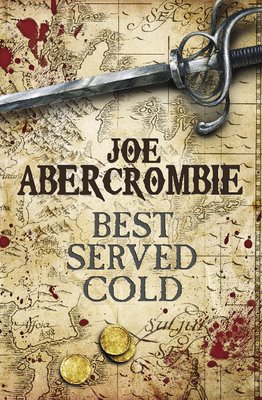
A Red Country is the next novel set in Joe Abercrombie’s popular fantasy world that readers first discovered in The First Law trilogy. With Abercrombie recently finishing a first draft of the novel, and some interesting news about the plot, I thought it would be a good time to go over the details of what we know about A Red Country.

First, we have this early synopsis from Abercrombie’s blog, from February 2012:

Shy South comes home to her farm to find a blackened shell, her brother and sister stolen, and knows she’ll have to go back to bad old ways if she’s ever to see them again. She sets off in pursuit with only her cowardly old step-father Lamb for company. But it turns out he’s hiding a bloody past of his own. None bloodier. Their journey will take them across the lawless plains, to a frontier town gripped by gold fever, through feuds, duels, and massacres, high into unmapped mountains to a reckoning with ancient enemies, and force them into alliance with Nicomo Cosca, infamous soldier of fortune, a man no one should ever have to trust…

While the confirmed conclusion of Nicomo Cosca was pleasing (he’s one of Joe’s more convincing creations, if you ask me), the real discussion was centred around the few sentences describing Shy’s namless uncle: “She sets off in pursuit with only her cowardly old step-father Lamb for company. But it turns out he’s hiding a bloody past of his own. None bloodier.”
Read More »

The Troupe by Robert Jackson BennettProbably one of the first circus- or carnival-themed stories I ever read and fell in love with was Ray Bradbury’s Something Wicked This Way Comes. I was quite young, and I remember I loved it because it felt like it could happen to me in real life at any moment: I would be walking home from school one chilly autumn afternoon, and I would see a poster taped to a wall promising a traveling show of amazing wonders, and I would attend, and… Something Amazing Would Happen.

I wouldn’t know what, exactly – it would be impossible to know, because all of that would be kept veiled behind the curtain until I’d paid my fee and taken my seat. But finally the lights would go down, and then…

Well. Showtime.

That’s how these things work. We all know it. It’s a story model that’s written into our bones. It doesn’t have to be a circus, or a carnival, or even a show – consider the Faerie Market from Neil Gaiman’s Stardust, when visitors from the other side of the wall flood the town offering mysterious goods and wares. One young man buys something… and Something Amazing Happens.
Read More »

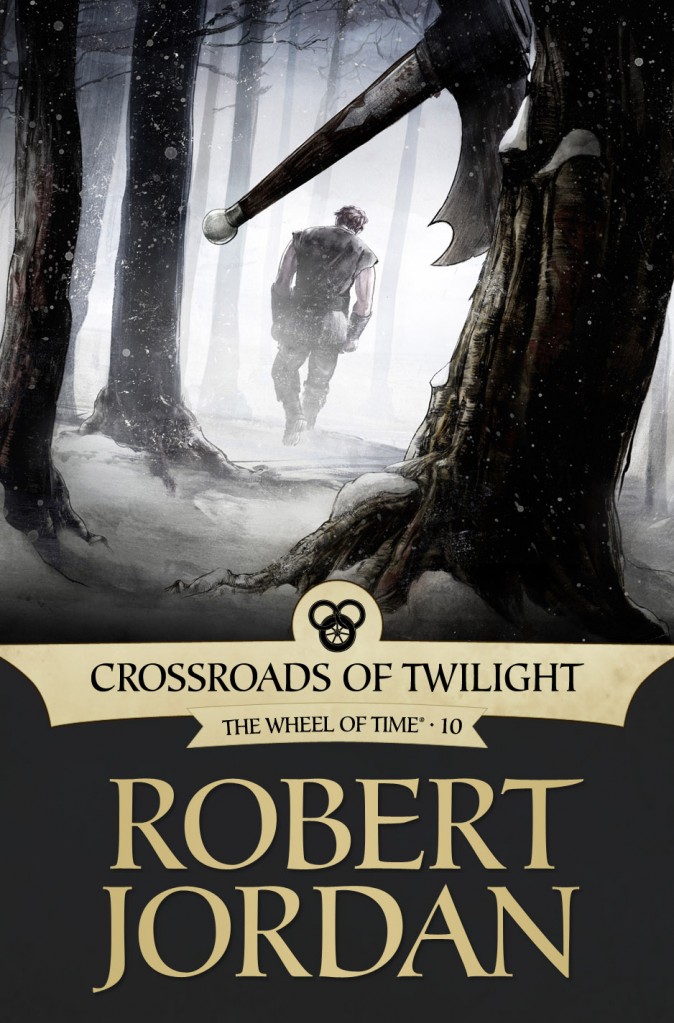
Crossroads of Twilight by Robert Jordan (eBook Edition)Earlier today, I stumbled across some interesting discussion from industry folk. In the thread, they discuss a fairly damning comment made by David Drake, another Tor author, of both Jordan’s and Tor’s handling of the middle books in the enormously successful Wheel of Time series.

Drake’s original comment:

Dear People,

What I said was that when Jim Rigney’s work became a significant part of not only the Tor but the Von Holzbrink bottom line, the plots for individual volumes were decided by very highly placed people in council with the author.

Business was expanded to a complete volume where it might originally have been one of several strands in a volume, and the action in minor theaters (so to speak) was followed when the author might have been willing to elide it.

I further said and will repeat: there were quite a lot of people who sneered at ‘Robert Jordan’ but whose own books wouldn’t have been published without the Wheel of Time to subsidize them. Since the onset of Jim’s (Jim Rigney’s) illness, he hadn’t been able to write–and a lot of those people are not being published any more.

Dave Drake

Read More »

Myke Cole, author of Shadow Ops: Control PointThis isn’t a eulogy for my father. The guy’s still around. In fact, every once in a while, he calls me and while I’m happy to hear from him, it takes me 3 hours to get him off the phone. But that’s not the point. The point is, that when my dad finally shuffles off this mortal coil (heaven forestall the day), there is one thing I will always remember about him.

When I was a young boy, dad would sit in the living room or in his study (he smoked a pipe back then, and the smell of pipe smoke still makes me comfortable) and read the New York Times Review of Books. He would disappear behind those venerable pages and emerge with a pronouncement, some minutes or hours later, that such-and-such a book sounded good.

What can I say? Kids are impressionable. Between my father (who, at the time, was the clear earthly authority on absolutely EVERYTHING) and that lauded institution known as the New York Times, if dad read the NYTROB and declared a book good, then it was GOOD, as objectively as anything can ever be considered in a matter of taste.

But, time has rolled on. Dad’s blind in one eye. I don’t trust his driving and he talks too much on the phone. I love him to death, but what is up with those pastel yellow pants? Just as I don’t want to be in a car with him behind the wheel, I don’t necessarily want him recommending me SF/F out of the NYTROB (not that they ever review the stuff anyway). I’m not a big Glenn Reynolds fan, but he was largely right in his Army of Davids. The Internet has diversified and broadened the arena of tastemakers, and I have long since turned to a bevy of blogs (the smaller and more independent, the better) to get advice on what to read next.
Read More »

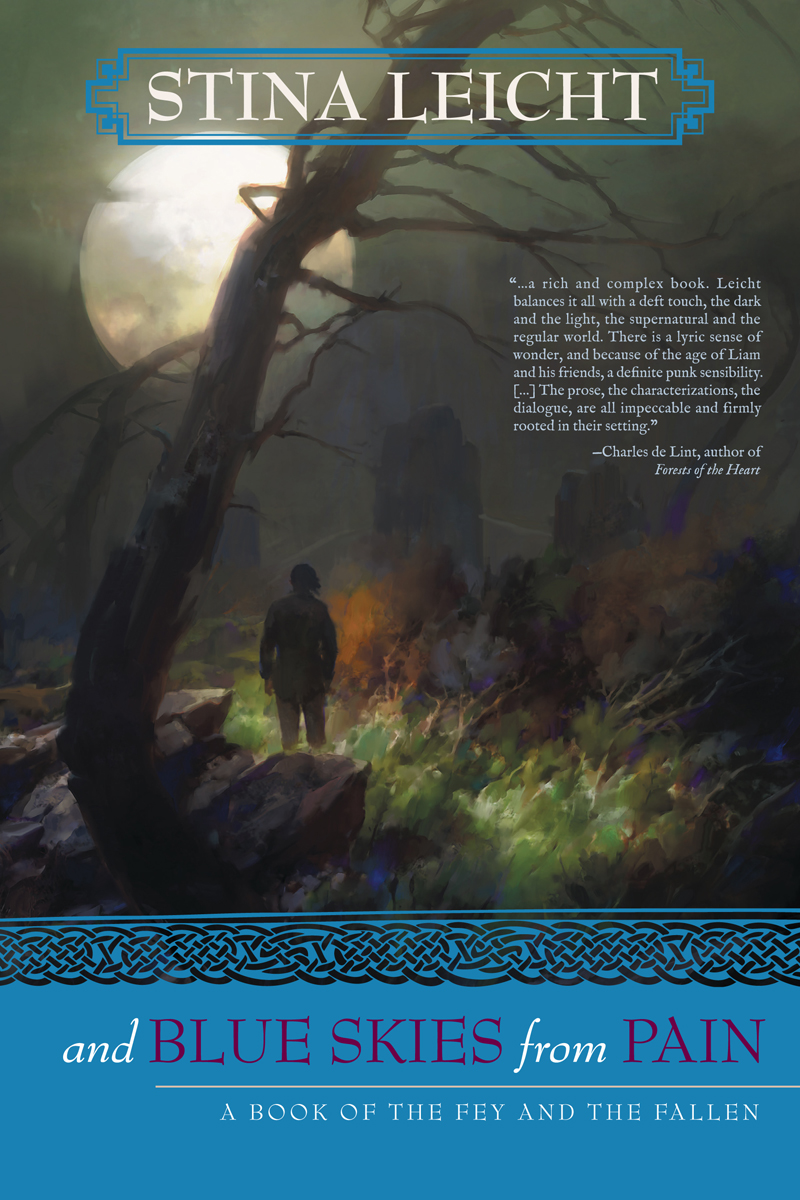
AND BLUE SKIES FROM PAIN by Stina LeichtThe subject of female authors and bloggers, and the tendency for their work to often be overlooked, has been spreading through the blogosphere over the past couple of days. I want to point you towards two that I feel are worth reading.

The first is from Lady Business, which examines the reviewing habits of bloggers in 2011 and the ration of male:female authors reviewed on each blog. The results are not surprising, but disheartening nonetheless.

Are there answers in these numbers? I’m only finding more questions. There are no good, easy answers. Of course, some like to pretend there are easy answers and that’s where I’ve watched this debate fall apart in the past whenever it’s cropped up. It goes to Disasterland immediately and becomes a shame spiral. Someone inevitably shows up and starts talking about why quotas are bad and no, no, how dare you call them sexist and a game of Defensive Assholes is launched. The entire situation devolves into Don’t Read the Comments™ and it’s Gender Catastrophe Theater and general badness, which accomplishes less than nothing, because if we go back to the beginning, no one called anyone any names at all. I want to avoid that as much as possible. Reading diversity is a complicated subject and book selection often a process that we’re not conscious of. We’re impacted on all sides by a myriad of things influencing our decisions. But reviewing and talking about titles on public blogs and journals is an active decision that we’re making every time we put a book down and go, “I’m going to write 1000 words about that and share it with the Internet!”

As friends finalized this data for me, made the graphs you see above and I started thinking about what to say about them, VIDA released The 2011 Count. It’s not specific to SF/F like my project and and it’s professionally focused, but I think it’s fascinating to look and see the same trends in an unrelated sphere repeated in this one.

What are we saying to those who trust our reading choices? What are we saying to the publishers who send us materials to review about the books that deserve that kind of virtual hand-selling? Does it impact what they think is relevant and sellable? What does it mean when we review that book by a man, and that one, and that other one and pass over the women writing the same kind of story? There’s worth in examining the reviewing choices we’re making. There’s worth in thinking about what messages we’re sending when our promotional energies favor the dominant gender without letting ourselves get mired in arguments grounded in gender essentialism.

The real meat of the discussion is just getting underway in the comments section, with one reader analyzing the ratio of male:female novels being published and selling well in the genres. A Dribble of Ink was included in the research (listed as article ‘A’ in the charts), and I’ll keep any explanation to a minimum, in fear of coming off as defensive and petulant. Bottom line, my male:female reviewing ration in 2011 was poor, something I will consider heavily as we move into 2012. I hope that other bloggers/critics will do the same.
Read More »