Posts Categorized: Review

City of Ruin by Mark Charan Newton

City of Ruin

AuthorMark Charan Newton

Hardcover
Pages: 400
Publisher: Tor (UK)
Release Date: June 4, 2010
ISBN-10: 0230712592
ISBN-13: 978-0230712591


The New Weird. It’s that strange little literary movement that, according to Mark Charan Newton, is dead. And yet, he’s flying that mantle high, telling anyone who’ll listen that City of Ruin, the second volume of his Legends of the Red Sun series, has been let of its leash by virtue of a four book publishing deal; it’s going to be weirder, more true to Newton’s original vision of the sun-deprived Boreal Archipelago. Nights of Villjamur, Newton’s first novel (REVIEW), dabbled in the New Weird, but City of Ruin is meant as a love letter to two ailing genres (it’s also very much in the vein of Jack Vance’s Dying Earth novels and Gene Wolfe’s Book of the New Sun), and promises to be the unrestrained novel Newton wanted to write in the first place (it’s not easy to sell giant spiders, floating spaceship islands and geriatric cultists to publishers, I guess.)

The New Weird movement is one I’ve only watched with vague disinterest from the sidelines. It just wasn’t for me. I’m too traditional, too happy to read novels I recognize. Why would I need weird for weirdness sake? At least, that’s what I thought. I was worried that the New Weird would take too much to wrap my head around, would be more trouble than it was worth. But, if City of Ruin is such an example of the genre then, well… the New Weird just isn’t as weird as the reputation that precedes it. Rather, it’s Fantasy with an open mind, Fantasy that steps away from Elves and Dragons and replaces them with smoking, male banshees and corpse golems. My early perceptions of New Weird were that I’d constantly be forced to reevaluate how I approached the place and setting of the novel, to push aside preconceptions and learn again how to listen to a story; but, really, in the end, a hulking, angry coin golem is just a fresh coat of paint on a troll, and a city-stomping cephalopod is just a dragon in disguise.
Read More »
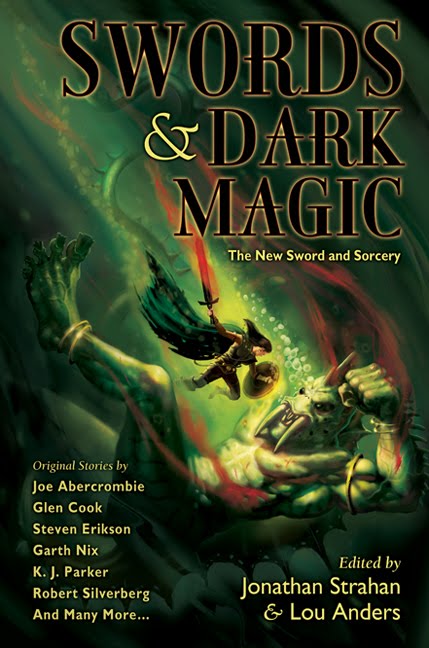
Swords and Dark Magic, edited by Lou Anders and Jonthan Strahan

It had been three days since the stranger returned to Invergo, there on the muddy shores of the milky blue-green bay where the glacier met the sea. Bruised and bleeding, she?d walked out of the freezing water. Much of her armor and clothing were torn or missing, but she still had her spear and her dagger, and claimed to have slain the demon troll that had for so long plagued the people of the tiny village.

Yet, she returned to them with no proof of this mighty deed, except her word and her wounds. Many were quick to point out that the former could be lies, and that she could have come by the latter in any number of ways that did not actually involve killing the troll?or anything else, for that matter. She might have been foolhardy and wandered up onto the wide splay of the glacier, then taken a bad tumble on the ice. It might have happened just that way. Or she might have only slain a bear, or a wild boar or auroch, or a walrus, having mistaken one of these beasts for the demon. Some even suggested it may have been an honest mistake, for bears and walrus, and even boars and aurochs, can be quite fearsome when angered, and if encountered unexpectedly in the night, may have easily been confused with the troll.

Imagine Beowulf, but replace the titular character with a drunk lesbian, the verse with beautiful prose and a myth-like lilt and you’ve an idea of what to expect from The Sea Troll’s Daughter, Caitlin R. Kiernan‘s contribution to Swords & Dark Magic, an collection of short fiction compiled by Jonathan Strahan and Lou Anders. In an anthology stuffed with Scott Lynch, Joe Abercrombie and Greg Keyes, it comes as a bit of a surprise that, a few weeks since putting the novel down, the story that has lingered longest was written by an author I’d not had any encounter with in the past, that I’d not been intending to read at all. I’ve since learned that Caitlin R. Kiernan, beyond her novels, is a multiple awarding-winning, and very prolific writer of short fiction. It’s easy to see why.

The Sea Troll’s Daughter tells the tale of an (at first) unnamed warrior – a drunkard woman who claims to have slain the Sea Troll, a nefarious monster that has threatened the livelihood of the village. Weaved on top of this overall narrative are the woes of a downtrodden, but greedy village, doomed romance and the dangers of misconception. Kiernan plays with the ideas of repercussions, of greed and its inexorable hold on our race, and, ultimately, of that ever present search for redemption and self-worth.

The connections and allusions to Beowulf are obvious, but doubly interesting when one considers that Kiernan wrote the novelization of the 2007 film version of Beowulf. The Sea Trolls Daugher seems to be Kiernan’s rebuttal to the famous poem, a challenge to the stereotypes and plot structure that has been stolen so many times in modern and ancient literature. Replacing the archetypical Beowulf with a cynical, well-realized female lends a weight to the classic tale that I’ve not run across before.

Told much like a fireside tale, rather than a more typical narrative style, Kiernan’s work is reminiscent of myth and legend, like a story passed by word of mouth and subverted by each tongue it touches. The story there is compelling, but there’s also the melancholy feeling that the truth has been lost in the telling. It’s an unusual road for the narrative to travel, but one that gives the story a timeless quality, and it’s lingered with me far longer than the other stories in the volume. Rather than just setting out to tell a story that entertains, Kiernan attemps, and succeeds, in showing that cliches and familiarity can be strengths, as much as weaknesses.

Stories with this much perspicacity are rare, and doubly so when they have the courage to retell and refine one of the defining works of our civilization’s literature. If The Sea Troll’s Daughter, one of the standout stories in an exceptional collation, is an indication of the quality and life of Kiernan’s work, I’ve got a new trove of wonderful fiction to explore.

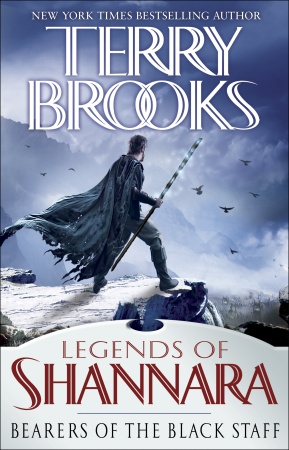
Bearers of the Black Staff by Terry Brooks

Bearers of the Black Staff

by Terry Brooks
Hardcover
Pages: 368 pages
Publisher: Del Rey
Release Date: August 24, 2010
ISBN-10: 0345484177
ISBN-13: 978-0345484178

In the interest of full disclosure, I’m a moderator at the Official Terry Brooks Forums, a role which I take seriously, but which has not coloured the following review

Reviewing a new Terry Brooks book is always a taxing experience for me. On the one hand, I’m a longtime fan of his work and have trouble separating my critic sensibilities from my fanboy sensibilities. As a fan, it’s often easy to overlook shortcomings by focussing on the elements of the novels that appeal to my deeply engrained fanboyisms – those small, easter egg elements that would mean little to a new reader, but send shivers up the spine of longtime fans. On the other hand, as a critic, Brooks’ reliance on these cyclical, repeating themes, plot elements and character archetypes is something that can’t be ignored.

Bearers of the Black Staff is the opening volume of a duology (in name only, which I’ll get to later), The Legends of Shannara, that further attempts to connect his Word & Void series (a wonderfully original and darkly satisfying Contemporary Fantasy trilogy) with his decades-running Shannara series. As promised. Brooks continues to explore how our war-ravaged Earth was transformed into the sweeping magical world of the Four Lands, and fans of the series will love some of the surprises and revelations in store.
Read More »

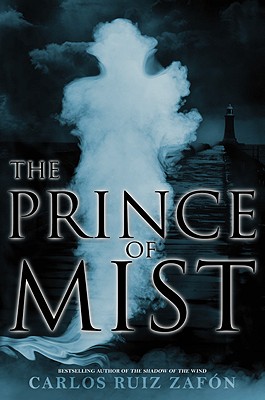
The Prince of Mist by Carlos Ruiz Zafon

The Prince of Mist

AuthorCarlos Ruiz Zafon
Hardcover
Pages: 224
Publisher: Little, Brown Books for Young Readers
Release Date: May 4, 2010
ISBN-10: 0316044776

EXCERPT

Carlos Ruiz Zafon’s The Shadow of the Wind is one of my two favourite novels. The other is The Hobbit by J.R.R. Tolkien. On the surface, these novels appear to have little in common – one is quest Fantasy, set in a mythical world, the other is a coming-of-age story set in 1940’s Spain. Where they’re similar, though, is in their origins and the reasons they were written.

Tolkien originally wrote The Hobbit for his children, a tale of adventure and hijinks meant to entertain and excite them. I much prefer it to The Lord of the Rings for its brevity, for its ability to get to the point and tell a story for storytelling’s sake.

I once saw young adult (YA) novels described as (and I’m paraphrasing) ‘Adult novels without all the crap’. I thought this a rather apt description of the oft-maligned publishing category. Though I’m ultimately a reader of adult novels, I’m drawn to YA for its hungry veracity to lay the story out before its audience, to cut out all the nuance and posturing and let the reader into its secrets, to reward them quickly for their commitment. It’s like a moped to a motorcycle: simple, little stress the reader, but ultimately enjoyable.

I like to think of The Shadow of the Wind as an evolution of this style of storytelling. It’s more drawn out than typical YA, with much of that extraneous fat and muscle added back on, but Zafon was able to draw on his experience writing YA and apply what he’d learned to craft a story that was as fable-like as the best YA. From a small cast of characters, to a youthful, zesty voice, to its ability and willingness to question the world, The Shadow of the Wind is a YA Adult novel grown up. This bumbling, awkward kid’s turned into a sophisticated gentleman.
Read More »

Dreamsongs by George R.R. Martin

Prior to releasing A Game of Thrones, and subsequently becoming one of the brightest and most respected authors in the Fantasy field, George R.R. Martin was perhaps best known for his short fiction, much of it in the Science Fiction genre, and a far cry from his current bread and butter. Foremost among those is Sandkings.

He flew his skimmer to Asgard, a journey of some two hundred kilometers. Asgard was Baldur’s largest city and boasted the oldest and largest starport as well. Kress liked to impress his friends with animals that were unusual, entertaining, and expensive; Asgard was the place to buy them.

This time, though, he had poor luck. Xenopets had closed its doors, t’Etherane the Pet seller tried to foist another carrion hawk off on him, and Strange Waters offered nothing more exotic than piranha, glow sharks, and spider squids. Kress had had all those; he wanted something new, something that would stand out.

Near dusk he found himself walking down Rainbow Boulevard, looking for places he had not patronized before. So close to the starport, the street was lined by importers’ marts. The big corporate emporiums had impressive long windows, in which rare and costly alien artifacts reposed on felt cushions against dark drapes that made the interiors of the stores a mystery. Between them were the junk shops-​narrow, nasty little places whose display areas were crammed with all manner of off world bric-​a-​brac. Kress tried both kinds of shops, with equal dissatisfaction.

Then he came across a store that was different.

Set in the far future city of Asgard, Sandkings tells the lamentable story of playboy Simon Kress, a man ruled by passions, but lacking in wit. Kress is a purveyor of exotic (and dangerous) animals, which he uses to entertain his guests at parties. A lonely attention whore. To this end, he acquires four sets of Sandkings – rare, insect-like hiveminds drawn to tribal warfare and worshipping their owner, all within the confines of a large aquarium. Just imagine being a kid and watching your pet turtles, or the ants in your ant-farm, war with each other over land and food. They promised to be the crown jewel of Kress’ collection.

Martin’s strength of creating characters you hate, yet understand at the same time, a hallmark of A Song of Ice and Fire is evident even in his early short fiction. Sandkings follows Kress’s travails as he raises the sandkings, cruelly using them to his amusement, wading into an addiction to the popularity they bring him. In a remarkably short space, Martin manages to make Kress both despicable, but interesting and likable at the same time. As the reader, we can see all the mistakes the man makes, but, equally, we understand his reasoning for making them. It all comes back to that loneliness, that cry for attention.

Martin’s A Song of Ice and Fire is known for its uncompromising twists and turns, for setting up plot twists hundreds of pages in advance, but only clear to the reader upon reflection. Sandkings is no different, and shows the roots of the storytelling that would go on to make Martin famous and rewards the reader with a cruel twist ending, that leaves several juicy questions to gnaw on.

Equally viable as a horror story and a psychological profile of the downfall of a greedy, lonely man, SandKings is an absolute pleasure to read, and justifies those that claim Martin’s true strength lies not in his Epic Fantasy but in short fiction. Speaking also to its quality is the fact that despite being published 30+ years ago, the story holds up to every one of its contemporaries, with not a wrinkle or liver spot to be seen. If you’ve only read Martin’s A Song of Ice and Fire, or haven’t read anything by Martin at all, do yourself a favour and pick up Dreamsongs Volume I & II, and discover Sandkings, and the other roots of one of the most compelling storytellers of our generation.