Hugo Awards LogoHere are my nominations for the 2012 Hugo Award:

Best Novel

Of Blood and Honey by Stina Leicht (REVIEW)
A Dance with Dragons by George R.R. Martin
The Night Circus by Erin Morgenstern (REVIEW)
The Tiger’s Wife by Tea Obreht (REVIEW)
Among Others by Jo Walton

Best Semi-prozine

Beneath Ceaseless Skies
Daily Science Fiction
Lightspeed
Strange Horizons
Tor.com

Read More »

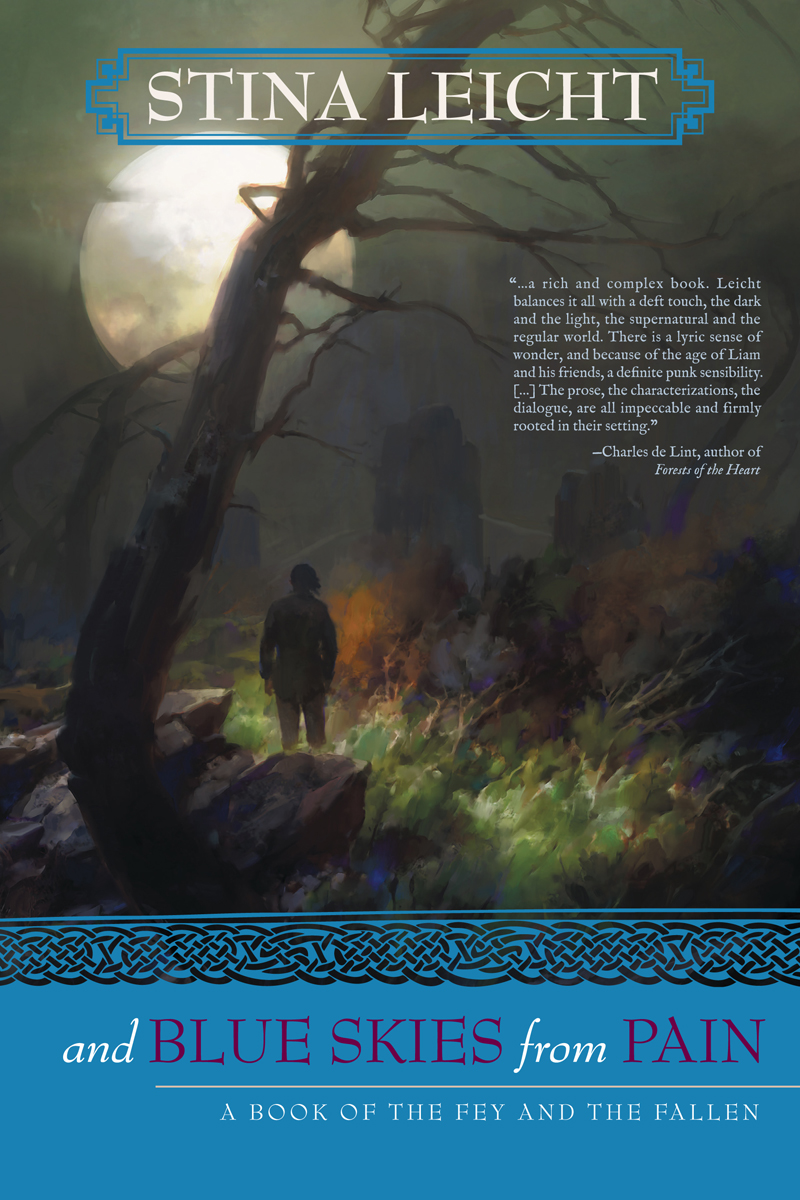
AND BLUE SKIES FROM PAIN by Stina LeichtThe subject of female authors and bloggers, and the tendency for their work to often be overlooked, has been spreading through the blogosphere over the past couple of days. I want to point you towards two that I feel are worth reading.

The first is from Lady Business, which examines the reviewing habits of bloggers in 2011 and the ration of male:female authors reviewed on each blog. The results are not surprising, but disheartening nonetheless.

Are there answers in these numbers? I’m only finding more questions. There are no good, easy answers. Of course, some like to pretend there are easy answers and that’s where I’ve watched this debate fall apart in the past whenever it’s cropped up. It goes to Disasterland immediately and becomes a shame spiral. Someone inevitably shows up and starts talking about why quotas are bad and no, no, how dare you call them sexist and a game of Defensive Assholes is launched. The entire situation devolves into Don’t Read the Comments™ and it’s Gender Catastrophe Theater and general badness, which accomplishes less than nothing, because if we go back to the beginning, no one called anyone any names at all. I want to avoid that as much as possible. Reading diversity is a complicated subject and book selection often a process that we’re not conscious of. We’re impacted on all sides by a myriad of things influencing our decisions. But reviewing and talking about titles on public blogs and journals is an active decision that we’re making every time we put a book down and go, “I’m going to write 1000 words about that and share it with the Internet!”

As friends finalized this data for me, made the graphs you see above and I started thinking about what to say about them, VIDA released The 2011 Count. It’s not specific to SF/F like my project and and it’s professionally focused, but I think it’s fascinating to look and see the same trends in an unrelated sphere repeated in this one.

What are we saying to those who trust our reading choices? What are we saying to the publishers who send us materials to review about the books that deserve that kind of virtual hand-selling? Does it impact what they think is relevant and sellable? What does it mean when we review that book by a man, and that one, and that other one and pass over the women writing the same kind of story? There’s worth in examining the reviewing choices we’re making. There’s worth in thinking about what messages we’re sending when our promotional energies favor the dominant gender without letting ourselves get mired in arguments grounded in gender essentialism.

The real meat of the discussion is just getting underway in the comments section, with one reader analyzing the ratio of male:female novels being published and selling well in the genres. A Dribble of Ink was included in the research (listed as article ‘A’ in the charts), and I’ll keep any explanation to a minimum, in fear of coming off as defensive and petulant. Bottom line, my male:female reviewing ration in 2011 was poor, something I will consider heavily as we move into 2012. I hope that other bloggers/critics will do the same.
Read More »

Hugo Awards LogoOne of my favourite bloggers, Stefan Raets dropped by Staffer’s Musings to talk about an important issues that’s near-and-dear to my heart. I’ll let his words speak for themselves.

How many authors on the ballot have done blog tours? How many have websites that quote reviews from bloggers? How many have done interviews on blogs? How many, for the love of Tehlu, have only achieved the prominence and popularity they currently enjoy because of the enthusiastic, dedicated and unpaid work done by bloggers? AND YOU’RE TELLING ME YOU MAY NOT WANT TO INCLUDE BLOGS IN THIS CATEGORY IN THE FUTURE? For shame.

Seriously, the only justification I could see for this is to make sure the traditional fanzines don’t get overrun by blogs. So, let’s create a brand new category called “Best Blog”. Somehow they have seen fit to create a new category called “Best FanCast” this year, so it’s possible. The person with the gavel needs to consider this. Maybe he or she wants to go down in history as the person who brought the Hugos in line with the progress of history. We need a Best Blog category, or we need blogs to be included under “Best FanZine”. It’s one or the other. You can’t reasonably exclude the place where 90% of fan writing happens right now. Not if you want to be taken seriously as an award in this day and age. Hands up how many of you have read a fanzine this year? And now how many have read a blog? I rest my case.

So! Enough with the speechifying. I’m hoping that enough fans and bloggers and authors will include their favorite blogs in the Best Fanzine category. Personally, I’m putting only blogs on my ballot. I’m hoping that at least a few of the best ones will make it to the final ballot. And I hope that one of them will win the award.

Aside from the Fanzine/blog category, you can also nominate individual Fan Writers. Things are a bit more straightforward and less exclusive there: you can nominate anyone who writes about SF&F in any format. Including bloggers. You don’t have to use a Xerox machine to be eligible for Best Fan Writer. So, if you have a favorite blog, you can nominate “Aidan Moher” or “Adam Whitehead” under Best Fan Writer as well as “SF Signal” or “Staffer’s Musings” under Best Fanzine. Even if blogs don’t count anymore in future years, you can continue to nominate the people behind the blogs in the Best Fan Writer.

It looks like a few people have put my name on their ballots in this category. I am very flattered, and I thank you from the bottom of my heart, but I want to make it clear that I’m not asking you to nominate me here. I’m asking you to support your favorite bloggers. If that’s me, great. If not, also great. Just support your favorite bloggers, whoever they are. Buy a membership and nominate them.

This is a subject that I’ve written about on a few occasions (like this, or this, or this). I think it’s integral to keeping the Hugo Awards relevant in the industry and among fans. You can read Raets full article, Love a Blog? Nominate It, on Staffer’s Musings or Far Beyond Reality.

The Killing Moon by N.K. Jemisin

The bedchamber: a study in worn elegance. The priest’s eyes made out graceful chairs upholstered in fraying fabrics, and wood furnishings gone dull for lack of polish. Reaching the bed, he took care to avoid shadowing the face of the person who slept there—but the old man’s eyes opened anyhow, blinking rheumily in the thin light.

“As I thought,” said the old man, whose name was Yeyezu. His hoarse voice grated against the silence. “Which one are you?”

“Ehiru,” said the priest. His voice was as soft and deep as the bedchamber’s shadows. “Named Nsha, in dreams.”

The old man’s eyes widened in surprise and pleasure. “So that is the rose’s soulname. To whom do I owe this honor?”

Ehiru let out a slow breath. It was always more difficult to bestow peace once a tithebearer had been awakened and frightened; that was why the law commanded Gatherers to enter dwellings in stealth. But Yeyezu was not afraid, Ehiru saw at once, so he chose to answer the old man’s question, though he preferred to do his work without conversation.

Ooh, finally a look at one of my most anticipated novels for 2012.

And a synopsis:

The city burned beneath the Dreaming Moon.

In the ancient city-state of Gujaareh, peace is the only law. Upon its rooftops and amongst the shadows of its cobbled streets wait the Gatherers – the keepers of this peace. Priests of the dream-goddess, their duty is to harvest the magic of the sleeping mind and use it to heal, soothe . . . and kill those judged corrupt.

But when a conspiracy blooms within Gujaareh’s great temple, Ehiru – the most famous of the city’s Gatherers – must question everything he knows. Someone, or something, is murdering dreamers in the goddess’ name, stalking its prey both in Gujaareh’s alleys and the realm of dreams. Ehiru must now protect the woman he was sent to kill – or watch the city be devoured by war and forbidden magic.

The entirety of Chapter One of The Killing Moon is available on Jemisin’s website. The Killing Moon will be released on May 1st, 2012, and I’ll be reading and reviewing this as soon as I can get my hands on it.