Posts Tagged: Cover Art

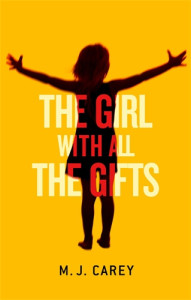
The Girl with All the Gifts by M.J. CareyYesterday, Orbit Books released the cover and first blurb for The Girl with All the Gifts by M.J. Carey. Early impressions (mostly from within Orbit, it seems, and those who’ve read unbound galleys) are extremely positive. Given how far release is, this sort of hype and raised expectations is expected, but, golly, that cover and early teaser blurb are mighty enticing. I generally associate Orbit with their more traditional fantasy and science fiction releases, like Brent Weeks, N.K. Jemisin and Daniel Abraham, but I’m always pleased to see them go out of their way to find quirky, off-the-beaten path genre novels.

Melanie is a very special girl. Dr Caldwell calls her ‘our little genius’.

Every morning, Melanie waits in her cell to be collected for class. When they come for her, Sergeant keeps his gun pointing at her while two of his people strap her into the wheelchair. She thinks they don’t like her. She jokes that she won’t bite, but they don’t laugh.

Melanie loves school. She loves learning about spelling and sums and the world outside the classroom and the children’s cells. She tells her favourite teacher all the things she’ll do when she grows up. Melanie doesn’t know why this makes Miss Justineau look sad.

The first thing to come to mind when reading the blurb for The Girl with All the Gifts is Irrational Games’ Bioshock Infinite, released earlier this year for Xbox 360, PS3 and PC, which features a similarly confined girl, manipulated and educated by her captor in an effort to gain access to whatever secret power lies within her. Most intriguingly, the blurb doesn’t call on any outwardly SFF elements, but there’s just enough of a hint in the final paragraph, and the obvious efforts at guarding Melanie, that, though she might not realize it, and the blurb doesn’t say so, uncovering Melanie’s origins and the threat of her power, even in the body of a young child, will be central to the plot.

M.J. Carey is a pen name for Mike Carey, best known for his work in comic books, including 2011’s crossover series, Age of X , and the Felix Castor novels, which begin with The Devil You Know (buy: book/eBook).

Yesterday won’t be soon enough to get my hands on this book. The Girl with All the Gifts is set for a worldwide release in 2014 from Orbit Books.
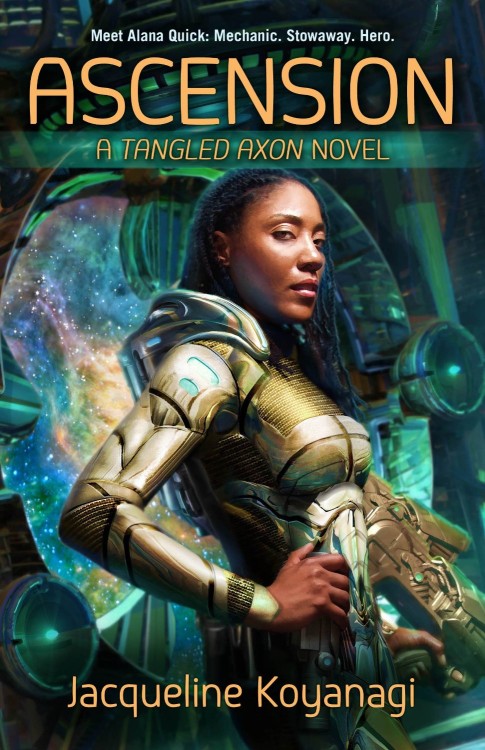
Ascension: A Tangled Axon Novel by Jacqueline Koyanagi

Ascension: A Tangled Axon Novel by Jacqueline Koyanagi
Art by Scott Grimando

Okay. So, maybe I made up the quote in the title, it’s not from this book, but, well… it’s true, no? Just look at this awesome cover.

I think we can all agree that, in general, there is a lot of pretty awful Fantasy and Science Fiction cover art these days, right? Sure, there’s some great work being done (like this, or this), but there’s also a proliferation super generic, dudebro, fistbump, “Pass me my hood, brah”-style covers that do little to improve the mainstream opinion that Fantasy is for kids, or neckbeards living in their parents’ basement. Read More »

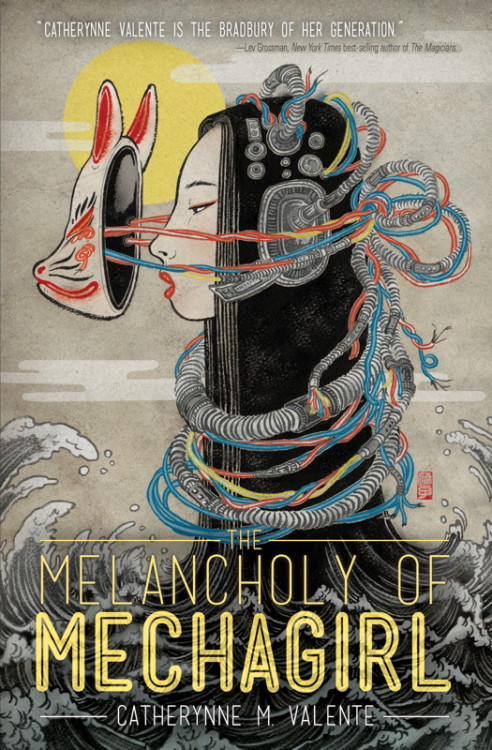
The Melancholy of Mechagirl features fantasy-inspired short fiction by Valente about Japan, including the Hugo Award-nominated novella Silently and Very Fast and “Thirteen Ways of Looking at Space/Time,’ both of which were originally published in Clarkesworld Magazine. She described ‘The Melancholy of Mechagirl’ as ‘a philosophical confessional poem about anime and giant robots.’ Fans of The Melancholy of Haruhi Suzumiya, a popular anime, will recognize the name. You can read it in Issue 26 of Mythic Delirium. Valente lived in Japan for a number of years, and the people and stories of the country are deeply rooted in much of her fiction. She discussed her relationship with Japanese culture in a 2006 interview with Bookslut:

How did living in Japan affect your writing and your life?

Oh, that’s a big question! I think Yume no Hon is probably one long answer to it, but I’ll give it a shot here.

Japan was very hard for me — my husband, a naval officer, was gone for 19 out of the 25 months we lived there. I was alone in an extremely alien culture, unable to speak the language, without friends or family. I lived alone with my dog and wrote. It was as close to a garret as you can get in the 21st century. I had never experienced loneliness like that before, and I’ll probably be processing it for awhile yet.

However, I came to interact with Japanese culture on my own terms, relatively stripped of the assumptions fostered stateside by anime and other memetic exports. I found my own way to loving it, and though it is a hard-won love, I won’t lose it soon. I lived like a hermit for a year and a half — if you don’t come out of that with some kind of zen, you go crazy.

So instead I wrote. And a lot of what I wrote in that time involves Japanese culture, because that was what I lived with every day. I wrote a novel about a lonely woman slowly losing her mind — not a very subtle allegory, I’ll admit — and another about the Shinto creation myth, and quite a lot of poetry. As a white woman living there, my relationship to Shinto was divided at best — I felt very strongly about it, and traveled all over to visit shrines, yet I always felt like an outsider, which is perhaps appropriate. The gaze of the outsider is part of all of my work, I think.

Part of me will probably always be in Japan, but it will be awhile before I write another Japanese novel. There are always new worlds to devour.

She speaks further about Japan, and particularly the Shinto religion, in an interview with Clarkesworld:

The mythology of Japan will always be with me—the Shinto faith, the syncretic culture, the jungle right up close to the urban sprawl. Some part of me will always be there, always looking for fox-statues in the forest, watching the jellyfish suck at the sides of boats in the harbor. I will never stop being fascinated by it, and processing what it means in relation to me and my work and my internal landscape. It was a hermitage, and I learned all the things good hermits are supposed to learn: how to be alone, how to quiet demons, how to sweep the halls and keep the wolves at the door.

Japanese history and mythology is rife with many stories and themes that resonate through the Fantasy genre. It’s wonderful to see authors like Valente, and collections like this in particular, celebrate a facet of myth and Fantasy that isn’t so beaten to death as the Euro-American stuff, particularly faux-Medieval England. Since learning as a kid that a lot of videogames came from Japan, I’ve been mildly obsessed ever since. This is right up my alley.

And, good golly, that cover art. I said that Joey Hi-Fi should take home an Inky Tentacle for his cover for The Lowest Heaven. He’s not eligible, so, damnit, let’s give the award to The Melancholy of Mechagirl, shall we? Artist Yuko Shimizu certainly deserves some applause for her body of work. Absolutely stunning stuff.

The Melancholy of Mechagirl will be released on July 16th, 2013 by VIZ Media LLC. It is currently available for preorder.

Acts of Caine by Matthew Stover

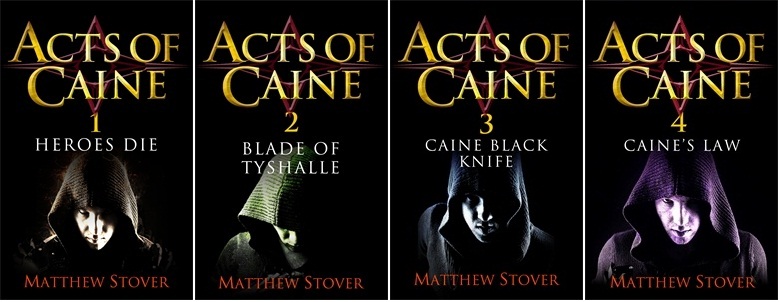
Orbit Books announced today that Matthew Stover’s Acts of Caine novels, beginning with Heroes Die, will be arriving, as eBooks only, in the UK for the first time. They say,

All four books in the Acts of Caine series – HEROES DIE, BLADE OF TYSHALLE, CAINE BLACK KNIFE and CAINE’S LAW – will be released digitally in the UK & ANZ on 27th May 2013.

This is good news for reading in the UK. I’ve not read the series (SHAME ON ME!), but they come highly recommended and the ebay prices for the earlier novels are, well.. outrageous. I should really sell my copies. Releases like this, eBook only, are a great way for out-of-print books to come back into circulation and find a new audience among those who previously couldn’t find (or afford) to read them. It’s also one of those fun times to think about the fact that publishers continue to try to convince the world that eBook publishing costs are similar to hardcopy publishing and distribution costs. The novels are already available as eBooks in the US and Canada.

But, can we please talk about these covers for a moment. I mean, I’m fairly certain that I’m being very specifically trolled by the art department at Orbit Books UK. Four hooded, bodiless men staring pensively menacingly at the reader, daring them to read what, underneath, must only be the most bro-tastic, grimdark, grimy, gritty, dudebro novels in the world? WTF. But, well, with a lineage like this, can I really expect any less?

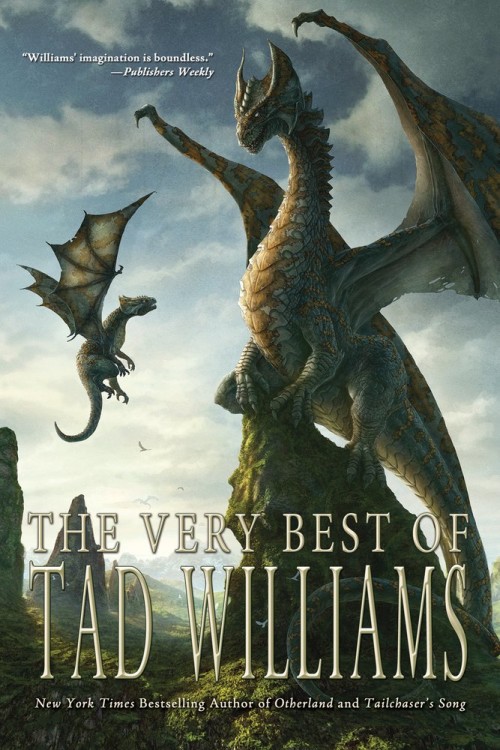
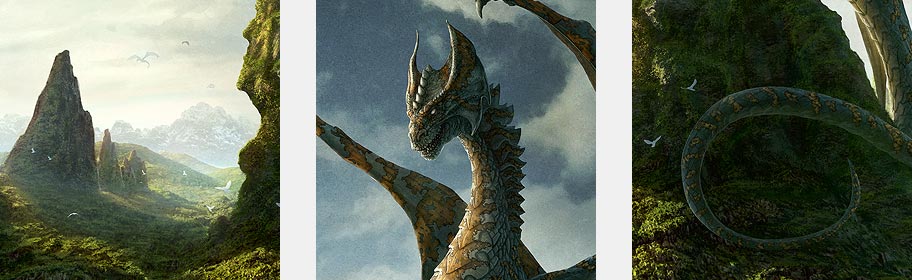
Cover Art for The Very Best of Tad Williams Art by Kerem Beyit

If you’re read this blog for any length of time, you’ll know that I’m something of an unabashed Tad Williams fanboy. He’s best known for his long (long, long, long) fiction, like Memory, Sorrow and Thorn or Otherland, multi-volume epics that would make most other authors weep at their length, but it’s often overlooked that some of his most finely crafted and powerful fiction is actually found among his shorter works. If this collection, coming from Tachyon, is, indeed, the ‘very best’ of his work, readers are in for a treat. The art on the cover is by Kerem Beyit, and is just lovely.