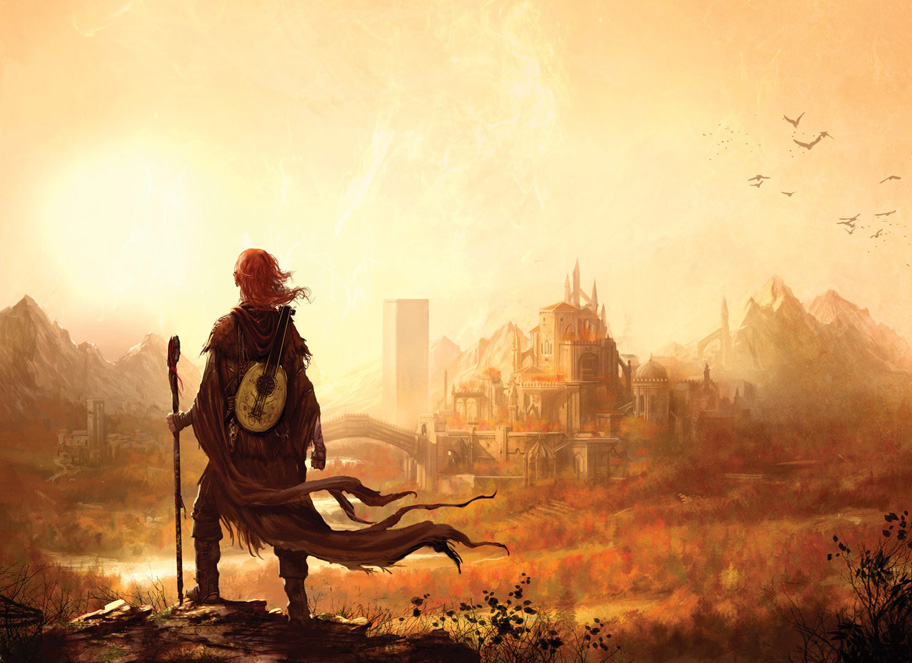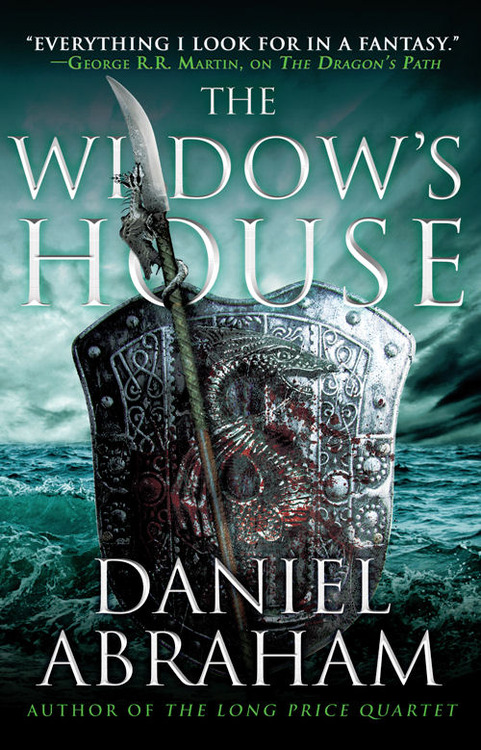
Sexy, and a huge step up from the weird cover for The Tyrant’s Law.
Sexy, and a huge step up from the weird cover for The Tyrant’s Law.
Readers, in many ways, want the same experience they’ve already had, only slightly different.
I was at a convention recently, and I was sitting on a panel with R.T. Kaelin, Timothy Zahn, and Pat Rothfuss. The subject of the panel was the ins and outs of writing the trilogy, but as you tend to do on panels, we started to wander toward other topics. Thus was born the subject of this post.
I was blabbering on about how you create arcs, not only for individual books but for an entire series (a trilogy or longer series), and I coughed up that old chestnut, that your characters need to change over the course of the story. Pat, being the contrarian he is, said something like, “I don’t really know that that’s true. Readers, in many ways, want the same experience they’ve already had, only slightly different.” I’m paraphrasing, of course, but the point is that he DISAGREED WITH ME! How DARE he! No, wait, that isn’t the point at all. Once I got over being flustered, I started to think of all the ways I could defend my point.
I ran out of those relatively quickly.
Then I started thinking about the ways I was wrong. Is it true? Should characters, in fact, not change much at all? Read More »
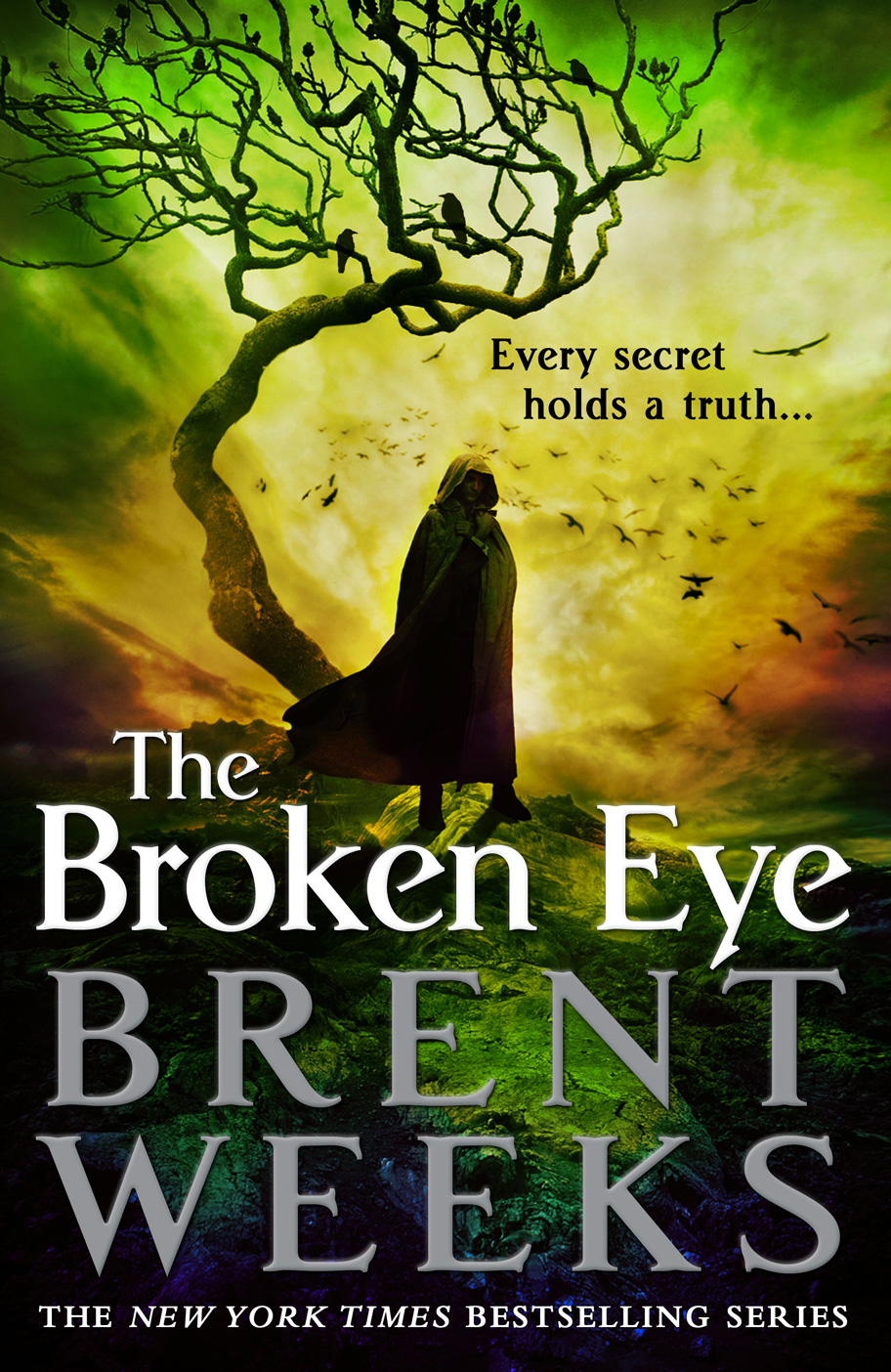
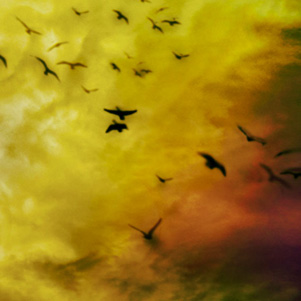
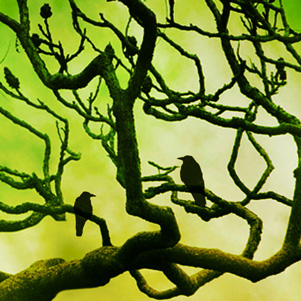
Some part of Weeks’ original (and screamingly fast) success is the result of the bold and unique (at the time, one must remember) covers for his original trilogy. Generally, a publisher is able to bring this sort of branding along with an author, but the hooded man (and the minimalist cover style) became so popular that Weeks brand was essentially stolen by the genre at large. Seriously, blame him for the hooded man, for he unleashed that demon on the world. Orbit has done a great job of evolving the look of the series to feel unique and impactfully branded, despite incorporating one of the most (nay, the most) overused tropes in Fantasy covers. The hooded man is prevalent, but the bold (and series-appropriate) splashes of colour, contrasted sharply against the black background, is striking and immediately recognizable as a Weeks book. Read More »
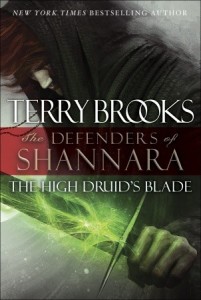 In recent years, Brooks has seen several revisions to the look and feel of his novels, even switching styles midway through a series because the first volume didn’t sell as well as expected (Armageddon’s Children to The Elves of Cintra). His most recent trilogy, The Dark Heritage of Shannara, used a bold, emblematic approach that I found quite appealing, so it’s interesting to see Del Rey shifting focus again to this new style. On first glance, I think it’s great all around. The typography and composition of the various cover elements is good, and the illustration is striking. It is sort of weird that the series title is larger than the book’s title and the two aren’t distinguished from one another, but that’s a small complaint. It’s funny, and somewhat telling, to see Terry Brooks all-of-a-sudden mimicing the look of Brent Weeks’ novels.
And I say all this despite the hooded man striking again. Even the big guys can’t get away from him. Who’s his agent, anyway?
Released alongside the cover is the first official blurb from the novel:
Paxon Leah never thought of the old family sword hanging above his living room hearth as anything other than an intriguing ornament—until his sister is kidnapped by a sorceror. Following the dark mage with nothing but this piece of steel to protect him, Paxon stumbles into a plot to remake the world . . . and accidentally unlocks the powers of the ancient blade.
In the most recent edition of ‘Ask Terry’ (a monthly feature where Brooks answers fan questions), Brooks revealed specifics about the plot that, when paired alongside this official description, paint a fairly clear image of the books’ plot:
The High Druid’s Blade is a stand-alone story, complete unto itself. But it is linked by a handful of common characters to two more stand-alones that will immediately follow. The principle link is complex and very dangerous sorcerer named Arcannen and a shared history of magic with Leahs and Ohmsfords. It will tie up a few loose ends from Witch Wraith, and it will further expand the growing conflict between magic and science. For the first time, the Druids and the Federation are mostly allies. The title to the book refers to a position created by the Ard Rhys of the Fourth Druid Order for a Druid protector.
In addition, Brooks’ official website reveals that The High Druid’s Blade, “features a Leah rather than an Ohmsford. It takes place about 100 years after the events of Witch Wraith. And it takes place largely in the Southland.”
Putting two-and-two together, it doesn’t take much to figure out that young Paxon is wielding the mythic Sword of Leah, imbued with the power of the druid’s, and likely fills the position referred to in Brooks’ answer. The book has been described to me as more character-focussed, with only two point-of-view characters (against Brooks more recent novels, most of which contained several POV characters), and less complex than usually expected.
I’m looking forward to this novel tremendously. After a few years of disappointment, Brooks had me grinning with his latest trilogy, which, if you ask me, is the best thing he’s written in a decade. Seriously, it’s that good.
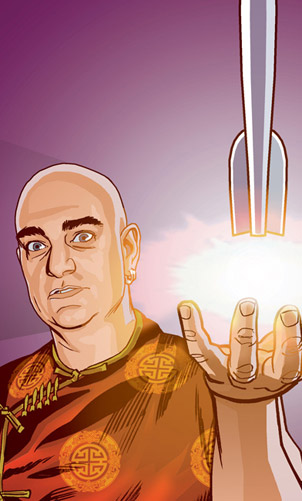 Crown Books is described by Publishers Weekly as having a ‘somewhat checkered history,’ but recently hired Phoebe Yeh hopes to establish its presence as a Young Adult imprint. The first round of acquired books has been announced, and among them is a name that should be well known to Science Fiction and Fantasy fans: Lou Anders.
Anders is best known as the Hugo Award-winning editorial director of Pyr Books, an imprint of Prometheus Books known for beautiful covers, and publishing some of the industries most exciting young authors. Anders has also won acclaim as a short fiction editor, having worked on a few high profile anthologies, such as Swords & Dark Magic and With Great Power.
Frostborn, the first volume in a Norse-inspired young adult fantsy series called Thrones and Bones, is described as ” involving a dead Viking sea captain, wyverns, and a 1,200-year-old dragon.” Anders further describes the plot of the novel as being about, “[a] brave frost giant’s daughter who befriends a cunning boy in a land inspired by Norse folklore as they become embroiled against warriors, wyverns, and the past.” It is Anders’ first novel.
Yeh discusses Anders’ novel and his jump from adult fiction (he’s written and published adult short fiction) to young adult:
Due in August 2014, the novel, Yeh explained, “is a very commercial fantasy adventure. The author is a terrific author and editor of adult science fiction, but hasn’t written for children before. He brings a brand new voice to children’s literature.”
Frostborn is due for release in North America on August 2014 and will be followed by two books, Frostforged and an unnamed sequel.