How could I not embrace science fiction? Literature that took me outside the here and now, to look back from somewhere else.
I’ve written science fiction for a while. Okay, since I was ten, which was the year before the first episode of Star Trek aired. I’m a child of the Cold War, of monster movies (Rhodan!), and of the seemingly limitless vistas of technology and space. My textbooks changed while I was in school, adding the discovery of DNA as well as the perils of pollution. In my university room — in everyone’s — hung the first photo of this planet taken from somewhere else.
How could I not embrace science fiction? Here was literature that spoke of what was happening in the world around me — and what I hoped might happen. (Or not!) Literature that took me outside the here and now, to look back from somewhere else. When I discovered my first volume in the school library (Andre Norton’s The Star Rangers), it began more than a love affair. As a budding scientist, science fictional thinking, replete with questions and speculations and curiosities and wonders, was like coming up for air. When I became a biologist, it became my most trusted skill set. I could frame questions. I would search out answers. Findings, the fun ones, should challenge preconception. Science fiction, to me, has been how I talk and dream science. It’s made me a better communicator. It’s given me a venue to share my passion. Read More »
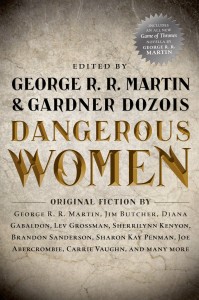 George R.R. Martin, author of A Song of Ice and Fire, recently spoke about his series and HBO’s television adaptation, Game of Thrones, at ConQuest 44. More specifically, Martin revealed details about his contribution to the upcoming companion book, The World of Ice and Fire, which was recently