Posts Tagged: Fantasy

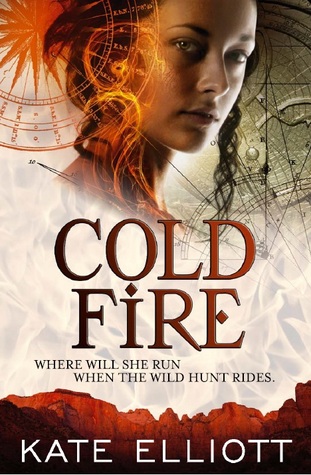
Cold Fire by Kate ElliottI wanted to write a post about diversity.

It could open something like this: In a diverse world, is fantasy and science fiction literature open to the largest possible view of the world and its cultures? If not, why not? What am I as writer, as reader, and as viewer doing to promote and highlight a more realistic view of the world’s diversity?

But such an opening already presupposes that I’m writing from the stance of a cultural hegemony centering around Euro/American settings and its structural, political, historical, and religious backdrops. The phrase “a more realistic view” already situates me within a US-centric sphere. It begs the question: More realistic than what?

The instant I say “diversity” what I mean, whether I want to or not, is that I’m writing to an audience in which the default mode lies in being male, white, and mostly straight. Or, to quote writer Aliette de Bodard, the [phrase] “‘importance of diversity’ boils down to ‘why white people benefit from seeing POCs in fiction.’”

POC, for those of you who may not know this acronym, in this instance stands for ‘people of color.’ I agree with Bodard, and I want to add that for the purposes of this post, I’m speaking of diversity in its largest sense, to include gender, gender identity, ethnicity, race, religion, nationality, language, class, and so on.

I’m weary of having this conversation over and over again. Read More »

Cover Art for The Blinding Knife by Brent Weeks

Gorgeous. Like, really gorgeous. And a step up even from the impressive early version that leaked a few weeks ago. I say this despite the hooded figure on the cover, which is saying something. It’ll look even more sharp if they end up using the foil-stamp technique that we saw on the paperback edition of The Black Prism. Good job to Lauren Panepinto, artists Shirley Green, Silas Manhood, and the Orbit Books crew.

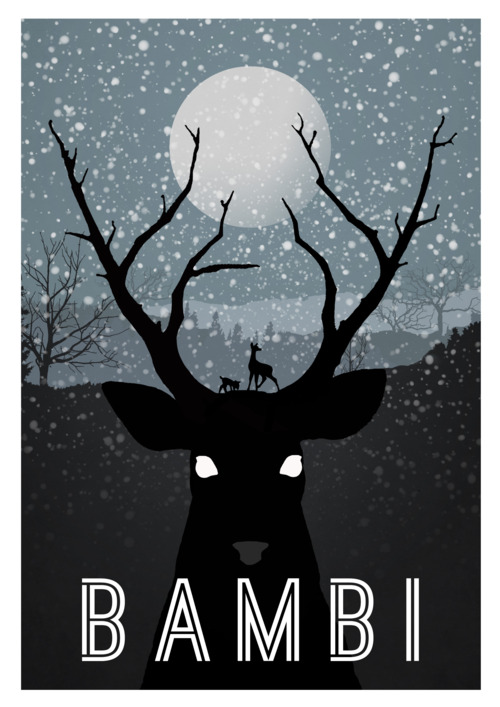
Bambi poster by Rowan Stock
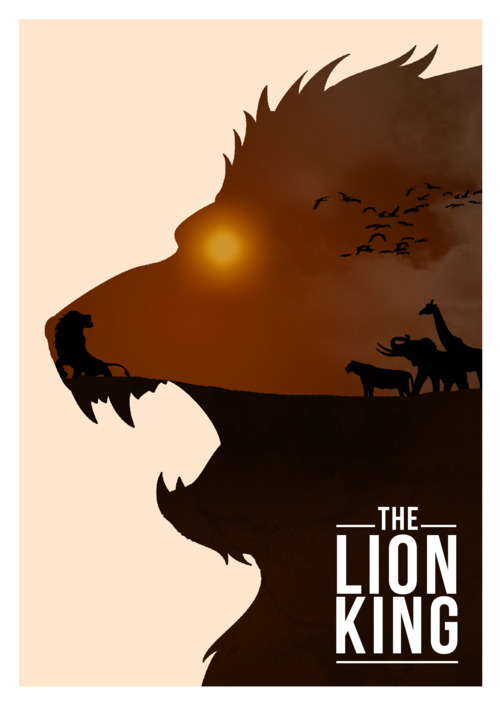
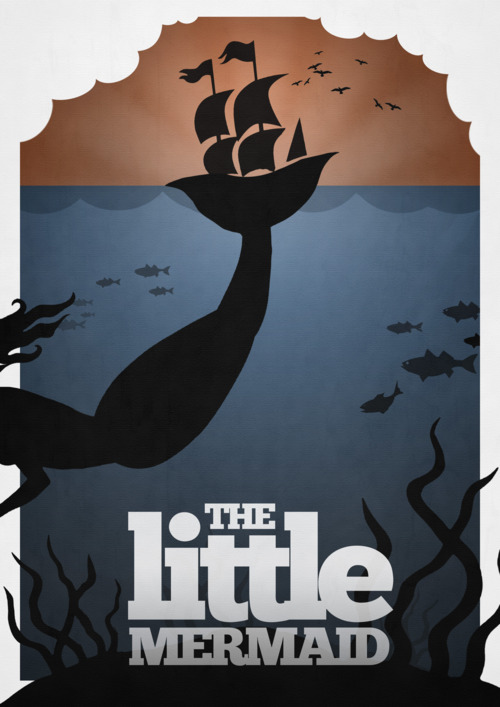
The Lion King poster by Rowan StockThe Little Mermaid poster by Rowan Stock

Presented without much comment, other than that that Bambi poster is suitably terrifying and beautiful. Terribly stylish, I’m already in love with artist Rowan Stocks-Moore’s work. More of his Disney posters can be found on his official portfolio. Stocks-Moore also has a Facebook page and a twitter account, if you’re interested in seeing more of his art and learning more about these wonderful creations.

The Troupe by Robert Jackson BennettThere was a moment the other day when I saw a famous author on twitter point out to everyone that they were not their characters. “If I was,” they said, “we’d all be in danger.” This was a joke, of course – the suggestion was that since a fair share of their characters were murderers or psychotics, then the author could not be them, as the author is not, to the best of anyone’s knowledge, a murderer or a psychotic.

This joke highlights one of the fun, fuzzy, gray areas in writing relationships – where do characters come from? How do writers make them up? Or do they make them up at all?

Characters aren’t precisely “made up,” I don’t think. When we think of fictional characters, we imagine them as just sort of popping into space – they do not exist, and then the writer thinks of them, and suddenly they’re there. Something from nothing, in essence.

But it’s not from nothing. People think writers work with no raw material at all, but they actually do – they work with themselves.

Imagine a writer as a huge, swirling, dripping ball of knowledge, memory, and experience. The ball is so big it’s impossible to hold in your hands, or even to get your arms around – after all, we’re talking about years and years of conscious and subconscious impressions, connotations, associations, all kinds of messy intangibles. And you can’t funnel that into any one character – the ball is just too big and unwieldy for anyone to make a copy of it.

So what does a writer do? They pull off a chunk, like a piece of clay. Then they take that chunk and massage it, and maybe add more chunks from the main ball if they think it’s necessary, and they sculpt it and shape it and adjust it until it has the semblance of a real person – the sculpted chunk’s got emotions, experience, agency, prejudices, goals, all that kind of fun crap.
Read More »

Kingdoms of Amalur Logo

38 Studios and Big Huge Games, creators and developers of Kingdoms of Amalur: Reckoning, are no more. After a well publicized run-in with the state of Rhode Island over a missed loan payment, it was announced today that all employees of both companies, 379 in total, have been laid off. No employees have received a pay cheque since April 30th.

Of Kingdoms of Amalur: Reckoning, the Governor of the state of Rhode Island, Rhode Island, Lincoln Chafee, said:

“The game failed,” he said. “The game failed. That was integral to the success of the company.”

He told reporters that experts told them it would have had to sell 3 million copies to break even. Schilling has said that the game sold about 1.2 million copies in its first 90 days.

“Companies fail over night,” Chafee said, in response to a question about the sudden closure.

Now, calling it a failure is something of a misnomer. To “break even” Kingdoms of Amalur: Reckoning had to sell 3 million units. It’s being speculated that where the failure lies isn’t so much with the performance of Reckoning, but with the studios projects and their reliance on its performance to fund the ongoing development of “Project Copernicus,” a long-in-the-making MMORPG. 1.2 million copies in a month-and-a-half is a decent number, even for a game as large as Kingdoms of Amalur: Reckoning. A more conservative estimate in sales and budget might have saved the studio (though this is, of course, speculation on my part.)
Read More »