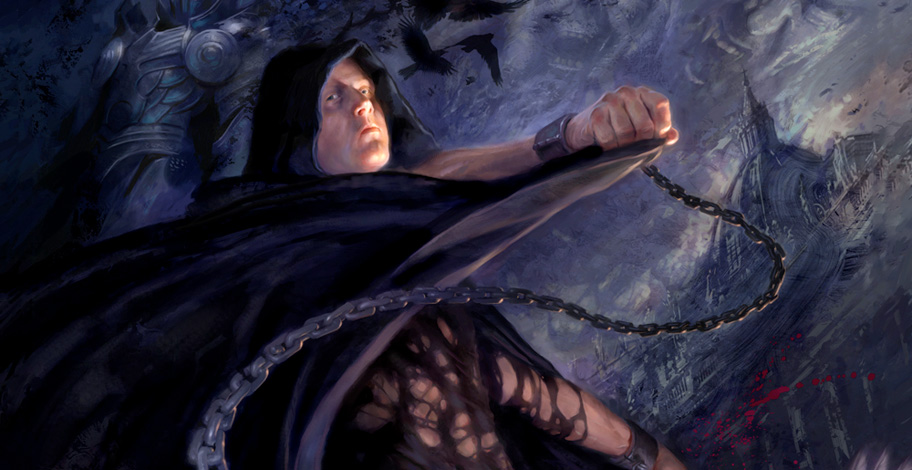
I’m proud to announce that the rights to publish Unfettered have sold to Orbit Books UK.
This is great news but not for the reasons you might think.
A little background. When I found out I had cancer, you might be astonished to find that my first thought was not survival. It was there but it was in the back of my mind, like an itch that can’t be scratched. No, my first thought was, “How the hell am I going to pay for treatment?” Due to a pre-existing condition, I could not find affordable health insurance. Then the inevitable happened. I was diagnosed with Stage 3B Hodgkin’s lymphoma and quickly accrued a massive medical debt.
Luckily, I’ve made some friends over the years. Unfettered exists because of those relationships and their good will, the anthology paying off my debt in its entirety as of two weeks ago. Read More »
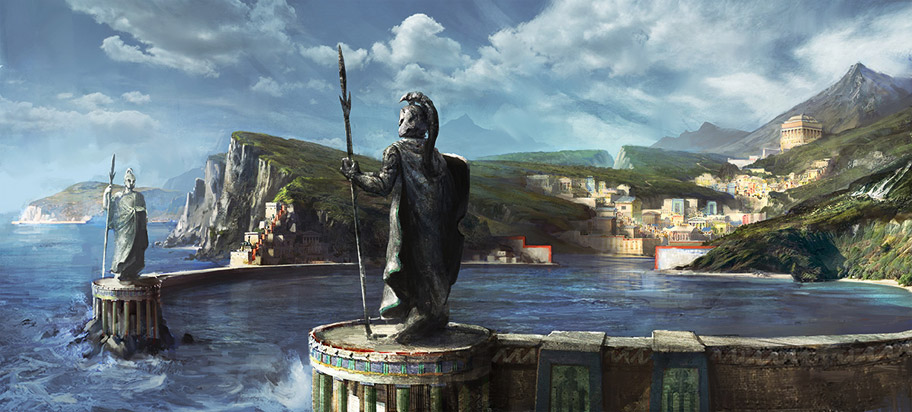
I’ve been a fan of crime fiction probably for as long as I’ve been a fan of fantasy books, even though I’ve not delved into the heritage of the genre as much. So for Drakenfeld – which is every bit as much a crime book as it is a fantasy novel – I wanted to use part of the crime genre’s heritage as a vehicle for the plot. I didn’t want to write hardboiled fiction, nor did I want to write a thriller – even though I enjoy both. Also, I wasn’t writing the type of urban magical crime, so I couldn’t rely on those things to carry the narrative. So I decided to make it not just a whodunnit, but a howdunnit by using one of the crime genre’s great formats: the locked-room mystery. Or rather, in my case, a locked-temple mystery. The set-up is a lot of fun – because it’s not just about an unreliable narrator, it’s about a manipulative author. Read More »
I’ve recently been thinking of science fiction as literature of the moment, an examination of how we look at the world and all of the many changes that pass us by. Given the state of the world, military science fiction has long struck me as a way to make sense of the global impact of the ‘war on terror’ and other related actions across the world.
Rugged individualism and a sense the edge of the world is an opportunity, no matter who’s already there.
Predominantly, Military Science Fiction as a distinct subgenre comes out of works published in the 1950s by American science fiction authors, namely Robert Heinlein and Gordon R. Dickson, whose respective books Starship Troopers and Dorsai!, have spawned an entire industry of imitators. Steeped in the fears of the Cold War, these novels were written at a time when global annihilation appeared imminent, held back only by the raw power held by the United States Armed Forces and the inherent greatness of the American way. This lines up strongly with other trends one sees in American strains of Science Fiction: rugged individualism and a sense that the edge of the world is an opportunity, no matter who’s already there.
Science fiction tends to carry along its baggage for a long time. While there’s been an incredible evolution of outstanding stories, the genre’s frequently saddled with a pulp characterization; the incredible changes from the so-called Golden Age to the New Wave and beyond simply doesn’t register. Military SF, in many ways, has a similar history: it remains, in many people’s minds, a relic of the 1950s, when the Cold War raged between the politicians and armies of the US and USSR. In retrospect, it’s appears to be a simpler conflict than what we face today. Read More »
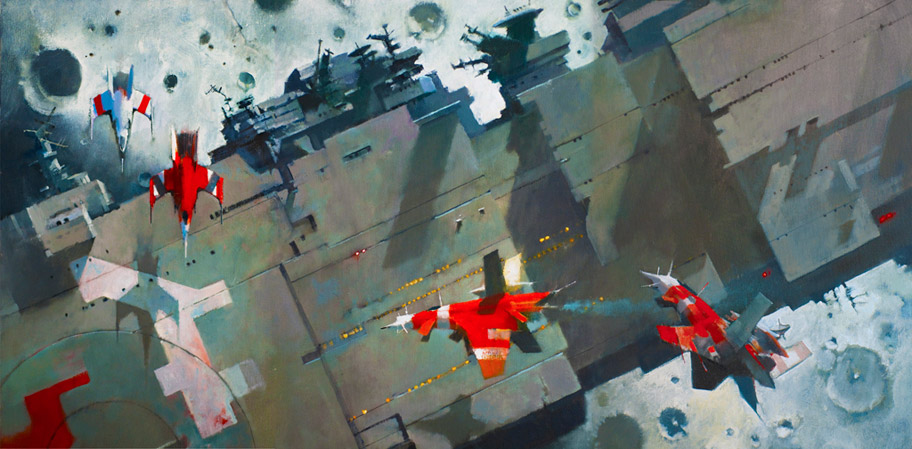
Ancillary Justice, the debut novel from Ann Leckie, first caught my attention thanks to its gorgeous John Harris cover art. It was hard to escape, and, frankly, antithetical to the idea that one shouldn’t judge a book by its cover. With a cover this good, it’s hard not to be immediately interested. Skip forward a few weeks, and Orbit Books, publisher of Ancillary Justice, noticed a trend on twitter: everybody loves Leckie’s book. And, by golly, they’re right.
So, naturally, I had to see what all the fuss was about, and picked up Ancillary Justice myself. They were right, they were so, so right. I’ll withhold my full opinion for a review, but Ancillary Justice is a bold, mind-twistingly adventurous SF tale with big ideas and so much confidence that it’s hard to believe it’s Leckie’s first novel. Come award season, I wouldn’t be surprised to see Leckie and Ancillary Justice all over the ballots. It’s that good.
So, I’ve gathered together some of the early reviews that nail exactly why I’m so excited about this book (and why I think you should be, too. Orbit’s had huge success with James S.A. Corey’s Expanse series, and it looks like they’re about to add another heavyweight to the mix with Leckie. It’s a damn good time to be an SF fan. Read More »
So, the Hugo awards have come and gone for 2013. People have blogged widely about it, and all that need saying has already been said (see here for my thoughts on this year’s ‘Best Novel’ winner, Redshirts by John Scalzi, for instance). So, instead of recapping the conversation (which, to be frank, I’m a little behind the curveball in catching up on), I thought it would be more interesting to look ahead at next year’s awards, and start the conversation a little early. This way, I can hopefully convince you to check out some of the year’s best works while there’s still time to enjoy and nominate it.
I’ll work through several of the categories, those which I have any sort of opinion of, and discuss the works that I think are most impactful and important, and will, as of right now, appear on my ballot (until they’re replaced by something even more awesome between now and the time nominations are due.) And then, in the ‘Also/maybe/are these good?’ sections, I’ll list off a few choices that I haven’t read/experienced yet, but feel that they deserve to be in the conversation and will likely be considered when I do get around to them.
I’d also encourage you to join me in the comments. Tell me why I’m wrong. Tell me what you’ve read this year that resonated with you. Because, what’s the point of award season if not to encourage people to discover great new books, films, and every other story of art? Read More »