Posts Categorized: Feature Article

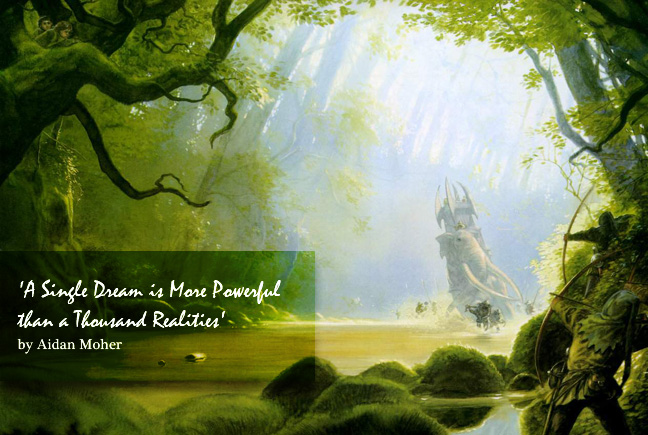
On the Power of Fantasy Fiction: ‘A Single Dream is More Powerful than a Thousand Realities’

Art by John Howe

One evening, I had the chance to sit down with Steven Erikson and several other people over a glass of wine and dinner. It was a wonderful evening, full of laughs, camaraderie and discussion. Despite what you might think, me being a book blogger and Steve being a popular author, only a small portion of the evening was spent discussing fiction, books or writing. However, one short conversation, not with Mr. Erikson but with one of his friends, led me to think a lot about why I read, and when I read.

The conversation began with a question, “Do you read before bed?”

Some of us answered no, others, including myself, said, “Yes, I can’t fall asleep otherwise.” Those who answered “no,” had some interesting reasons, though they escape me now, but one of the other diners, a woman whose name I’m sorry to say I can’t remember, began talking about why she reads before bed. She made an observation that has stuck with me since. You see, she reads before bed because it allows her to put aside the events of her day, the events that might be coming the next day, and immerse herself in the emotions, problems and triumphs of the people living in the fiction she holds in her hands. Instead of falling asleep thinking about what needs doing tomorrow, or how her exam went poorly, she falls asleep wrapped in thoughts of these characters, wandering through these other landscapes. Read More »
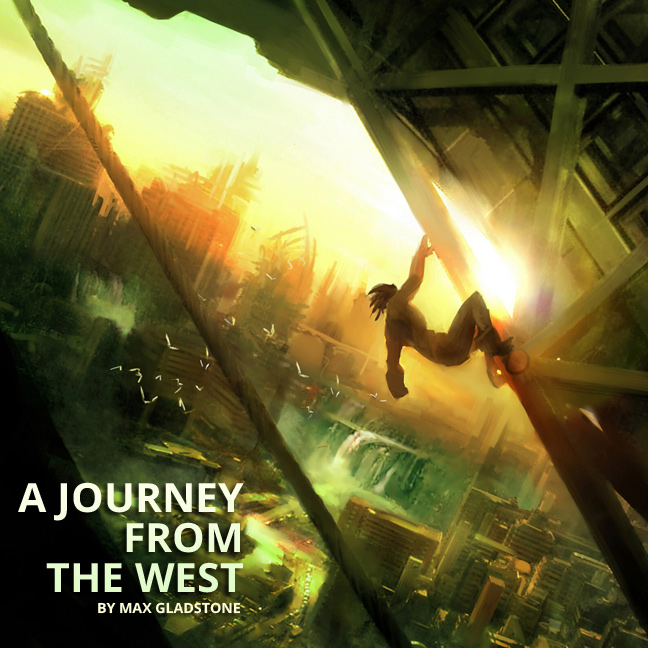
A Journey From the West by Max Gladstone

Fantasy should be the broadest genre in existence. Fantasy writers get to create and transform to our hearts’ content. Not even the laws of thermodynamics bind us. Our imaginations are our only limits.

The problem is, the imagination’s limits are often harder than physical law. Writers are formed by experience, and interpret that experience into story using instincts developed reading, and hearing, stories, from early childhood. So, when a lot of Western folks turn to writing fantasy, Arthurian and Greek and Norse myths are the seeds they use to people and structure their imaginative worlds.

Which is fine! Each generation needs to remake the myths received from the previous generation. But sometimes writers and readers feel the limits of their traditions, and wonder, what else is out there, other than kings and earls?

In this three-part series I’m going to be writing about stories I think all fantasy writers and fans should know, other than the standard Celtic, Greek, and Norse sources. If you know these stories already, then good! I hope there’ll be something cool for you here anyway. If these stories are new to you, maybe these few posts will expose you to some amazing worlds. Read More »

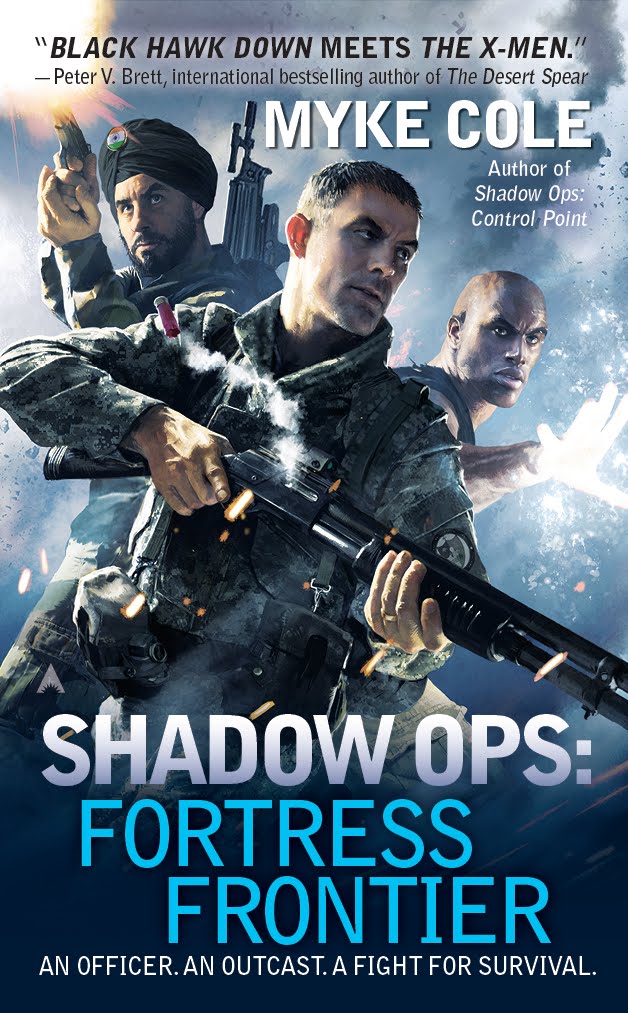
Shadow Ops: Fortress Frontier by Myke Cole“Urban Fantasy” is a hot term these days. You hear it used to describe everything from Charlaine Harris’ Sookie Stackhouse books to Jim Butcher’s Dresden Files. It encompasses the work of authors from Patricia Briggs to Kim Harrison, from Ilona Andrews to Kevin Hearne. With such a diverse range of talent, the definition quickly loses meaning. There isn’t a whole lot that’s urban about the sleepy, small town of Bon Temps.

But that’s okay. Because urban fantasy has never been about urban settings. It’s about *contemporary* settings. It does a very simple thing: it takes the modern world, the one we live in every day, and ask the question, “What would this be like if magic were real?”

If the genre’s popularity is any indicator, that question has traction. Fantasy has, for much of its lifespan, been dominated by ancient and medieval settings. Many of the most enduring works in the genre, from Tolkien to Brooks to Feist, are set in pre-gunpowder, pre-industrial revolution worlds. But readers don’t ride to work on horses, hunt deer for dinner, or carry a sword to fend off the occasional Orc raid. Contemporary fantasy’s popularity suggests that many readers like to dream about the impossible right in their own backyard.

And here’s where you can run into trouble writing contemporary stories. The same thing that makes a contemporary setting resonate so strongly with the reader may also piss them off: Ownership. Read More »

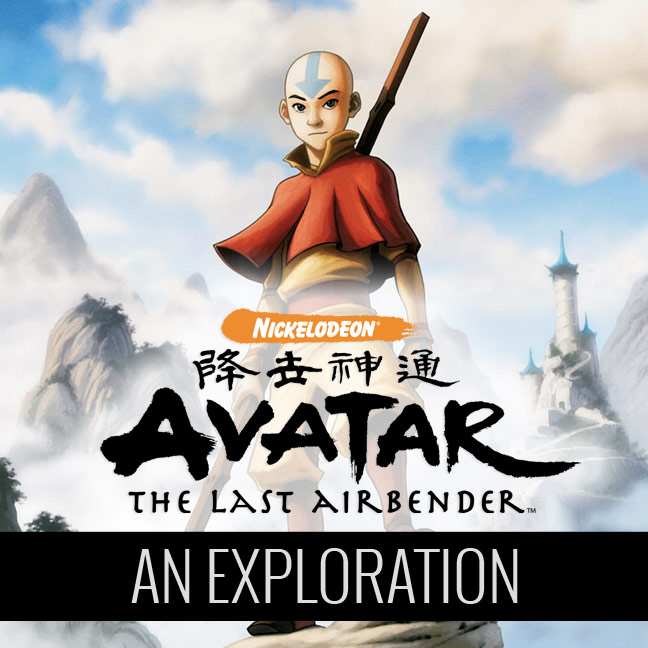
Exploring Avatar: The Last Airbender
Pop Culture is full of phenomena. These phenomena capture the imagination of millions, and dominate talk around water coolers, Internet forums, Twitter and pub tables. Many factors lead to the formulation of such zeitgeists, such as focussed marketing, fresh storytelling that taps into flash-in-the-pan societal fears and interests, a bold take on traditional concepts, or, well, because they’re just damn easy and accessible. Such phenomena, by their very nature, come and go. They sweep through fans like a fever, and burn out just as quickly.

Lost was a cultural phenomenon… until the second and third seasons when the show-runners jumped the trails and lost control of their script. As I write this, “Gangnam Style” is sweeping America, Europe and the rest of the world, yet Psy, the Korean musician behind the hit, will likely never release another song which significantly impacts Western pop music.

There are phenomena like Pokemon: a weird, complex Japanese videogame and television series that captured the attention of children fifteen years ago and still hasn’t let go. Each new iteration of the video game series sells millions of copies, and the animated series is still running today. Most famously, there is also J.K. Rowling’s Harry Potter. When it first rose to wide prominence at the turn of this century, it was easy to dismiss Rowling’s work as a fad. But then it kept on going, and going, and going. Harry Potter and his friends Hermione Granger and Ron Weasley are now literary staples on the same level as Bilbo Baggins and the Pevensies.

Read More »

I recently read The Red Knight by Miles Cameron and it provoked a mixed reaction in me. Without getting too long-winded, I absolutely loved some bits – for example, I thought some of the action scenes in particular were far better than even the biggest names in the genre offer up – but had significant issues with other parts. Of those, one that really struck me was the use of Christianity as the significant religion and while I stand by my opinions on it, at the same time I felt a certain inherent absurdity in my own argument.

Put simply, in a world with monsters and magic (whether or not it was sortof England) I found it looked rather ridiculous to use Christianity as a religious background. Now I might be an atheist, but even I have to admit Christianity is at the very least, no less illogical and baseless than a religion Cameron might have made up, yet I found its place in the book far less plausible.

Now logic doesn’t play a large part in religion. Whether you’re talking Norse myths where (as memory serves) a god’s born of basically nothingness and the first thing he sees is a cow, or Japanese where a god creates the land by stirring the sea with a spear (presumably creating all raw materials needed for spears let alone reasons to need a spear such as hunting anything but spontaneously-created cows), doing the 5-year-old thing of asking where the cow came from doesn’t serve much good. Read More »