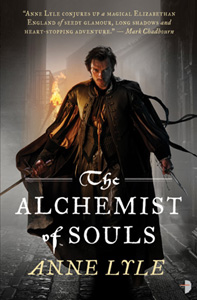
Before I became re-enamored with fantasy, I was an avid reader of historical fiction (or as I like to call it — fantasy for people who don’t want to be seen reading fantasy). I read Shogun (Clavell), Pride of Carthage (Durham), Musashi (Yoshikawa), Gates of Fire (Pressfield), and their ilk. It’s exciting to me now when I come across a fantasy concoction that blends that historical sensibility with the speculative. Anne Lyle’s debut novel is just that kind of brew. Set in historical Elizabethan England, Alchemist of Souls of Souls shows what might have happened if the Virgin Queen had children, secured her rule, and made an alliance with a heretofore undiscovered alien race from the New World.
Lyle’s protagonist is Mal Catlyn, a down on his luck swordsman with a checkered past and an unfortunate family connection to Catholicism. The skraylings, a new race from the New World, have been allied with England for a generation, but an ambassador had yet to treat with the Queen. With word of the first skrayling delegation, Mal is hand picked, rather unexpectedly, to serve as bodyguard during the controversial visit. Assassination attempts are the least of his concern as layers of espionage and political jockeying begin to pull him in unexpected directions.
Along with the intrigue, Lyle sets the stage with a tournament of stage performances in honor of the ambassador’s visit. Put on by the three most esteemed theater troops in London, the tournament becomes a set piece for the larger story. The theater sections are told mostly through the eyes of Coby, a young woman hiding behind men’s clothing, and connects to Mal’s thread through his friend Ned, a scribe with a penchant for theater men. Between the three of them they’ll be asked to prevent a conspiracy at the core of the monarchy. Read More »
 So, Hugo Award nominations. Every year, it seems to be both an invitation to bellyaching among those who want the award to take itself more seriously, to again become a fair and trustworthy snapshot of the genre’s best year-in-and-year-out, and an everybody-hug-circlejerk-ignore-the-trolls-you-deserve-this-i-voted-for-you twitter fun factory between nominees. Fun times, especially for frustrated Internet pundits like myself. This year’s ballot was particularly blah, though. I won’t go through each category because, well… I don’t have an opinion on a lot of it. But there are a few spots I’d like to explore.
My first thought on the list of nominations for the ‘Best Novel’ was a tepid lack of inspiration. The inclusion of Ahmed’s Throne of the Crescent Moon (REVIEW) is the lone bright spot, and also the only novel from my list of nominations to appear on the final ballot. Redshirts (REVIEW) is entertaining, but no more worthy of a Hugo than a fourth-or-fifth episode of Dr. Who appear in the ‘Best Dramatic Presentation (Short Form)’ category; I’m not surprised to see it there, but I am disappointed that another of Scalzi’s wash, rinse, repeat efforts was rewarded with a nomination. The novels from Bujold and Grant are included, for all intents and purposes, because of the name on their cover, rather than the text inside. I’m sure they’re both fine novels, but neither made waves in fandom or genre discussion this year. Kim Stanley Robinson is another Hugo darling, and 2312 was at least a significant release in Science Fiction, which, alongside David Brin’s Existence (a novel that some will should have been included instead of Robinson’s), reopened a style of hard Science Fiction that has a long legacy in the genre but little recent activity. Read More »
“Poker is a man’s game,” Josh’s daddy used to say, “because it isn’t fair.”
–Galveston by Sean Stewart
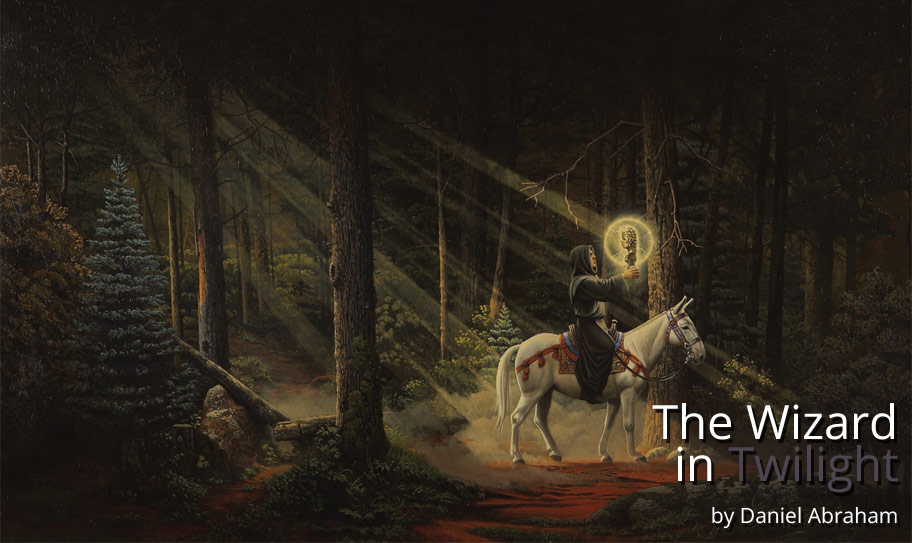
Back in college I was in a roleplaying game set in medieval Europe, only with wizards. It was called Ars Magica. And one of the things that made it interesting was that, in that world, wizards didn’t die of old age. Either they died by violence, or else they just went . . . elsewhere. They fell so deeply into the magic that they stopped being part of the world that you or I experience. That process of moving on was called the wizard’s twilight.
About the same time I was sitting around a friend’s living room pretending to be a Latin-speaking wizard somewhere in 1300s Scotland, a guy named Sean Stewart won the Aurora and Arthur Ellis awards for a book called Passion Play. A couple years after that, he got the Aurora again for a book called Nobody’s Son. And the year after that, the New York Times named his novel Resurrection Man the best science fiction book of the year. And he kept getting better. A couple books later, Mockingbird was a finalist for the World Fantasy Award along with being a New York Times notable book of the year. In 2001, his novel Galveston shared the World Fantasy Award with Tim Powers’ novel Declare, beating out Guy Gavriel Kay, Paula Volsky, Phillip Pullman and China Mieville.
And after that, he couldn’t sell his next book. Read More »
Editor’s Note — In late March, I published an essay by Bradley P. Beaulieu about the changing landscape of publishing and why he decided to leave his publisher, Night Shade Books, and relaunch his Epic Fantasy trilogy, The Lays of Anuskaya as a self-published series of eBooks. Seeing this, Michael J. Sullivan, author of The Riyira Chronicles, one of Fantasy’s early self-published success stories, wrote to me with his own valuable take on the world of ‘hybrid publishing.’ You can find more information about Sullivan’s upcoming novel, Hollow World, on the official Kickstarter page.
I first met Brad Beaulieu at ConFusion this January. We were having lunch and after telling me about what was going on at Night Shade we tossed around the various options. I encouraged him to retrieve his rights, do another Kickstarter, and take control of what I saw as a valuable franchise. He was probably already leaning that way. Hopefully I gave him the last nudge to take the leap. I will be taking the hybrid route myself with one of my upcoming novels, Hollow World, and I couldn’t be more thrilled with his decision, and I think it will work out very well for him.
I’m a huge supporter of the hybrid model. Traditional publishing opened doors for me that I couldn’t get when I was self-published. Now that my books are in libraries and bookstore, my audience broadened. I received more foreign deals, and the advances on those were probably larger than they would have been without Orbit. There was even book club and audio versions produced, which paved the way so to Theft of Swords being named a finalist for an Audie (the audio book equivalent of the Grammy). These are all good things, but there are also aspects that I miss from my self-publishing days. Read More »
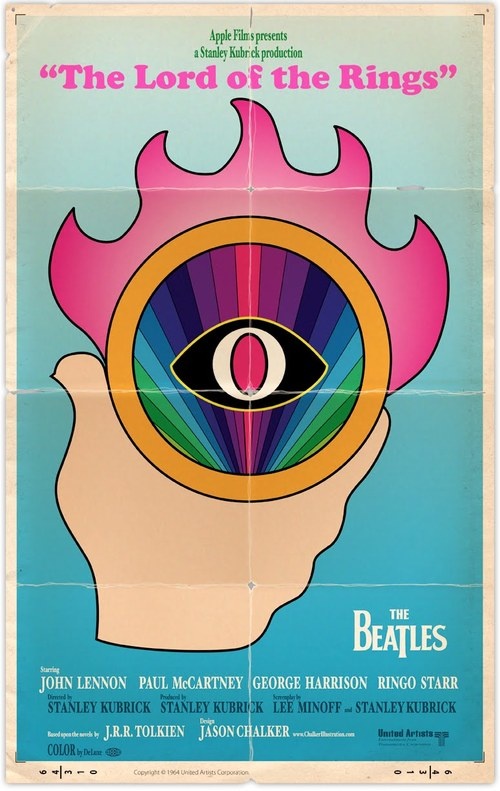
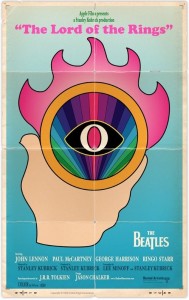 According to First Things, J.R.R. Tolkien once nixed a film adaptation of his classic novel, Lord of the Rings, by the Beatles. Better yet, the film was to be directed by Stanley Kubrick.
Via Patheos, First Things lays out the original plans:
Once upon a time, the Fab Four—having slain the pop charts—decided to set their sights on the Dark Lord Sauron by making a Lord of the Rings feature, starring themselves. One man dared stand in their way: J.R.R. Tolkien.
According to Peter Jackson, who knows a little something about making Lord of the Rings movies, John Lennon was the Beatle most keen on LOTR back in the ’60s—and he wanted to play Gollum, while Paul McCartney would play Frodo, Ringo Starr would take on Sam and George Harrison would beard it up for Gandalf. And he approached a pre-2001 Stanley Kubrick to direct.
More details came from a conversation between Paul McCartney and Peter Jackson, who successfully managed to coerce the Tolkien estate into giving up the film rights to the trilogy (something that Christopher Tolkien still hasn’t lived down):
McCartney told Jackson about the failed scheme when the two bumped into each other at the Academy Awards: “It was something John was driving and J.R.R. Tolkien still had the film rights at that stage but he didn’t like the idea of the Beatles doing it. So he killed it,” Jackson told the Wellington Evening Post in 2002.
“There probably would’ve been some good songs coming off the album,” said Jackson.
That Tolkien didn’t care for the Beatles will come as no surprise to fans of either one, but Tolkien’s letters give us a hint that his opposition to the Beatles may have had a more personal dimension.
I think the real question, though, is whether the Beatles/Kubrick film would have managed to feel even more like an acid trip than the terribly awesome (or awesomely terrible) Ralph Bakshi adaptation.