Posts Tagged: Fantasy

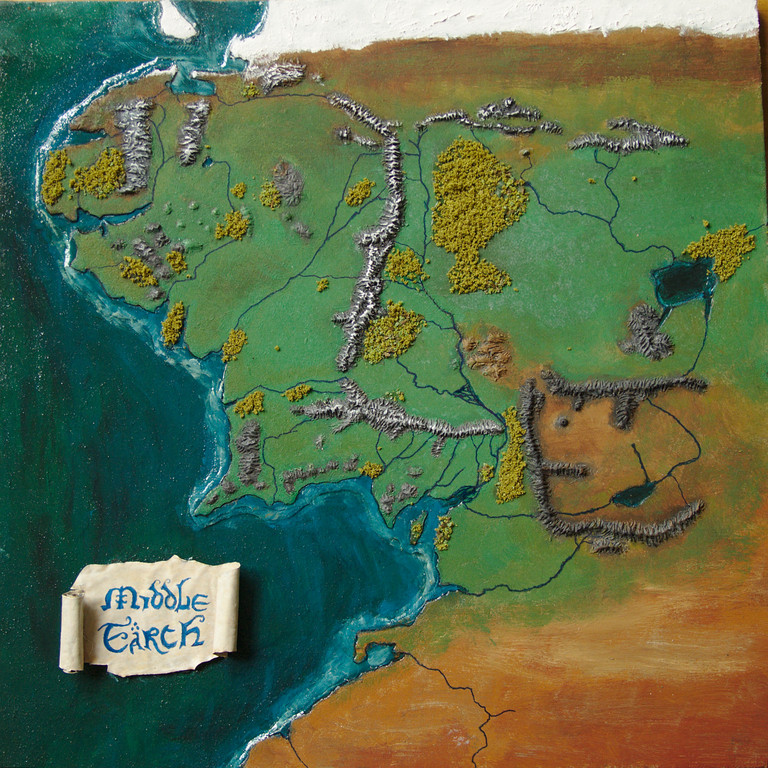
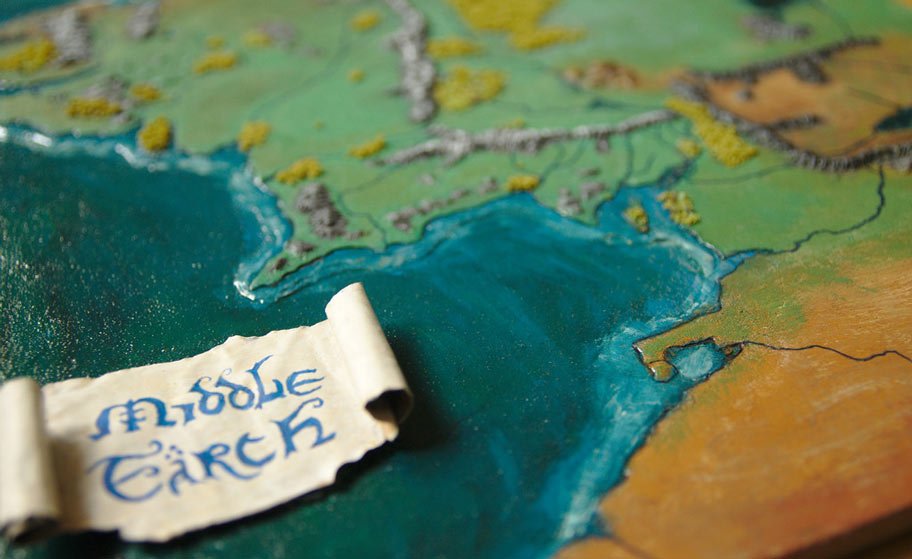
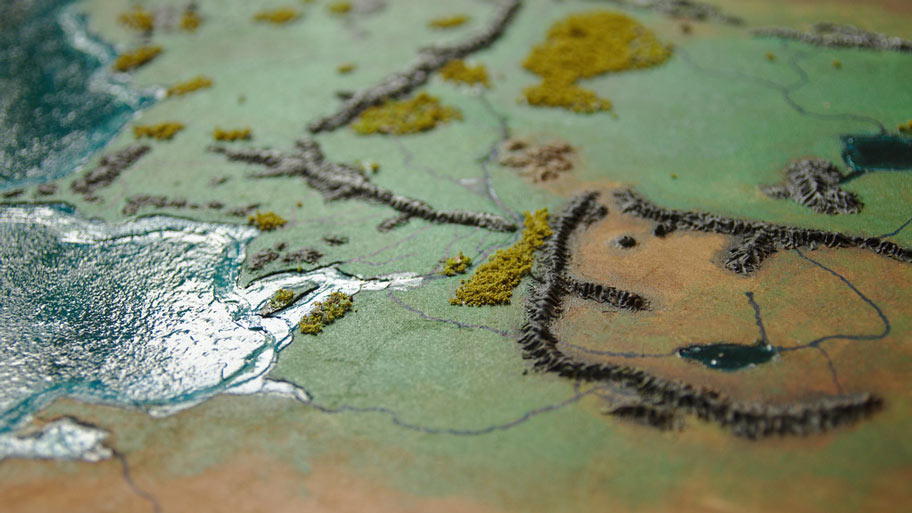
middle-earth2middle-earth1middle-earth3

I happened across these maps a couple of weeks ago on the Fantasy sub-Reddit (enter at your own risk), and they haven’t left my mind. So, like any thought that won’t escape, I felt it’d be best to set it free so I can move on.These maps are hand-made, and gorgeously textured. The map-fetishist in me (and, frankly, the ol’ Warhammer fan) is madly in love. It’s been discussed to death, but there’s something magically tangible about a good map, one on paper, or leather and hung on a wall, and I’d love to see how these models appear in person. Read More »

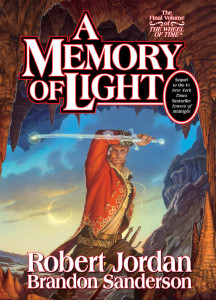
A Memory of Light by Robert Jordan

Publisher: Tor Books - Pages: 912 - Buy: Book/eBook
A Memory of Light by Robert Jordan and Brandon Sanderson

After nearly twenty three years and countless millions of words vomited out upon thousands of pages, Robert Jordan’s The Wheel of Time series finally concludes with its fourteenth volume, A Memory of Light. It has been a memorable series for those who’ve read, it albeit for some such as myself, it has become more an exercise in patience and restraint, waiting to see if the payoff justifies to any extent the laborious parsing of repetitive descriptions, redundant sentences, clothing and furniture porn, hackneyed villain motivations, etc. My own opinion of the series has fluctuated between a diversion during my last semester of grad school in the Fall of 1997 (it was a change of pace from reading Hitler’s memoirs and speeches for my grad seminar/research) toward it being a repetitive, poorly structured (and written) clunker of a novel/series. I wrote a series of posts on re-reading the Jordan-penned books, most of them for the first time since the release of the ninth book back in November 2000, and the re-reads did little to improve my deepening dislike for the series. Yet the first semi-posthumous release, co-written by Brandon Sanderson, I thought at first was a marked improvement. That was before I began to understand while reading the second co-written volume, Towers of Midnight, that the planned three-volume conclusion to the Wheel of Time series was terribly flawed in terms of narrative structure, characterization development, and prose. Therefore, it was with some trepidation that I ordered A Memory of Light and read it. Unfortunately, it is one of the worst-written books in a series renowned for its mediocre, bloated prose. Read More »

The Tyrant's Law by Daniel Abraham

Publisher: Orbit Books - Pages: 528 - Buy: Book/eBook
The Tyrant's Law by Daniel Abraham

“Come close, my friends, and know that in our tale as in the world, anything may happen.”
pp. 111

Anything may happen.” This phrase, more than any other, exposes the heart of speculative fiction. Removed from the accepted and understood restrictions enforced by a real world setting, speculative fiction is allowed to explore themes, ideas and conflicts that might not naturally intersect in the more restrictive boundaries of traditional literature. This speculative playground is even more powerful when it is used to create a world, and fill it with conflicts and themes, that raise questions of issues that readers ask themselves about our own world. Few in-progress epic fantasy series do this as well as Daniel Abraham’s The Dagger and the Coin, further proved by its third volume, The Tyrant’s Law. Read More »

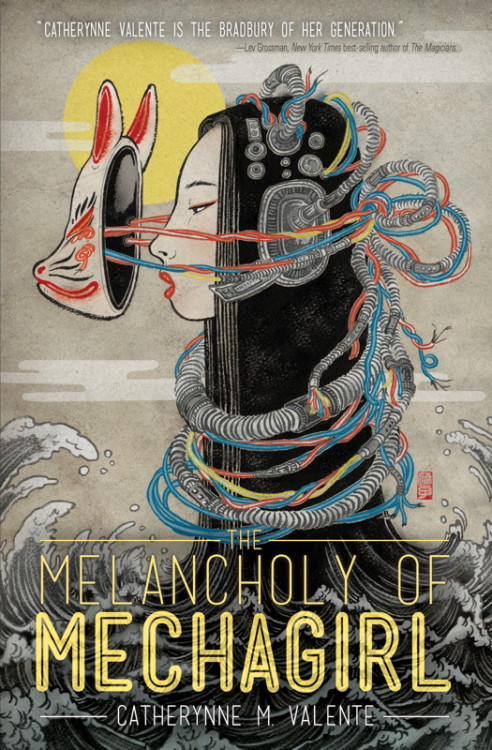
The Melancholy of Mechagirl features fantasy-inspired short fiction by Valente about Japan, including the Hugo Award-nominated novella Silently and Very Fast and “Thirteen Ways of Looking at Space/Time,’ both of which were originally published in Clarkesworld Magazine. She described ‘The Melancholy of Mechagirl’ as ‘a philosophical confessional poem about anime and giant robots.’ Fans of The Melancholy of Haruhi Suzumiya, a popular anime, will recognize the name. You can read it in Issue 26 of Mythic Delirium. Valente lived in Japan for a number of years, and the people and stories of the country are deeply rooted in much of her fiction. She discussed her relationship with Japanese culture in a 2006 interview with Bookslut:

How did living in Japan affect your writing and your life?

Oh, that’s a big question! I think Yume no Hon is probably one long answer to it, but I’ll give it a shot here.

Japan was very hard for me — my husband, a naval officer, was gone for 19 out of the 25 months we lived there. I was alone in an extremely alien culture, unable to speak the language, without friends or family. I lived alone with my dog and wrote. It was as close to a garret as you can get in the 21st century. I had never experienced loneliness like that before, and I’ll probably be processing it for awhile yet.

However, I came to interact with Japanese culture on my own terms, relatively stripped of the assumptions fostered stateside by anime and other memetic exports. I found my own way to loving it, and though it is a hard-won love, I won’t lose it soon. I lived like a hermit for a year and a half — if you don’t come out of that with some kind of zen, you go crazy.

So instead I wrote. And a lot of what I wrote in that time involves Japanese culture, because that was what I lived with every day. I wrote a novel about a lonely woman slowly losing her mind — not a very subtle allegory, I’ll admit — and another about the Shinto creation myth, and quite a lot of poetry. As a white woman living there, my relationship to Shinto was divided at best — I felt very strongly about it, and traveled all over to visit shrines, yet I always felt like an outsider, which is perhaps appropriate. The gaze of the outsider is part of all of my work, I think.

Part of me will probably always be in Japan, but it will be awhile before I write another Japanese novel. There are always new worlds to devour.

She speaks further about Japan, and particularly the Shinto religion, in an interview with Clarkesworld:

The mythology of Japan will always be with me—the Shinto faith, the syncretic culture, the jungle right up close to the urban sprawl. Some part of me will always be there, always looking for fox-statues in the forest, watching the jellyfish suck at the sides of boats in the harbor. I will never stop being fascinated by it, and processing what it means in relation to me and my work and my internal landscape. It was a hermitage, and I learned all the things good hermits are supposed to learn: how to be alone, how to quiet demons, how to sweep the halls and keep the wolves at the door.

Japanese history and mythology is rife with many stories and themes that resonate through the Fantasy genre. It’s wonderful to see authors like Valente, and collections like this in particular, celebrate a facet of myth and Fantasy that isn’t so beaten to death as the Euro-American stuff, particularly faux-Medieval England. Since learning as a kid that a lot of videogames came from Japan, I’ve been mildly obsessed ever since. This is right up my alley.

And, good golly, that cover art. I said that Joey Hi-Fi should take home an Inky Tentacle for his cover for The Lowest Heaven. He’s not eligible, so, damnit, let’s give the award to The Melancholy of Mechagirl, shall we? Artist Yuko Shimizu certainly deserves some applause for her body of work. Absolutely stunning stuff.

The Melancholy of Mechagirl will be released on July 16th, 2013 by VIZ Media LLC. It is currently available for preorder.
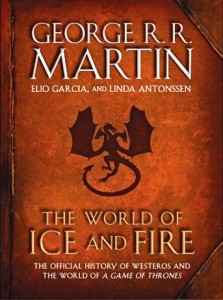
The World of Ice and Fire by George R.R. MartinErr… winter isn’t coming? At least for another year. That’s the appropriate joke, right?

It’s been reported by Elio Garcia, co-author of the book, that The World of Ice and Fire, a companion book/encyclopedia about George R.R. Martin’s A Song of Ice and Fire, slated for a Fall 2013 release, has been delayed by a year. Garcia says,

Yes, [The World of Ice and Fire] won’t be out this year… but that’s because it’s becoming rather cooler. More pages, more new history and details, more art. Like the story of the fall of the Tarbecks and the Reynes, the surprising person from whom the Lannisters are descended, more history of the Vale and the arrival of the Andals, and a good deal more. We’re working quick as we can, but there’s also more art to commission and that means it’d be safest to aim for next year.

In the past, these volumes, related to Robert Jordan’s Wheel of Time and Terry Brooks’Shannara series, have been released to some criticism, much directed toward the poor art included inside. In addition, these books were published midway through the series and feature large gaps and lack coverage of the later volumes, which is a shame. This will, of course, be the same here for A Song of Ice and Fire, but an additional year will at least give contributors some extra room to wriggle and, hopefully, allow the book to age a little better than its predecessors.

Adam Whitehead of the Wertzone suggests that the twelve month delay, rather than a shorter delay simply to complete the extra content, is to ensure that the book remains in its pre-Christmas publication slot, when coffee table-style books have the best chance of selling copies. With Game of Thrones continuing to break records for HBO, one can’t see the popularity of Martin’s work waning anytime soon, so, hopefully, this delay is for the best for everyone involved. Except those salivating fans who have to wait another year to get the book in their hands.