Posts Tagged: Fantasy

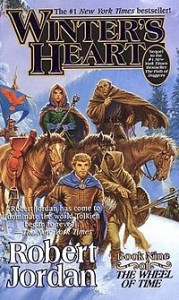
Winter's Heart by Robert Jordan

Publisher: Tor Books - Pages: 800 - Buy: Book/eBook

I have spent the past eight commentaries talking about where I was as a reader in my early-to-mid 20’s when I first read (and then re-read, in some cases more than twice) the first eight volumes of The Wheel of Time. For the first seven, I read them all within a two-week stretch in-between and just after my MA exams in November 1997. The eighth volume, The Path of Daggers, I bought on its release date and re-read either once or twice (memory is faint) before November 7, 2000, when the ninth Wheel of Time novel, Winter’s Heart, came out in the US.

The astute readers probably have realized by now that if I am talking about books last read around 10 years ago, then it must have been Winter’s Heart that gave me a long pause in my reading. That is indeed true, as not only was there a shade over two years to wait until the tenth volume, Crossroads of Twilight, but I never re-read any of the first nine in the interim, nor did I read that volume until 2006 on a lark. What happened in this reading that finally caused me to do the metaphorical throwing up of hands in surrender? Read More »

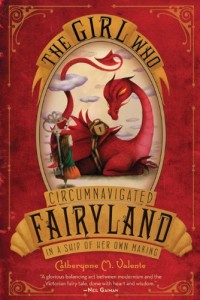
The Girl Who Circumnavigated Fairyland in a Ship of Her Own Making by Catherynne M. Valente

Publisher: Square Fish - Pages: 288 - Buy: Book/eBook

It’s difficult for me, personally, to read portal Fantasy without comparing it against Neil Gaiman’s Stardust, especially those with a fairy tale lilt to its voice. It’s hardly fair to hold one novel against a work of fiction that still, just by evoking its name, transports me, like its protagonist, to another time, another place: a rainy December afternoon, just after Christmas, when I first discovered the beauty of Gaiman’s whimsical imagination. The Girl Who Circumnavigated the World in a Ship of Her Own Making (furthermore, The Girl Who…) has such soul, such a wonderfully commanding and joyous relationship with language, myth and fairy tale, however, that soon after its opening scene, I stopped comparing it against other works, and, in a critic-proof manner that makes this review difficult to write, began to read the work without thought. I fell into its pages, and only crawled out again alongside September, a girl who loses and finds herself in Fairyland.

September read often, and liked it best when words did not pretend to be simple, but put on their full armor and rode out with colors flying.

Though September’s tale is familiar, the telling of it is extraordinary. She is an intelligent girl, though her intellect is often lost behind the naivety of her youth and gets her into as much trouble as it solves. Much of what a reader needs to know about September is summed up in a particular passage that caught my attention:

One ought not to judge her: all children are Heartless. They have not grown a heart yet, which is why they can climb high trees and say shocking things and leap so very high grown-up hearts flutter in terror. Hearts weigh quite a lot. That is why it takes so long to grow one. But, as in their reading and arithmetic and drawing, different children proceed at different speeds. (It is well known that reading quickens the growth of a heart like nothing else.) Some small ones are terrible and fey, Utterly Heartless. Some are dear and sweet and Hardly Heartless At All. September stood very generally in the middle on the day the Green Wind took her, Somewhat Heartless, and Somewhat Grown.
p. 4

Read More »

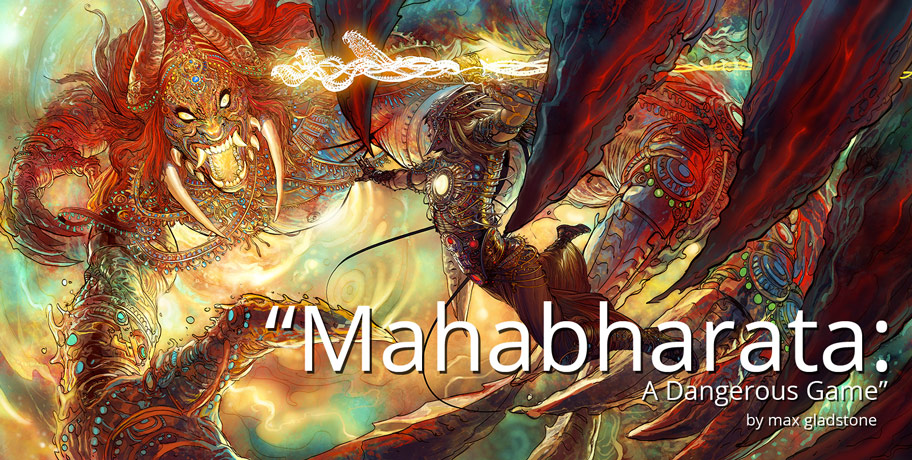
Mahabharata: A Dangerous Game by Max Gladstone

Art by Nisachar

Mahabharata: A Dangerous Game

My enthusiasm and love for these characters and this story will serve for the purpose at hand: encouraging you, dear reader, to immerse yourself in the Mahabharata.

The last two iterations of this column have played it safe. I’ve read Journey to the West in two languages and studied it from a variety of angles, and Romance of the Three Kingdoms, too though to a lesser extent. I could continue in this vein—the next logical essay would be on Outlaws of the Marsh / The Water Margin, China’s great Robin Hood novel and one of Mao Zedong’s favorite books, followed probably by Dream of the Red Chamber for more domestic source material. (Or Jin Ping Mei, if we want to get the sexy-fun-times element in play…)

But while all these stories are great, I’m not as passionate about them as I am about the story I want to discuss now. The problem is, I’m nowhere near as cut out to write this essay as I was the first two—I don’t know the source language, Sanskrit, and I haven’t spent as much time studying the work’s cultural context. (I’m not ignorant, I just don’t have a four year degree, six years of language study, and three years in-country.) There’s also much more chance I’ll do inadvertent harm writing this essay, since the text I’m about to discuss is a live, and lived, religious document in addition to one of the greatest adventure stories, romances, war stories, and apocalyptic tales of all time.

That said, maybe my enthusiasm and love for these characters and this story will serve for the purpose at hand: encouraging you, dear reader, to immerse yourself in the Mahabharata. And I hope that will be worth whatever unintentional harm I do. Read More »

The High Druid's Blade by Terry Brooks

On Suvudu, Shawn Speakman, webmaster for Terry Brooks, reports on the first details about The High Druid’s Blade, the Shannara novel recently completed by Brooks and set for a 2014 release. Speakman says:

The High Druid’s Blade takes place a century after Witch Wraith. It is the first Shannara stand alone novel since 1996’s First King of Shannara. Terry has long been entrenched in long epic series. Instead, with Blade, he is telling a very different tale. Fewer characters being scattered to the winds of the Four Lands. Instead, Terry has crafted a more personal journey, of a hero unable to protect his family unless he unleashes the power of his ancestors.

Brooks also revealed on the tour that the main protagonist of The High Druid’s Blade will be a Leah, a family that has been integral to many novels in the series since The Sword of Shannara. This will, however, mark the first time that a protagonist of a (chronologically) post-The Sword of Shannara novel will feature a sole protagonist that isn’t of Ohmsford blood. The Leah family, thanks to events in The Wishsong of Shannara, are in possession of the Sword of Leah, a sword imbued with the magic of the Druids. Is there a connection here between the High Druid (who’s identity I know, but for fear of spoiling Witch Wraith, Brooks’ upcoming novel, I won’t reveal), and the Leah family? Additionally, Brooks said that the novel will take place in areas of the Southland that have not been explored in previous novels.

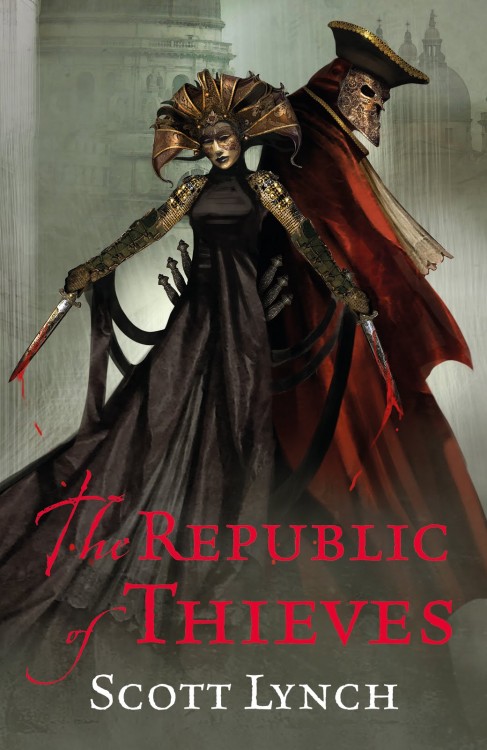
The Republic of Thieves by Scott Lynch

We all know the labyrinthine story of Scott Lynch’s The Republic of Thieves. But who cares about that now. Lynch is done the book and it’s been guaranteed (by Lynch, his publishers and many others), that the book is coming this Autumn, come hell or high water. Lynch recently revealed some details about The Republic of Thieves, which might, hopefully, satisfy fans as they wait for the Autumn release:

When does The Republic of Thieves pick up chronologically?

The “present day” thread resumes the story a few weeks after the end of Red Seas Under Red Skies. The flashback thread shows several episodes from Locke’s early years, and then a long adventure from when Locke, Jean, and Sabetha were about sixteen.

So Sabetha is actually in this thing?

Yes, Sabetha Belacoros is finally revealed in person for the first time and is a major character in The Republic of Thieves.

Do we find out more about the Bondsmagi?

The Bondsmagi are fairly integral to the plot. We meet several more of them and explore their home city of Karthain.

Maybe more satisfying is the chapter just released by io9. It makes me feel all tingly just reading new fiction from Lynch. I’ve missed the bugger.

Time passed, days and months chaining together into years, and Jean Tannen joined the Gentlemen Bastards. In the summer of the seventy-seventh Year of Perelandro, two years after Jean’s arrival, a rare dry spell came over the city-state of Camorr, and the Angevine ran ten feet below its usual height. The canals went gray and turgid, thickening like blood in the veins of a ripening corpse.

Canal trees, those glorious affectations that usually roamed and twirled on the city’s currents with their long float-threaded roots drinking the filth around them, now bobbed in sullen masses, confined to the river and the Floating Market. Their silk-bright leaves dulled and their branches drooped; their roots hung slack in the water like the tentacles of dead sea-monsters. Day after day the Temple District was shrouded in layers of smoke, as every denomination burned anything that came to mind in sacrifices pleading for a hard, cleansing rain that wouldn’t come.

In the Cauldron and the Dregs, where the lowest of the low slept ten to a room in windowless houses, the usual steady flow of murders became a torrent. The duke’s corpse-hunters, paid as they were by the head, whistled while they fished putrefying former citizens out of barrels and cess-pits. The city’s professional criminals, more conscientious than its impulsive killers, did their part for Camorr’s air by throwing the remains of their victims into the harbor by night, where the predators of the Iron Sea quietly made the offerings vanish.

Read the chapter, ‘The Boy Who Chased Red Dresses,’ on io9.