Posts Tagged: Fantasy

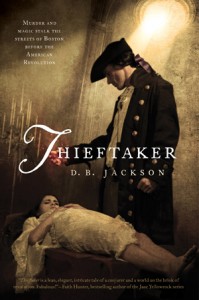
Thieftaker by D.B. Jackson

Thieftaker

By D.B. Jackson
Hardcover
Pages: 336 pages
Publisher: Tor Books
Release Date: 07/03/12
ISBN: 0765327619

EXCERPT

Prior to reading D.B. Jackson’s (aka: David B. Coe) most recent novel, my only exposure to the idea of a thieftaker, or a private individual hired to capture criminals, was Julian Sandar from Robert Jordan’s iconic Wheel of Time. Interestingly, my only experience with pre-Revolution America in genre fiction also came by way of Robert Jordan in his Fallon Blood series written under the pseudonym Reagan O’Neal. Jackson’s Thieftaker lifts both limitations, deftly blending historical fiction and urban fantasy to create a who-dun-it dressed up with tricorn hats and blood magic.

Set in 1765 in Boston, Massachusetts, during The Stamp Act riots, Thieftaker follows the exploits of Ethan Kaille, Jackson’s protagonist and only point of view character. Making his living finding stolen goods, Ethan is also a speller, capable of turning organic material into magical energy. When he’s asked to recover a necklace worn by the murdered daughter of a prominent royalist, he finds himself in the middle of a conspiracy to upset the delicate balance between Britain and her colonies.

As that summation suggest, Ethan is the narrative impetus, and the vehicle that Jackson uses to snare the reader. His history, power, and moral center held my interest despite a standard crime fiction plot structure that won’t overwhelm anyone with its inventiveness. In particular, it’s Ethan’s back story and how conjurers interact in a world that reviles their existence which gives Thieftaker its unique flavor. Read More »
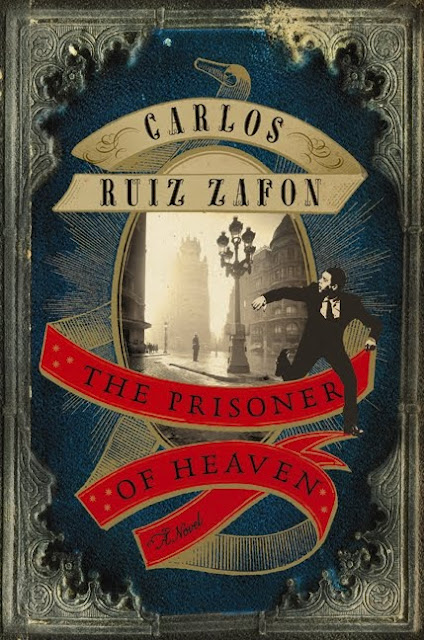
The Prisoner of Heaven by Carlos Ruiz Zafon

If, like me, you’re dying to get your hands on The Prisoner of Heaven, the sequel to Carlos Ruiz Zafon’s critically-acclaimed The Shadow of the Wind, you might be in luck. I wandered down to my local bookstore and saw copies of the novel sitting there on the shelf, over two weeks before the official release date. I’ve heard from other folk that they’ve also seen copies in the wild. So, if you’re waiting, it’s worth checking your bookstore to see if they have copies available now. I’ve got one, and just in time for a nice camping trip. Woo-ha!

If you’re not familiar with Zafon’s work, you might be interested in my review of The Shadow of the Wind. I consider it my favourite novel. Ever.

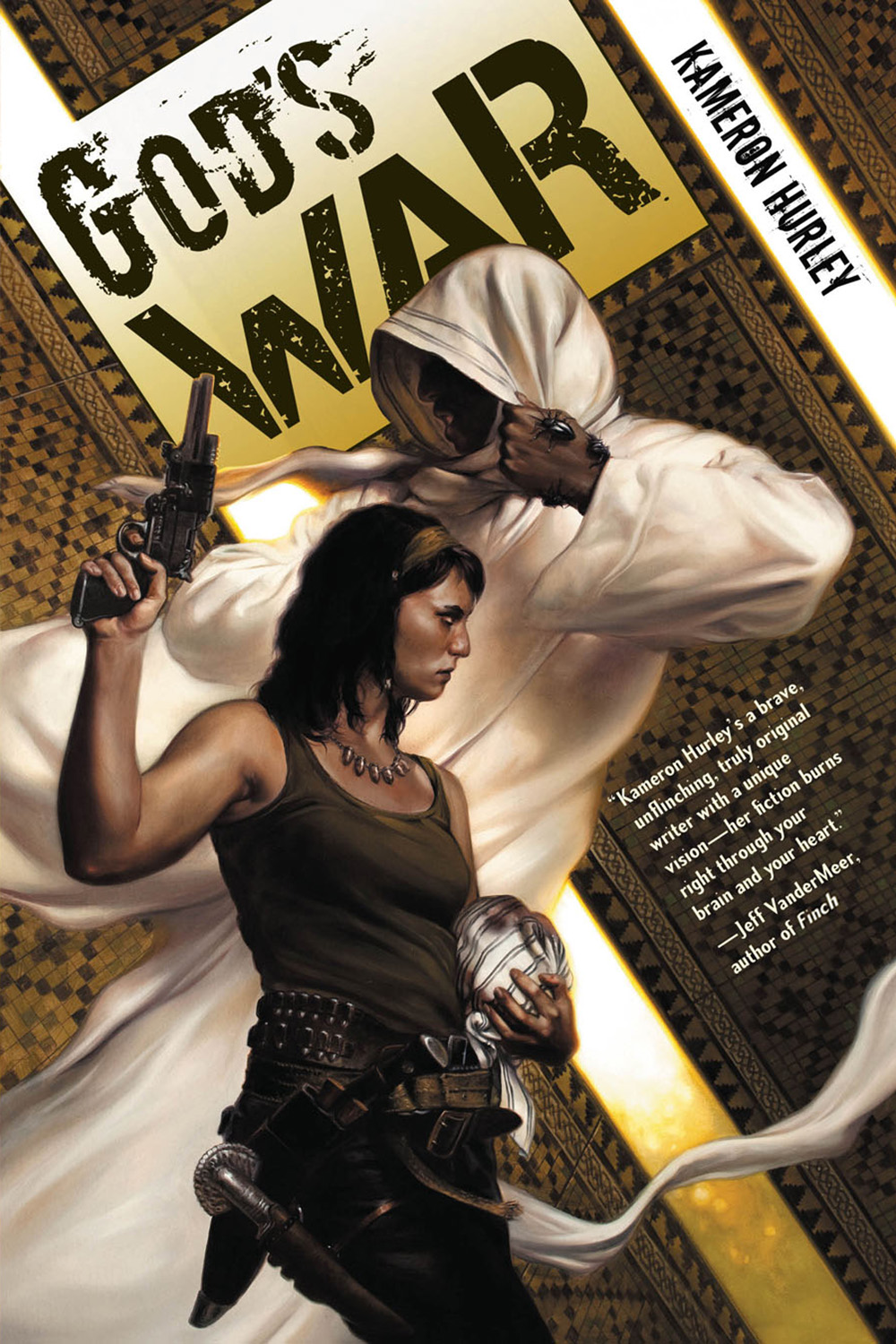
God's War by Kameron Hurley

In 2011, after much angst and delay, my first novel, God’s War, came out from Night Shade Books. It went on to win the Kitschy Award for Best Debut Novel and was nominated for a Nebula Award as well as a Locus Award for Best First Novel. I earned out my advance in about six months and sealed the deal for the third book in the series not long after that. I’ve also just sold UK and audio rights for all three novels in the series.

Looks like a smashing good success all around when you string it all together like that, doesn’t it? In fact, it looks almost miraculously easy, as if I must have written some kind of exceptional book or something. Now, don’t get me wrong. I love my books. But I also read a lot of other books in 2011 that I thought were a lot better, some of which didn’t make any awards list and many of which are still earning out their (probably substantially larger) advances.

So how did this happen? How does a little book that was rejected at nearly every other publisher as being “unmarketable” and had its first contract cancelled for similar concerns get so much… well – as people kept putting it online – “buzz”?

The real answer is, nobody really knows exactly why some books get talked about and some books don’t. A lot of people will tell you that who you know is what gets you published. And until I went through this process, I’d be the first to tell you that that’s bunk.

What I didn’t realize was that I was about to become one of those “silly punks” myself.

But turns out that once you can actually write a good book, that it does actually matter a good deal who you know and who’s heard of you. Recently, in this post over at Staffer’s Musings regarding the relationship of book bloggers and publishers, God’s War and its marketing came up again in conversation, with an assertion that, hey, you know, it must have been because it was such a good book that it made all these lists.

But there were a LOT of good books that didn’t make these lists. What helped God’s War get noticed? There’s a lot of mysterious stuff that happens among readers with particular books, and I can’t pretend to get that, but what I can do is tell you how I went about trying to get this book noticed, and how a small but passionate bunch of book bloggers, colleagues, and friends helped get this book’s name out in 2011. Is this approach applicable to other books? Sure. If you’re willing to play the game. And accept the fact that what you’re about to launch yourself into is a casino, not a meritocracy. Read More »

Wards of Faerie by Terry Brooks, Wards of Faerie

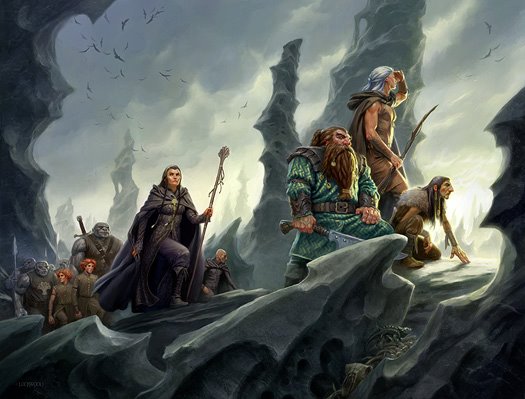
Art by Todd Lockwood

One of the most exciting things about the upcoming release of Wards of Faerie, a new Shannara trilogy by stalwart Fantasy writer Terry Brooks, is that, for the first time since The Wishsong of Shannara, in the ’80s, the novel will feature artwork to go alongside Brooks’ story. It’s doubly exciting because they chose one of my favourite artists, Todd Lockwood, to do the art. I’ve always felt that Lockwood and Shannara would be a good mix. Having read Wards of Faerie, I think he nailed the feel and look of Brooks’ characters and world.

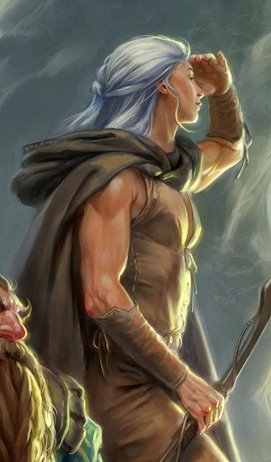
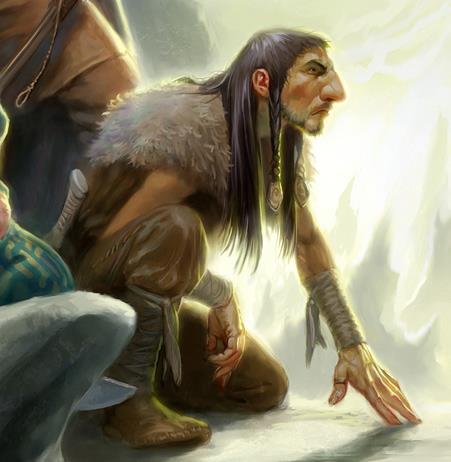
The above image is kinda small, but Lockwood also made some detail shots available, to give us a closer look at some of the characters.

Khyber, Wards of Faerie by Terry Brooks, Art by Todd LockwoodWards of Faerie by Terry Brooks, art by Todd Lockwood

Great work. I can’t wait to see the rest when Wards of Faerie comes out this summer. I know Brooks gets a hard time nowadays, and he’s been writing some hit-or-miss novels for the past several years, but Wards of Faerie is one of his better novels and I hope other fans are as excited as I am to see where he takes the trilogy.

Thieftaker by D.B. JacksonWriters often draw upon history, be it for inspiration, for setting, for character, for plot ideas, or for some combination of these. Recently, I have embarked on a new phase in my career, turning from epic fantasy to what I call historical urban fantasy. And even as I borrow so many of my ideas from the past, I find myself wondering what I owe history in return.

I have a Ph.D. in U.S. history, and though I have been a refugee from academia for far longer than I was actually a part of it, I still harbor a certain reverence for the study of our past, and a near-obsessive concern for historical accuracy. I also understand that “accuracy” is a term that is both freighted with unintended meanings and nearly impossible to define for more than one person at any given moment. Still, to the extent possible, I want to get the easily-verified stuff right. I want to put the correct people in the correct place at the correct time.

The first thing I owe to history: attention to detail. This is not to say that I can’t bend some “facts” to my own purposes.

That I believe, is the first thing I owe to history: attention to detail. This is not to say that I can’t bend some “facts” to my own purposes. Authors do that all the time. Indeed, often that is the point of our work, whether it’s giving the Confederacy superior weaponry — as Harry Turtledove famously did in The Guns of the South — or having Charles Lindbergh, an anti-Semite and white supremacist, defeat Franklin Roosevelt in the 1940 Presidential election — as Philip Roth did in The Plot Against America. In my new book, Thieftaker, I portray Boston in 1765 as accurately as possible, with two notable exceptions: First, in my book the city’s population includes some people who are conjurers, and second, the city has at least two thieftakers working within its boundaries. I’ll leave a discussion of magic and conjuring for another day, but I will readily admit that thieftakers did not actually appear in any North American city until the early 19th century and then only for a very brief period.

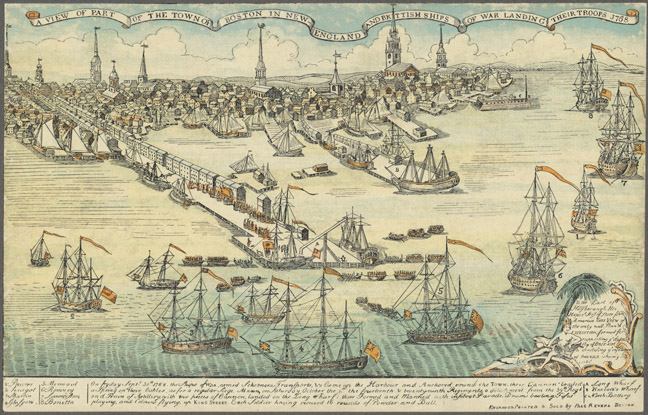
Boston in 1768

Boston, c. 1768

So, one may ask, if we can add thieftakers and conjurers to a city population, or give modern machine guns to the army of the Confederacy, or change the outcome of a Presidential election that occurred over seventy years ago, all in the interests of satisfying our narrative needs, how could it possibly matter what color Samuel Adams’ house was painted? And while I know it’s not a satisfactory answer to the question, I will start by saying “Because it just does.” Read More »