Posts Tagged: Orbit Books

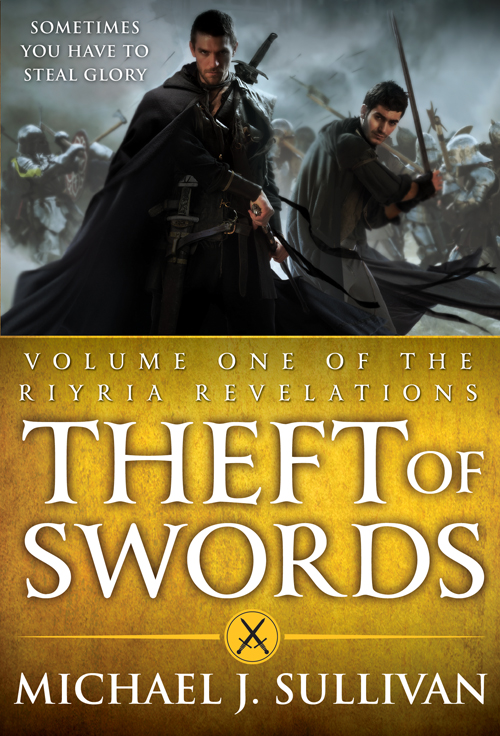
Theft of Swords by Michael J. Sullivan

Theft of Swords

By Michael J. Sullivan
Paperback
Pages: 704 pages
Publisher: Orbit Books
Release Date: 23/11/11
ISBN: 0316187747

EXCERPT

Michael J. Sullivan has a story that every aspiring writer would love to tell. It’s not about trolls or princesses, vanquishing evil or finding treasure (at least not in the literal sense), but it is a tale of perseverance and personal triumph, of overcoming obstacles that prove impossible for so many others. See, Sullivan’s most interesting story isn’t that of Hadrian Blackwater and Royce Melborn, the protagonists of Theft of Swords, which consists of Sullivan’s first two self-published novels, The Crown Conspiracy and Avempartha, and the eponymous pair behind The Riyria Revelations, it’s the story behind his success, of his rocky and self-driven path to publication, first under his own publishing label (ostensibly a self-published writer) and selling several thousand eBooks a month to signing a full-fledged publishing deal with a major New York City publisher (and potentially leaving tens- or hundreds-of-thousands of dollars on the table.) Michael J. Sullivan is a self-made success story and it shows in Theft of Swords’ utter disregard for the current trends that are sweeping the Fantasy genre (and are so important in the minds of the major publishers.)

In this post-GRRM (George R.R. Martin, author of A Song of Ice and Fire) world, popular Epic Fantasy is dominated by so-called ‘gritty’ writers like Joe Abercrombie, Scott Lynch or R. Scott Bakker. Even the ‘good guys,’ like Brandon Sanderson, author of The Alloy of Law are known for attempting to subvert the tropes of the genre by taking common building blocks and flipping them on their heads in a way that’s supposed to upend the reader’s expectations. Theft of Swords, on the other hand, is a delightful throwback to the Fantasy of the ‘80s and ‘90s that took the concepts and thematic structures first popularized by Tolkien and helped solidify the genre’s place in popular geek culture. These days it’s cool to hate on Terry Brooks, David Eddings and Raymond E. Feist, but Theft of Swords proves that the building blocks used by those authors are still effective today when wielded by a careful author.
Read More »
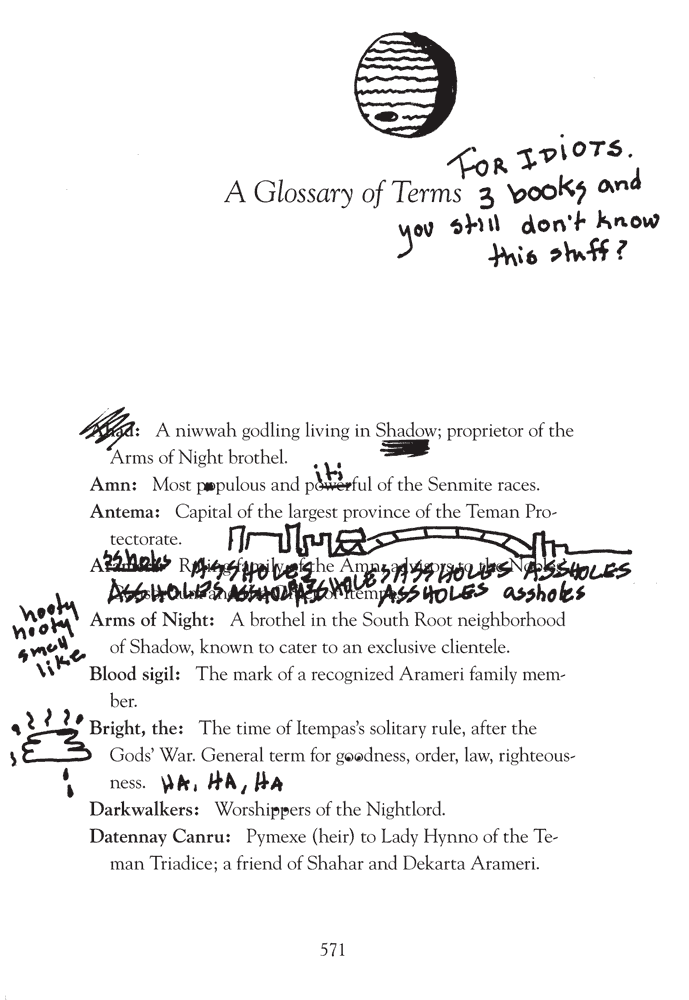
Recently, I picked up a copy of N.K. Jemisin’s latest novel, The Kingdoms of God and was surprised and delighted when I flipped through to the glossary and saw this (click to embiggen):

N.K. Jemisin on God-doodled Appendices

I amused myself for a few more minutes by reading the rest of the glossary and immediately knew I needed the story behind it. I contacted Ms. Jemisin and she was kind enough to share the story behind the creation of Sieh’s tomfoolery.

The idea hit shortly after my editor had accepted the book. She asked me if I had any additional end-matter to include, like the “scrivener’s notes” that were at the end of the previous two books. Orbit likes to include extras when it can, a sort of lagniappe for readers. At the time I couldn’t think of any. (Later, the short story “Not the End” popped into my head, and I wrote it and sent that to her.) But as I tried to think of what sort of end-matter would befit Sieh, it occurred to me that there wouldn’t be any, not like I’d written before. Any scrivener who tried to take notes on Sieh would become so exasperated with his pranks and blatant lies that he wouldn’t commit the report to paper, or he’d have to cover it in “none of this may be true” disclaimers. And as soon as that scrivener wrote it down, Sieh would sneak in during the night and doodle all over the thing, just to teach the scrivener a lesson. Meddle not in the affairs of trickster gods, for they will drive you nuts.

But it gradually occurred to me that Sieh wouldn’t stop there. Throughout THE KINGDOM OF GODS, he breaks the fourth wall to address the reader. He’s a god, aware of things beyond mortal ken; he knows we’re here, reading about him. So it occurred to me that Sieh would also sneak in and doodle all over *my* work. Ideally just before it went to print, so that he could prank not just me, but my entire readership.

I asked my editor if something like that was do-able. I expected her to say it would cost too much; I have no idea how they figure these things. But she seemed delighted by the idea, so I scribbled some stuff on the copyedited glossary and sent that back to her, just to give her an idea of what I had in mind. I kept it short and black and white only, mindful of costs. But because I’m no artist by far, I asked if they could get a real artist to play around with it, maybe make it look more childlike somehow. The designer they sent it to (Fearn de Vicq), however, sent it back virtually unchanged and said my own doodles were fine. (She did clean up the giant glops of liquid paper, and rearranged the doodles to make them integrate with the text better.) So what you’re seeing is my own inept artwork and handwriting.

I’ve had to issue a few disclaimers since the book came out, because I’ve seen some concerned emails and blog posts from people who honestly thought their copy of the book was defaced. One librarian was absolutely furious on my behalf — though he laughed when I told him *I* had done it. It’s fun when people fall for a prank, but even better when they’re good-natured
about it.

I also intended for it to be a part of the story in a way, so pay attention to how Sieh’s reacting to various entries. If someone skips to the glossary, it shouldn’t spoil them, but for people who’ve already read it, I think they’ll notice, for example, where Sieh stops doodling and sort of freaks out.

If you haven’t already, go grab The Kingdom of Gods and check out the terrific glossary. Or, if you haven’t read Jemisin, run out and buy her first novel, The Hundred Thousand Kingdoms (REVIEW) because it seriously rocks.

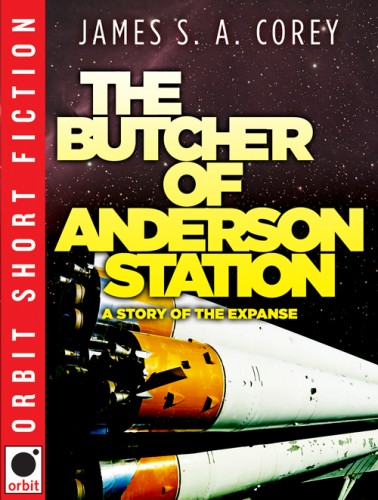
'The Butcher of Anderson Station' by James S.A. Corey

A new story set in the world of The Expanse. One day, Colonel Fred Johnson will be hailed as a hero to the system. One day, he will meet a desperate man in possession of a stolen spaceship and a deadly secret and extend a hand of friendship. But long before he became the leader of the Outer Planets Alliance, Fred Johnson had a very different name. The Butcher of Anderson Station.

This is his story.

Well this is just music to my ears. Leviathan Wakes is one of the best novels I’ve read this year (REVIEW). It’s sequel (COVER ART) is one of my most anticipated novels of 2012. And a short story, completely out of the blue, revolving around one of the first novel’s most interesting characters and events? Sign me right on up.

A quick excerpt:

When Fred was a kid back on Earth, maybe five or six years old, he’d seen a weed growing in the darkness of his uncle’s cellar. The plant had been pale and thin but twice as tall as the ones out in the side yard, deformed by reaching for the sunlight. The man behind the bar looked just like that: too tall, too pale, too hungry for something he’d never had and never would. Belters were all like that.

The music in the bar mixed Punjabi rhythms with a high-voiced woman rapping in the polyglot mess of languages that made up Belter creole. The battered pachinko machine in the back rang and skittered. Hashish smoke sweetened the air. Fred leaned back on a bar stool meant for someone ten centimeters taller than he was and smiled gently.

“Is there a fucking problem?” he asked.

‘The Butcher of Anderson Station’ is 9,000 words long and available on all the major eBook platforms and costs as much as a bad gas station latte. Go buy it now. I already have.

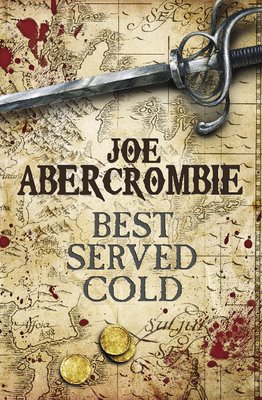
Best Served Cold

AuthorJoe Abercrombie

Trade Paperback
Pages: 544 pages
Publisher: Gollancz
Release Date: June 1st, 2009
ISBN-10: 0575082453
ISBN-13: 978-0575082458

You can say many things for Joe Abercrombie.

You can say he’s leading the way for no-holds-barred Fantasy. You can say he’s a great stylist, with satisfying, easy-to-read prose. You can give him credit for being adept at writing convincing, startling endings (a trait sadly lacking in the Fantasy genre). You can say his action scenes are among the best out there. You can say he loves to set the reader up, then pull the rug out from under them by subverting the tropes we all know and abhor/love.

You can say all these things about Joe Abercrombie, and they all certainly apply to Best Served Cold as surely as they did for his first trilogy, The First Law. I recognized all of these qualities while reading the novel, but the whole time I also couldn’t fight the feeling that something was off, that I wasn’t connecting to this Abercrombie novel as I had to previous ones. It took me a few days, and a couple of conversations with others who had read the book, to finally unearth the roots of this feeling.
Read More »

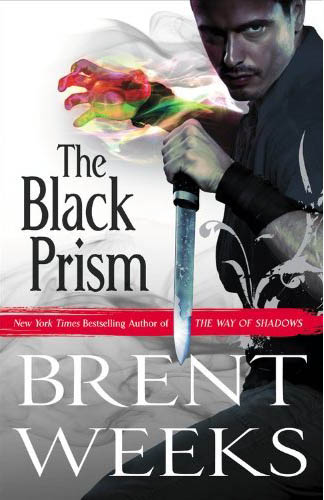
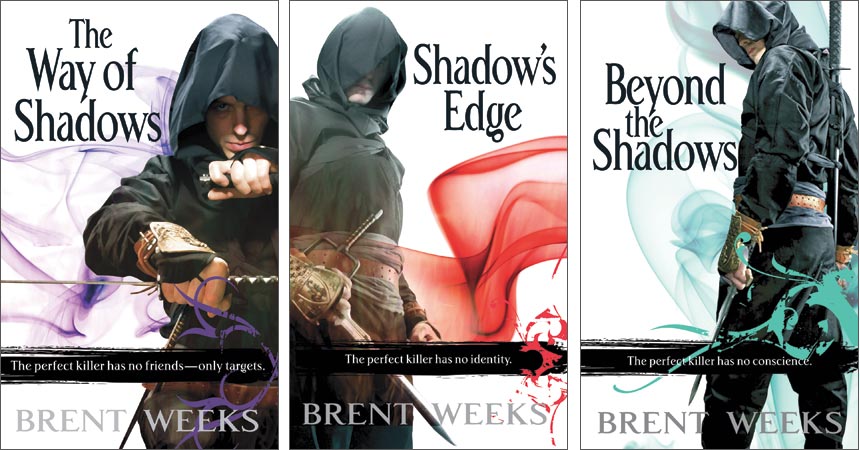
In a shocking turn of events, the cover of Brent Weeks‘s next novel, The Black Prism features a menacing looking dude, a white background and a splash of bold colour (obviously signifying magic, or something). This is a major departure from The Night Angel Trilogy, his first series.

Black Prism by Brent Weeks
Source

Okay, seriously. I suppose they want to give Weeks his own identity, so you know a Weeks novel on the shelf, but this is a little blatant. The original covers were interesting when they first hit the market (and effective, too, given Weeks sales and popularity), but couldn’t Orbit have done something to give this new series its own identity? Removing the hood from the Hollister model on the front doesn’t count.