Posts Tagged: Science Fiction

Love Minus Eighty by Will McIntosh

Publisher: Orbit Books - Pages: 419 - Buy: Book/eBook
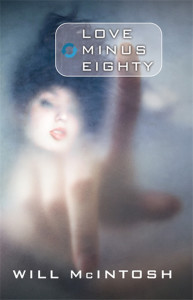
Love Minus Eighty by Will McIntosh

Based on Will McIntosh’s Hugo Award winning short story, ‘Bridesicles,’ Love Minus Eighty is set years in the future where cryogenics and life extension technology have reached the point that the only thing standing in the way of death is money. For the particularly beautiful and female, dying young means ending up in cryogenic dating farms where the creepiest rich men briefly resurrect them to determine how depraved they’ll be in exchange for another chance at life. It’s a horrific idea driven home by the character of Mira, who throughout the novel is killed and awakened untold times by curious ‘Johns’ (for lack of a better words). McIntosh calls these trapped souls bridesicles. Read More »

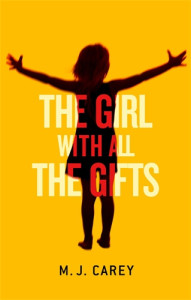
The Girl with All the Gifts by M.J. CareyYesterday, Orbit Books released the cover and first blurb for The Girl with All the Gifts by M.J. Carey. Early impressions (mostly from within Orbit, it seems, and those who’ve read unbound galleys) are extremely positive. Given how far release is, this sort of hype and raised expectations is expected, but, golly, that cover and early teaser blurb are mighty enticing. I generally associate Orbit with their more traditional fantasy and science fiction releases, like Brent Weeks, N.K. Jemisin and Daniel Abraham, but I’m always pleased to see them go out of their way to find quirky, off-the-beaten path genre novels.

Melanie is a very special girl. Dr Caldwell calls her ‘our little genius’.

Every morning, Melanie waits in her cell to be collected for class. When they come for her, Sergeant keeps his gun pointing at her while two of his people strap her into the wheelchair. She thinks they don’t like her. She jokes that she won’t bite, but they don’t laugh.

Melanie loves school. She loves learning about spelling and sums and the world outside the classroom and the children’s cells. She tells her favourite teacher all the things she’ll do when she grows up. Melanie doesn’t know why this makes Miss Justineau look sad.

The first thing to come to mind when reading the blurb for The Girl with All the Gifts is Irrational Games’ Bioshock Infinite, released earlier this year for Xbox 360, PS3 and PC, which features a similarly confined girl, manipulated and educated by her captor in an effort to gain access to whatever secret power lies within her. Most intriguingly, the blurb doesn’t call on any outwardly SFF elements, but there’s just enough of a hint in the final paragraph, and the obvious efforts at guarding Melanie, that, though she might not realize it, and the blurb doesn’t say so, uncovering Melanie’s origins and the threat of her power, even in the body of a young child, will be central to the plot.

M.J. Carey is a pen name for Mike Carey, best known for his work in comic books, including 2011’s crossover series, Age of X , and the Felix Castor novels, which begin with The Devil You Know (buy: book/eBook).

Yesterday won’t be soon enough to get my hands on this book. The Girl with All the Gifts is set for a worldwide release in 2014 from Orbit Books.
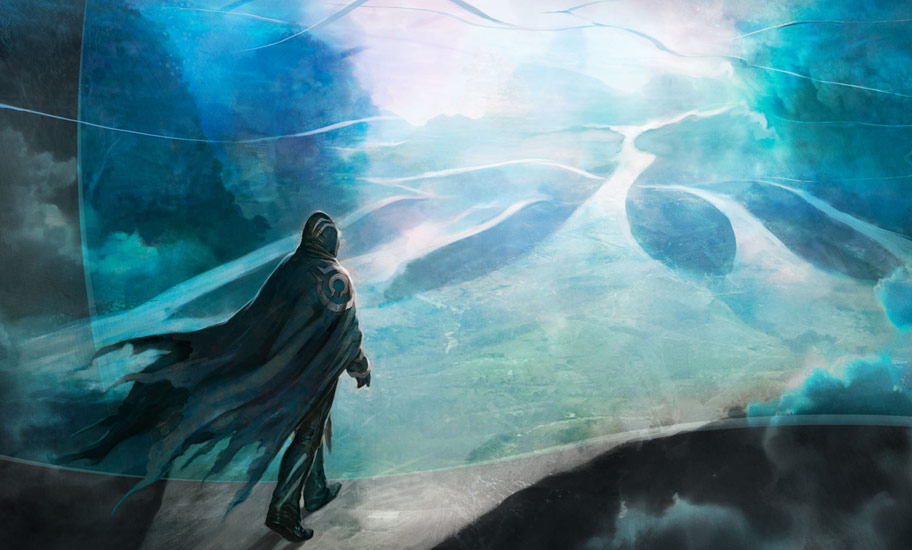
Art by Jason Chan
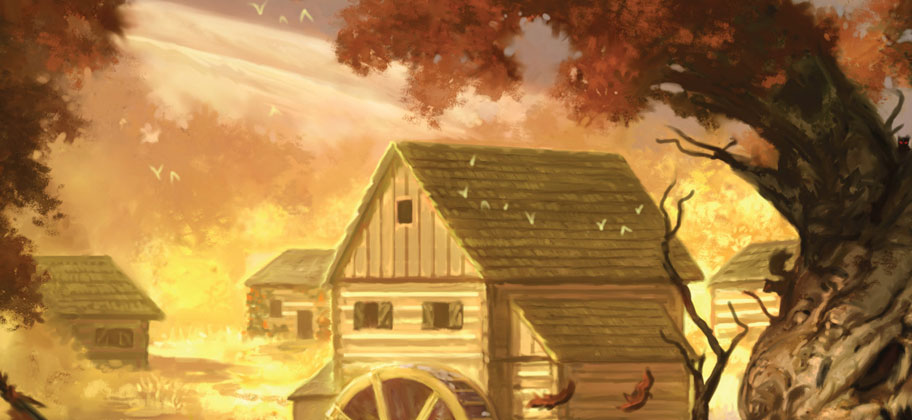
A Secondary World Much Like the First

Even if you put aside problematic assumptions of biological determinism, there’s still one thing I just can’t understand: why on earth would a fantasy world have to conform to the (supposed) rules of this one?

Lately there have been questions as to whether epic fantasy is inherently “conservative.” The term is sometimes specified in terms of political movement or ideological conservatism, but more broadly refers to the production and reproduction of social convention. I have serious doubts about the ideological bit, a point already well articulated by Liz Bourke. Unfortunately, I have little doubt about the rest—particularly in comparison to epic fantasy’s sibling genre, science fiction. But why is that, and does it really have to be that way?

I started thinking about these questions after reading excellent essays by Kameron Hurley and Foz Meadows on the historical precedent for women warriors in epic fantasy (as well as Django Wexler’s epic follow-up piece), and particularly after being drawn into a vigorous online discussion on that topic. The prevalent counter-argument, as I understand it, is this: for biological-evolutionary reasons (lesser upper body strength, necessity for the slow human reproductive process, greater empathy, etc.), women in our world are less likely to be soldiers; therefore, they should be less common as soldiers in fantasy worlds.

Huh? Read More »

Two Genres, One Author ... Not Bad.

How could I not embrace science fiction? Literature that took me outside the here and now, to look back from somewhere else.

I’ve written science fiction for a while. Okay, since I was ten, which was the year before the first episode of Star Trek aired. I’m a child of the Cold War, of monster movies (Rhodan!), and of the seemingly limitless vistas of technology and space. My textbooks changed while I was in school, adding the discovery of DNA as well as the perils of pollution. In my university room — in everyone’s — hung the first photo of this planet taken from somewhere else.

How could I not embrace science fiction? Here was literature that spoke of what was happening in the world around me — and what I hoped might happen. (Or not!) Literature that took me outside the here and now, to look back from somewhere else. When I discovered my first volume in the school library (Andre Norton’s The Star Rangers), it began more than a love affair. As a budding scientist, science fictional thinking, replete with questions and speculations and curiosities and wonders, was like coming up for air. When I became a biologist, it became my most trusted skill set. I could frame questions. I would search out answers. Findings, the fun ones, should challenge preconception. Science fiction, to me, has been how I talk and dream science. It’s made me a better communicator. It’s given me a venue to share my passion. Read More »

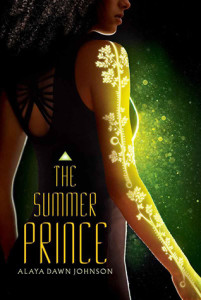
The Summer Prince by Alaya Dawn Johnson

Publisher: Arthur A. Levine Books - Pages: 304 - Buy: Book/eBook
The Summer Prince by Alaya Dawn Johnson

The Summer Prince is the best book I’ve ever read.

I don’t say that lightly. It’s not an exaggeration. I’ve read it twice in the space of two months, first in March, and now in May, and in all the time between those dates, I never stopped thinking about it.

The first time, it took my breath away. I didn’t want to review it then: some experiences are so pure, so perfect, that you can’t bear to sully them with analysis – not right away, at least. I had to savour it for a while; I had to let it sit. But even so, I always knew I’d come back to it. Not just because it’s beautiful, and not just because it’s brilliant, but because I’d be betraying myself if I didn’t do everything in my power to convince other people to read it. There need to be more books like this (there can’t be another book like this), and by now, I can almost hear you thinking, she’s overhyped it, nothing can live up to this sort of press and now I’ll be disappointed – but hear me out. Listen: I can’t guarantee The Summer Prince will touch you the way it did me. I’d be lying if I tried to promise anything of the sort. But every new book is a gambit, wagering your taste against a cover’s tricks, a blurb’s allure, the measure of praise or condemnation with which you’ve heard it hawked. I can’t promise that you’ll fall in love, like I did.

Nonetheless. If you’re going to risk your money and heart on only one new book this year, make it this one. Read More »